Argentina and Uruguay on One eSIM: Three Ways, Priced

Roami Team
Roami offers reliable eSIM plans, serving over 1 million travelers annually, and supports automatic local network switching to help travelers stay connected globally.
📑 Table of Contents
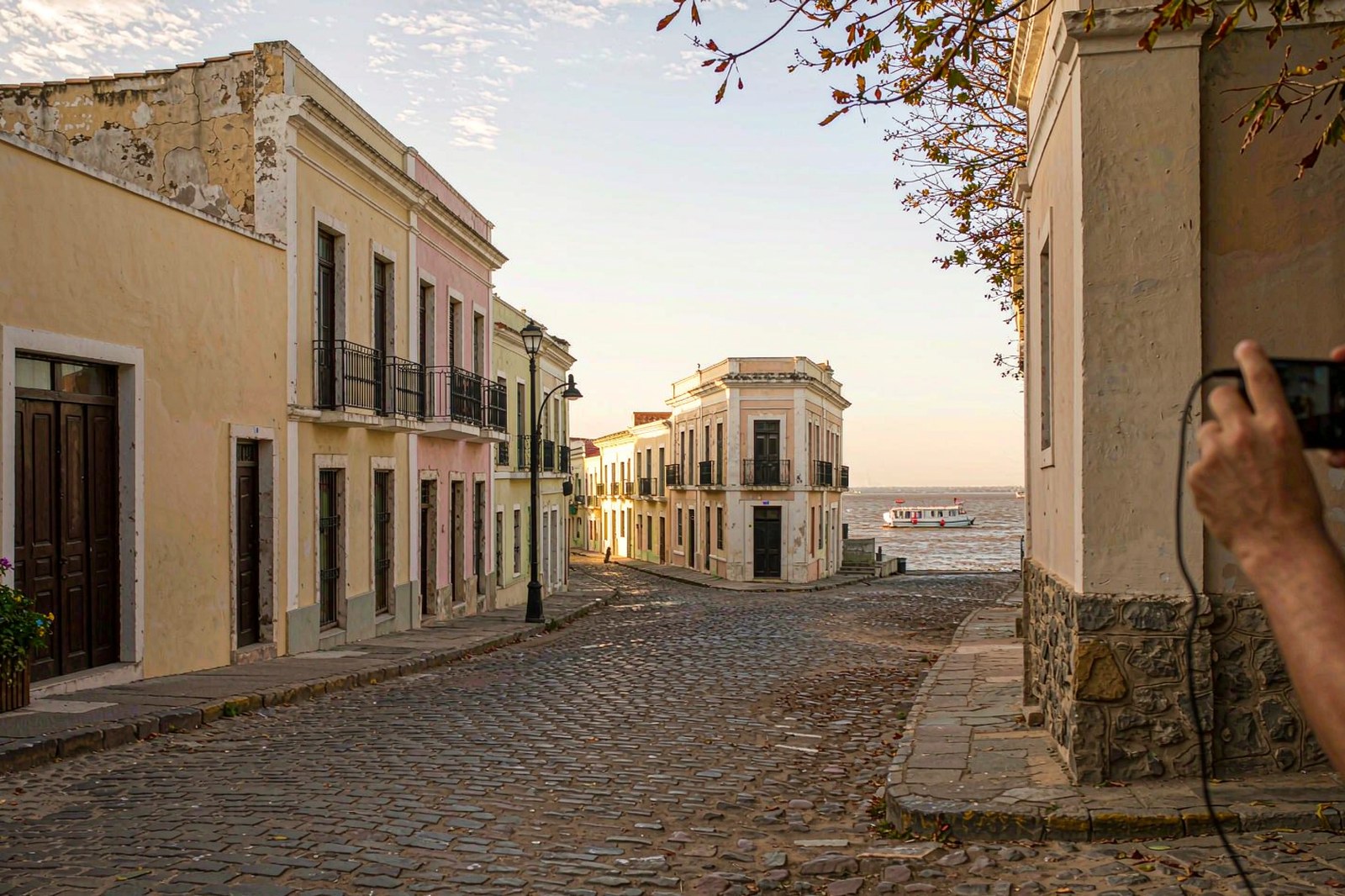
The Buenos Aires to Uruguay crossing has a property that no other border in South America shares, and it decides which eSIM you should buy before you know anything else about your trip. Both countries’ immigration is cleared in Buenos Aires, at the ferry terminal, before you board. You do not walk through a border post. You walk onto a boat, sit down, and thirty-five minutes later your phone stops working — somewhere in the middle of the Río de la Plata, with no land in sight and no checkpoint to blame.
That is what a single-country Argentina eSIM does on this route. It does not degrade at the border; there is no border to degrade at. It detaches from the Argentine network when the network runs out, which is a long way from either shore.
So the question this page answers is not “which eSIM is best for Argentina” — that is settled elsewhere. It is: for a trip that spends days on both banks of the river, what do you actually buy? There are three answers, they differ by less than you would expect, and one of them is priced so strangely that it is worth its own section.
The short version. Three architectures. Two single-country plans, which is what most people assume is necessary. One regional plan, which is what almost everyone should buy. Or one plan that dies in the middle of the crossing, which is what a great many people actually do and regret on the return leg. Priced on Nomad’s own storefront, one eSIM for Argentina and Uruguay — bought as a regional plan — beats two country plans at every single tier, from 1 GB to 20 GB. So the question of whether the combined product is worth it has a cleaner answer than in most markets.
Where does an Argentina eSIM stop working on the way to Uruguay?
Somewhere between the two coasts, and the loss is not gradual in the way people expect.
A single-country Argentina profile is provisioned against Argentine networks only. While the ferry is in the Buenos Aires terminal and for the first stretch of open water, you are still inside the coverage of the Argentine towers along the coast and the profile keeps working. As the river widens — and the Río de la Plata is 220 kilometres across at its mouth, which is why the far shore is invisible — the signal drops, and the profile does not hand over to a Uruguayan network because it is not entitled to one.
What you see is a phone that goes from four bars to searching, and stays searching. No error message, no “not included in your plan”, nothing that tells you what happened. The profile is fine. The plan is fine. The country changed.
There is a second-order effect that catches people on the return leg. A profile that has detached does not always re-attach quickly when you come back into range, particularly if the phone has been searching in a low-signal environment for two hours. The first attach after a crossing can take a minute or two, and if you have switched the line off to save battery, it will not attach at all until you switch it back on.
That is the mechanism. What it costs to avoid is the rest of this page.
How long is the Buquebus crossing to Colonia and to Montevideo?
Two routes, and the difference between them matters for how much data you need rather than for which plan you buy.
The fast ferry from Buenos Aires to Colonia del Sacramento takes about 1 hour 15 minutes. The direct fast ferry to Montevideo takes about 2 hours 15 minutes to 2 hours 30, and runs fewer sailings. The third option — ferry to Colonia, then a connecting bus to Montevideo — takes roughly four hours door to door and is usually the cheapest way to reach the capital, sold as a single through-ticket.
Three operators run the river: Buquebus, which is the largest and sails from the Dársena Norte terminal; Colonia Express, which has its own terminal further south and is often the cheapest if booked early; and Seacat Colonia, which sails from the Buquebus terminal. Round-trip fares swing with season and operator — roughly $40 to $120 to Colonia and $60 to $180 to Montevideo, with high season and Argentine long weekends at the top of both ranges.
Why Colonia and Montevideo are different purchases
For a data plan the practical consequence is this: Colonia is a day trip and Montevideo is a short stay, and those are different purchases. A day trip that puts you in Uruguay for eight hours does not justify a plan; a two-night stay in Montevideo does.
Why the terminal, not the water, is where the border actually is
The pre-clearance arrangement is worth understanding because it changes what you would do if something goes wrong.
Both Argentine and Uruguayan immigration are handled at the Buenos Aires terminal before departure, which means you are processed out of one country and into the other while standing on Argentine soil. Your passport is stamped twice before you have left the building. On arrival in Colonia or Montevideo you walk off the boat and into the town.
Which means the usual travel habit — buy a local SIM at the border, or at the first shop after crossing — has no moment to attach to. There is no border zone, no duty-free limbo, no cluster of SIM vendors at a checkpoint. There is a terminal in Buenos Aires full of cafés and a boat.
For an eSIM traveller this is actually good news dressed as a complication: because the crossing has no friction, the only thing that can go wrong is the data, and the data is decided entirely before you board.
What does Nomad charge for Argentina, Uruguay, and both together?
Nomad is the provider this query names, and its pricing across the three products is where the interesting arithmetic lives.
Read on 26 October 2026 from Nomad’s own storefront, in Swiss francs, which is the currency that storefront quoted. What matters is the comparison between rows, since all three come from the same page in the same currency:
| Tier | Argentina only | Uruguay only | Latin America, 17 countries |
|---|---|---|---|
| 1 GB | CHF 4.12 / 7d | CHF 4.95 / 7d | CHF 7.42 / 7d |
| 3 GB | CHF 7.83 / 30d | CHF 13.20 / 30d | CHF 15.67 / 30d |
| 5 GB | CHF 13.19 / 30d | CHF 15.67 / 30d | CHF 23.92 / 30d |
| 10 GB | CHF 23.08 / 30d | CHF 20.62 / 30d | CHF 32.16 / 30d |
| 20 GB | CHF 38.75 / 30d | CHF 23.92 / 30d | CHF 53.61 / 30d |
For reference, Nomad’s US storefront prices the Argentina plans at $5.00, $9.50, $16.00, $28.00 and $47.00 for the same five tiers, so the Swiss figures are roughly a fifth higher in nominal terms rather than a different product.
Two rows in that table are strange enough to deserve their own headings, and one of them is the single most useful fact on this page.
Is the Nomad eSIM Argentina Uruguay plan cheaper than two country plans?
Yes, at every tier, and by a margin that grows with the bundle.
Add the two single-country columns together and compare with the regional column:
| Tier | Argentina + Uruguay bought separately | Latin America plan | Saving |
|---|---|---|---|
| 1 GB | CHF 9.07 | CHF 7.42 | CHF 1.65 |
| 3 GB | CHF 21.03 | CHF 15.67 | CHF 5.36 |
| 5 GB | CHF 28.86 | CHF 23.92 | CHF 4.94 |
| 10 GB | CHF 43.70 | CHF 32.16 | CHF 11.54 |
| 20 GB | CHF 62.67 | CHF 53.61 | CHF 9.06 |
At 10 GB the regional plan is 26% cheaper than the two separate ones. That is the opposite of the usual structure, where a regional plan is a premium you pay for convenience and the two-country traveller is better off buying exactly what they need. Here the combined product is both more convenient and less expensive, which means the Nomad eSIM Argentina Uruguay question — one plan or two — has an unambiguous answer for anyone using Nomad.
The reason is not generosity. Nomad’s Uruguay plans are priced sharply at the top end (see the next section), and its Argentina plans are not, so the arithmetic of adding them lands above a regional product that has been priced to compete with Airalo’s.
The list of 17 countries is Argentina, Bolivia, Brazil, Chile, Colombia, Costa Rica, Ecuador, El Salvador, Guatemala, Honduras, Mexico, Nicaragua, Panama, Paraguay, Peru, Uruguay and Venezuela. For a Río de la Plata trip you need two of them, and the other fifteen are the cost of doing business.
Why is Nomad’s Uruguay 20 GB cheaper than its Argentina 20 GB?
Read the 20 GB row again: Uruguay CHF 23.92, Argentina CHF 38.75. Same provider, same storefront, same currency, same 20 gigabytes, across a river that is 50 kilometres wide at Buenos Aires. Uruguay is 38% cheaper.
There is no market explanation that survives inspection. Uruguay is a smaller, wealthier country with higher retail prices than Argentina in almost every category — restaurants, hotels, wine, taxis. Argentine mobile data is, by Cable.co.uk’s 237-market survey, among the cheapest in the world at about $1.11 a gigabyte; Uruguay’s is not. If prices tracked local market conditions, the Argentine plan would be the cheap one by a wide margin.
What the numbers suggest instead is that Nomad’s Argentine pricing is set against what US and European buyers expect to pay for a Latin American destination, and its Uruguayan pricing is set against almost nothing — a smaller market with fewer resellers competing, priced to move. The Argentina catalogue supports the whole Latin America product line. The Uruguay catalogue is a rounding error someone priced once.
Two practical consequences. The first is that if your itinerary is Uruguay-heavy — Montevideo, Colonia and the coast, with a couple of days in Buenos Aires at the end — pricing the two countries separately is actively misleading, because the country you would expect to be expensive is the cheap one. The second is that a 20 GB Uruguay plan at CHF 23.92 is better value per gigabyte than Nomad’s own Latin America plan at 20 GB (CHF 53.61), which is an absurd sentence that the price list nonetheless supports.
What none of this changes is the border. A Uruguay plan will not work in Argentina and an Argentina plan will not work in Uruguay, whatever they cost.
Which operators do the two countries use under a regional plan?
A regional plan is not one network. It is a list of local agreements, one per country, and the handover between them is invisible to you — which is the whole point, and also the reason the far side of the handover deserves a look.
Nomad names Movistar for Argentina and Tigo for Uruguay. Those are two different operators in two different markets, with two different footprints, and a regional profile switches between them automatically when the ferry reaches the far shore. You do not choose; the profile does.
For Argentina the operator question is well documented — Personal leads on measured speed, Claro on rural reach, Movistar on interior fallback — and the carrier guide that measures all three is the reference for what each one does on the ground. For Uruguay the market is smaller and simpler: three operators serve a country of 3.5 million people, and the practical coverage question is mostly about how far outside Montevideo and Colonia you plan to go.
What that means on a day trip versus a two-week stay
The distinction that matters is not network quality but how much of your time is spent where the network is thin.
A Colonia day trip never leaves a town of 25,000 people on the edge of a river. Coverage there is not a question you will ever have an opinion about. The same is true of Montevideo, which is a capital city with the density that implies.
A two-week stay that includes the Uruguayan coast in summer, or the interior towards Salto and Rivera, is a different proposition — and it is precisely the traveller who should care which regional plan they bought, because the cheapest one may be routed through whichever operator gave the best wholesale rate rather than the best tower.
What changes if you fly into Montevideo instead of taking the ferry?
The mechanics change and the conclusion does not.
Carrasco airport outside Montevideo is a normal international arrival: immigration, baggage, a taxi rank, and shops that may or may not be open when you land. There is no pre-clearance and no river. If your profile is regional, it attaches to a Uruguayan network within a minute of you switching the line on, exactly as it would have done on the boat.
If your profile is Argentina-only, you land with nothing, and the fix is a shop in the terminal or a taxi into the city — the same problem as arriving in Buenos Aires with no data, in a country with fewer shops.
The one genuinely different case is a flight that connects through Buenos Aires. A long layover at Ezeiza or Aeroparque, followed by a hop to Montevideo, means your first attach happens in Argentina and then again in Uruguay. On a regional plan that is two attaches on one profile and nothing to think about. On two country plans it is a handover in an airport, which is the worst place to do one.
The other case worth naming is arriving by land from Brazil or from the Argentine northeast. Those crossings do have border posts, and the same rule applies: a regional plan crosses without intervention, a country plan does not cross at all.
Does the 12-country or 17-country list matter for this trip?
Almost never, and the one place it does is worth a paragraph.
Saily’s Latin America plan covers 12 countries: Argentina, Bolivia, Brazil, Chile, Colombia, Costa Rica, Ecuador, El Salvador, Mexico, Paraguay, Peru and Uruguay. Nomad’s and Airalo’s cover 17. The five Saily omits are Guatemala, Honduras, Nicaragua, Panama and Venezuela.
None of those five is on a Río de la Plata itinerary. If your trip is Argentina and Uruguay, or Argentina, Uruguay and Chile, the lists are identical in the only way that matters, and choosing on country count would be choosing on a number that does not apply to you.
Where it does apply is the traveller building a longer Latin America trip on one profile — the classic route being Mexico into Central America and down the Andes. That traveller needs the 17, and needs to check the list rather than the headline number, because the difference between the two products is entirely a Central American one.
The reason to mention it at all: every comparison of regional plans leads with country counts, and country count is the least informative number on the page for anyone whose trip has two countries in it.
What does Airalo charge for the same two countries?
Airalo’s structure is different and, for short trips, better.
Its Argentina catalogue does not sell metered data at all on the main view — it opens on unlimited, in four durations, from three days to ten. The Latin America eSIM sells unlimited in six durations, from three days to thirty, across 17 countries:
| Duration | Argentina only | Latin America | Difference |
|---|---|---|---|
| 3 days | $19.50 | $19.50 | $0.00 |
| 5 days | $27.50 | $30.50 | +$3.00 |
| 7 days | $34.50 | $39.00 | +$4.50 |
| 10 days | $38.50 | $49.00 | +$10.50 |
| 15 days | not sold | $60.00 | — |
| 30 days | not sold | $97.00 | — |
At three days the regional plan costs exactly the same as the single-country one. Not approximately — identically, $19.50 for either. At five days the second country costs $3, and at seven days $4.50.
That is the cheapest border insurance in this market, and it is not advertised as such. If your Buenos Aires trip has a Colonia day trip bolted onto it, the difference between a plan that works on the boat and one that does not is zero dollars on a three-day purchase and four dollars fifty on a seven-day one.
Above ten days the regional plan stops being an option and becomes the only thing Airalo sells, which also solves the twelve-day problem the Airalo Argentina review spends a section on: a fortnight in Argentina and Uruguay has no single-country product at all, and the 15-day regional at $60 is the only purchase on that page that fits.
Which regional plan covers Argentina, Uruguay and Chile at once?
All three of the big regional products do, and they are not priced alike.
| Provider | Countries | Smallest tier | 5 GB tier | 10 GB tier |
|---|---|---|---|---|
| Nomad Latin America | 17 | CHF 7.42 (about $9) | CHF 23.92 (about $29) | CHF 32.16 (about $39) |
| Airalo Latin America | 17 | $19.50 unlimited, 3 days | $30.50 unlimited, 5 days | $49.00 unlimited, 10 days |
| Saily Latin America | 12 | $7.99, 1 GB | $31.99 | $44.99 |
Three observations that a plain price table hides.
Nomad is the cheapest by a distance on metered data. Its 10 GB regional tier works out around $39 against Saily’s $44.99, and it carries 17 countries against Saily’s 12. If you want a fixed allowance across the river, Nomad wins.
Airalo is the only one whose regional plan is free at the short end, and the only one that sells a 15-day and 30-day unlimited regional product. For a trip under a week with one border in it, that combination is hard to beat.
Saily’s 12-country list covers all three countries you care about — Argentina, Uruguay and Chile — but not Paraguay, which matters only if you were planning the Encarnación crossing, and not Bolivia, which matters only if the Salta route north was on your list. Its regional plan is also the only one of the three priced in US dollars end to end, which is one less conversion to think about.
If your trip is the classic triangle — Buenos Aires, Colonia or Montevideo, then across the Andes to Santiago — a 17-country plan is the only purchase that covers all three legs without a second transaction. The Chilean catalogue and the wider South America eSIM pricing cover the other two legs in more detail than belongs here.
Is a $10 day pass from your home carrier cheaper than any eSIM?
Sometimes, and the case where it wins is the one nobody writes about.
Most US postpaid carriers sell an international day pass — Verizon’s TravelPass, AT&T’s International Day Pass, and equivalents from the other three — for around $10 a day, which lets you use your normal allowance abroad for 24 hours. Check your own plan’s current price and, more importantly, whether Argentina and Uruguay are both covered; most Latin American destinations are, but the lists change.
Run that against the alternatives for a single day in Colonia. The cheapest eSIM that covers Uruguay on its own is a 1 GB Uruguay plan at CHF 4.95 (about $6), plus the Argentina plan you already bought. A regional plan that covers both starts around $9 for 1 GB on Nomad, or $19.50 for three days on Airalo. Your carrier’s day pass is around $10 and covers everything, on your own number, with your own data allowance, with no second profile to manage.
So for a one-day crossing, the day pass is competitive and often simpler. For a two-night stay it is not — $20 to $30 for a pass against $4.50 for the incremental country on an Airalo regional plan. And for anyone whose carrier does not include the region, or charges per megabyte rather than per day, the comparison does not exist.
The general principle: a day pass is priced per day, so it only wins on very short crossings. The moment the trip has more than two days in the second country, a data plan beats it on both price and behaviour.
How much data does an eight-day two-country trip use?
Eight days, split four and four, is the shortest itinerary that makes a regional plan make sense. Here is what it consumes.
A normal tourist day — maps, messages, translation, ride-hailing, a dozen photos, an hour of browsing — lands between 400 MB and 1 GB. The variable that moves it is not the country but the evening: if your accommodation has usable Wi-Fi, most of the heavy use happens there, and the mobile allowance covers only the hours you are out.
Applied to four days in Buenos Aires and four along the Uruguayan side — Colonia, Montevideo, or the coast at Punta del Este in summer:
| Behaviour | Daily use | Eight days |
|---|---|---|
| Maps, messages, photos on hotel Wi-Fi | 400 MB | 3.2 GB |
| Plus social posting and some video | 800 MB | 6.4 GB |
| Plus tethering a laptop or streaming | 2 GB | 16 GB |
Which puts the decision at a 5 GB plan for the first two profiles and a 20 GB plan for the third. On Nomad’s regional pricing that is CHF 23.92 and CHF 53.61 respectively; on Airalo’s unlimited ladder it is a seven-day or ten-day unlimited at $39 or $49.
The Subte, and why a Buenos Aires data budget is smaller than it looks
The one Argentina-specific adjustment: do not plan on using data on the Subte in Buenos Aires. The metro has no usable signal on any network, which means an hour or two of every city day is offline whether you planned for it or not. Load the offline map before you descend, and treat the underground time as a saving rather than a gap.
Does the same plan cover Chile if you cross at Mendoza?
A different problem in the same category, and the reason the Chilean side appears in an article about Argentina and Uruguay. The single-brand version of this road — what an Argentina-only Airalo plan does at the pass — belongs to the Airalo review. The question here is narrower: does the plan you are already buying for Uruguay stretch to a second border.
The Mendoza to Santiago route crosses the Andes at the Los Andes pass, a road with long dead stretches, a border post that can hold you for hours on a busy day, and altitude that makes a cold phone slower than usual. Unlike the river crossing, this one has a physical checkpoint — and it is exactly where you would want a working phone to confirm a bus connection.
Which leaves the marginal cost, and that is the interesting number. Nomad, Airalo and Saily all include Chile in their regional lists, so a second border costs nothing extra on a plan you were buying anyway: the coverage is either in the list or it is not, and the price does not move when it is. On a trip that crosses both ways, that makes the regional plan not a convenience purchase but the only one that does not force a second decision at a terminal.
The Argentina carrier guide covers what the Argentine side of that road does to a phone. The rest of the itinerary planning is not about data.
Does Iguazú count as a second country?
Yes, technically, and almost nobody plans for it.
The falls sit on a tri-border, with the Argentine side accessed from Puerto Iguazú and the Brazilian side from Foz do Iguaçu, twenty minutes apart by road across the Tancredo Neves bridge. A day trip to the Brazilian side is one of the most common add-ons on an Argentina itinerary, and it has the same property as the river crossing: no warning, no border-zone SIM shop, a profile that simply stops.
Brazil is in all three regional plans. It is not in any single-country Argentine plan. So if the falls are on your itinerary and you intend to cross for the day, the same $4.50 that buys Uruguay on an Airalo regional plan buys Brazil as well — and the Brazilian eSIM catalogue exists separately if you would rather buy a country plan for a longer stay.
Which plan should you buy for a Colonia day trip?
The shortest version of the question, and the one where the answer is least like the marketing.
If the crossing is one day and you are back in Buenos Aires that night, the honest options are your home carrier’s day pass at around $10, or a regional eSIM if you were buying one anyway. Buying a Uruguay-only plan for eight hours is possible — Nomad’s 1 GB Uruguay tier is CHF 4.95 — but it starts a 7-day clock against a trip that has one day left in it, and it leaves you with a profile you will never use again.
If the crossing is one day but your phone is your map, buy the regional plan. Wandering Colonia’s Barrio Histórico without a working map is a charming idea that lasts about twenty minutes in 30-degree heat, and the incremental cost of being able to look things up is $3 to $4.50.
If you are going for two nights or more, buy the regional plan without further thought. At that length the day pass has already lost on price, and every other option requires a purchase you will make badly, at a terminal, at 07:40.
What covers a two-week Buenos Aires and Montevideo trip?
Fourteen days, Buenos Aires to Montevideo with Colonia in between, maybe a Mendoza detour. This is the itinerary the whole page has been building towards, and there is exactly one clean purchase.
Nomad’s Latin America 10 GB at CHF 32.16 (about $39). Thirty days of validity, 17 countries, both banks of the river covered, and the cheapest per-gigabyte regional rate in the market. 10 GB is enough for two weeks of normal use with hotel Wi-Fi in the evenings, and if it is not, a top-up is cheaper than a second plan.
Airalo’s Latin America 15-day unlimited at $60 is the alternative if you want no counting. It costs $21 more and removes the need to think about gigabytes, which for some travellers is the whole point. Its 3 GB daily cap will not touch a normal day.
What not to do: buy an Argentina plan and a Uruguay plan from different providers and switch profiles at the terminal. It works, it is more expensive than the regional plan at every tier on Nomad’s list, and it puts a manual handover at the exact moment you are carrying a bag through a queue.
What breaks when you install two profiles on one phone
If you do end up holding two country profiles, there are four failure modes, and they are all phone-level rather than plan-level.
Data still routing through the wrong line. Adding a second travel profile does not change which line carries mobile data. You have to select it, and dual-SIM phones sometimes switch back when a carrier bundle updates.
Roaming off on the new line. The setting is per-line, and a newly installed profile arrives with it off. Bars appear, nothing loads.
The old profile still active. An unused Argentine profile sitting in the list will keep searching for a network it cannot find in Uruguay, which costs battery and can slow the handover. Switch it off rather than leaving it to fail.
SMS codes going nowhere. Data-only profiles cannot receive texts. Your bank’s verification code still arrives on your home number, so keep that line active for messages and point only data at the travel line.
The full sequence for a profile that will not attach is in the activation fault guide, and the install order for both platforms is in the setup walkthrough. Check both handsets against the compatibility list before you buy anything, since a carrier-locked phone will refuse every profile on this page.
What travellers ask about a two-country plan
Can one eSIM cover both Argentina and Uruguay? Only a regional plan. A single-country profile for either country stops at the river, and there is no border post to buy a replacement at, because immigration is cleared in Buenos Aires before you board.
Is the Nomad Argentina Uruguay plan worth it against two separate plans? On Nomad’s own price list, yes at every tier: its Latin America plan is cheaper than its Argentina plan plus its Uruguay plan from 1 GB up to 20 GB, and 26% cheaper at 10 GB.
Why is Uruguay cheaper than Argentina on Nomad? The 20 GB Uruguay plan is CHF 23.92 against CHF 38.75 for Argentina, a 38% gap that does not match either country’s local data market. Argentina’s mobile data is among the cheapest in the world; Uruguay’s is not. The likeliest explanation is that the two catalogues were priced separately and never reconciled.
How long is the ferry from Buenos Aires to Colonia? About 1 hour 15 minutes on the fast ferry. Montevideo is 2 hours 15 to 2 hours 30 direct, or roughly 4 hours via Colonia plus a connecting bus.
Do I need a plan for a day trip to Colonia? Not necessarily. A home-carrier day pass at around $10 covers it on your own number. A regional eSIM costs $3 to $4.50 more than the Argentina-only version and also covers Brazil and Chile, so it is the better buy if anything else is on the itinerary.
Does a regional plan work in Chile as well? Yes, on all three of the regional products covered here. That matters for the Mendoza to Santiago crossing, which has the same problem as the river but with a border post and worse phone reception at altitude.
What happens to my Argentine plan when I come back? It re-attaches, usually within a minute or two, provided you have not switched the line off. The first attach after a crossing is slower than a normal one, which is not a sign of a fault.
Can I buy the regional plan after I arrive? You can, but you will be doing it on a phone with no data, which is the one purchase that genuinely needs a connection. Buy before you fly, install on Wi-Fi at home, and the whole problem disappears.
Which plan to buy before you board
If you are crossing the river for a day, buy nothing new or buy the regional version of whatever you were already buying. The incremental cost of the second country is $3 to $4.50 on Airalo and less than $2 on Nomad’s smallest tier.
If you are staying on both banks for a week or more, buy Nomad’s Latin America plan at 10 GB. It is cheaper than Nomad’s two country plans combined, cheaper per gigabyte than either competitor’s regional product, and it covers the Chilean and Brazilian crossings that a river itinerary tends to acquire.
If your trip runs past ten days, the regional plan stops being a choice — no single-country Argentina product covers a fortnight, and the two-country arithmetic in the main Argentina comparison shows how much the workarounds cost.
And if you are reading this because you already bought an Argentina-only plan and are now looking at a ferry ticket: the cheapest fix is a small regional or Uruguayan plan bought now, before you fly, rather than at a terminal where the only shop sells coffee.