What a Boost Mobile eSIM Can and Cannot Do

Roami Team
Roami offers reliable eSIM plans, serving over 1 million travelers annually, and supports automatic local network switching to help travelers stay connected globally.
📑 Table of Contents
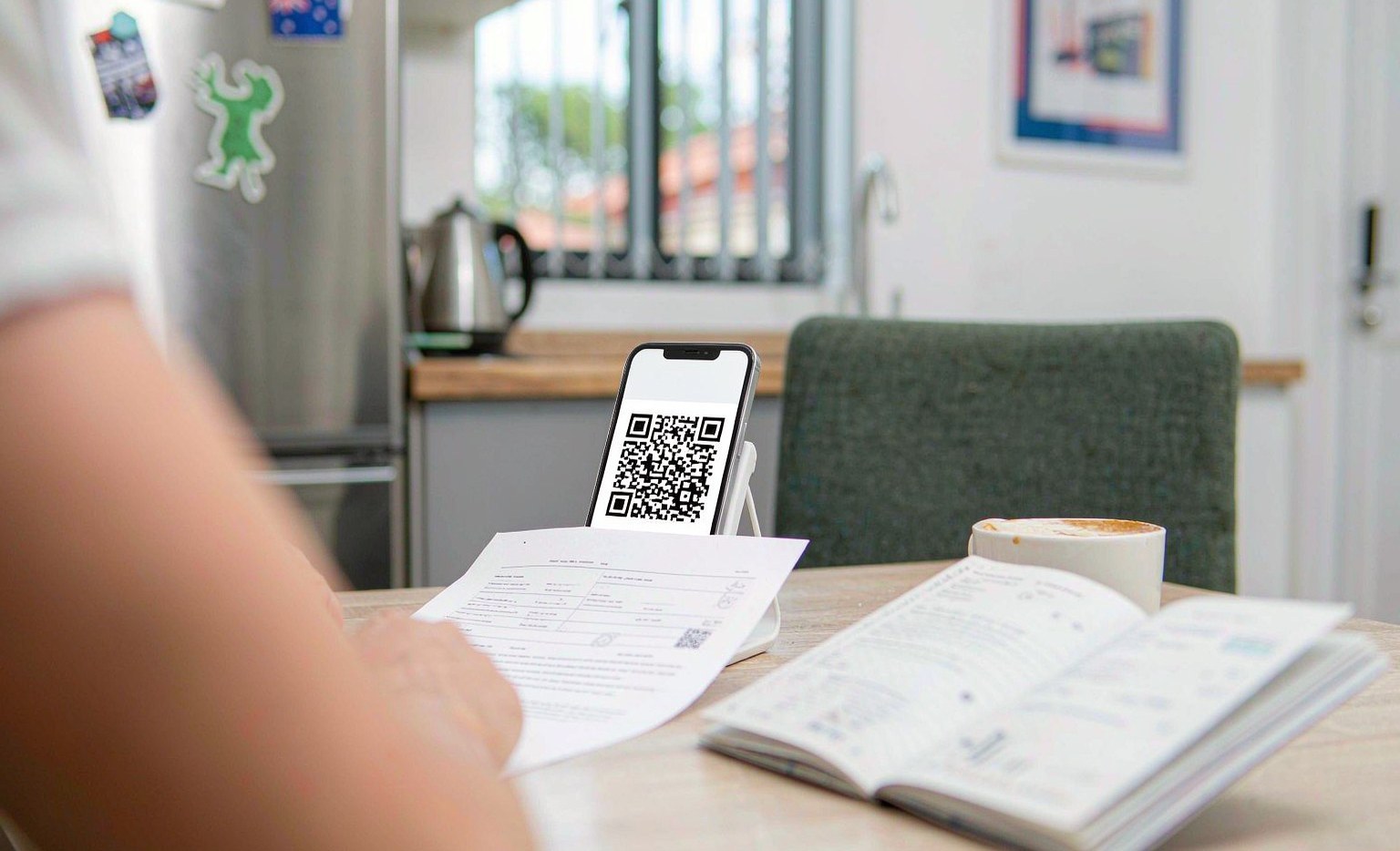
Yes. Boost sells an eSIM, every prepaid plan on its list supports one, and it runs on the full Telstra network — the same towers that cover more of the country than any other. That is the answer to the question most people arrive with, and it takes one sentence. The rest of this page exists because that sentence is not what anyone actually needs.
What people need depends on which of three groups they are in. If you already have a Boost number and want to move it onto an eSIM, you are doing an internal transfer inside your own account, and the whole job takes a few minutes in the My Boost app. If you are shopping for a plan and want to know whether the eSIM version costs more, it does not — the eSIM is the delivery method, not a product tier. If you are visiting Australia for three weeks and wondering whether a Boost eSIM is a sensible way to get data, the answer is almost certainly no, and the arithmetic further down explains why.
Those three answers point in different directions, so this page keeps them apart. The short version: Boost is the right product for someone who lives in Australia, and the wrong product for someone passing through.
Which Boost Mobile this is: Australia’s, not the American one
This matters more than it sounds, because the two companies share a name, a logo history and a founder, and nothing else.
Boost Mobile in Australia is a mobile virtual network operator running on the Telstra network. It began in 2000 as a youth-focused brand, moved onto Telstra’s network in 2013, and in December 2024 Telstra bought the business outright for A$94 million. It is now a Telstra subsidiary. Its plans are sold in Australia, for use in Australia, in Australian dollars, with support delivered through Telstra’s systems. Its coverage claim is the full Telstra network rather than the reduced wholesale version that most other small brands buy.
Boost Mobile in the United States is a different company owned by EchoStar, following the 2020 divestiture that let the Sprint–T-Mobile merger proceed. It runs on AT&T’s network. It has its own plans, its own app, its own pricing, and a free-trial promotion that the Australian business does not run.
Why does this matter to a search query? Because plenty of pages ranking for Boost eSIM content treat the two as one company, quoting American prices and describing an American app. If you are in Sydney reading a page that mentions a “free 30-day trial” and a plan that costs US$25, you are on the wrong page. Australia’s Boost does not run trials; it runs discount promotions — a plan advertised at A$59 with the first recharge reduced to A$45 is the shape those deals take.
There is a third wrinkle worth knowing. Boost is a brand of Telstra, which means Boost customer support routes through Telstra’s support systems. If you call Boost about a failed eSIM activation, you are talking to the same organisation that runs the network. That is usually an advantage. It also means the person on the phone may hand you Telstra’s standard eSIM script, which was written for Telstra retail customers and does not always match the Boost app’s menus.
The real price of a Boost Mobile eSIM, across 7 days, 28 days and a year
Boost Mobile eSIM plans are prepaid and tiered by expiry rather than by commitment, which is unusual enough in the travel-eSIM market to confuse people who arrive expecting monthly billing. There is no contract and no credit check. You buy a recharge, you get an allowance, and when it runs out or expires you buy another.
Prices below are from Boost’s own site in October 2026 and will drift; confirm before you buy.
| Expiry | Allowance | Price | Effective cost per GB |
|---|---|---|---|
| 7 days | 6 GB | A$14 | A$2.33 |
| 28 days | 8 GB | A$28 | A$3.50 |
| 28 days | 60 GB (first six recharges, then 30 GB) | A$39 | A$0.65 first cycle |
| 28 days | 75 GB | A$49 | A$0.65 |
| 12 months | 365 GB | A$365 | A$1.00 |
Two things jump out of that table, and both are worth understanding before you choose.
The short-expiry plans are the expensive ones per gigabyte. The 7-day starter exists for people testing the network or bridging a gap, not for value. If you are staying a fortnight, the 28-day 60 GB tier is about three and a half times cheaper per gigabyte than the 7-day tier, even though the headline number looks larger.
The 365-day plan is priced at exactly one dollar per gigabyte. That is not an accident; it is the whole product. Boost is selling certainty rather than volume — a year of service, paid once, with no monthly decision to make.
Note also what the plan price includes: the first recharge. When you buy an eSIM from Boost, you are not paying a separate activation fee on top. The number you see is what covers the first cycle. If you have read about a Boost “eSIM fee” somewhere, check whether the source is describing a replacement SIM in a store (a different transaction) or the American SIM kit — neither is the Australian eSIM purchase.
All plans include unlimited calls and texts to standard Australian numbers. The larger tiers add international calling to a list of destinations, with minute allowances that vary by tier. The 150 Mbps speed cap applies on 4G and 5G for some plans and is covered further down.
Why the 365-day plan exists, and who it is really for
Australian prepaid has a habit that surprises visitors: long-expiry plans. A year of service bought in one payment is a mainstream product here, not a niche one, and Boost’s 365 GB for A$365 is the clearest example.
The reason is demographic. Australia has a large population of people whose address changes and whose need for a monthly bill does not: seasonal workers moving between harvests, fly-in-fly-out workers on rotation, students here for a year, retirees travelling with a caravan, and anyone who simply resents a direct debit. For all of them, a plan that costs A$30 a month on paper but is paid once and cannot lapse is worth more than a cheaper plan that requires attention every 28 days.
This is also why so many people search for a long-expiry Australia eSIM and end up disappointed by travel brands. A travel eSIM is built around the opposite assumption: short validity, generous data, no local number, no expectation that you will still be using it in six weeks. If your actual requirement is “a number that stays alive for a year while I am in and out of the country”, no travel product will meet it, and the search results that promise otherwise are misreading the intent.
One detail that catches people on the 365-day tier: the allowance is large but the plan is still a prepaid product with a Fair Play policy and a speed cap. It is not a substitute for a home broadband connection, and using the allowance as a household connection will attract attention. For a phone, it is generous to the point of being excessive.
Buying it online takes ten minutes; the store takes an hour
The online purchase of a Boost Mobile eSIM is five steps long: pick a plan, choose eSIM as the SIM type at checkout, upload your identity document, pay, and receive a QR code by email. Four of those steps finish instantly. The fifth is where orders stall, and it stalls for unglamorous reasons.
Passport photographs fail on glare from a kitchen light, on a corner outside the frame, on an expiry date the system will not accept as proof. When the automated check rejects an image, the order drops into manual review, and manual review outside business hours waits until the next working morning. Ordering at eleven at night and expecting to be connected before a seven o’clock flight is a reliable way to start a trip disconnected.
The store route trades that uncertainty for queue time. A staff member performs the identity check in front of you, so a bad photograph is corrected on the spot rather than emailed about. The counter also catches the two other failures early: a handset still locked to another carrier, and a card the billing system declines.
Which route is faster comes down to one variable — whether your documents clear an automated check the first time. With a clean scan and an internationally accepted card, online wins by a wide margin. With either in doubt, the store removes the guessing, and an hour of queue is cheaper than a day of waiting.
The timing mistake to avoid. Boost’s expiry runs from activation rather than from purchase, and promotional offers carry their own activation deadlines — the deal running on their site at the time of writing names a date by which the eSIM must be activated. Buying early is fine. Activating early is not: a 7-day plan switched on the evening you land expires seven days later, and a 7-day plan switched on at home to “test it” expires before you have used a gigabyte.
Recharging, rollover, and whether your data survives the month
One rule governs whether a prepaid line in Australia feels generous or expensive, and it has nothing to do with the headline gigabyte count.
Rollover is conditional on timing. Boost rolls unused data into the next cycle if you recharge before the current one expires. Recharge late and the allowance is gone, along with the goodwill you felt about the plan. Set a reminder for the day before, not the day of, because a recharge that lands while the old cycle is closing out is a different transaction from one that lands after it has closed.
A 28-day cycle is not a month. Divide 365 by 28 and you get thirteen recharges per year, not twelve. On the A$39 tier that is A$507 annually rather than the A$468 people budget when they multiply by twelve, roughly eight per cent more than expected. It is not a trick, and every Australian prepaid brand does it, but it is the kind of detail that only surfaces on the twelfth month when the budget looks wrong.
The Fair Play policy is not aimed at you. Boost publishes one, as do the other Australian prepaid brands. Its purpose is to stop a prepaid line being run as an unmetered household connection — hundreds of gigabytes of tethering, resale, automated traffic. Normal phone use, including a few hours of tethering a laptop on a trip, does not come near it.
Letting a line lapse costs more than the recharge. If a prepaid line goes unused past expiry, the number is eventually reclaimed, and the Australian number attached to your bank, your lease and your employer’s payroll goes with it. Recovering it afterwards is not guaranteed. For anyone on a 12-month tier this is moot; for anyone on 28 days who travels home for two months, it is the reason the 365-day plan exists.
There is one more rule that surprises people who leave Australia for a while. A prepaid line kept alive only by occasional recharges, while the handset sits abroad, is not the same as a line in use. Recharging from overseas keeps the number alive but does not make it a domestic line again, and the arrangement is best treated as number-keeping rather than service.
Moving your existing Boost number onto an eSIM
This is the operation most people actually want, and it is genuinely quick. You keep your number, your plan and your recharge date; you change only the physical container.
Before you start, make sure you are on Wi-Fi and that the phone you are holding is the one you want the eSIM on. A transfer to eSIM cannot be undone remotely in the way a physical SIM can be swapped back, so a mistake here means a store visit.
In the My Boost Mobile app, the route is under Services. Open the service you want to change, scroll to the bottom, and choose Transfer or restore eSIM. The app then provisions a new eSIM profile to the handset and the physical SIM stops working. The alternative path, if you cannot find that menu, is Get help → select your service number → set up or manage eSIM, which walks through the same steps with more prompting.
Online, buying a new eSIM rather than converting an existing line means choosing eSIM as the SIM type at checkout, paying for the plan, and receiving a QR code by email. Scan it from the phone’s cellular settings. If you are activating on the same phone you are reading the email on, use the manual entry option instead of scanning — a phone cannot easily scan a code displayed on its own screen.
What happens to your number depends on which of those two things you did. Converting an existing line keeps the number, because nothing about the subscription changes. Buying a new eSIM plan gets you a new number, because it is a new subscription. People conflate these constantly, and it produces the most common complaint in Boost’s community threads: someone buys a fresh eSIM expecting their old number to follow, and it does not.
If what you actually want is to keep your number while changing carrier, that is a third operation entirely, called porting, and it sits under what a Boost eSIM cannot do.
Four ways a transfer fails, and what each error means
Boost’s own help pages cover the happy path. They are thinner on the four ways it goes wrong, which is why the same questions keep appearing.
The eSIM was already activated somewhere else. A Boost eSIM profile can only be installed once. If the QR code was scanned on an old handset — or scanned twice on the same handset during a failed attempt — the profile is spent. The fix is a reissue, not a retry, and reissues are not always instant outside business hours.
The phone is locked to another carrier. This is the failure that generates the most confusion, because the error message talks about the eSIM rather than the lock. A handset bought on a plan from another Australian carrier, or imported from a market where carrier locking is standard, may refuse to install a Boost profile. Check the handset’s lock status before blaming the eSIM.
The phone’s eSIM slot is occupied. Most recent handsets hold two active profiles. If you are already running a travel eSIM for data and a home line for calls, there may be no room for a third. Deleting a profile you still need is the usual mistake here; re-adding it later requires a new code from that provider.
The account and the identity do not match. Boost, like every Australian prepaid brand, is required to verify identity at activation. If the details on the new eSIM request do not match the account — a married name, a passport number typed differently, an address that has changed — the provisioning stalls without a clear message. This one is resolved by support rather than by retrying.
A fifth, less dramatic failure is worth listing because it looks like a network problem: the eSIM installs, shows signal, and passes no data. In nearly every case the data roaming toggle for that line is off, or the APN has not populated. Both are covered in our activation walkthrough, and neither indicates a faulty eSIM.
Check your phone before you start: EID, dual SIM, and the Australian iPhone question
Two minutes of checking saves the store trip.
Dial *#06#. If an EID number appears below the IMEI, the handset has an eSIM chip and can install a Boost profile. If nothing appears, it cannot, and no amount of app retrying will change that. Our device compatibility list covers the model-by-model detail, but the EID check is faster than any list.
The Australian iPhone question deserves its own paragraph, because it generates a specific and reasonable worry. Recent iPhone models sold in the United States have no physical SIM tray at all; models sold in Australia have generally retained one, which means a phone bought here can run a physical Boost SIM and a travel eSIM at the same time. Some of the thinnest recent models are eSIM-only in every market, so check the tray rather than assume it. If you bought your iPhone in Australia and it has a visible tray, you have both options; if it does not, you are eSIM-only and should plan accordingly. This is worth checking now rather than at the airport.
Dual SIM behaviour is the other thing to understand before you start. Running a Boost eSIM alongside a travel eSIM works, but the two lines do different jobs: the Boost line carries your Australian number for calls and verification texts, and the travel line carries data. Set the default data line deliberately — leaving it on the Boost line is how people burn through a domestic allowance in three days of roaming.
One more physical consideration: if you convert your Boost physical SIM to an eSIM, keep the old card for a week. It is dead, but the ICCID printed on it is sometimes requested by support when diagnosing a provisioning problem, and it is easier to read from the card than from an app.
Is a Boost eSIM any use to a visitor? Usually not — here is the arithmetic
A visitor can buy a Boost eSIM. What stands in the way is not eligibility but process, and the process does not shrink for a short stay.
Australian prepaid law requires identity verification. In practice that means a passport — a real one, in person or through an online flow that photographs it — and a payment method that the billing system will accept. Some foreign cards are declined. The whole sequence takes somewhere between twenty minutes and an hour if you walk into a store, and longer if the queue is bad or the staff member has not processed a foreign passport before.
Against that, price yourself a three-week trip. Boost’s 28-day 60 GB tier at A$39 is excellent value: far more data than a visitor needs, at a price no travel eSIM beats on a per-gigabyte basis. But the comparison is not really about data. A travel eSIM bought before departure costs a little more per gigabyte and skips the store entirely. On a 21-day holiday, the difference is a few dollars against half a morning of your trip.
Where the calculation flips is duration. Beyond roughly a month, or any trip where you need an Australian number for something concrete — a lease, a job, a bank account, a course — the local route wins, and it stops being close.
If you are visiting and want data rather than a number, the Australia plans page is the shorter path, and our network comparison for visitors explains what each carrier does differently for someone who does not live here. For the coverage half of the question — what signal you should expect outside the capital cities — the driving and regional coverage guide goes further than any carrier page will.
Boost’s $40 roaming pack against a travel eSIM, on a two-week trip
Here is the part of Boost that travel pages never mention, and it changes the answer for anyone who already has a Boost line.
Boost sells an international roaming add-on: A$40 for 14 days, usable across 42 countries, which works out under A$3 a day. For an existing Boost customer flying to Japan, Bali, the UK or the United States for a fortnight, that is a genuinely competitive product. It keeps the Australian number active, so bank codes and two-factor messages still arrive, and it removes the whole category of “which eSIM do I buy” decisions.
So why would anyone still buy a travel eSIM? Three reasons, and they are specific.
The countries list is not the world. Forty-two is a wide list and covers the obvious destinations, but if your itinerary includes a country outside it, the pack does nothing for you. Check the list against your actual route rather than the countries you might visit.
The daily economics stop working on a long trip. A$40 for 14 days is under A$3 a day. A$40 for 30 days is the same pack, and now you are buying two of them. Past about three weeks, a travel eSIM priced per gigabyte pulls ahead on cost — and considerably ahead if you use little data.
Speed and data allowance on roaming packs are not the same as the domestic plan. Roaming allowances are typically smaller than the headline domestic figure, which is fine for maps and messages and frustrating for anything heavier. Read the allowance, not the pack name.
A travel eSIM, by contrast, is built for exactly this use: it activates on arrival, it does not touch your Australian number, and it is priced for data. What it cannot do is receive an SMS on your Australian number, which is why the two products coexist rather than compete. Many people run both — Boost pack off, travel eSIM for data, Boost line alive for verification codes.
What the 150 Mbps cap means once you are actually using it
Boost caps download speed at 150 Mbps on 4G and 5G for some plans. In a market where 5G marketing talks about 500 Mbps and up, that number reads like a limitation. In practice it is not one for almost anybody.
Video streaming tops out well below it. A high-definition stream runs at roughly 5 Mbps; a 4K stream at 15 to 25 Mbps. A 150 Mbps ceiling carries four simultaneous 4K streams with room to spare. Video calls need 2 to 4 Mbps. Navigation, messaging and music are rounding errors. The cap becomes visible in one scenario only: large file transfers, where a 2 GB upload that might take two minutes on an uncapped connection takes four.
Where it does matter is perception during congestion. A capped plan and an uncapped plan on the same tower at 7pm on a weeknight will behave similarly, because the constraint is the tower, not the account. People who test once, see 90 Mbps, and conclude the cap is throttling them are usually measuring congestion.
For a visitor, the cap is irrelevant. For someone tethering a laptop to work, it is manageable but worth knowing about — and at that point the plan choice matters less than where you are standing.
Boost against Telstra, Optus and the other Telstra-network brands
Boost’s position is unusual: it is a discount brand that owns its own network infrastructure through its parent, and it resells that network at a lower price than the parent does.
Against Telstra retail: same towers, lower prices, thinner extras. Telstra’s own prepaid includes store support, more generous international calling on some tiers, and access to Telstra’s full product range. Boost gives you the network without the shopfront. If your need is data and calls, the network is what you are buying, and Boost is cheaper for it.
Against Optus and Vodafone: this is a coverage question more than a price question, and it depends entirely on where you will be. In the capital cities all three are strong. Outside them, the gap widens, and it widens fastest in the places people most want to go. Our carrier comparison page works through the speed data and the regional differences rather than repeating marketing claims.
Against the other Telstra-network brands: ALDI Mobile, Belong and Woolworths Mobile all ride Telstra infrastructure, but on wholesale terms with a smaller footprint than the full network. Boost’s claim to the complete Telstra network is its main structural advantage over those three. If you spend most of your time in cities, that difference will never show up. If you do not, it is the whole reason to pay Boost’s slightly higher prices.
Against a travel eSIM: different product, different buyer. A travel eSIM has no Australian number, no store, no identity check, and no expectation you will still be a customer next month. Boost has all four, which is exactly what a resident needs and exactly what makes it a poor fit for a two-week holiday.
If you are staying a year: when Boost beats a travel eSIM outright
Anyone staying long enough to need an Australian number should be on a local plan, and the question is only which one. Once that is settled, Boost becomes the easy recommendation for three overlapping groups.
Working holiday makers are the clearest case. The visa runs up to a year, employment requires a local number for rosters and payroll, and the 28-day 60 GB tier covers a month of normal use at A$39 with rollover if you recharge early. The catch is that a 28-day cycle does not align with a calendar month, so a year contains thirteen recharges rather than twelve — budget for it.
Students have the same need with a different pattern: heavy data in semester, light in breaks. The 12-month 365 GB tier removes the monthly decision entirely and averages A$30 a month, which is competitive against any student plan in the market.
Seasonal and remote workers get the most from the full-network claim. If the job moves you between regional towns, the wholesale-network brands will let you down in exactly the places you are sent. This is the one group for whom the coverage difference translates directly into money.
What all three have in common is that they will also travel — home for Christmas, a week in Bali, a long weekend in New Zealand. That is when the second product becomes relevant, and it is worth understanding now rather than at the airport: the Boost line stays on, a travel eSIM carries data, and the two do not interfere.
Where a Boost eSIM stops working
The list is short but each item causes real disappointment.
It cannot port a number by itself. Moving your existing Australian number from another carrier to Boost is a port, and ports require identity verification and are initiated by the receiving carrier. Converting your Boost SIM to an eSIM is not a port. Confusing the two is the single most common source of wasted afternoons in Australian prepaid.
It cannot be installed twice. One profile, one handset, one installation. Changing phones means a reissue through support, not a re-scan of the old code.
It cannot serve a number you have abandoned. If a Boost prepaid line goes unused past its expiry, the recharge lapses and eventually the number is reclaimed. An eSIM does not protect against that any more than a physical SIM does.
It cannot act as a home internet replacement. The Fair Play policy and the speed cap both exist for this reason.
It cannot roam without the add-on. Boost’s domestic plans are priced for use in Australia. Outside the country, they do nothing until you buy the roaming pack. This trips up visitors who assume any Australian eSIM works across the Tasman Sea — it does not, and our New Zealand page covers the other side of that trip.
It cannot be bought by someone who has not verified identity. There is no workaround, no gift purchase, no activation code that skips it.
Questions that come up before switching
Does Boost Mobile support eSIM on prepaid, or only on a plan? All of Boost’s prepaid plans are eSIM compatible. There is no separate eSIM tier and no surcharge for choosing it over a physical SIM.
Can I keep my number when I move from a Boost SIM to a Boost eSIM? Yes. That is an internal transfer on the same account, and the number, plan and recharge date all stay. Only the container changes.
How long does Boost eSIM activation take online? The provisioning itself is usually a few minutes. The variable is the order flow and payment verification, which can take longer if your card or passport triggers a manual check.
Why does my Boost eSIM show signal but no internet? In order of likelihood: data roaming is off for that line, the APN has not populated, or the plan has not been activated yet. Check the first two before contacting support.
Is there a Boost Mobile eSIM free trial? Not in Australia. The free-trial offer belongs to Boost Mobile in the United States, which is a separate company. Australian Boost runs discount promotions instead, where the first recharge is reduced.
Can I use a Boost eSIM in my iPad or watch? Boost’s eSIM product is built around phone plans. Whether a secondary device can hold its own number is a question for Boost rather than something to assume, and the answer has changed over time as the product line has moved.
Will a Boost eSIM work if my phone was bought overseas? It will if the handset is eSIM-capable and not carrier-locked. Imports from some markets are locked to the original carrier, and that lock blocks installation regardless of what the eSIM says.
Can I have Boost and a travel eSIM active at the same time? Yes, that is the normal arrangement for someone living in Australia who travels. Boost carries the number, the travel eSIM carries data abroad.
What happens to my Boost eSIM if I lose my phone? The profile goes with the handset. Contact support for a reissue; do not expect to recover it by reinstalling the app, because the eSIM is bound to the device’s chip rather than to the app.
Is Boost cheaper than Telstra for the same coverage? On prepaid data, generally yes, because you are buying the network without the retail layer. The trade is support depth and the extras bundled into Telstra’s own tiers.
Where this comes from. Product details — plan tiers, expiries, the 150 Mbps cap, the A$40 fourteen-day roaming pack, the app-based transfer flow, the identity requirement, and the inclusion of the first recharge in the plan price — reflect Boost Mobile’s own published material at boost.com.au as of October 2026, including its eSIM page. The ownership position (Telstra’s December 2024 acquisition of Boost Mobile Australia for A$94 million, and the separate American business under EchoStar) follows public reporting of the transaction and the two companies’ own corporate descriptions. The distinction between the full Telstra network and Telstra wholesale coverage is drawn from Telstra’s own wholesale documentation and from how the smaller brands describe their network access. Speed figures for streaming and calls are working figures used across the industry rather than measurements of any single network. Prices and plan terms change without notice; treat every number here as a starting point and confirm it on the carrier’s site before you pay.
The honest summary
Boost’s eSIM is not a complicated product. It is the same prepaid plan you would buy on a plastic card, delivered as a profile instead. That is the entire innovation, and for a resident it removes a genuine friction — no waiting for post, no shop, no card to lose.
The confusion around it comes from three collisions. There are two Boost Mobiles, and only one of them sells Australian plans. There are two different operations — converting your SIM and porting your number — that people describe with the same words. And there are two different buyers, the resident and the visitor, for whom the same product is respectively obvious and unnecessary.
If you live here, the arithmetic is straightforward. A 28-day recharge at A$39 for 60 GB, or A$365 once for a year, on the network with the widest reach, with an eSIM that installs in four minutes. The only decision worth deliberating is which expiry tier matches how you actually use a phone, and the answer is usually the one that requires the least attention.
If you are visiting, the arithmetic points elsewhere. The identity check, the store, the acceptance of a foreign card and the hour it costs are fixed, and a three-week trip cannot amortise them. Buy data before you fly, keep your own number alive for the messages that matter, and spend the saved morning somewhere you will remember.
Travelling to Australia rather than living there? Compare data plans that install before you board, and if the trip continues to New Zealand, the trans-Tasman coverage question is the next thing to sort.