A Chile SIM Card Is No Longer a Two-Minute Purchase

Roami Team
Roami offers reliable eSIM plans, serving over 1 million travelers annually, and supports automatic local network switching to help travelers stay connected globally.
📑 Table of Contents
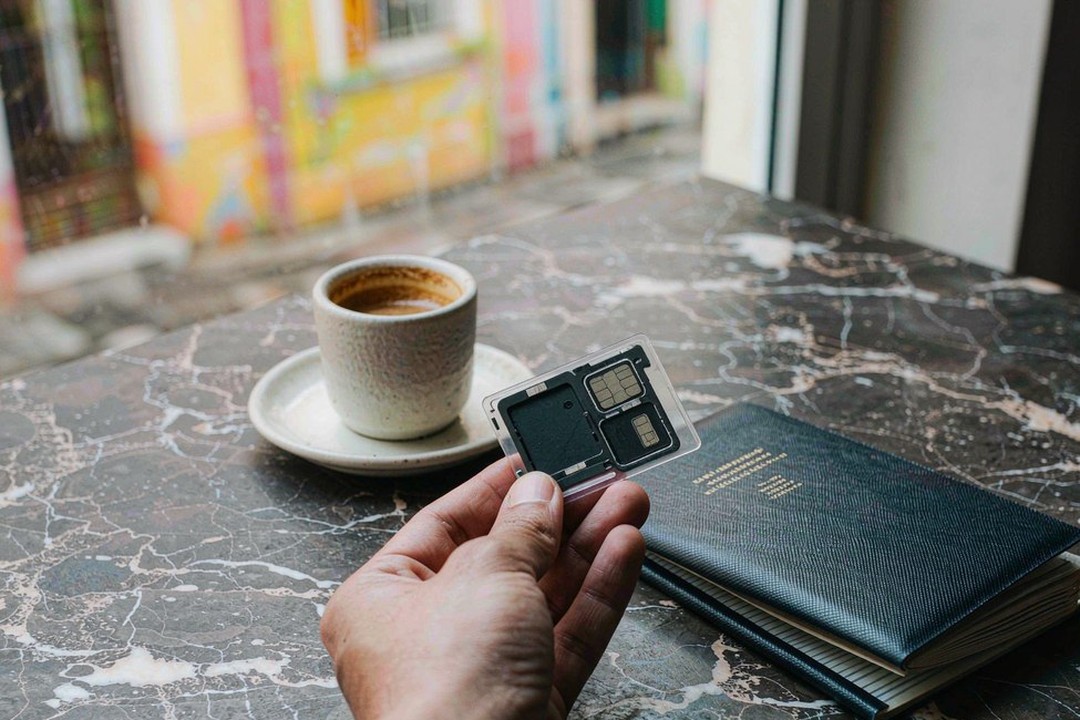
Buying a Chile SIM card used to be the easy part of arriving. It is now a procedure with three stages, and the stages arrived in a particular order that explains why older guides are wrong.
The first stage was identity. Since February 2025 every prepaid SIM sold in the country has to be activated with an identity check. The second stage landed on 20 August 2026 and closed the remaining gap: from that date a prepaid line has to be attached to a named person before it works at all, so an unregistered card will neither switch on nor accept a top-up. The third stage is a separate rule that has nothing to do with the card: a phone bought abroad that uses a Chilean carrier’s line has thirty days to be registered in the national equipment database or it can be blocked.
None of that is unreasonable. All of it takes time at a counter, in Spanish, with a passport in your hand. This page walks through the whole procedure — what the store asks for, what the pack costs in pesos, which carriers are easiest for a visitor, where the airport fits in, and what to do when the card will not activate.
The alternative route is a Chile eSIM, which is not a Chilean line and sits outside all three rules. That page argues its case; this one takes the local route seriously, because for some travellers it is still the right purchase.
A Chile SIM Card Now Begins With Your Face
The identity step is not a form. It is a biometric check, and it is the part that surprises people.
The sequence at an official store is roughly this. You hand over your passport. The staff member photographs the data page. You then complete a facial verification — a selfie taken through the carrier’s app or a store tablet — which is matched against the document. When the system clears, the line is activated.
Two practical consequences follow. The first is that a photograph of your passport will not do; the physical document is required, and it has to be the one you will carry. The second is that the biometric step sometimes fails, usually for lighting reasons, and a second attempt is normal rather than a sign that something is wrong.
The interfaces are mostly in Spanish, and the staff are usually helpful but not always patient with a traveller who does not read the language. Doing the process in a city store rather than a street kiosk is the difference between a fifteen-minute task and an hour of confusion, because kiosks frequently cannot complete a registration at all.
Why the rule exists is worth one sentence. Chile linked prepaid lines to identities to reduce fraud and extortion messaging, and the enforcement date in August 2026 closed the gap where unregistered lines kept working. That context matters because it tells you the rule is not a formality you can talk your way around.
What the Registration Asks For and What It Does Not
The list of documents is shorter than people fear, and the list of things it does not ask for is more useful.
It asks for a valid passport. For visitors from Argentina, Peru, Bolivia and a few neighbouring countries who enter on a national identity card, carriers vary: some accept the card, some want a passport, and the variation is per company rather than per law. If you are travelling on a card rather than a passport, ask before you queue.
It does not ask for a Chilean tax number. The RUT comes up constantly in forums, and the truth is more specific: some counters at some carriers ask for one, and a visitor cannot have one, so the transaction stalls. That is a store-level habit rather than a legal requirement, and the fix is to try another branch or another carrier rather than to argue.
It does not ask for a local address or a bank account. A hotel booking on your phone is enough if anyone asks where you are staying.
It does not ask for a deposit or a contract. Prepaid is prepaid.
What it does require is time. Fifteen to thirty minutes is realistic in a city store with a short queue. In an airport outlet on a morning arrival bank, an hour is realistic, and that is the argument for doing it later rather than sooner.
Which Carrier Will Sell a Visitor a Prepaid Line?
All four networks sell prepaid to visitors. They differ in how easy they make it.
Entel is the largest and the most used to visitors. Its tourist-oriented bundles are the ones most often quoted in guides, and its stores in Santiago and the coastal cities handle registration routinely. Its network has the best reputation for reach on the main highway south, which matters if you are driving.
Movistar sells a week-long bundle with a generous voice allowance — reported at 4 GB plus 400 minutes over seven days — which is the most voice-heavy option of the three big carriers. Its store process is comparable to Entel’s. The Movistar prepaid pages list current bundles, though the site is Spanish-only.
Claro undercuts the other two on headline data and has the widest retail footprint, which means the shortest walk from most hotels. Its week-long “unlimited” package carries a fair-use cap that matters, covered below. Claro’s prepaid section is where the current terms live.
WOM is the fourth network and the cheapest. It restructured through Chapter 11 in March 2025 and continues to operate under new ownership, selling aggressive prepaid bundles with a thinner rural footprint. Its prepaid catalogue is the one to read if price is the only criterion you care about. For a Santiago-only stay it is a legitimate budget choice; for a driving trip it is not.
The difference that matters for a visitor is not price. It is whether the store you walk into can complete a registration that afternoon, and the three big carriers can.
What Does a Tourist Pack Cost in Pesos?
The numbers here are small enough that the procedure matters more than the total.
The card itself costs a couple of thousand pesos — a range of roughly 2,000 to 5,000 pesos depending on the carrier and whether a bundle is included. Data bundles start around 2,000 pesos for the smallest. A week-long tourist bundle combining the card and a few gigabytes lands around 4,000 to 4,500 pesos at the carriers that publish one, sometimes with unlimited social media and a block of voice minutes included.
For a longer stay, a thirty-day bundle with twenty gigabytes sits near 8,000 pesos at the largest carrier. That is genuinely cheap per gigabyte by the standards of any developed market, and it is the strongest argument for the local route.
The complication is the exchange rate you actually get. Pesos are quoted locally, your card converts at whatever spread your issuer applies, and the result can move the effective price by a few per cent. On a purchase this small that is noise; on a family buying four cards it is worth knowing.
The other complication is validity shape. A thirty-day bundle bought for a nine-day trip wastes two-thirds of what you paid, and the waste is larger than the difference in unit price between the local pack and a travel plan sized to the trip. Buying the right duration matters more than buying the cheapest gigabyte.
Ask for a Chip, Not a SIM
The single most useful thing to know before walking into a Chilean store is that nobody there says SIM.
The word used in Chile is chip — un chip prepago. Asking for “una SIM” will usually be understood, because staff deal with tourists constantly, but the conversation starts easier if you use the local word. It is the same object: a plastic card with a punch-out that carries a prepaid line.
The second useful phrase is the intent rather than the product. Saying you want a prepaid line for a two-week stay, with data, gets you the tourist-shaped bundle rather than the cheapest resident bundle that expires in seven days with no data attached. Staff are generally good at this and will steer you to whatever the store currently sells to visitors, which may not be the bundle quoted in any guide.
The third is the request that saves the second visit: ask them to confirm data works before you leave. This is normal, takes two minutes, and catches the provisioning failures that otherwise surface in a taxi twenty minutes later. A staff member who tests it for you has also taken ownership of the problem.
What you should not do is buy from a street kiosk to skip the queue. A kiosk can sell you the plastic and usually cannot complete the registration, which produces a card that looks fine and never activates. The queue at an official store is the price of a working line.
Prepaid Versus Postpaid, and Why Visitors Should Not Sign Up
Stores will occasionally offer a postpaid plan because the monthly price looks better. For a visitor this is the wrong instrument for three reasons that are not about money.
Postpaid requires a Chilean tax number, a credit check and a contract in your name. A visitor has none of those, and a passport will not substitute for the tax number at the contract stage even though it works fine for prepaid.
Postpaid also runs on a billing cycle rather than a validity window. A plan signed on the 25th bills on the 1st, and cancelling requires either a store visit or a process you cannot complete from abroad. Travellers who sign up for a twelve-month contract to get a cheaper handset bundle discover this the expensive way.
The third reason is the one that matters after you leave: a postpaid account in your name keeps accruing obligations until it is formally closed, and closing it from another country is the kind of task that turns into a debt collection letter six months later.
Prepaid is the only sensible product for a stay under a few months. It costs a little more per gigabyte, it ends when the balance ends, and it creates no ongoing relationship. That is exactly what a visitor wants.
What Happens If You Lose the Card or the Phone?
Replacement is possible and is a different procedure from the original purchase, which is worth knowing before it happens rather than during.
A lost chip is replaced at a carrier store with the same passport, and the balance usually transfers to the new card because the line is attached to your identity rather than to the plastic. This is the one place where the registration requirement works in your favour: a registered line is recoverable in a way an anonymous one never was.
A lost or replaced phone is a bigger problem on the local route. The line is fine, but the new handset is a new device, and if you are past the thirty-day mark it needs its own Multibanda registration before it can use a Chilean line. That is a second administrative task, and it is the reason long-stay travellers should photograph their registration confirmation and keep it somewhere retrievable.
The travel-plan route behaves differently. A profile deleted from a lost phone cannot be reinstalled without a transfer, and most providers do not offer one on the same purchase. That is the single strongest argument for keeping the QR code email in a place you can reach from a borrowed device.
Either way, the recovery plan should exist before the trip. A printed QR code in a bag, or a screenshot in a cloud folder, costs nothing and converts a disaster into an inconvenience.
Do You Need a RUT to Buy a SIM Card?
The RUT is Chile’s tax identification number, and it surfaces in this process in a way that wastes afternoons.
Some counters ask for one. A visitor does not have one and cannot get one, so the transaction stops, and the traveller concludes that foreigners cannot buy SIM cards here — which is wrong, and which is how a lot of the contradictory advice online gets written.
The accurate version: a passport is the document the rules recognise for a foreign visitor, and most staff know it. A counter that insists on a RUT is applying a habit from serving residents. The workarounds, in order of effort: try a different branch of the same carrier; try a different carrier; go to a mall store rather than a street kiosk; and if all of that fails, buy a travel eSIM instead of spending a second afternoon on it.
There is a related trap worth mentioning. Some resellers advertise a “tourist line without RUT” and charge a premium for handling the registration. Since registration is free and legal with a passport, you are paying a middleman to do a fifteen-minute task. It is not a scam, but it is not a shortcut either.
The Thirty Days That Decide a Long Stay
This is the rule that gets over-dramatised in one direction and ignored in the other, and both are wrong.
How it works: thirty calendar days after a foreign handset first connects as a local subscriber, its IMEI has to be on the national equipment register or the handset loses access to the networks. The filing costs nothing and can be done once a year per device. Because it follows the handset rather than the card, moving a SIM to a different phone starts a fresh clock on that phone.
For a two-week trip the clock never runs out and the rule is irrelevant. For a working holiday, a semester, or a stay that quietly becomes two months, it is a twenty-minute administrative task that is far easier in week one than in week five.
The exemption is the part most guides miss. International roaming is not subject to the requirement, and a travel eSIM is roaming by construction — no Chilean number, no contract with a Chilean company. So the rule applies to the local-card route and not to the travel-plan route, which is a real distinction rather than a marketing one.
The practical decision: if you are staying under a month, ignore it entirely. If you are staying longer, decide whether you want a Chilean number badly enough to spend an afternoon on two separate registrations — the line and the device.
Timing the Visit: When the Queue Is Short
The registration takes fifteen minutes. The queue can take an hour, and the queue is the part you can plan around.
Mall stores keep mall hours, which means they open late morning, stay open through the afternoon, and trade on Sundays. Standalone street stores generally follow office hours, often close for a long lunch, and are commonly shut on Sundays. For a traveller arriving on a weekend, the mall is the reliable option and the street store is a gamble.
Mid-morning on a weekday is the quietest window almost everywhere. The lunch period is the worst in standalone stores and fine in malls, because the two keep different schedules. Late afternoon on a Friday is the worst of all, for reasons that have nothing to do with tourists.
The second timing question is your own. Buying a Chile SIM card on arrival day means doing it with luggage, jet lag and a queue of people who arrived on the same flight. Buying it on the second morning means doing it fresh, in a store near your accommodation, with no car waiting. The card costs the same either way, and the second version takes half the time.
There is a third option that costs nothing: buy the card on the day you actually need it. A first night spent on hotel wifi needs no mobile data at all, and starting the validity clock on the morning you pick up the rental car buys you real days.
Lunch Closes More Counters Than Weekends Do
Opening hours are the detail that wastes the most afternoons. Mall-based stores stay open through the evening and shut on public holidays; stand-alone branches on a shopping street often close for lunch between one and three, which is exactly when a visitor with a free afternoon turns up. Check the branch page before travelling across the city.
Airport Counters and What the Guides Disagree About
Published advice on buying a card at Santiago’s international terminal contradicts itself, and the contradiction is worth explaining rather than papering over.
One set of guides describes counters in the arrivals hall selling tourist packages from around fifteen dollars, staffed and open. Another states plainly that you cannot buy a SIM at a Chilean airport at all and that you should take the bus into the city. Both are describing the same airport at different times and possibly different terminals, which means availability is not something to build an arrival plan around.
What is consistent is the gap between the two purchase points. A tourist pack bought airside runs to about fifteen dollars; the same volume from a store in the centre costs a few dollars. Whether that premium is worth paying depends entirely on the hour you land and whether anything else is open.
What is also consistent is that carrier stores in the city handle registration properly, while convenience stores and pharmacies usually cannot. Buying a card from a supermarket because the queue was shorter is how people end up with a plastic rectangle that will not activate.
A last detail: the airport’s own wifi is good enough to complete an online purchase if you arrive without anything. That is the fallback that works regardless of whether a counter is open.
The Coverage Question the Counter Cannot Answer
A store will happily explain which network it sells. It cannot tell you whether that network reaches the places you are going, because the person behind the counter has never driven your route.
This matters more in Chile than in most markets because the country is long and thin and the roads between the interesting places run through country with one site per valley. The network with the deepest rural footprint holds a usable signal on most of the main highway south; the cheapest network does not, and the difference shows up as an hour of silence rather than a slow connection.
The counter’s limitation is structural rather than dishonest. Staff sell what their employer operates, and no carrier publishes a map that says “our competitor is better on this road”. The honest method is to look at a coverage map yourself, at the layer that matters — the low-band 4G layer rather than the 5G one — and to compare it against your actual route rather than against the country as a whole.
The second thing the counter cannot answer is the wholesale question. A Chile SIM card from any of the four carriers is a direct connection to that carrier’s network, which is the one clear advantage of the local route: there is no middleman deciding which towers you use. Travel plans buy wholesale access and the network underneath varies by provider, which is why the provider comparison spends more space on networks than on prices.
Anyone who wants the local route for its directness should pick the carrier whose map matches their route, not the one with the shortest queue.
Ten Gigabytes Is Where Claro’s Week Ends
The word unlimited in Chilean prepaid is a term of art, and the terms are where it gets undone.
One large carrier sells a week-long unlimited package with a 10 GB fair-use cap, after which the connection drops to 128 Kbps. That is not a data connection in any useful sense — it will load a text message and it will not load a map. A second carrier steps down to 512 Kbps on what its terms call excessive use, which is more usable but still a different product from the one the poster advertised.
None of this is dishonest. The terms state the cap. The problem is that the marketing page states the word, and travellers buy the word.
The practical translation: on the local route, buy a fixed-data bundle rather than an unlimited package unless the price difference is trivial. A fixed bundle ends, visibly, and then you buy another one. An unlimited package ends invisibly, at a speed you did not choose, usually on the day you needed it.
The same logic applies on the travel-plan side, where the better-value products are fixed allowances with a top-up path. The instrument that tells you where the end is beats the instrument that hides it.
Getting Chile Internet Without a Local Card
Ask about cheap Chile internet and the answers split three ways, which is why the question keeps getting asked.
The first route is a travel eSIM, installed before departure, data-only, riding a local network. It needs no registration, gives no Chilean number, and works from the moment the plane lands. It is the route this site sells, and it is also the route most competitors sell, which is why the category is crowded and the differences are mostly about which network sits underneath.
The second route is international roaming on your home plan. It works, it requires nothing, and it is expensive unless your plan includes a regional bundle. Worth checking before you buy anything: several European and Gulf plans include Chile, and a traveller who owns one of those should buy nothing at all.
The third is public and commercial wifi, which in Chile is better than most visitors expect. Santiago’s cafés are set up for people working from them, hotel wifi is generally reliable, and the metro has coverage on platforms. It is not a substitute for a data plan on a driving trip, and it is entirely sufficient for a two-day city stop where the phone only needs to summon a taxi.
The Chile internet market is unusual in one respect: all three routes are viable, and the choice is about paperwork tolerance rather than about coverage, because they all end up on the same four networks.
Wi-Fi in Santiago Is Better Than You Expect
The wifi point deserves its own section because it changes the arithmetic for short stays.
Santiago’s café culture is a working culture. Independent coffee shops in Providencia, Ñuñoa and Lastarria are full of people on laptops, the networks are sized for it, and nobody minds if you sit for two hours. Hotel and apartment wifi is generally what you would expect in a capital city, which is to say adequate for video calls and unreliable for large uploads.
The metro is the exception. Platforms have coverage on the newer lines and patchy signal on the older ones, and the tunnels are a gap on all of them. If you are relying on wifi rather than data, the underground is where the plan fails.
Where this changes the decision: a two-night stop in Santiago with a hotel booking and a couple of restaurant reservations needs almost no mobile data. Four days with day trips to Valparaíso and a wine valley needs data, because the interesting parts are between towns. Match the purchase to the itinerary rather than to the trip length, because a long trip spent in cities can need less data than a short one spent driving.
What Happens When the Card Will Not Activate
The failure modes are specific and mostly diagnosable without going back to the store.
The card is registered but the line is not provisioned. This looks like a card with no service. Staff usually fix it in two minutes, which is why testing before you leave the counter is worth the extra five minutes.
The phone is carrier-locked. A handset bought on contract elsewhere will accept the card and refuse to register on a Chilean network. No store can fix this; it needs the original carrier.
The APN is missing. Some Android builds need a manual access point name. The store can supply it, and the carrier’s website publishes the values.
The device is waiting on Multibanda. If you are past thirty days and unregistered, the block is on the device rather than the card, and changing cards will not restore service.
The bundle expired before use. Prepaid bundles count validity from purchase or activation depending on the product, and a pack bought on day one for a trip that starts on day ten may already be half spent.
The diagnostic order is the same as everywhere: which line has the bars, is roaming on, is the APN right, is the balance real. Most of it can be settled in a car park in five minutes.
The APN Values That Fix Most Silent Lines
A line that activates and moves no data is usually an access-point setting rather than a network problem. The value is the operator name in lower case, with the same string as the user name where the form demands one. Copy it from the operator page rather than guessing, and restart the handset afterwards.
Keeping the Number After You Leave
A Chilean prepaid number survives absence for a limited period, and the limit is the thing people discover too late.
The line stays alive while there is activity or balance, and it stops being recoverable when the carrier reclaims the number — which happens after a period of dormancy that varies by operator and is not published as a promise. For anyone planning to return within a few months, a small top-up before departure is cheaper than restarting the process.
The complication is that topping up from abroad usually requires a Chilean payment method, or a reseller who charges a fee. That is the hidden cost of keeping a local number: it is cheap to hold while you are in the country and mildly annoying to hold from outside it.
For most visitors this is irrelevant, because the trip ends and the number does not matter. It matters for the specific group who arrive on a long stay, leave for a month, and come back — and for them the answer is to top up before the flight rather than to hope.
Paying With a Foreign Card or Cash
Most operator stores take an international card, and some terminals refuse one without warning, which is a queue lost for nothing. A few thousand pesos in cash covers the card and the first top-up and removes the variable entirely. Withdraw before entering the store rather than discovering the problem at the till.
Tourist Pack Against a Travel Plan: The Afternoon Is the Price
Put the two options side by side honestly and the difference is not really money.
The local pack is cheaper per gigabyte, often by a wide margin, and comes with a Chilean number and voice. Its cost is an afternoon: finding an open store, queuing, a passport scan, a face check, a Spanish-language app, and a small chance of being asked for a tax number you do not have. For a long stay that afternoon is amortised over weeks and the local route wins clearly.
The travel plan is more expensive per gigabyte and has no number and no voice. Its cost is a few minutes at home before departure. For a ten-day trip the difference in total spend is small, and the difference in arrival experience is not.
The deciding question is not price. It is whether you need a Chilean number — for a bank, a delivery, a landlord, a landline — and whether you are staying long enough that the afternoon is worth amortising. A third consideration tips it further: the thirty-day device clock only starts on the local route, so a long stay adds a second registration to the same afternoon.
Anyone who wants the detailed version of the alternative can read the Chile eSIM guide, which covers the arrival sequence, the data sizing and the settings that break in the first hour.
Buying for a Family or a Group
Four people do not need four cards, and this is where the local route gets awkward rather than expensive.
Each prepaid card needs its own registration, which means four passport scans and four face checks — a forty-minute procedure rather than a fifteen-minute one, in a store with one counter and a queue behind you. Carriers do not offer a family registration, and there is no way to register one card and share it legally.
The practical arrangement for a family is one local card in one phone, used as a hotspot, with everyone else on wifi where available. That works, and it concentrates the registration to one transaction. The limitation is the same as anywhere: one device is one point of failure, and a phone doing hotspot for four people will flatten faster than a car socket refills it.
The travel-plan version of the same arrangement is one larger fixed-data plan shared through a hotspot, which is cheaper than four plans and skips the registration queue entirely. For a family arriving at midnight with children, that is usually the deciding argument.
What Gets Asked at the Counter, and What Nobody Mentions
Can I buy a card with a photograph of my passport? No. The physical document is required for the biometric check, and a photo will not pass.
Do I need a Chilean address? No. A hotel booking is enough if anyone asks.
Will the store staff speak English? Sometimes. In Santiago and the coastal cities, often enough. The forms and apps are in Spanish regardless.
Can I buy at a supermarket? You can buy the plastic. You usually cannot complete the registration, which means the card will not activate.
Is the card reusable on a later trip? Only while the line is alive. Top up before you leave if you intend to return within a few months.
What if I only need two days of data? A travel plan or airport wifi is the better purchase. The registration afternoon does not amortise over two days.
Does a local card work in Argentina? No. Prepaid lines are domestic. Crossing the border needs a second purchase or a regional plan.
Whether You Should Bother
The local route is worth the afternoon in three cases: you are staying more than three weeks, you need a Chilean number, or you are travelling in a group where one person can absorb the queue while the others wait with the bags.
It is not worth the afternoon in the common case. A ten-day trip with a car and a phone that needs maps, messaging and a booking app is served better by a plan bought before departure, sized to the trip, on a network you checked in advance. The comparison of providers is the place to choose one, and the single-brand review covers the middle of that market in detail.
What is worth doing either way is the thirty-second handset check. Band 28 and voice over LTE decide whether any of these purchases work outside a city, and no card, plan or provider fixes a radio that cannot hear the band the country runs on.