The Egypt SIM Card, Bought at a Counter in Twenty Minutes

Roami Team
Roami offers reliable eSIM plans, serving over 1 million travelers annually, and supports automatic local network switching to help travelers stay connected globally.
📑 Table of Contents
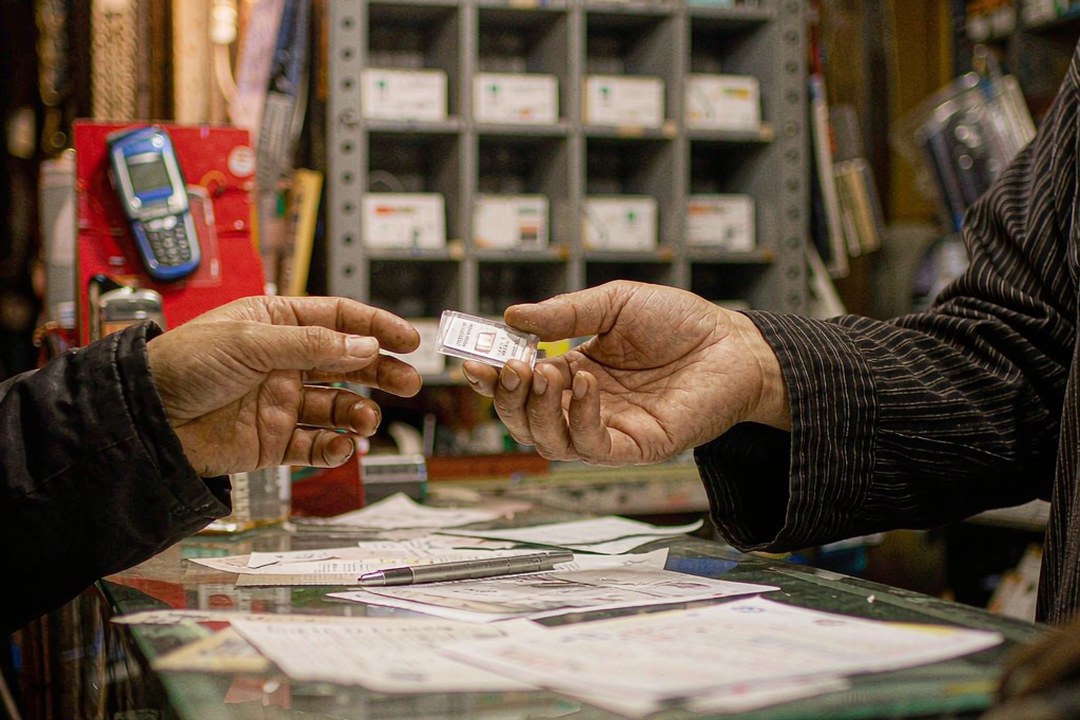
Buying an Egypt SIM card is the cheapest data decision in the country and the most paperwork-heavy twenty minutes of the trip. Those two facts sit together and explain why the advice online splits so violently: the people who did it tell you it is trivially cheap, and the people who tried at the wrong hour tell you never again.
Both are describing the same product. What changed is the procedure around it. A tourist line now needs a passport, a registration against the handset, and a bundle activated before the card will carry a single megabyte, and the shops that do it well are not the shops most travellers walk past.
This page is the counter, step by step, with prices in pounds, the exact questions you will be asked, and the three points where the purchase goes wrong. If you have not yet decided whether to buy at a counter at all, the main eSIM page for Egypt works through that decision first.
A Tourist SIM in Egypt Is a Product With Its Own Name
The thing to ask for is not a SIM card. It is a tourist line, and the distinction is commercial rather than technical.
Every operator sells prepaid lines to residents, and those require residency documents that a visitor does not carry. The tourist line is a separate SKU created for the visa-holding market: it is registered against a passport rather than a national identity number, it usually bundles some local and international minutes with the data, and — the detail that surprises people — it is often cancelled automatically when the visa expires.
Vodafone Egypt is the operator most associated with the product, and its tourist line bundles data with local and international minutes. Orange and e& sell equivalents at their airport and city counters. The names differ by operator; the shape does not.
The phrase that works at a counter is “tourist line”, said clearly, at a counter that sells lines rather than top-ups. Anyone asking for an Egypt SIM card in general terms will usually be offered the resident product and then asked for documents they do not have. A kiosk selling scratch cards cannot issue one, and a supermarket that sells SIM cards often cannot register one either.
That mismatch explains what a search for sim card egypt turns up. The results are retail pages selling a card, and what you need at the counter is a registration — a different transaction, done by a different clerk, in a shop that has the paperwork. Asking for the card and hoping the registration happens alongside it is the single most common way this purchase stalls.
What the Clerk Actually Asks For
Four things, in this order, and knowing them in advance is the difference between five minutes and twenty.
A passport, the physical document. Not a photograph, not a scan on a phone. The number goes into the registration and the document is usually inspected against the face in front of it.
An entry category. Some branches want proof of how you entered — an e-visa, a visa stamp, sometimes an onward ticket. This is the requirement most often missed, and it is the one that sends people back to the hotel for a piece of paper.
An address. A hotel name and district is normally enough. It is entered against the line, which is why the hotel booking confirmation on your phone is worth having open.
The phone’s IMEI. The identification number of the handset, not of the card. It is entered against the registration, it is what starts the device clock discussed below, and it is the reason handing over a friend’s phone to do the purchase is a bad idea.
Nobody asks for a local tax number, a residency permit, a bank account or a deposit. An Egypt SIM card bought on a tourist line is a short document and four questions. None of those appear in a tourist line purchase.
The IMEI Line Nobody Warns You About
The registration of the handset is the part of this purchase with consequences beyond the shop, and it deserves a paragraph of its own.
Egypt registers imported phones by IMEI. A tourist line records yours and starts a ninety-day exemption per stay; inside that window nothing is owed and nothing happens. Past it, an unregistered device can be cut off from all Egyptian networks, and the amount owed is a percentage of the phone’s Egyptian market value — reported in the high thirties — paid through a government app by card, wallet or bank.
Three practical consequences follow, and they are the reason this matters even if you intend to stay a fortnight.
The clock is on the handset rather than the card, so swapping cards does not reset it. It is unclear from public sources whether the ninety days restart on each visit or accumulate across them, which means anyone who returns often should check the device’s status rather than assume.
The fee is calculated on the phone’s value rather than on what you paid, so a second-hand flagship can carry a larger exposure than its price suggests.
And the exemption is per stay, so an itinerary that leaves Egypt for Jordan and comes back is a new stay with a new clock — usually a help, occasionally a surprise.
For a short trip none of this bites. For a long stay it argues for doing the registration properly rather than hoping the counter forgot to enter it.
Four Operators, Four Different Tourist Products
The four networks sell similar things at similar prices, and the differences that matter are coverage and the shape of the bundle.
Vodafone Egypt is the market leader with the widest reach and the most polished tourist product. Its bundles include local and international minutes, the counter staff are used to passports, and the coverage argument for choosing it is strongest on the river and outside the cities. That last point is the whole case for paying a few pounds more here rather than shopping.
Orange Egypt is strong in Cairo, Alexandria and the tourist zones, slightly cheaper, and the network most international brands ride. Its tourist bundles are published with tax included, which makes the headline easier to compare than some competitors’. If your trip is cities and a cruise, Orange is a defensible choice and often a faster queue.
e& Egypt, formerly Etisalat, is the budget challenger with generous minute bundles and, unusually, a long-validity option that runs to ninety days. For a stay of six weeks that structure is the most useful thing on the market.
WE, the state operator, is the cheapest and the thinnest, and its published bundle prices exclude tax — a detail that makes its headline look better than the total at the till. Its tourist bundles are the lowest headline price in the country and its coverage outside the cities is the weakest of the four — a trade that makes sense for a week in one place and very little sense for a moving itinerary.
For the operator-level detail — who owns whom, which network wins which measurement — the carrier reference page has it without the counter procedure.
What Thirty Gigabytes Costs in Pounds
Prices move with promotions and exchange rates, and branches vary, so treat these as the shape of the market rather than a quotation.
Vodafone’s tourist ladder has been reported at roughly 255 pounds for ten gigabytes over thirty days, 505 pounds for thirty gigabytes with 200 local and 30 international minutes, and 866 pounds for thirty-nine gigabytes. Orange sits around 155 pounds for five gigabytes and 505 for thirty. e& has been reported at 350 pounds for ten gigabytes with a large minute bundle, and 525 for twenty gigabytes valid up to ninety days. WE’s entry bundles are the cheapest on the market and start well under a hundred pounds for small volumes.
Two structural notes that explain the shape of those numbers.
The card itself is nearly free — a bare prepaid SIM has been sold for 85 pounds, and the branch will insist on an initial package on top, which brings a simple purchase to somewhere between 120 and 150 pounds. The value is entirely in the bundle, which is why the clerk’s first question is about data volume rather than about the card.
And validity is the variable that decides value. A thirty-day bundle bought for a twelve-day trip wastes eighteen days, and the ninety-day options only make sense for long stays. On per-gigabyte terms this is one of the cheapest markets in the world; what the travel brands charge for is arriving connected, not the data itself.
The Bundle Is the Price, Not the Card
The most expensive mistake in this purchase is buying the card and leaving without a bundle.
Megabytes bought outside a bundle are the expensive way to own data here. The largest prepaid brand’s overage rate has been quoted near 0.19 pounds per megabyte, which turns a map refresh into a line item and an evening of ordinary scrolling into something close to the price of a bundle. Nothing warns you: bars stay full, pages still load, and the credit drains quietly between two glances at the screen.
Which is why the sequence at the counter matters: the line is issued, the bundle is attached, and only then does the phone leave the counter. Ask what the total is for both, not for the card, and ask what the bundle’s validity is in days rather than in words.
There is a workable check that takes ten seconds and catches most of this. Dial the operator’s balance short code — Vodafone’s is *6060# — before walking away. If it reports a data balance in megabytes or gigabytes, the bundle is live. If it reports a cash balance only, the bundle did not apply and the queue was wasted.
Airport Counter Against City Branch: The Same Product, Twice the Price
The airport is the most convenient place to buy and the worst value, and the gap is larger than for most products.
A tourist bundle bought inside the terminal runs to a multiple of the city price for the same volume. That is not a scam; airport concessions pay for the position and the staff are there at three in the morning. But it means the airport purchase should be evaluated as a convenience purchase rather than as a data purchase.
The rule that follows is simple. If you land with working data, the terminal is a place to buy water. If you land with nothing, the counter is worth the premium and paying it is the right decision rather than a failure of planning — a working connection on the first evening is worth more than the difference.
Two operational details. Counters take cards, but foreign cards are refused often enough that carrying a little local cash is prudent. And the queue is a function of how many wide-body arrivals landed in the same hour, which is not something you can plan around — only something you can avoid by buying before you fly.
Why Are There Two Queues at the Counter?
A branch visit is two queues stacked on top of each other, and the second one is the reason people give up.
The visible queue is the till: eight people ahead, one clerk doing registrations on a terminal that seems to require three confirmations per field. It moves at the speed of the slowest customer, and the slowest customer is usually a visitor with a question.
The invisible queue is the provisioning system behind the counter. A registration entered at 14:00 may activate in two minutes or in forty, and nothing the clerk does makes it faster. This is why a purchase that looks finished at the till can produce a phone with no data an hour later, and why the counter test — load a page before leaving — is worth more than any receipt.
One practical consequence: a branch visit is not a five-minute errand, whatever the guide said. Budget half an hour, do it once, and do not attempt it on the way to a timed ticket entry.
Asking for a Tourist Line and Getting a Regular One Instead
This happens, and it is worth recognising while it is still fixable.
A regular prepaid line sold to a visitor will usually work, and it will be registered against the passport rather than a residency document because that is what the clerk has in front of them. What differs is the product: the bundle structure is aimed at residents, the validity may be different, and the line may behave differently at renewal.
The tell is in what the clerk asks for. A tourist line purchase is passport, address and IMEI. A resident product asks for a residency document, and if the conversation moves toward “do you have an address proof” then the wrong SKU has been reached.
The fix is to ask again for the tourist line by name, and if the branch does not stock it, to try another branch. Operators do not distribute every product to every shop, and the airport counters and the larger city branches are the ones that reliably carry the visitor product.
What the Registration Form Actually Records
It helps to know what is being written down, because the form explains both the questions and the ninety-day clock.
Three identifiers go in. The passport number, which ties the line to a person. The handset’s IMEI, which ties the device to the national equipment register. And the address, which in practice is a hotel name and district rather than a verified residence.
The bundle is attached to the line rather than to the handset, which is why moving the card to a second phone does not carry the registration with it. And the line’s own expiry is tied to the entry category in many branches, which is where the automatic cancellation at visa expiry comes from.
What the form does not record is anything about your home carrier, your travel profile, or the phone’s physical condition. It is a short document, and the queue is a function of how many of them the branch can process in an hour rather than how long yours takes.
Why the Line Must Be Activated Before You Walk Away
The second most common failure is a card that is registered but not provisioned — the line exists on paper and carries nothing.
Two things can be true at once here. The registration can be complete while the line is still pending activation on the operator’s side, and that gap resolves in minutes or in hours depending on the branch. The symptom is a phone that shows the operator’s name and no data, and the diagnosis is not on your phone.
Which is why the check belongs at the counter rather than at the hotel. Ask the clerk to confirm the line is active, then load a page on the phone in front of them. Two minutes at the counter removes the possibility of an evening spent troubleshooting something you cannot fix.
If the data does not come through despite an active line and a live bundle, the next thing to check is the access point name. A line that attaches and moves nothing is usually pointing at the wrong one, and the value is the operator’s name in lower case. It is a two-field fix that reads as a network outage until you have seen it once.
The Postpaid Contract Nobody Asked For
Some branches will offer a monthly contract instead of a prepaid tourist line, and it is the one upsell in this transaction worth refusing.
The pitch is reasonable on its face: a larger allowance, a subsidised handset, a monthly price that looks close to the prepaid bundle. What it requires is proof of financial capacity — a utility bill, a driving licence, sometimes a local bank account — and what it creates is a contract with a minimum term attached to a person who is leaving the country.
The prepaid tourist line exists precisely to avoid that. It has no term, no credit check and no cancellation process, and when it stops being useful it expires.
If the conversation moves toward a contract, the answer is one sentence: prepaid tourist line only. That is not a negotiating position, it is the category of product you came in to buy.
What Happens When the Bundle Does Not Come Through
Three failures cover nearly every dead line, and each has a different remedy.
Registered, not provisioned. The line exists and nothing flows. This is a branch problem rather than a phone problem, and the remedy is to go back or call the operator. It is the reason the counter test exists.
Bundle never attached. The card works, the balance is cash, the data is out-of-bundle at a punishing rate. The remedy is to buy the bundle again, deliberately, and confirm the balance afterwards.
Wrong APN. The line attaches and no data moves. The remedy is a manual entry, and the operator’s own site publishes the value.
Notice that none of the three is solved by buying another SIM, and two of the three are solved in under five minutes by someone who knows the order. The temptation to walk into a different shop and start again is strong and usually the most expensive option available.
The Paper You Leave With Is the Warranty
The receipt is not proof that you own a line. The registration is. But the receipt carries the three things you will need if anything goes wrong later, and it is worth photographing before it goes into a pocket.
The line’s own number, which is often not obvious because the tourist product may issue a number that differs from what the clerk wrote on the card sleeve. The bundle name and its validity in days, which is what a dispute turns on. And the branch or terminal where the purchase happened, because the operator’s support will ask.
One habit worth adopting: photograph the receipt and the registration slip together, on the counter, before leaving. The photograph is in your camera roll offline, which matters precisely in the hour when nothing else works.
What the Data Runs Out To on One Network
Unlimited-style prepaid bundles are sold by every operator and they are not all the same instrument, and one network’s behaviour is unusual enough to be worth naming.
WE’s tourist bundles have been described as continuing after the allowance rather than stopping, at a reduced speed. That is a friendlier failure mode than a hard cut, and it is also a different product from what the phrase “unlimited” usually means — a slow connection that still loads messages rather than a connection that ends.
The other three throttle at a stated threshold or stop. The threshold is in the bundle detail rather than the shop’s poster, so the question to ask is what happens at the limit rather than how much the limit is.
For a trip built on maps and messaging, a connection that survives at reduced speed is genuinely useful. For a trip where someone intends to work, it is not a connection, and the fixed-volume bundles are the more honest purchase.
Keeping the Number for the Next Visit
A prepaid line survives while there is activity or balance, and a returning visitor can usually keep the same number by topping up before it lapses.
Whether that is worth doing depends on the interval. A gap of a few months is usually fine with a small top-up; a gap of a year is usually not, and the number is reissued. The travel line’s own terms are the ones to check, because the tourist product is often cancelled at visa expiry by design — which is exactly the wrong behaviour for a repeat visitor.
For anyone who returns regularly, the more durable arrangement is a regular prepaid line registered properly, with the phone’s registration handled once. That is a residency-shaped purchase rather than a tourist one, and it is the point where the local route stops being a holiday convenience and becomes infrastructure.
Buying for Two: Four Passports, One Queue
A group purchase is four separate purchases, and the queue does not get shorter.
Every line needs its own registration, which means every traveller’s passport and every traveller’s handset, in person or represented by someone holding both. Doing it for a family of four at an airport counter is a twenty-minute transaction in the best case and a much longer one at a busy hour.
Two configurations work. The first is one line per adult, with the children on a hotspot, which halves the paperwork and is fine for a week. The second is one line with a large bundle and a second as backup, which is cheaper still and fails more completely when it fails.
What does not work is buying four lines at a counter and discovering at the hotel that two of them were never provisioned. The counter test — load a page on each handset before leaving — is the only thing that scales to a group.
What the Phone Must Support Before You Queue
Three checks, and one of them is specific to this purchase rather than to travel generally.
The phone must be unlocked. A handset bought on an instalment plan is locked to the network that sold it, and a local Egyptian card will be rejected exactly as a travel profile would be.
It must have a free SIM slot, or support eSIM. Some recent handsets sold in the United States have no physical slot at all, which makes a plastic card impossible and a carrier eSIM the only local option — and that option requires an identity document a visitor does not have.
It must handle the bands. Egypt runs standard GSM and LTE bands that almost every recent handset covers, and the 5G layer uses spectrum that recent phones support. An older or single-market import is the case worth checking, and the compatibility list is the fastest way.
If You Arrive After the Shops Close
Late arrivals are the scenario where the counter plan collapses, and it is common enough to plan for.
Airport counters at Cairo, Hurghada and Sharm el-Sheikh operate around the clock in principle and thin out in practice, and a 03:00 arrival can find one counter open with a queue and the others shuttered. City branches keep office hours, mall branches keep mall hours, and a public holiday closes both.
The fallback that works costs nothing: a transfer booked in advance rather than a kerbside taxi, a screenshot of the hotel address in Arabic, and the terminal’s free network for the ten minutes it takes to confirm the driver. That covers the arrival without a single megabyte of mobile data.
A third option deserves a mention because it is now the cheapest one available on arrival day: a travel profile bought on the plane’s wifi, delivered as a QR code, installed before passport control. It arrives with tethering included on most fixed plans and a published fair-use line on the unlimited ones. Better, it solves two things the local line cannot: voice calls over WhatsApp and other VoIP apps, which are commonly throttled on a locally registered Egyptian SIM, and the fact that nothing about it depends on a counter’s opening hours.
The other fallback is the one this page exists to make unnecessary. A travel profile installed before the flight does not care what time the shops close, and it is the reason the counter plan should be a choice rather than a necessity.
There is a middle path that costs almost nothing and that experienced travellers use: land on a cheap travel plan bought for the first two days, and buy the local line on day three, in the city, at a branch that is not a queue of arriving flights. The travel plan covers the arrival, the local line covers the rest of the trip, and both purchases happen at a sensible hour. The extra cost is a few dollars for the short travel tier, and it buys the one thing a five-hour flight takes away: patience.
Six Phrases That Shorten the Conversation
Counter staff in tourist areas speak enough English to complete a sale, and the conversation still goes faster in fragments. None of this needs to be pronounced well; it needs to be recognisable.
Tourist line is the product name and the first thing to say. Data bundle and a number of gigabytes is the second. How many days establishes validity, and the answer is a number rather than a word. Passport is understood everywhere, and holding it up ends the question. Activate now is the one that matters most, because it asks for the provisioning step rather than the sale. And balance gets you a short code and a number on a screen.
What to avoid is a full sentence. A counter transaction is a sequence of nouns and numbers, and a visitor who opens with a paragraph gets a paragraph back — usually a helpful one, occasionally a different product.
What the Counter Cannot Tell You About Coverage
The person selling you a line knows the price list and the registration form. They do not know whether the network holds on the stretch between two towns, and asking will produce an answer that reflects loyalty rather than measurement.
The coverage question that matters is geographic and it is answerable in advance. On the river itinerary, signal follows the water well for most of the route and thins between towns. At the coast, the resorts sit in areas all four networks cover. In the cities, every network is fast and the difference is invisible.
Three specifics the clerk cannot supply. The line will not fall back into roaming onto a rival network when a competitor’s signal is stronger; it stays on its own operator until you leave the country. The 4G layer behaves differently on the Nile between Luxor and Aswan than it does in either city, because the towers follow the towns rather than the water. And the Red Sea coast is a capacity question in the evening rather than a coverage question at noon, while Giza and the museum district are the opposite — dense capacity, thin patience, and no reason to care which operator you chose. What the branch does have a rule for is the refund on an unused bundle, which is worth asking about before you pay rather than after.
Which means the counter conversation should be about volume and validity, and the coverage decision should have been made before you walked in. If it was not, the safest default on a moving itinerary is the operator with the widest reach, and the price difference is small enough that guessing is unnecessary.
The Bundle You Will Actually Use
Local bundles are sold in sizes that assume a resident, and a visitor’s consumption sits at the bottom of that ladder.
A four-night city trip uses under two gigabytes. The smallest bundle most operators sell is five, sometimes ten, and buying the smallest available is still buying four times what the trip needs — which is fine, because the price is so low that the waste is irrelevant. The mistake is buying the largest bundle because the per-gigabyte rate is better, and then carrying twenty unused gigabytes home.
The two itineraries where the big bundles earn their place are the river, where eight to twelve gigabytes disappear over ten days, and the coast, where a resort network with a weak signal turns the phone into the connection. Both are cases where the local route’s volume advantage is also a coverage advantage, because the operator with the widest reach sells the largest bundle at the lowest rate.
One further detail that decides value more than volume: the minute bundles. Tourist lines in this market routinely include local and international minutes, and for a traveller who needs to ring a hotel, a driver or a guide, those minutes are the part of the product the travel brands cannot match at any price.
The Afternoon Priced Against a Travel Plan
Put the two routes on the same page and the trade becomes arithmetic rather than ideology.
A travel plan for a two-week trip runs somewhere between fifteen and thirty-five dollars depending on brand and volume, arrives before you fly, and needs no paperwork. A local bundle of comparable volume costs a fraction of that in pounds, plus an afternoon.
The afternoon is the price. It is a queue, a passport, an IMEI entry, a bundle activation, a counter test, and the risk of one of those steps going wrong in a language you do not speak. On the day you land, after a long flight, that is a poor use of the only hours you have.
Where the arithmetic reverses is length of stay. At a month the local route is not a compromise but the obviously correct answer, because the volume is four times larger and the price difference becomes a real number rather than a rounding error. The crossover arithmetic sets out where that point sits and why it moves with the trip.
What People Ask While Waiting
Can I buy with a photograph of my passport? No. The physical document is checked, and a photograph is refused often enough that it is not worth queueing with one.
Do I need a visa stamp to buy? An entry category is usually required — a visa, an e-visa confirmation, sometimes an onward ticket. Carry whatever proves how you entered.
Can someone else buy it for me? Only with your passport and your handset, because both are registered. A friend cannot buy a line in your name.
Is the card itself expensive? No. The card is trivial; the bundle is the purchase, and a branch will insist on selling you one.
Will it work in a second phone? The card will, the registration will not follow it, and the device clock starts again on the new handset.
Can I keep the number? While there is activity or balance, usually yes. The tourist product is often cancelled at visa expiry, which is the catch.
How long does it take? Ten minutes at a quiet branch, forty at a busy airport counter, and the difference is entirely the queue rather than the paperwork.
Is there a cheaper hour? Mid-morning on a weekday is the quietest window at city branches. Airport counters have no quiet hour, because their traffic is flight arrivals rather than local habits.
Two lines on one passport? Frequently yes, and the second line still needs its own registration and its own handset IMEI. Ask before queueing for the second one.
Whether You Should Bother
Three cases, and they are the only ones where the counter is clearly right.
You are staying more than three weeks. The volume argument becomes decisive, and the ninety-day exemption covers the usual stay. This is the case where an Egypt SIM card stops being an errand and starts being the obvious purchase.
You need an Egyptian number. A restaurant you will book repeatedly, an apartment, a course, a work contact, a delivery. No travel profile produces a +20 line, and no amount of data substitutes for one.
You are travelling with a group and need to share a large allowance cheaply. The per-gigabyte economics of a local bundle at thirty gigabytes are not close to anything a travel brand sells.
Everything else — a city break, a river cruise, a fortnight at the coast — is a trip where the travel profile wins on time, and where the afternoon at the counter buys nothing except a number you will not use. The six brands compared is where to choose between those profiles, and the Vodafone page is where to go if the network you want is specifically that one.