Germany eSIM for Oktoberfest, Christmas Markets and Bundesliga
Roami Team
Roami offers reliable eSIM plans, serving over 1 million travelers annually, and supports automatic local network switching to help travelers stay connected globally.
📑 Table of Contents
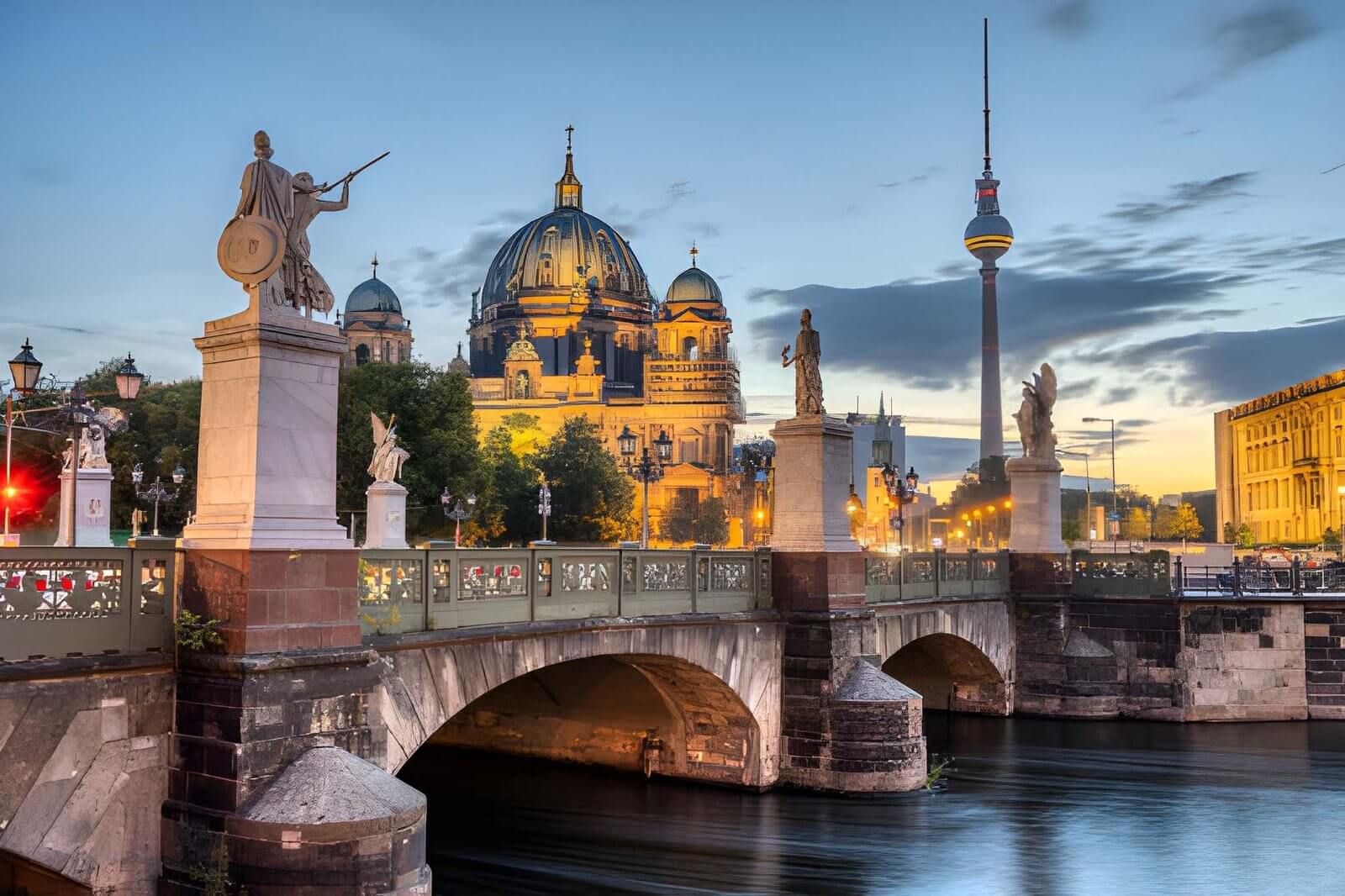
Marienplatz in Munich sees peak crowds of 40,000+ during Glockenspiel performances, Oktoberfest draws 6 million attendees over 16 days, and the Cologne Cathedral plaza operates at or near mobile network capacity for hours at a time during peak tourist season. These concentrations create demand spikes that a standard single-carrier eSIM often cannot handle. An eSIM with automatic switching between Telekom, Vodafone, and O2 adapts to whichever network has spare capacity at your location. For event-focused travel, a Germany data eSIM with multi-carrier access ensures you maintain a reliable connection even when networks are under peak load.
Germany travel connectivity depends on understanding how different locations stress mobile networks in different ways. Missing a train connection because your navigation stalled, losing a restaurant reservation confirmation when your data dropped out, or failing to access your boarding pass at a busy airport are all avoidable with the right preparation. For the broader picture of mobile coverage across the country, the overview provides the full overview of networks, coverage zones, and provider comparisons.
Why Event Destinations in Germany Need Reliable eSIM Data
Key takeaways: An eSIM with automatic switching between Telekom, Vodafone, and O2 adapts to whichever network has spare capacity, so it handles event crowds far better than a standard single-carrier eSIM. Roami connects you to whichever carrier has the strongest signal at your current location rather than locking you to a single network, while Airalo’s Germany plans run on O2 only. Deutsche Telekom maintains the strongest network in Bavaria and eastern Germany, while Vodafone is strongest in the densely populated west and O2 offers the most competitive pricing. For data, a seven-day trip visiting three to four cities needs a 10 GB plan, while a two-week trip is better served by 15 GB to 20 GB.
Tourist hotspots in Germany see concentrated demand on local mobile infrastructure. The Brandenburg Gate area in Berlin, Marienplatz in Munich, and Cologne Cathedral square each draw thousands of daily visitors who rely on their phones for navigation, communication, and sharing their experiences. When every person in a crowd is uploading photos, checking maps, and messaging simultaneously, network capacity becomes a limiting factor.
The Capacity Challenge at Major Landmarks and Transit Hubs
The capacity gap at popular landmarks. A typical urban mobile tower handles routine neighborhood traffic well, but tourist concentrations create demand spikes that exceed normal provisioning. The area around Brandenburg Gate sees its highest data demand between late morning and early evening, when tour groups, sightseers, and commuters overlap. The same pattern repeats at Marienplatz with its Glockenspiel crowds, at the Cologne Cathedral plaza, and along Berlin’s Unter den Linden boulevard. During peak tourist season, these locations operate at or near network capacity for hours at a time.
Transit hubs compound the demand. Berlin’s major U-Bahn stations, including Alexanderplatz, Friedrichstraße, and Hauptbahnhof, handle hundreds of thousands of passengers daily, many of whom use their phones while waiting for trains or navigating connections. The mobile infrastructure in these underground stations relies on distributed antenna systems that have finite capacity. When a train arrives and releases a platform-load of passengers all checking their phones simultaneously, the brief demand surge can slow connections noticeably.
How Travel Seasons Affect Network Demand
Travel seasonality matters. Germany’s peak travel periods create predictable patterns of elevated demand at popular destinations:
- Summer holidays (July to September): Highest international tourist volumes to cities like Berlin, Munich, Hamburg, and Cologne.
- Easter break: Drives domestic travel to city centers and cultural sites.
- Christmas shopping period (late November through December): Concentrates domestic visitors in pedestrian zones and shopping districts.
During these periods, the combination of higher visitor numbers and increased data usage puts sustained pressure on urban mobile networks. The official Germany Tourism portal provides visitor information for all major German cities, which is useful for understanding peak visitation times at specific destinations.
Managing Network Congestion with a Germany eSIM in City Centers
Germany’s most visited cities each have their own connectivity profile shaped by geography, infrastructure age, and visitor patterns. Understanding these differences helps you prepare for the conditions you will actually encounter.
Berlin: Distributed Demand Across a Sprawling City
Berlin’s tourist attractions are spread across a large metropolitan area, which distributes network demand more evenly than in more compact cities. The Brandenburg Gate, Reichstag, Museum Island, and East Side Gallery each draw significant crowds, but rarely simultaneously. The city’s mobile infrastructure benefits from modern investment driven by its role as the capital, with Deutsche Telekom, Vodafone, and O2 all maintaining strong urban coverage. The primary challenge in Berlin is underground connectivity in the U-Bahn system, where tunnel sections between stations can drop connections entirely. Using offline maps downloaded before descending into stations ensures you maintain navigation capability when signals weaken underground.
Munich: High Density in a Compact City Center
Munich’s central attractions are concentrated in a relatively small area around Marienplatz, the Viktualienmarkt, and the Residenz. This concentration means thousands of visitors share the same mobile towers throughout the day. Deutsche Telekom maintains the strongest presence in Bavaria, and its Munich infrastructure is the most robust of the three carriers for handling concentrated demand around Marienplatz and the pedestrian zones extending from it. The busiest hours at Marienplatz coincide with the Glockenspiel performance at 11:00 AM and noon, when the square fills with tourists all capturing the moment on their phones.
Cologne: The Cathedral’s Signal Shadow
The Cologne Cathedral (Kölner Dom) is the city’s dominant structure and its central tourist attraction. The cathedral’s massive stone construction creates a signal shadow effect: mobile signals are blocked on the side facing away from the nearest tower, and reflections off the stone surfaces create pockets of variable signal strength. Visitors standing at the cathedral’s south side may experience different connectivity than those at the north entrance. The adjacent Hauptbahnhof adds further network demand from travelers passing through. Moving a short distance away from the cathedral walls typically improves signal quality, and an eSIM with automatic network switching can shift between carriers to find the strongest available signal in this environment.
Key Factors That Affect Your Experience in Crowded Areas
Three factors determine your experience in crowded city centers:
- The carrier you are connected to — each carrier has different tower density and placement in each city. The Deutsche Telekom 5G coverage page shows street-level 5G availability across German cities.
- The generation of network technology — 5G networks generally handle dense crowds better than 4G LTE because they support more simultaneous connections per tower.
- Your device’s modem quality — newer flagship phones generally maintain connections better under challenging signal conditions than older models.
Services like Roami address all three factors simultaneously by offering automatic network switching between Telekom, Vodafone, and O2. Unlike Airalo which uses O2 only, Roami connects you to whichever carrier has the strongest signal at your current location. Roami also provides 24/7 real human customer support to help resolve any connectivity issues while you are exploring crowded venues.
Best Germany eSIM Setup for Oktoberfest, Christmas Markets and Multi-City Travel
A multi-city Germany trip is standard for international visitors. A typical itinerary might start in Berlin, take an ICE train to Hamburg or Cologne, continue to Frankfurt or Munich, and potentially add day trips to nearby destinations. Each city introduces new network conditions, local coverage patterns, and data demands shaped by specific activities in each location. For the two biggest city stops, the Berlin and Munich city guide covers apps, coverage quirks and data sizing.
Carrier Selection for Multi-City Travel
Carrier selection for multi-city travel. Germany has three primary mobile networks:
- Deutsche Telekom: The most extensive network nationwide, with particular strength in southern Germany including Bavaria. Its coverage density in Munich is the best of the three carriers, and its rural and rail corridor coverage is strongest overall.
- Vodafone: The best balance of coverage and speed in most German cities, with particular strength in the densely populated west including Cologne, Dusseldorf, and the Ruhr region.
- O2: Has improved significantly but remains the most variable option, with strong urban coverage but more gaps outside city centers.
How automatic network switching helps: Most Germany eSIM providers assign you to a single carrier based on their commercial agreements. An eSIM with automatic network switching continuously evaluates signal quality across available networks and moves your connection to the strongest one as you move between cities. This happens in the background without interrupting your active sessions. When you travel from Berlin, where all three carriers perform well, to a smaller city where one carrier has weaker infrastructure, your connection shifts seamlessly.
Network Comparison for Event Travel
| Carrier | Oktoberfest (Munich) | Christmas Markets (City Centers) | Bundesliga Matchdays | ICE Train Corridors |
|---|---|---|---|---|
| Telekom | Strongest in Bavaria | Excellent 5G at Christmas markets | Good stadium coverage | Best rural rail coverage |
| Vodafone | Good 5G capacity | Strong in pedestrian districts | Official partner at some venues | Competitive on major routes |
| O2 | Adequate in urban areas | Variable in crowded zones | Limited during peak times | Weakest on long-distance trains |
Data Requirements and Plan Recommendations
Data requirements for multi-city trips:
- A typical day of city exploration with navigation, photo sharing, messaging, and occasional social media uploads: 300 MB to 800 MB.
- Adding video calls, streaming, or heavy social media activity: 1 GB to 1.5 GB per day.
- For a seven-day trip visiting three to four cities: a 10 GB plan provides comfortable coverage.
- For a two-week trip covering more destinations: 15 GB to 20 GB is appropriate.
Estimated Data Usage by Event Type
| Activity | Data per Hour | Typical Duration | Total per Event Day |
|---|---|---|---|
| Navigation & maps | 50-100 MB | 2-4 hours | 100-400 MB |
| Photo & video sharing | 150-300 MB | 1-2 hours | 150-600 MB |
| Messaging & social media | 30-80 MB | 3-5 hours | 90-400 MB |
| Live streaming (Bundesliga) | 500 MB-1 GB | 2 hours per match | 1-2 GB per match |
| Video calls | 500 MB-1.5 GB | 0.5-1 hour | 250 MB-1.5 GB |
For a detailed comparison of providers available for Germany travel, the provider comparison guide breaks down the differences between carriers, data models, and pricing tiers.
Germany eSIM Connectivity Between Cities on ICE Trains
German high-speed rail, operated by Deutsche Bahn, is the primary mode of inter-city travel for many international visitors. Connectivity on ICE trains has improved significantly over the past five years but remains variable depending on the route, terrain, and train model.
How ICE Train Connectivity Works
Deutsche Bahn has equipped its ICE fleet with onboard signal repeaters that amplify mobile signals from trackside towers into the train carriages. These repeaters work with all three German carriers. The system uses multiple antennas on the train roof to maintain connections as the train moves between tower coverage areas. Modern ICE trains, particularly the ICE 4 series introduced from 2017 onward, have the most advanced onboard connectivity systems. The official Deutsche Bahn website provides route planning and real-time information about onboard services including Wi-Fi availability across the ICE fleet.
Route-Specific Networks and Coverage
Connectivity varies significantly by route:
- Berlin to Munich high-speed line: Extensive tunnel sections through the Thuringian Forest where connectivity drops completely for several minutes at a time.
- Cologne to Frankfurt high-speed line: Multiple tunnel sections with similarly interrupted coverage.
- Hamburg to Berlin route: The most consistent coverage of the major corridors, crossing flatter terrain with fewer obstructions.
- Frankfurt to Cologne stretch: Passes through the Siebengebirge hills, where signal quality fluctuates as the train navigates curves and elevation changes.
Practical Strategies for Staying Connected on ICE Trains
Practical strategies for staying connected on ICE trains:
- Use train Wi-Fi as a supplement to your Germany eSIM rather than a replacement.
- For tasks requiring consistent connectivity (navigation, booking changes), rely on your eSIM — train Wi-Fi can become congested during peak travel periods.
- Choose an eSIM with automatic network switching to shift between Telekom, Vodafone, and O2 as conditions change along the route.
- Download entertainment content, maps, and offline resources before departure to avoid streaming during the journey and preserve your data for when you arrive.
Data Usage During Train Travel
A three-hour ICE journey between Berlin and Frankfurt typically uses 200 MB to 500 MB of data for browsing, messaging, and light streaming. Reviewing restaurant options for your destination, checking museum opening hours, and confirming hotel reservation details are common data uses during the approach to a new city. Planning these data-dependent tasks for when you have both eSIM and train Wi-Fi available provides the best reliability.
Germany eSIM Battery and Signal Considerations on Long Days
A full day of city exploration in Germany, from breakfast through dinner, keeps your phone in constant use. Navigation, photos, messaging, and transit app usage accumulate throughout the day, and battery and signal management determine whether you stay connected until you return to your accommodation.
Managing Battery Life Across a Full Travel Day
Lithium-ion batteries degrade in capacity under sustained high drain. A phone used continuously for navigation, photography, and communication over 12 to 14 hours of active tourism typically requires a midday charge:
- A 10,000 mAh power bank provides enough reserve for two to three full phone charges.
- Carrying your own power source is more reliable than relying on finding outlets at coffee shops or restaurants.
- Many German cafes will let you charge while you order, but this should be a backup option, not your primary strategy.
Network switching and battery impact. An eSIM with automatic network switching continuously evaluates signal quality, which adds a small overhead to battery consumption. In practice, this overhead is negligible, typically less than 5 percent of daily battery usage, and is far outweighed by the benefit of maintaining a usable connection in variable signal conditions. Most modern phones manage this background scanning efficiently.
Signal Considerations in Different Urban Environments
Dense city centers with tall buildings create multipath signal reflections that can cause connection instability. The historic districts of German cities, particularly in Munich’s Altstadt and Berlin’s Mitte district, have narrow streets and stone buildings that can block or degrade signals from specific towers. Moving a few meters in any direction, stepping out of a building’s shadow, or moving away from a group of people all using their phones simultaneously can improve connectivity noticeably. Understanding that signal quality is not static but changes with your physical position helps you troubleshoot slow connections without assuming a network-wide problem.
Preparing for Connectivity Variability
- Download offline maps for the cities you plan to visit through Google Maps or Apple Maps before departure.
- Save your hotel address, reservation confirmations, and key contact information to local storage.
- Load the Deutsche Bahn Navigator app with offline timetable data to access train schedules without a data connection.
Short-Term Germany eSIM Plans: 3 to 7 Day Options
International visitors to Germany often travel for concentrated periods. A long weekend in Berlin, a week-long trip covering multiple cities, or a short business trip all call for connectivity plans that match the trip duration without paying for unused validity.
Why Short Validity Periods Matter for Pricing
- eSIM pricing is not linear with respect to time. A 30-day plan costs roughly the same as a 7-day plan from most providers because data allowance is the primary cost driver.
- Some providers offer genuinely short-duration plans at proportionally lower prices for 3, 5, or 7 days of coverage.
- For travelers attending one or two events in Germany, a short-validity Germany eSIM provides just enough coverage without paying for unused days.
Comparing Short-Term Provider Options
Comparing short-term eSIM options for Germany. The Germany eSIM market has expanded significantly, and visitors now have a range of options:
- Germany-specific eSIMs with 3 GB, 5 GB, and 10 GB data allowances and validity from 3 to 14 days are ideal for most tourist itineraries.
- Plans with automatic network switching across all three German carriers are valuable for travelers moving between cities.
- For travelers visiting neighboring countries, a Europe-wide eSIM on a single plan offers the most flexibility.
Activation Timing and EU Roaming Benefits
- Purchase and install the Germany eSIM profile before leaving home.
- Activate it on your departure date or when you land in Germany — this flexibility eliminates wasted days of validity.
- For the best experience, activate your eSIM as you board your flight or arrive at the airport to ensure maximum validity coverage for your travel days.
The price comparison provides a comprehensive breakdown of costs per GB across different providers and plan tiers, which is particularly useful for short-term visitors optimizing their spending.
EU roaming regulations and Germany travel. Germany is part of the European Union’s “Roam Like at Home” framework:
- Any Germany eSIM providing EU coverage works seamlessly across German borders.
- Travelers spending time in neighboring countries (Austria, France, the Netherlands) can use the same eSIM without additional configuration.
- The fair use policy limits high-volume data roaming across borders, but the limits are high enough that typical travelers never encounter them.
Germany eSIM Data Demands at Oktoberfest Tents and Stadium Crowds
Event days stress a connection in ways ordinary sightseeing does not. Inside a packed beer tent or a sold-out stadium, thousands of phones compete for the same cell sectors, so raw signal strength matters less than how much spare capacity the operator has at that exact location. A Germany eSIM that can move between Telekom, Vodafone and O2 gives you three chances to find that spare capacity instead of one — which is precisely when automatic switching earns its keep.
Plan your data around the surge moments: uploading photos and short videos right after you arrive, live-messaging friends to regroup inside the grounds, and pulling up maps and transit schedules on the way out. If your plan supports it, downloading the day’s tickets and offline maps while still at the hotel keeps those tasks off the congested network entirely.
Germany eSIM Setup Guide for Event Travelers
Setting up an eSIM for Germany travel involves a few specific steps. The time-sensitive nature of travel means connectivity issues need resolution quickly, and a properly configured eSIM prevents problems before they arise.
Pre-Travel Configuration and Device Compatibility
- Purchase your eSIM at least three days before departure to allow time to resolve any issues.
- Install the eSIM profile on your phone before leaving home while you have a stable Wi-Fi connection.
- Set your phone’s data line to the eSIM and configure your home SIM for voice and SMS only.
- Ensure that iMessage or WhatsApp is registered with your preferred number before departure, as changing these settings abroad can delay message delivery.
Device compatibility verification: Most modern smartphones support eSIM. Verify your specific device model supports eSIM before purchasing:
- iPhone: XR and XS onward support eSIM; US iPhone 14 and later are eSIM-only.
- Samsung Galaxy: S20 series onward support eSIM; S21 series and later offer dual eSIM support.
- Google Pixel: Pixel 3 onward support eSIM.
Dual SIM configuration for travel: Running two SIMs simultaneously — one home SIM for calls and SMS, one eSIM for data — is the standard configuration for international travelers:
- On iOS, configure this under Settings > Cellular.
- On Android, configure this under Settings > Network & Internet > SIMs.
- The benefit is that you receive SMS verification codes from your bank or credit card company while using the German eSIM for data.
- Many booking confirmations, restaurant reservations, and app registrations require SMS verification.
The installation and activation guide covers the step-by-step procedure for both iOS and Android devices in detail.
What to Do on Arrival at a Busy Airport
- Large German airports (Frankfurt, Munich, Berlin Brandenburg, Dusseldorf) have significant mobile infrastructure, but arrival halls can experience congestion when multiple flights land simultaneously.
- Installing your eSIM profile before departure means you simply toggle it on when you land.
- If you have not installed it beforehand, most airports offer free Wi-Fi sufficient to download and install the eSIM profile.
- Have your hotel address and transport connections saved offline before arrival to avoid loading this information over a potentially slow connection.
Set the plan up as a prepaid, data-only profile before you travel, and let the QR code sit in your inbox until the day. When the event weekend starts and every cell in the city centre is saturated, a profile that is already installed and simply switched on will connect in seconds — a plan you still have to configure in a beer tent queue will not.
Germany eSIM Load During Oktoberfest: Hour-by-Hour Reality
Oktoberfest behaves like a temporary city with a mobile network sized for a village, and understanding its daily rhythm makes the difference between frustration and mild inconvenience. A Germany eSIM does not fix congestion, but it lets you plan around it.
- Late morning (10:00–12:00). The grounds fill, but demand is still mostly messaging and photos. Uploads go through, maps load, payments clear. This is the window for anything you would rather not repeat.
- Early afternoon (12:00–16:00). The first sustained peak. Text messages still send, image uploads slow noticeably, and video calls become unreliable. Screenshots of your group’s meeting points pay off now.
- Evening (17:00–21:00). The worst window on every network. Hundreds of thousands of devices in a few hundred square metres means messages queue and arrive in bursts. Assume nothing is instant.
- Late night (after 22:00). Load eases as crowds thin; your Germany eSIM picks up again for the trip home.
Three habits carry the day. Agree meeting points verbally before you split up, because messages may arrive twenty minutes late. Keep your ticket, table reservation and payment method available offline — a screenshot beats a live app when the network is saturated. And resist livestreaming or long video uploads during the peak; those are the transfers that fail and drain your battery in the attempt.
If your Germany eSIM plan is metered, watch the evening peak for a second reason: apps that fail to upload retry in the background, quietly consuming data. Checking the usage counter after a heavy day catches this before it eats a meaningful share of the plan. The wider festival-season patterns — Christmas markets, match days, holiday travel — are covered in the sections above.
Winter Markets: Cold-Weather Germany eSIM Care
December in Germany adds an environmental variable that no plan or network can offset: cold. Lithium batteries lose capacity quickly near and below freezing, and a phone that reads 40% indoors can shut down in a market square within twenty minutes of active use.
Plan for the temperature, not just the traffic:
- Carry a power bank, kept warm inside a coat, not in an outside pocket. The bank suffers the same cold as the phone.
- Keep the phone in an inner pocket between uses. The single most effective cold-weather measure is body heat.
- Lower screen brightness and shorten auto-lock. Displays are the largest power draw, and a dimmed screen in a dark market costs little.
- Download maps, tickets and menus while still warm. Offline content removes the need for a transaction at exactly the moment your battery is weakest.
Network-wise, market squares reproduce Oktoberfest’s pattern in miniature: heavy congestion between roughly 17:00 and 21:00, when crowds peak around the stalls, and free-flowing data earlier and later. A Germany eSIM with multi-carrier switching helps modestly here, but the dominant constraint is your device’s power and the crowd’s demand, not the plan.
One last payment habit worth forming: card terminals in market stalls depend on the same saturated network as your phone. When a contactless payment fails, it is usually the terminal’s connection, not your card — so carrying a small amount of cash through December removes a friction no Germany eSIM can solve.
Germany eSIM Cost Transparency for Event Weekends
Travelers face specific financial risks related to mobile connectivity. High data usage during city exploration, automatic background consumption, and confusion between EU included zones and non-EU countries near Germany’s borders can all lead to unexpected charges.
Understanding Plan Coverage and Regional Carrier Strengths
Understanding what your plan covers. Germany is in the EU “Roam Like at Home” zone, meaning no additional roaming charges within Germany for EU-based plans. However, not all eSIM plans include EU coverage. Some plans marketed as “Europe” or “Global” may route through a non-EU gateway or impose speed throttling after a certain usage threshold. Reading the fine print of your chosen plan prevents the surprise of discovering that your plan has a soft cap at a lower data threshold than expected. Data-only plans are the most practical choice for travelers, since navigation, messaging, and social media all run over data. VoIP alternatives like WhatsApp calling and FaceTime Audio provide voice communication without a voice-specific plan.
Carrier-specific advantages in different regions. Automatic network switching provides the best overall experience across multiple cities, but understanding regional carrier strengths is useful for travelers on a single-carrier eSIM. If your itinerary includes multiple event venues across different cities, a Germany eSIM with automatic network switching adapts to the strongest local carrier at each location. Deutsche Telekom maintains the strongest network in Bavaria and eastern Germany. Vodafone is strongest in the densely populated west, including Cologne, Dusseldorf, and the Ruhr area. O2 offers the most competitive pricing with urban coverage approaching the other two carriers.
Monitoring Data Usage During Travel
- Data consumption is concentrated in the active hours of city exploration, making it easy to exceed your allowance without noticing.
- Most phones have built-in data tracking that can alert you at a specific usage percentage.
- Set a warning at 50 percent for an early signal to moderate usage, and a warning at 80 percent to curtail non-essential activities before hitting the cap.
- The first day in a new city typically sees the highest data usage as you navigate, check opening hours, and share initial photos.
Independent measurements tell the same story: Opensignal’s June 2026 Germany report ranks the carriers on consistent quality and speed in exactly the urban and transport-corridor environments visitors move through. The GSMA’s eSIM standard development continues to make eSIM activation simpler and more portable, with the SGP.32 specification enabling remote provisioning that will eventually allow activation entirely through a provider’s app.
Services like Roami offer Germany eSIM options that include automatic switching between Telekom, Vodafone, and O2 networks. For travelers moving between multiple German cities, this flexibility means your connection adapts to whichever carrier has the strongest local infrastructure at each destination. A free eSIM trial is useful for testing the process before committing to a paid plan for your Germany trip.
New Roami customers can apply the code “web20” at checkout for a 20 percent first-order discount.
For additional context on network performance across German cities and rail corridors, the coverage guide provides further information to help plan your connectivity across the full scope of your trip.