Globe eSIM: The Local Option, and Its Catch

Roami Team
Roami offers reliable eSIM plans, serving over 1 million travelers annually, and supports automatic local network switching to help travelers stay connected globally.
📑 Table of Contents
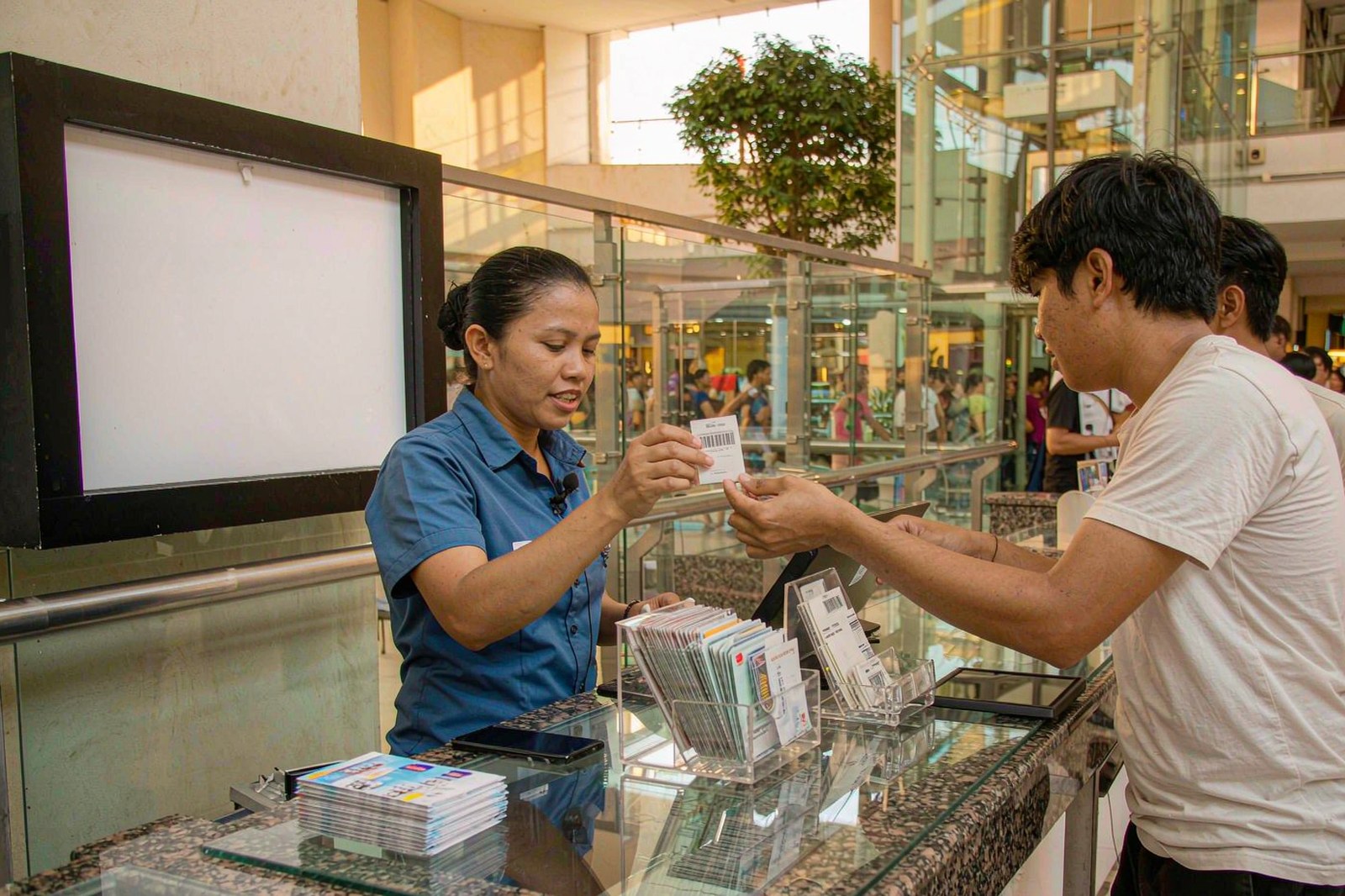
Globe is the Philippine carrier most visitors end up on, and it is the one that most often disappoints them for a reason that has nothing to do with signal. Globe’s prepaid eSIM is cheap, its Traveler packages are generous, and its network is the more consistent of the two big operators. What Globe does not have is data that never expires. Every gigabyte you buy from Globe is on a clock, and the clock starts when you activate, not when you use.
That single fact reorganises the whole purchase. A Globe eSIM is excellent if you buy it for a defined trip and use it hard. It is a poor instrument if you want something to sit in your phone between visits.
The short answer: For a visitor, Globe’s Traveler eSIM is the product that matters — packages run from ₱500 for 20 GB over 15 days to ₱3,000 for 169 GB over 30 days, with unlimited calls and texts to all networks, and a ₱99 surcharge to have it as an eSIM instead of plastic. You can buy it in the GlobeOne app before you fly, at a Globe booth at NAIA, Clark, Mactan-Cebu or Caticlan, or at any Globe store. You will register it under the SIM Registration Act with your passport, your hotel address and a return ticket, and if you are on a tourist entry it deactivates automatically after 30 days. The base prepaid eSIM at ₱99 is a different product for a different person: a local line with a small welcome bundle, not a tourist data plan.
The rest of this page is the part that decides whether the purchase works: how the conversion actually happens, where the QR code comes from, what breaks, and how to move the profile when you change phones.
What a Globe eSIM Is and What It Is Not
A Globe eSIM is not a discount version of a Globe SIM. It is the same subscription, the same number, the same billing, delivered as a downloaded profile instead of a plastic card. Everything Globe sells to a prepaid subscriber is available to a Globe eSIM subscriber, including the promos, the top-ups and the registration obligations.
If you have been searching for a Globe travel SIM, the Globe Telecom eSIM sold in the Philippines under the Prepaid Traveler brand is the same product under a second name: Traveler is the package, eSIM is the format. A Globe SIM card bought in the Philippines by a tourist and a Globe eSIM are priced off the same package sheet, and the only structural difference is the ₱99 surcharge for going digital. The network, the data and the registration rules are identical. What changes is that you never have to find a paperclip.
What it is not:
- It is not a travel eSIM. A Globe eSIM is a Philippine subscription with a +63 number. An international travel eSIM that rides on Globe’s network is a roaming product with no number. The two are often confused because both are called “Globe eSIM” in reviews, and the confusion costs people either money or a working GCash account.
- It is not instant. Installing the profile takes two minutes. Getting the line to actually carry data requires SIM registration, which is a separate step with a passport and an address.
- Moving it to another phone is a carrier operation, not a settings toggle. The profile lives in one handset’s secure element, so a swap means going through Globe rather than through Settings.
- Globe sells three eSIM products and visitors want the cheapest one. Prepaid, Traveler, and postpaid for people already on a Philippine account. The postpaid version assumes that account exists, which is where most visitor enquiries end.
The distinction that matters most: do you want a Philippine phone number? If yes, Globe eSIM or Smart eSIM. If no, an international travel eSIM on either network is cheaper, faster to obtain and skips the paperwork entirely.
The number is the whole point
A +63 number unlocks things a data-only plan cannot touch. GCash and Maya both require one, and both are how a lot of the country pays for things — tricycle fares, market stalls, small resorts that take no card. Philippine banks send OTP codes by SMS. Tour operators call rather than email. A resort landline is sometimes the only way to confirm a boat.
If your trip involves any of that, the ₱99 base eSIM plus a data promo is the right purchase, and the friction is the price of admission. If none of it applies, you are paying for a capability you will not use.
Three Ways to Get One, and the One to Avoid
Globe sells its eSIM through four channels, and they are not equivalent in price, speed or reliability.
| Channel | Cost | Speed | Registration | Best for |
|---|---|---|---|---|
| GlobeOne app, before you fly | Published price | Instant after install | You do it in-app | Anyone who plans ahead |
| Airport booth (NAIA, Clark, Mactan, Caticlan) | Highest; bundles differ from the website | 15–40 minutes | Staff does it for you | Arrivals who need a number immediately |
| Globe store in a mall | Published price | 20–60 minutes with queue | Staff does it | Anyone staying near a mall |
| Authorised retailer, sari-sari, 7-Eleven | Base SIM is cheap; bundle extra | Instant | You do it yourself | People already in the country |
The channel to avoid is the informal one. At NAIA there are people outside the branded counters holding “free SIM” signs. The SIM is free. The load bundled onto it is priced at a level that bears no relation to the published rate, with reports of ₱1,500 to ₱2,000 for a plan worth a fraction of that. There is no receipt, no recourse, and no way to check what you were sold until you are already in a car.
The rule holds everywhere in the Philippines: buy at a branded counter, ask for the plan by name, pay the posted price.
What the airport counter actually costs
Globe’s airport tourist SIMs have been reported through 2025 and 2026 at roughly ₱2,000 for about 131 GB, ₱2,500 for about 200 GB and ₱3,000 for about 262 GB, all on 30-day validity with unlimited calls and texts.
Note that those bundles do not match the published Traveler packages exactly — the published sheet tops out at 169 GB for ₱3,000. The counters sell their own allocations, refreshed on their own cycle. The practical consequence is that you cannot compare the airport price to the website price and conclude you were cheated; you can only conclude you paid for a different bundle. What you can conclude is that the opening offer will usually be the ₱2,500 or ₱3,000 tier, so ask what the cheapest 30-day option is rather than accepting the first number quoted.
How to Convert a Physical Globe SIM to eSIM
If you already have a Globe SIM — from a previous trip, from a friend, or bought at a 7-Eleven — you can move it to an eSIM. This is the “conversion” question that brings a lot of people to this page, and the honest answer is that the mechanism depends on which Globe product you hold.
For a prepaid Globe SIM you already own: Globe’s own guidance points to the GlobeOne app and to Globe stores. The conversion issues a new eSIM profile against your existing number; it does not create a new number. You will need the physical SIM present and active, because Globe sends a confirmation to the number being converted. In practice the store route is the one that works reliably, because the app route has historically been inconsistent about which accounts it will accept.
For a Globe SIM you have not bought yet: there is nothing to convert. Buy the eSIM directly, in the app or at a booth, and skip the physical card entirely. This is cheaper and faster, and it is what most visitors should do.
For a postpaid Globe line: the conversion is a store operation and may carry a fee or a plan condition. Do not attempt it in the app.
Whatever route you take, three things are true:
- The number survives, the profile does not. You keep your +63 number, your load balance and your promos. The physical card stops working the moment the eSIM activates, so do not convert while travelling on that SIM as your only connection unless you can complete the whole flow in one sitting.
- You need the phone you intend to use. The profile installs on the handset you scan from, and moving it later is a separate operation with its own friction.
- Do not delete anything until the new profile works. If the conversion fails halfway, the old SIM is often the path back.
If the conversion fails
The failure modes are predictable enough to list.
| What you see | What it means | What to do |
|---|---|---|
| App will not offer the eSIM option | Account type or product not eligible in-app | Go to a Globe store with ID |
| Conversion starts, then errors | Number has an active promo or a pending transaction | Wait for the promo to lapse, or ask store staff to clear it |
| New profile installs but shows no service | Old SIM still active on the network | Give it up to 30 minutes; if it persists, the store must complete the swap |
| Profile installs, data does not work | APN or registration not complete | Check registration status first, APN second |
| App says already converted | A profile exists on another device | Store visit; the old profile must be released |
The pattern is that conversion problems are account problems, not technical ones, and account problems are solved by a human at a counter. Budget an hour if you are going to a store, and bring your passport.
The GlobeOne App Is Where All of It Happens
GlobeOne is Globe’s account app and it is the single most useful thing you can install before your trip. The GlobeOne app eSIM flow covers purchase, installation, registration, balance checks, promo activation and top-ups, all from one screen and one login. Globe documents the full prepaid eSIM flow, including the in-app compatibility test, on its prepaid eSIM help page.
What it does well:
- Buying a Traveler eSIM before arrival. This is the feature that matters most to a visitor. You can complete the purchase from your home country, receive the profile, install it, and land with it ready to activate. Globe explicitly supports this pre-arrival path.
- Promo activation. Globe’s prepaid promos are numerous and the app is the only place they are all listed with current prices. Activating from the app is faster than dialling a USSD code and hoping the syntax is current.
- Balance and expiry visibility. Data balance, remaining validity and active promo, in one screen. On a clock-based plan this is not a nicety; it is how you avoid losing 30 GB to an expiry you did not notice.
- Top-up with a foreign card. Globe accepts international cards in-app, which matters because the alternative is finding a 7-Eleven that will take a foreign card, and many will not.
What it does not do well:
- It requires a connection and a login. Both are fragile on arrival day. Install and log in at home, on wifi, before you need it.
- Support inside the app is slow. For anything involving a profile that will not install, a store is faster.
- Some regional builds are unstable. If the app crashes on launch after an update, the web portal at Globe’s site covers most of the same functions.
The practical advice: install GlobeOne at home, create the account, add a payment method, and buy the plan before you fly. Do not plan to do all of that in the arrivals hall on airport wifi.
What the Globe Traveler eSIM Actually Costs
These are Globe’s published Traveler packages, sampled in 2026. Promos rotate, so treat the numbers as structure rather than as today’s quote.
| Data | Validity | Price (₱) | Approx. USD | Per GB |
|---|---|---|---|---|
| 20 GB | 15 days | 500 | $8.60 | $0.43 |
| 30 GB | 15 days | 750 | $12.90 | $0.43 |
| 80 GB | 30 days | 1,500 | $25.90 | $0.32 |
| 120 GB | 30 days | 2,000 | $34.50 | $0.29 |
| 139 GB | 30 days | 2,500 | $43.10 | $0.31 |
| 169 GB | 30 days | 3,000 | $51.70 | $0.31 |
Every package includes unlimited calls and texts to all networks, is 5G-ready, and carries a foodpanda voucher worth 50% off a food order. Add ₱99 to take any of them as an eSIM rather than a physical SIM. Counters have also been quoting ₱1,750 for the same 80 GB package, which is the ₱1,500 price plus the ₱99 eSIM fee plus whatever the outlet adds — a useful illustration of how the published price and the till price diverge by amounts you should not fight over but should expect.
Reading the table by the gigabyte: the price per gigabyte falls from 43 cents at 20 GB to about 31 cents at 169 GB, and then stops falling. There is no reason to buy the 169 GB tier for the per-GB advantage; the advantage over the 120 GB tier is two cents. Buy the smallest package that covers your realistic usage and accept the slightly worse unit rate, because unused data at the end of a trip is the most expensive data you will ever buy.
Two travellers, one package: the tier you need is not the tier you would buy alone. Tethering a laptop and a second phone through one Globe eSIM means every gigabyte crosses the same allowance, and a shared 20 GB / 15-day package is 20 GB for the pair, not 20 GB each. Tethering rules are not printed on the plan card, so confirm at the counter or in the app before you pay rather than discovering a block on the day you need to send a file.
Reading it against the international providers: a 20 GB / 30-day Smart-based plan from Airalo costs $30. Globe’s 120 GB / 30-day Traveler package costs $34.50 and includes unlimited calls and texts and a Philippine number. On raw volume, Globe is not close to competitive with itself — the local product is roughly a third the price per gigabyte.
| Purchase | Data | Days | Price | Per GB | Local number |
|---|---|---|---|---|---|
| Globe Traveler 20 GB | 20 GB | 15 | ₱500 + ₱99 = ₱599 ($10.30) | $0.52 | Yes |
| Globe Traveler 80 GB | 80 GB | 30 | ₱1,500 + ₱99 = ₱1,599 ($27.50) | $0.34 | Yes |
| Globe Traveler 120 GB | 120 GB | 30 | ₱2,000 + ₱99 = ₱2,099 ($36.10) | $0.30 | Yes |
| Airalo 20 GB on Smart | 20 GB | 30 | $30.00 | $1.50 | No |
| Nomad 20 GB on Globe | 20 GB | 45 | $27.00 | $1.35 | No |
| Holafly unlimited on Globe | Unlimited | 30 | $73.90 | n/a | No |
That table is the whole economic argument in one place. The local product is between three and five times cheaper per gigabyte, and it includes a number. What you pay for with the international product is the absence of the queue, the absence of the 30-day cliff, and the ability to install it before you have decided whether you are going.
The ₱99 Question: Prepaid eSIM vs Traveler eSIM
Globe sells two things that both get called “the Globe eSIM” and they are aimed at different people.
The prepaid eSIM at ₱99 is a starter line. You get a +63 number and a small welcome bundle, which Globe varies — one listing shows 2 GB plus unlimited 5G for 2 days, another shows 5 GB plus unlimited texts for 3 days. After that you buy promos like anyone else. It is the right product if you want a local number cheaply and intend to manage your own data purchases.
The Traveler eSIM is a bundled tourist package. You get a large data allocation, unlimited calls and texts, a set validity, and a foodpanda voucher, for a price between ₱500 and ₱3,000 plus the ₱99 eSIM surcharge. It is the right product if you want to buy once and not think about it.
Which one wins depends on one question: will you use more than about 5 GB?
| Prepaid eSIM ₱99 | Traveler eSIM | |
|---|---|---|
| Upfront cost | ₱99 | ₱599 to ₱3,099 |
| Data included | Small welcome bundle | 20 GB to 169 GB |
| Calls and texts | Charged from load | Unlimited, included |
| Validity | Follows the promo you buy | Fixed, 15 or 30 days |
| Effort after purchase | You must buy a promo | None |
| Best for | Light users, long stays, people who want a number only | Anyone using more than 5 GB |
A visitor on a ten-day trip will use 5 to 10 GB with normal habits, which puts them in Traveler territory. A visitor who needs a number for GCash but does everything else on hotel wifi sits at the other end. Be honest about which one you are.
The promo path, if you take the ₱99 route
If you buy the ₱99 eSIM, the data comes from promos, and Globe’s promo structure is different from Smart’s in a way that matters.
| Promo | Data | Validity | Price (₱) | Approx. USD |
|---|---|---|---|---|
| Go+99 | 8 GB + 8 GB app data | 7 days | 99 | $1.70 |
| Go140 | 10 GB | 10 days | 140 | $2.41 |
| Go250 | 15 GB | 15 days | 250 | $4.31 |
| GoSURF299 | 8 GB | 30 days | 299 | $5.16 |
The Go+99 line is the value play: 16 GB of usable data for ₱99, as long as you can spend 8 GB inside the named apps. The GoSURF299 line is the opposite — only 8 GB, but it lasts a month, which suits someone who needs a trickle of data rather than a flood.
The freebie rule that decides whether you should upgrade or buy new
Globe’s ₱99 prepaid eSIM comes with a welcome bundle — currently 5 GB and unlimited all-net texts for three days — and that bundle is the reason the product looks cheaper than it is worth. There is one condition that changes the arithmetic: the bundle is only for a new eSIM purchase. If you are upgrading an existing physical SIM to an eSIM, Globe states plainly that no freebie is included.
That single line separates two very different purchases that look identical in the app.
| What you are doing | What you pay | What you get |
|---|---|---|
| Buying a new prepaid eSIM | ₱99 | The line plus 5 GB and unlimited texts for 3 days |
| Converting your existing SIM | ₱99 | The line only, no data, no texts |
| Buying a new eSIM as a visitor | ₱99 plus a Traveler package | The Traveler bundle, not the ₱99 welcome bundle |
If you are arriving with no Globe SIM and need three days of data to find your feet, the ₱99 new-purchase route is genuinely good value and covers the gap before you buy a bigger promo. If you are a return visitor converting last year’s SIM, the ₱99 buys you a profile and nothing else, so budget for a promo on the same day.
The other detail worth knowing, and it is the one that catches people: the welcome bundle cannot be paused. Globe’s terms state that the plan validity runs from the purchase date, even if cellular data is switched off. Buy the ₱99 eSIM three weeks early and the free 5 GB expires before your flight, while the line itself still works. This is the opposite of how an international travel eSIM behaves — those start their clock on first connection in the country — so if you are buying a Globe eSIM and a travel eSIM for the same trip, buy the travel eSIM early and the Globe eSIM on landing.
What Globe does not sell is data that never expires. That is a Smart exclusive in the Philippines, and it is the one genuine product gap between the two carriers — the Smart prepaid breakdown covers what Magic Data actually costs per gigabyte, and the per-gigabyte comparison sets both against the international providers.
The Bundled Perks, Priced Honestly
Globe attaches a foodpanda voucher to every Prepaid Traveler SIM, physical or eSIM, worth 50% off a food transaction. Every review mentions it. Almost none of them tell you what it is actually worth, which is the only number that matters when you are comparing a Globe package to an Airalo plan.
The voucher is a discount, not credit. It reduces the bill on one order rather than putting ₱200 in your account, it usually carries a minimum spend, and it expires. On a single ₱400 foodpanda order it saves about ₱200, or roughly $3.45. That is real money against a ₱599 package, but it is not the ₱500 of value that “50% off” suggests if you read it quickly.
| What the voucher is | What it is not |
|---|---|
| A one-use percentage discount | Repeatable credit |
| Applied at checkout on a minimum order | Usable on any purchase |
| Worth roughly ₱150–250 on a realistic order | Worth 50% of your total trip food spend |
| Time-limited | Valid for your whole stay |
The honest read: treat the voucher as a ₱200 rebate you will probably use if you order delivery in Metro Manila or Cebu, and as zero if you are heading straight to a small island where foodpanda does not operate. Do not let it move your purchase decision. It is a tiebreaker between two Globe packages, not a reason to choose Globe over a competitor.
Globe also bundles unlimited calls and texts into every Traveler package, and this is worth more than the voucher for a specific kind of traveller — anyone who needs to call a resort landline, a tour operator, a tricycle driver or a family member back home on a real phone line rather than an app. An international travel eSIM cannot make that call at any price. If that capability matters to you, the value calculation changes completely and Globe wins on a criterion that has nothing to do with gigabytes.
Coming Back Next Year: What Happens to an Old Globe SIM
Return visitors ask a question that no guide answers: I still have the Globe SIM from last year. Can I use it?
Sometimes. Three things have to still be true.
The SIM has to be alive. A Philippine prepaid SIM stays active as long as it has load activity within its validity window. Globe’s prepaid validity runs from a few days on a small load to a year on larger denominations. A SIM left untouched for twelve months is almost certainly dead, and a dead SIM cannot be revived with its old number — the number goes back into the pool.
The registration has to still be valid. A tourist registration is good for 30 days. That clock does not pause when you leave the country. A SIM registered on a tourist entry last year is deactivated, and re-registering means going through the same passport, address and return-ticket flow again, this time on a number that may not be recoverable.
The profile has to still be on a phone you own. If you converted to eSIM and then wiped or replaced that handset, the profile is gone with it.
If all three hold, you can top up and buy a promo and carry on. If any one fails, you are buying a new SIM, and there is no advantage to chasing the old one.
The practical version for a return visitor:
| Situation | What to do |
|---|---|
| SIM from under 6 months ago, still in the same phone, still had load | Top up ₱100, check it registers, then buy a promo |
| eSIM still installed on the same phone | Top up and buy a promo; ignore the registration prompt if the line is still active |
| SIM from over a year ago, untouched | Buy new. Do not queue for a revival that will not happen |
| eSIM on a phone you have since replaced | Buy new, or attempt a transfer only if you kept the QR code |
| You extended your visa and updated registration last time | Check whether the number is still live before assuming either way |
One habit that makes the next trip easier: before you fly home, leave about ₱50 of load on the SIM and use it once. It costs almost nothing and it is the difference between a live number next year and a dead one.
Registering a Globe eSIM With a Foreign Passport
Registration is mandatory under Republic Act No. 11934 and Globe enforces it at the point of activation. An installed profile that has not been registered will not carry data or calls.
Globe’s registration portal is at new.globe.com.ph/simreg. The tourist flow:
- Enter the Globe mobile number assigned to your eSIM.
- Receive an OTP by SMS on that number. This is why the eSIM must be installed and able to receive SMS before you start.
- Fill in your full name, birth date, nationality and Philippine address.
- Upload your passport bio page, and the page carrying your admission stamp.
- Upload proof of Philippine address — a hotel booking, an Airbnb confirmation, a lease, anything that ties you to a place.
- Upload your return or onward ticket, showing the date and time you leave.
- Take a live selfie in the portal.
- Wait for the SMS confirmation.
The selfie is where registrations fail. Poor lighting, a beauty filter, glare on the passport page, or a passport photo that no longer resembles you will all trigger a rejection, and the rejection notice is often uninformative. Take it standing under a bright light with the phone steady, and switch off any camera filter before you start.
The 30-day cliff, and what to do about it
A tourist-registered Globe SIM is valid for 30 days and then deactivates automatically. This is not a soft expiry. The number stops working, and if you are still in the country you are starting over with a new number and re-registering everything that depended on the old one.
If your stay is longer than 30 days, file your visa extension with the Bureau of Immigration while the SIM is still live, then update the registration to reflect the extended status. Do this in week three, not week five.
If you are staying under 30 days, the cliff is invisible and you can ignore it — except for one wrinkle: a 30-day Traveler package and a 30-day registration expire at roughly the same moment, so do not plan to use the last day of the plan for anything that needs a number you are about to lose.
What registration costs you in practice
Nothing in money, and 15 to 40 minutes in time. At a Globe booth the staff does it for you, which is faster and much more likely to succeed on the first attempt. Doing it yourself in the app is fine if you have good light and a steady hand.
The thing to avoid is attempting it on arrival day with 4% battery, no wifi, and a passport photo taken in 2016.
Where the QR Code Comes From and What to Do When It Fails
Globe delivers its eSIM profile as a QR code, in the app or by email depending on the channel you bought through.
The QR code is not a link you can forward to a friend. It encodes the activation credentials for one profile on one device, and scanning it a second time after a successful install usually returns an error rather than reinstalling anything.
Keep it. Screenshot it, save it to your photo roll, forward it to your own email, and do both before you fly. If the profile is later deleted by accident, some carrier flows will accept the same QR for a reinstall and some will not — having it is the difference between a phone call and a lost number.
The failures, and what each one means:
| Error or symptom | Cause | Fix |
|---|---|---|
| “This code is no longer valid” | Profile already installed once | Check Settings for an existing line before assuming failure |
| “eSIM cannot be added” on iPhone | Carrier lock, or a full eSIM slot | Check “No SIM restrictions”; delete an unused eSIM |
| Scan completes, no line appears | iOS or Android build too old | Update the OS |
| Line appears, “No Service” at home | Correct behaviour before arrival | Nothing |
| Line appears, no service in the Philippines | Network selection stuck, or registration incomplete | Toggle airplane mode, then check registration status |
| QR email never arrives | Spam filter, or purchase still pending | Check the app’s order status before asking support |
The “already installed” case catches the most people. A QR code that fails on the second scan is often a QR code that succeeded on the first, and the profile is sitting in Settings under a name the user does not recognise. Look before you reinstall.
Moving Your Globe eSIM to a New Phone
The profile lives in your old phone’s secure element. It is not synced to an account, it is not in iCloud, and it does not follow you through a phone migration. This surprises people who upgrade mid-trip.
The general mechanics are the same on every carrier:
- Deactivate on the old device first. Delete the eSIM profile from the old phone’s settings. The carrier cannot release the profile to a new device while the old one still holds it.
- Get a new activation credential. Depending on Globe’s current policy this is a QR code issued in GlobeOne, a request to support, or a store visit with ID. Prepaid conversions in particular often require the store.
- Install on the new device and complete registration if the system asks for it.
- Test before you rely on it. Data, SMS, and an inbound call from another phone.
Two warnings. Do not delete the profile from the old phone before you have a working path to a new one, because in the worst case you end up with no line and a support ticket. And do not buy a new phone mid-trip expecting to carry the number across in ten minutes; plan for an hour and possibly a store visit.
If you are travelling with a single phone and it dies, this is the scenario that ruins a trip’s connectivity. It is also the argument for carrying your home SIM alongside, and for keeping the QR screenshot somewhere you can reach from another device.
Why Globe Wins on Consistency and Loses on Expiry
Globe’s positioning is reliability, and the data supports it. Ookla has recognised Globe for the most consistent mobile network in the Philippines, with a consistency score above 87% on the Philippines index, meaning a higher proportion of its tests cleared a usable threshold rather than merely being fast at the best moment. For a trip that strings together cities, ferries and provincial towns, consistency is the metric that predicts whether your Grab will load.
Globe has also taken awards for the widest 5G coverage in the country in the second half of 2025, and 5G in Metro Manila, Cebu City and Davao is genuinely fast — 200 to 500 Mbps in central Manila is a normal reading on a good day.
Where Globe loses to Smart is at the very edge. Traveller reports cluster around Smart holding a usable 4G signal on Siargao and on smaller Visayan islands where a Globe handset showed nothing, and around Smart winning on rural Luzon routes such as the Cordillera. Palawan is genuinely contested: El Nido town and Coron town work on both, and the boat routes between the lagoons work on neither.
The other place Globe loses is product. Globe has no no-expiry data. Smart’s Magic Data starts at ₱99 for 2 GB and runs to ₱549 for 38 GB, and none of it expires. If you are the sort of traveller who wants a plan to sit in the phone between trips, that is a decisive advantage and no amount of consistency compensates for it.
For the full carrier-level comparison — bands, per-city throughput, APN settings and activation troubleshooting — the technical reference for bands and APNs goes deeper than this page needs to.
What Globe’s APN and 5G Settings Should Be
Globe’s APN is internet.globe.com.ph. Most modern handsets populate it automatically from the carrier profile. When they do not, the symptom is specific and unmistakable: the phone shows a carrier name and signal bars, and every app reports no internet.
Set it under Settings → Cellular → Mobile Data Network on iPhone, or Settings → Network & Internet → SIMs → Access Point Names on Android. Name it anything, set APN to internet.globe.com.ph, leave username and password blank, and save.
Two related settings worth checking:
Data roaming. For a local Globe eSIM, roaming should be off unless you are leaving the Philippines. For an international travel eSIM riding on Globe, the phone may need data roaming switched on for the profile to attach — check your provider’s instructions, because the two cases are opposite and the wrong setting produces “no service” in both directions.
5G. Globe’s 5G is real in Metro Manila, Cebu City and Davao and thin elsewhere. Setting the phone to “5G Auto” rather than “5G On” lets it fall back to 4G without hunting, which saves battery in exactly the places where 5G is not there. Do not buy a plan on the strength of the 5G label.
When Globe Is the Wrong Choice
Three cases where you should buy something else.
You are going to Siargao, Siquijor, Camiguin or the Cordillera, and nowhere else. Smart’s island and rural build-out is better in those specific places. Buy Smart, or buy a dual-network eSIM.
You do not need a Philippine number. Then the local product’s main advantage disappears and you are left paying the registration tax in time for a product that is only cheaper per gigabyte. An international travel eSIM at $12 to $19 for 5 to 10 GB, installed before you fly, is the simpler purchase for a one-city week.
You want data that survives between trips. Globe cannot sell you this. Smart can.
Globe is the right choice for the majority of visitors — a multi-stop route, a number for GCash, a large data bundle at a third of the international per-gigabyte rate. It is the wrong choice for a narrow set of trips, and knowing which one you are on is worth more than any promo.
What People Get Wrong About Globe eSIM
Can a Globe SIM be converted to eSIM? Yes. Prepaid conversions go through the GlobeOne app or a Globe store, and the number is preserved. Postpaid conversions are a store operation. Do not convert while that SIM is your only connection unless you can finish the whole flow in one sitting.
How do I get a Globe eSIM in the Philippines? Four ways: the GlobeOne app before you fly, a Globe booth at NAIA, Clark, Mactan-Cebu or Caticlan, a Globe store in a mall, or an authorised retailer. The app is cheapest and fastest; the airport is the most convenient and the most expensive.
Is the Globe eSIM the same as a travel eSIM on Globe? No. A Globe eSIM is a local subscription with a +63 number and mandatory registration. A travel eSIM riding on Globe’s network is a data-only roaming product with no number and no registration.
What does a Globe eSIM cost? The prepaid eSIM is ₱99 plus whatever promo you buy. Traveler packages run ₱500 to ₱3,000 for 20 GB to 169 GB, plus ₱99 to have it as an eSIM. Airport counters charge more and sell different bundles.
Do I need to register a Globe eSIM? Yes. Republic Act No. 11934 applies to local eSIMs exactly as it does to physical SIMs. Tourists need a passport, proof of Philippine address, a return ticket and a selfie. The line deactivates after 30 days unless you extend your visa and update the registration.
How do I transfer my Globe eSIM to another phone? Delete the profile from the old device, obtain a new activation credential — QR code in GlobeOne, or a store visit — then install on the new device. Plan for an hour and keep the old phone until the new one works.
Why does my Globe eSIM show no service? Before you fly, that is normal. In the country, toggle airplane mode, check that network selection is automatic, confirm registration is complete, and then check the APN. In that order.
Does Globe have no-expiry data? No. Magic Data, the no-expiry product in the Philippines, is Smart and TNT only. Globe’s closest equivalents are time-limited promos such as GoSURF299.
Can I use Globe eSIM and my home SIM together? Yes. Set the Globe line as the data line and your home SIM for voice and SMS so two-factor codes keep arriving on your own number.
Where This Leaves You
Globe is the safe default for a Philippine trip that involves more than one stop and a need to pay for things locally. Buy the Traveler package a size larger than you think you need if you will tether, buy it in the app before you fly, register it the moment it installs, and keep the QR code screenshot until you are home.
If any of the following is true — you are heading for Siargao or the Cordillera and nowhere else, you do not need a +63 number, or you want data that survives past this trip — buy elsewhere. The comparison of Philippines eSIM plans sets Globe’s product against nine others on the same criteria, and the Philippines eSIM overview covers the network question, the registration rules and the arrival sequence if you have not settled those yet. If you want the Smart side of the same decision, the Smart side of the same decision covers its ₱99 prepaid line, its ₱1,599 tourist package and the no-expiry data Globe does not sell.