India eSIM With a Phone Number: The Six Places +91 Decides the Booking

Roami Team
Roami offers reliable eSIM plans, serving over 1 million travelers annually, and supports automatic local network switching to help travelers stay connected globally.
📑 Table of Contents
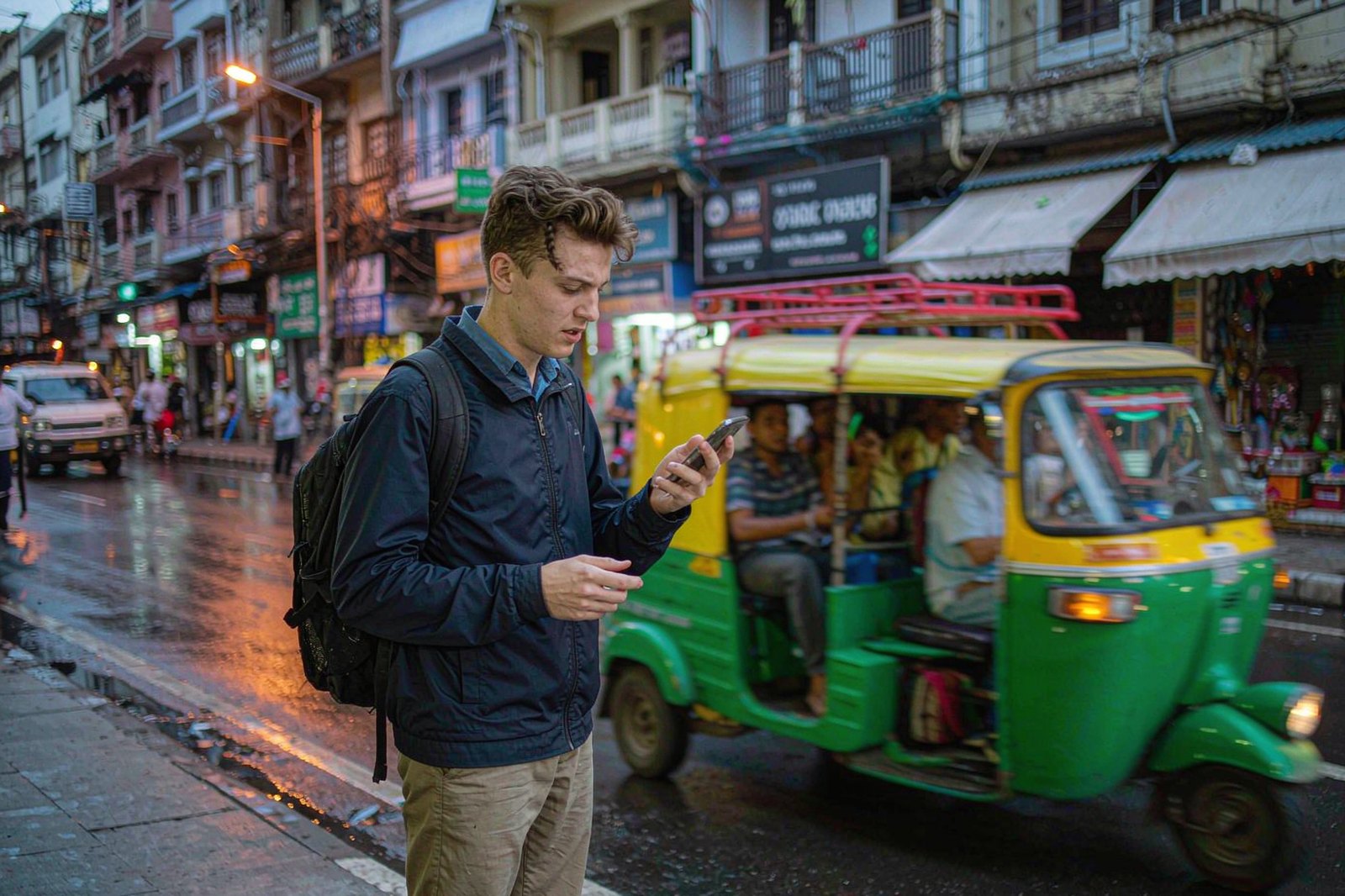
Every eSIM product sold to travellers is data-only, and every one of them is advertised as though that were a feature. The limitation is invisible until the moment something in India asks you to type a phone number into a box and wait for a six-digit code that will never arrive.
The question behind any search for an India eSIM with a phone number is not whether you want an Indian number. It comes down to whether anything in your itinerary will refuse to work without one, and that depends on what you have booked rather than on how long you are staying.
A fortnight of hotels, restaurants and sightseeing can run entirely on WhatsApp and a data plan. The same fortnight with a train booking, a scooter rental and a local wallet does not.
This page sorts the six places where the number decides the outcome from the five where it never comes up, then covers the three ways to hold a +91 line: buy one at a counter, convert one you already own, or use the payment product that was built specifically so you do not need one.
The arrival queue itself is covered separately, and the price arithmetic for data is on the comparison page, because neither of those is the same decision as this one.
Six Places a +91 Number Decides Whether You Book
Ranked by how often they actually stop a traveller, not by how often they are discussed.
| What you are doing | Does it need +91 | What happens without it |
|---|---|---|
| Booking a train on IRCTC | No, but it costs a registration fee | International numbers accepted with a country code, plus a verification charge |
| Hailing a ride on Ola | Usually yes | Registration frequently fails; the SMS never arrives |
| Paying a small shop by QR code | No, if you use UPI One World | The local wallet needs an Indian account or an inbound-traveller wallet |
| Receiving a bank OTP | No | It goes to the number your bank already has, and receiving is free while roaming |
| Getting a call from a driver or guesthouse | Often | They will use WhatsApp if asked, but only if you ask first |
| Ordering food to a hotel | Sometimes | The apps usually want an Indian number for the delivery call |
The pattern in that table is that the number matters most for the things you do spontaneously and least for the things you book in advance. Trains are booked from home. Rides are booked on a pavement. That asymmetry is why the answer changes depending on the kind of trip rather than its length.
There is a second pattern worth noticing: four of the six have a workaround that is not a phone number. IRCTC takes an international number for a fee. UPI One World exists precisely so that inbound travellers can pay without an Indian account. Banks route OTPs to the number already on file.
Only Ola and the delivery apps are genuinely stubborn, and only Ola is stubborn in a way that has no substitute for a first-time visitor.
Ola Will Not Register a Foreign Number, and Uber Will
This is the single most cited reason people want a +91 line, and the reporting is consistent enough to plan around.
Uber accepts an international number and an international card for registration, and the account usually works on arrival without any intervention. Ola’s registration flow is built around an Indian number, and attempts with a foreign number frequently stall at the verification step, where the code is sent to a number the app expects to be Indian.
Rapido and Namma Yatri, the two other ride options in most cities, lean the same way.
The practical consequence is a decision made before you land. If Ola is part of the plan, plan for either a local number or a fallback. The fallback costs nothing: install Uber before you fly, add a card that works abroad, and use it as the default. Uber’s coverage in the large cities is broad enough that the difference rarely shows.
Where Ola does earn its reputation is in the smaller cities and in the auto-rickshaw category, where its fleet is sometimes deeper than Uber’s. If your itinerary includes a tier-two city and you want a three-wheeler on demand, the local number becomes worth more than it is in Mumbai.
The call that arrives from an unknown number
The other ride-related friction is not the app, it is the driver. Indian drivers call. They call to confirm the pickup point, to ask which gate, to say they have arrived. If you have no Indian number, they cannot, and the trip starts with a series of messages that the driver may not read while moving.
The fix is a sentence, written into the booking note and sent as a message: WhatsApp only, and here is the number. Most drivers will use it. Some will not, and those are the trips where a local number earns its keep in a way no comparison table can show.
UPI One World Exists So You Do Not Need a Number
The payment problem is the one people assume requires a local SIM, and it does not. The National Payments Corporation of India runs a product for inbound travellers that is a prepaid rupee wallet, usable anywhere UPI is accepted, with no Indian bank account and no Indian number.
The flow is: download the app the programme is delivered through, upload a passport, a visa and a selfie, set a UPI PIN, and top up with an international card. What you get is a wallet that scans the same QR codes as everyone else at the counter, which in India is how most small payments happen.
The limits are real and worth knowing before you rely on it. A single transaction caps at ₹25,000, there is a monthly cap on the number of top-ups, and the total loaded balance is capped at ₹50,000. For a holiday that is generous. For a group paying for a hotel in one go it is not, and the hotel will take a card anyway.
Two operational details decide whether it works on day one. The first is where you get it: the programme is distributed at authorised counters and booths at the major international airports, including a presence at New Delhi, so the sensible moment to set it up is on arrival rather than three days later when you first need to pay a guide.
The second is the refund path, which returns an unused balance to the original card under foreign exchange rules rather than in cash.
There is at least one private alternative approved for the same purpose, which registers with an international number and works as a UPI front end. It is worth having as a backup rather than a plan, because the approval status of these products changes and the airport counter version is the one with a physical presence behind it.
IRCTC Wants a Registration Fee, Not a Number
Train booking is the case where the internet’s advice is most out of date. The old story is that foreigners cannot use IRCTC without an Indian number. The current position is more useful: a foreign passport holder can register, an international mobile number with a country code is accepted, and non-resident registrants pay a verification fee of about ₹100 plus tax.
What that buys is access to the same booking system as everyone else, including a quota that most travellers never hear about. The Foreign Tourist Quota sets aside seats in executive chair car, first, second and third air-conditioned classes on many long-distance trains, and it is the difference between a waitlist and a confirmed seat in peak season.
Availability under it is limited and the rules around how far ahead it opens have been adjusted more than once, so confirm the current window at the counter or on the site rather than assuming a figure from a blog.
The general quota opens sixty days ahead at eight in the morning Indian time on Indian Railways’ own enquiry system, and that is the moment to be at a keyboard if you want a specific train. Payment needs an Indian payment method or a card that the gateway accepts, which is the second place a foreign card can fail after the operator apps.
One limit catches people out: online Tatkal booking, the last-minute quota, requires Aadhaar linkage. A foreign passport holder cannot use that path online. The workaround is the counter, where the passport is the document, and the queue is the price.
Where the OTP Actually Arrives When You Are Roaming
The fear that drives people to buy an Indian number is the bank code. The fear is mostly misplaced, and the reason is technical rather than commercial.
An OTP from your own bank goes to the number your bank already holds, which is your home number. Incoming text messages are normally free to receive while roaming, in the sense that you are not charged for them and they arrive whether or not you have a data plan active on that line.
That is why the advice to keep the home line alive for messages appears in every sensible arrival guide.
What does break is the reverse direction: an Indian service that will only send a code to an Indian number. That is the OTP wall, and it is a policy rather than a technical limit. Ola is the clearest example. Several delivery apps behave the same way. Nothing about your phone prevents the message; the service simply will not send it abroad.
There is a third case that catches long-stay travellers: an Indian bank account or wallet registered to an Indian number that you no longer hold active. The code goes to a number in a drawer.
Reactivating it requires the KYC record and a store visit, and the account is frozen for verification in the meantime, which is an argument for keeping an Indian number alive with a small annual recharge if you have any Indian financial relationship at all.
WhatsApp Covers Four of the Six, and Not the Other Two
The substitution people actually use is WhatsApp, and it works better than its reputation suggests.
Guesthouses, drivers, tour operators, guides and most small businesses in India run on WhatsApp. A message from a foreign number is answered. Photos of a passport are sent for a booking. A driver shares a live location instead of explaining a junction.
In the places where a phone call would have been the only option a decade ago, a message now does the job, and it does it better because the address is in the chat rather than in a call log.
What WhatsApp cannot do is receive a code that a service sends by SMS to an Indian number, and it cannot register an account on a platform that has decided to require one. Those are the two gaps, and they are narrow.
The practical rule is therefore about identity rather than communication. If the thing you need is to talk to a person, your existing number and WhatsApp are enough. If the thing you need is to be a registered user of an Indian platform, the platform’s registration rule decides, and no messaging app changes it.
A Data-Only Plan Has No Number, and That Is Structural
The reason a travel eSIM cannot give you a phone number is not a product decision by the seller. It follows from what the product is.
A travel eSIM is a profile issued by a foreign operator, attached to an Indian network for radio access. The subscription belongs to the foreign operator, so the number that would come with it is the foreign operator’s number, in the foreign operator’s numbering range. An Indian platform asking for an Indian mobile number is asking for a number in India’s own range, and a roaming profile never has one.
Anyone shopping for an India eSIM with a phone number runs into this inside the first minute, because the products advertising one are advertising a foreign number. Two consequences follow, and both are worth internalising before you shop.
The first is that any product advertised as an India eSIM with a phone number is either a local operator connection that requires KYC, or a roaming product whose number is foreign and therefore useless for the registrations that motivated the purchase.
The second is that voice calls, where they exist on a travel product, are usually delivered over the data connection rather than as a native service, which means they work in an app and not in the dialler.
None of that makes the data-only product a bad purchase. It makes it a data product. The mistake is buying one expecting a number, then discovering the gap at the Ola registration screen on the second evening.
Which Number Goes in Which Field, in the Order Forms Ask
Indian booking forms are inconsistent about how they want a number, and the inconsistency itself is a small tax on every booking.
The rule that works: an Indian platform asking for a mobile number expects ten digits with no country code and no leading zero. A form asking for an international number with a country code wants the full string starting with a plus. Getting these two the wrong way round is the most common reason a booking form rejects a number that is perfectly valid.
A ten-digit number typed into a field that wanted a country code will fail validation, and the error message usually blames the number rather than the field. The reverse is worse: a plus-prefixed number in a ten-digit field will sometimes truncate silently, and you discover the problem when the confirmation never arrives.
The same applies to the arrival card and to hotel registration. Both want a number that can be reached in India. Putting your home number there is acceptable and is what most people do, but it is worth understanding that the number is a contact field, not an identity field.
If an officer or a hotel needs to reach you about a booking, the number they call is the one you wrote.
Three formatting habits avoid almost all of this. Store both numbers in your phone’s contacts with the country code so you can copy them without thinking. Never include spaces or dashes, because validation is often a strict pattern rather than a parser.
When a form asks for a number and offers a country selector, use the selector rather than typing the plus, because the selector and the field together produce the string the system expects.
What a +91 Number Still Cannot Do
A local number is a key, and it opens fewer doors than its reputation suggests. Knowing which ones stay shut is what stops a purchase from becoming a disappointment.
It does not open a bank account. An Indian bank account needs an address proof, a PAN or an Aadhaar path, and a residence status that a tourist visa does not provide. A non-resident can open an NRE or NRO account, but that is a process with documents and time, not something a prepaid pack accomplishes.
It does not unblock the last-minute train quota. Online Tatkal booking requires Aadhaar linkage, and an Aadhaar number is not something a visitor holds. The counter is the route, passport in hand.
It does not create a UPI account on its own. A UPI account is attached to a bank account, and a bank account needs the things listed above. This is exactly why the inbound-traveller wallet exists as a separate product: it decouples the payment method from the bank account, which is the part a visitor cannot get.
It does not make an app trust you. Platforms that verify new accounts against device, payment and usage signals can flag a number registered last week on a handset that has never been in the country. The registration may succeed and the first ride may still be cancelled. That is a fraud model rather than a bug, and no number solves it.
It does not work outside India. An Indian prepaid connection is an Indian connection; taking it home requires an international roaming pack, priced for short trips and rarely worth it except to keep the number alive.
You Already Have an Airtel Number, and It Can Become an eSIM From Abroad
There is a large group for whom this whole question is easier: people who already hold an Indian number from a previous life, a family connection or a period of work, and who want it working before they land.
Conversion from a physical SIM to an eSIM is supported by all three private operators, and the codes are worth knowing because they are the whole process.
| Operator | How to start | What comes back | Rough time |
|---|---|---|---|
| Airtel | SMS the word eSIM to 121 | A reply within a minute, then a voice authorisation | QR by email in about two hours |
| Jio | SMS GETESIM to 199 | A nineteen-digit virtual eSIM number, reply 1, then IVR confirmation | Profile pushed in about two hours |
| Vi | SMS eSIM to 199 | A prompt, reply ESIMY | Profile pushed after confirmation |
The catch is the sentence everyone skips: the process starts from a number that is currently active and able to receive an SMS. If the physical SIM is in a drawer in India and the number has lapsed, there is nothing to convert. Indian operators recycle numbers after a long period without paid usage, commonly described as around ninety days, and a recycled number is somebody else’s number.
The order of operations for anyone in this position is: confirm the number is alive by sending it a message from another phone, recharge it if the operator allows a recharge from abroad, then start the conversion.
The recharge, through Airtel’s own recharge page or a voucher, is the step that fails most often, because the operator apps are built around Indian payment rails and a foreign card typically fails at the bank’s security check rather than at the operator’s end.
A voucher bought through an Indian marketplace, or a friend with an Indian card, is the usual workaround.
Where the QR code lands, and why that matters
Both Airtel and Jio deliver the profile as a QR code sent to an email address, which sounds convenient and creates a specific failure. The QR is single-use and it has to be scanned by the phone that will hold the profile. If you are converting while travelling and the email lands on the phone you are holding, you need a second screen to display it, or a printout.
The second failure is the handset. Converting to an eSIM ties the profile to that device. Moving it to a new phone later requires the operator again, which is why the transfer searches for Airtel eSIMs outnumber the conversion searches, and why anyone who upgrades phones frequently should think before converting a number they depend on.
The third is that the process assumes the KYC record is current. A number dormant for two years may convert, and then fail to make a call, because the record was never re-verified. Checking that the number can make a call before relying on it for a bank code is worth the two minutes.
How Long a Number Lives After You Leave
A number bought for a holiday does not wait for you. Prepaid connections are recycled after a long period without paid usage, and the period operators describe is around ninety days. In a market with more than a billion cellular subscriptions, a released number is reassigned rather than retired.
After that it belongs to whoever buys it next, and any account still registered to it will send its codes to a stranger.
That has two consequences worth planning for. The first is for anyone who intends to return: a small recharge twice a year is cheaper than redoing the KYC process on each visit, and it is the only thing that keeps the number in your name. The recharge has to be paid from an Indian payment method or a voucher, which is the same bottleneck described above.
The second is for anyone with an Indian financial relationship, a property, a subscription or a family account. Those accounts do not know the number has changed hands. A dormant number linked to a bank account is a security problem rather than an inconvenience, and it is worth either keeping the number alive deliberately or updating the registered number before the trip ends.
The third case is the traveller who lets a number lapse and then tries to revive it from abroad. That is not a thing that can be done. The record has to be rebuilt in person, with the documents, at a counter, which means the next trip starts with a queue.
Three Ways to Hold Two Numbers on One Phone
Once you have decided a +91 line is worth having, the question becomes where it lives.
The first arrangement is a physical local SIM in the tray and your home eSIM as the second line. This works on almost every phone sold in the last five years, is the cheapest hardware-wise, and means the local number can be moved to another phone by taking the card out.
The cost is that you are carrying a card you can lose, and that a phone with one physical slot cannot also take a second travel eSIM.
The second is two eSIMs active at once, which recent iPhones and most flagship Android devices support. Your home line stays as an eSIM, the local connection arrives as a second eSIM, and nothing physical is involved.
This arrangement is the tidiest, and the one that survives a lost card, but it requires an unlocked handset and a local operator willing to issue a tourist connection as an eSIM, which is not universal.
The third is a second handset: an old phone with the local SIM in it, kept in a bag, used for calls and hotspots. It is the least elegant and the most robust, because the number is never dependent on your main device, and it is the arrangement long-stay travellers converge on after their first lost phone.
Whichever you choose, the settings matter as much as the hardware. Data on the travel or local line, voice and SMS on the line that needs to receive codes, data switching off so the phone cannot quietly bill the expensive line, and WiFi calling tested at home rather than discovered on a hotel network.
Two Weeks With a Number and Without, Costed Side by Side
The comparison that matters is not the price of a number. What matters is the price of the workarounds you buy instead, because those are real purchases and they are usually invisible in a budget.
| Item | Trip without a +91 number | Trip with one |
|---|---|---|
| Data | 10 GB travel pack, $23.99 | Airport pack, about $5.56 |
| Queue time | None | 30 to 120 minutes at a counter |
| Train booking | Registration plus about 100 rupees verification fee | Same registration, same fee |
| Rides | Uber only, Ola unavailable | Both available |
| Delivery apps | Hotel reception as the contact | Direct |
| Payments | Inbound-traveller wallet, set up on arrival | Wallet, or the same card |
| Failed attempts | Two to four at 20 minutes each | Near zero |
Add the money and the minutes with an hour valued at 20 dollars, which is the assumption used in the cost comparison, and the two columns land close together. The number route is cheaper on data by about $18 and more expensive on time by whatever the queue takes.
The no-number route is cheaper on time and carries a tail risk of failed attempts that cost 20 minutes each at the worst possible moment.
The variable that decides it is the train booking and the ride-hailing, and both are predictable before you fly. If the itinerary has two or more trains and no pre-arranged driver, the number earns its cost. If the itinerary is a hotel, a tour and a transfer, it does not, and the data-only purchase is the cheaper and simpler decision.
The mistake in both directions is buying twice without noticing. A traveller who buys a ten-gigabyte travel pack, then buys an airport pack as well, has spent $30 and two queues to solve a problem they could have solved for $6 if they had decided on the plane.
The Cost of a Number, Priced Three Ways
A number is not sold separately in India, so its cost is the cost of the thing that carries it.
The cheapest route is a local prepaid pack: about ₹299 for twenty-eight days with two gigabytes a day, a working number, and unlimited local voice on most plans. Priced in dollars that is roughly $3.32, and it buys more than any travel product on the market.
The airport version, at roughly ₹500, buys the same four weeks with a gigabyte a day and a working number attached. The premium over the city store buys the location, not the product.
The third route costs nothing if you already hold a number: convert it to an eSIM before you fly, keep it recharged, and use a data-only plan alongside it. This is the only route where the number and the data are separate purchases, and it is the arrangement most frequent visitors end up with.
Set against those, the data-only travel eSIM costs $3.99 to $23.99 and delivers no number at all. Anyone who buys one and then also buys a local pack has paid twice, which is not a mistake if the first purchase solved the arrival night and the second solved the fortnight, but is a mistake if neither was planned.
Five Trips Where the Number Never Comes Up
A hotel-based city break with airport transfers booked. Everything is arranged, the hotel will message on WhatsApp, and the only payments are cards and a UPI wallet you set up at the airport. Skip the number.
A package tour with a guide and a driver. The operator’s number is in the itinerary, the guide meets you at the airport, and the driver is arranged by the hotel. The number adds nothing.
A week in one hotel with a spa and a pool. This is the trip where the data plan is for maps and messages and nothing else needs to exist.
A business trip where the company has a local fixer. The fixer’s number is the number. Yours is irrelevant.
A short layover. Two nights, an airport hotel, a flight out. A number is a queue you do not have time for.
The common thread is that all five have an intermediary. Somebody local is already handling the things a number would be for. The trips where the number matters are the ones where you are the intermediary, which is most independent travel.
What Breaks When You Skip the Number
The failures are specific and they cluster at the same moment: the second evening, when the improvisation starts.
You decide to take a train tomorrow. IRCTC will register you, for a fee, with your home number, and the payment is the part that fails. You decide to rent a scooter. The rental shop wants a phone number it can call, and writes down your hotel’s. You order food.
The app asks for a number, you type your home one, and the delivery call goes to a phone that is on a data-only profile and cannot receive it. You book an auto through an app that will not register you.
None of these end a trip. All of them cost twenty minutes at the moment they happen, and the twenty minutes is always at the least convenient time. The decision is whether to spend an hour at a counter on day one to remove five twenty-minute problems, or to spend nothing and accept them.
The answer flips on trip length in a way that is easy to calculate. Under a week, the counter costs more than the problems. Over two weeks, the problems cost more than the counter. Between the two, it depends on whether you are the kind of traveller who books things in advance, in which case most of the problems never arise.
A USA SIM Card in India, and an Indian SIM at Home
Two mirror-image questions come up often enough to answer together, because they have the same answer for opposite reasons.
Using a USA SIM card in India is roaming. Whether it is a good deal depends entirely on the plan: some US plans include India in a generous international allowance that is genuinely usable, and others charge a daily pass that adds up faster than any local purchase.
The brand does not tell you which; the plan’s international terms do. Check the specific line item for India rather than the marketing page.
Using an Indian SIM in the US is the same arithmetic in reverse and usually a worse deal. Indian operators sell international roaming packs priced for short trips, and the per-day cost is high relative to a local US eSIM. The exception is a number you need to keep alive for bank codes, which is the case where paying for a minimal roaming pack is cheaper than losing the number.
For anyone holding both, the arrangement that works is: home number active for incoming messages with data roaming off, local data from whichever country you are in, and no outgoing calls on the roaming line unless the call is worth the rate. That configuration costs nothing beyond the data and removes the entire category of bill shock.
The case of the Airtel eSIM held from the USA
The most common version of this question is not about data at all. It comes from someone with an Indian number on a physical SIM who now lives abroad, wants an Airtel eSIM from the USA before a visit, and has read that the conversion needs a store.
It does not, provided the number is alive. The conversion runs over SMS from the number itself, so the requirement is that the physical SIM can receive a message wherever it is, which is either in your own phone on roaming or in a relative’s phone in India.
If it is the second case, the QR code has to reach the phone that will hold the profile, and the authorisation call has to be answered by someone who can confirm your details.
Getting a Jio eSIM while in the USA follows the same logic with different codes, and transferring an Airtel eSIM to a new iPhone from abroad is where the process stops being self-service, with the device side of it handled in the eSIM transfer walkthrough. A transfer to a new device needs the operator, because the profile is bound to the handset’s electronic identity, and that means a call to support rather than an SMS.
Anyone planning to upgrade phones on the way to India should convert after the upgrade, not before.
Seven Questions Before You Decide
Do I need an Indian phone number to travel in India? No. Most trips run on data and WhatsApp. The number matters when you want to register on Indian platforms, and the two that refuse foreign numbers most often are ride-hailing and food delivery.
Can I get an India eSIM with a phone number before I fly? Not with an Indian number. A travel eSIM carries a foreign number or none at all. A real +91 number requires the KYC process at a counter, in person.
Is a data-only eSIM enough for Ola? Not reliably. Uber accepts an international number, and Uber is the practical substitute in the large cities.
How do I pay for things without an Indian number? Use the inbound-traveller wallet based on UPI, set up at an airport counter on arrival, or pay by card. Both work; the wallet is what the QR codes at small shops expect.
Can I book trains with a foreign passport? Yes, with registration and a verification fee of about ₹100 plus tax, and an international mobile number is accepted. The last-minute quota online needs an Aadhaar number, so plan ahead or use the counter.
Will my bank code reach me while I am in India? Yes, if it goes to your home number. Incoming messages are normally free to receive while roaming, which is why keeping that line active for messages is worth doing.
I already have an Airtel number. Should I convert it? Only if it is active and can receive an SMS now. Conversion starts from a live number, and a lapsed number cannot be revived from abroad.
The arrival walkthrough covers the documents and the counter this page keeps referring to. The data price ranking prices a number against a data-only plan on the same trip. For operator-level detail on Airtel, Jio and Vi, the carrier guide is the deeper read, and the current India plans are what the data-only side actually costs today.