Buying a Morocco SIM Card at the Counter, Step by Step

Roami Team
Roami offers reliable eSIM plans, serving over 1 million travelers annually, and supports automatic local network switching to help travelers stay connected globally.
📑 Table of Contents
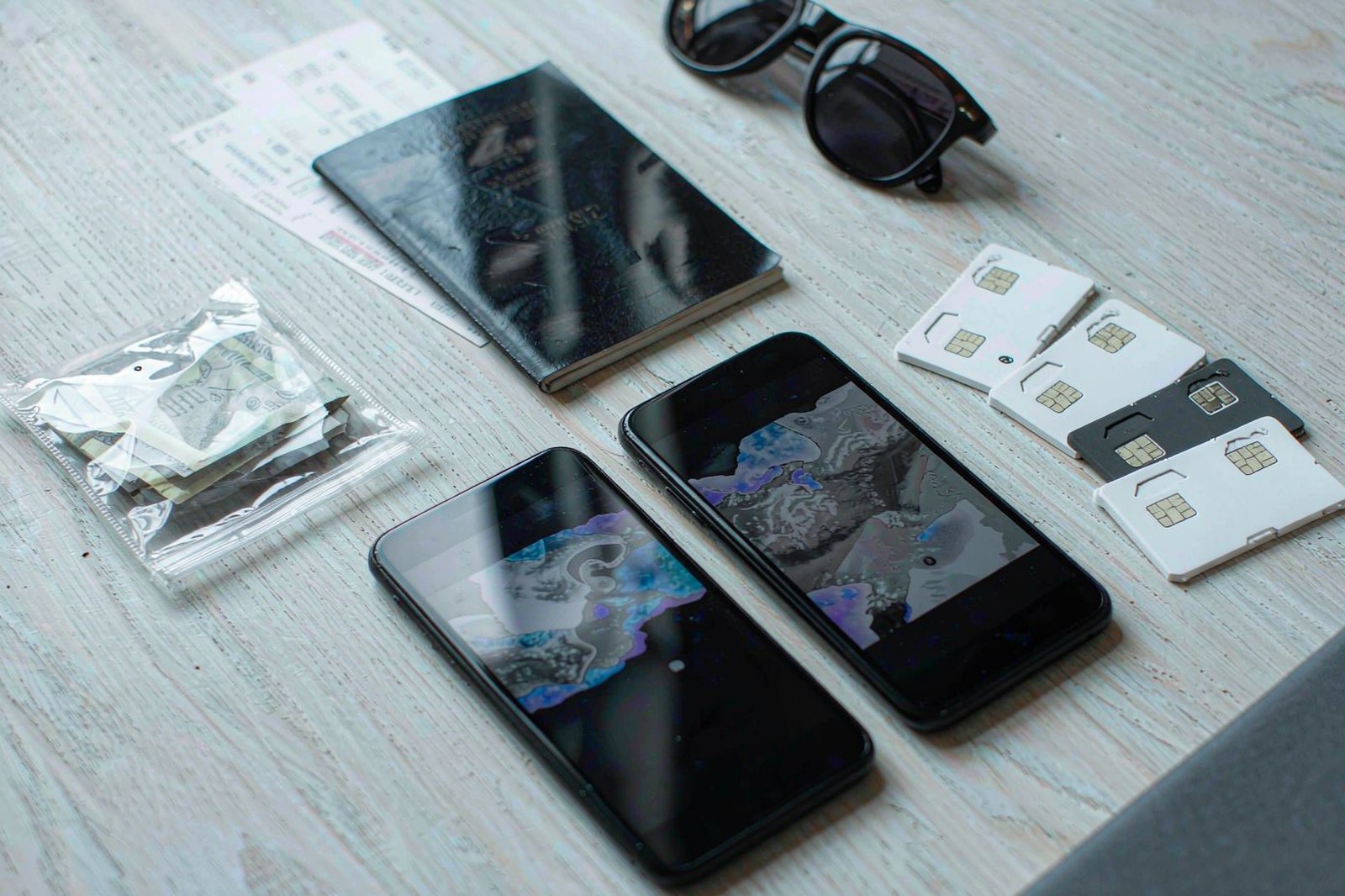
The counter in the arrivals hall is the only place in Morocco where you walk out holding a local phone number. Everything you can install before boarding gives you data and nothing that rings, and that single difference settles more trips than the price does. It is also why this purchase still exists in 2026 despite being slower, worse value at the small end, and entirely at the mercy of a queue.
So this page does the counter as a procedure rather than a recommendation: the document you must carry and the copy that will be refused, the four sentences that get you served in a shop that speaks French, the step that leaves your data switched off after the card is already in the phone, and the arithmetic that says whether the hour costs more than it saves.
Three operators sell to visitors. All three run 4G wherever a visitor goes, and 5G in the cities since the November 2025 launch. None of them is interchangeable at a counter. Maroc Telecom holds the best measured network in the country. Orange is the one whose website will sell you the same prepaid line without a queue at all. inwi moved into the largest share of active subscriptions in the final quarter of 2025, which surprised anyone who had not been watching the regulator’s numbers.
One figure to keep in view: Morocco averages about sixty-three US cents a gigabyte, roughly a quarter of the global average. That is the price the counter exists to reach. Whether it is worth an hour of your first morning depends entirely on how many of those gigabytes the trip will actually spend, and that is a question about days rather than destinations.
A Morocco SIM Card Comes With a Number and a Queue
The number is the product. Data is the part everyone talks about and the part that is easier to obtain elsewhere.
A Moroccan number is what a riad’s caretaker can ring when you are late, what a taxi driver can reach after the first call dropped, what a restaurant uses to confirm a table for eight, and what a delivery rider needs when the address is three doors deep in a lane with no name. None of that runs on a data profile. All of it runs on a line someone can dial.
The second use is verification. A growing share of local services — a car-hire app, a booking platform, a guesthouse wifi portal — want an SMS code. If your only connection is a data profile with no number, that code goes nowhere. If your number is a home-country number roaming at whatever rate your operator charges, the code arrives and costs you a fee to receive it, which matters more than people expect.
What the number will not do is rescue the second factor on your own bank account. A Moroccan number is a Moroccan identity as far as an SMS gateway is concerned, and a bank that has your home number on file will still send to the home number. Travellers discover this at the worst moment, mid-payment, and conclude the SIM is faulty. It is not faulty. It is doing exactly what a foreign line does.
So the sorting is honest and short. If you need to be reachable by people in Morocco, or you need local SMS codes, the counter is not optional. If neither of those applies — you have a data profile, a map that works offline, and a family that talks to you on WhatsApp — you are buying a queue you do not need.
What the Passport Rule Actually Requires in 2026
A SIM card for Morocco is not something you lift off a rack and activate yourself. Every Morocco SIM card is registered to an identified person, under a regulator decision that took effect in 2014. The rule covers all three operators, covers eSIM as well as plastic, and has no visitor exemption.
In practice this means four things at the counter, and the first one sinks more purchases than the rest combined.
Bring the original passport. Not a photocopy, not a photograph on your phone, not a driving licence. The seller copies the number into the operator’s activation system and the line is live against that identity. Counters turn away copies, and there is no argument available at the desk that changes it.
One passport, one line. A couple buying two cards needs two passports at the desk. A family buying three needs all three, including the children’s if the lines are to be in their names. Groups who arrive with one passport between four people leave with one working phone.
Expect the detail to be typed, and check it. The passport number, the name as printed, and the expiry date are keyed in manually. A transposed digit is not caught at the counter; it surfaces a week later when the line refuses to accept a top-up, and correcting it means going back to a shop with the passport again.
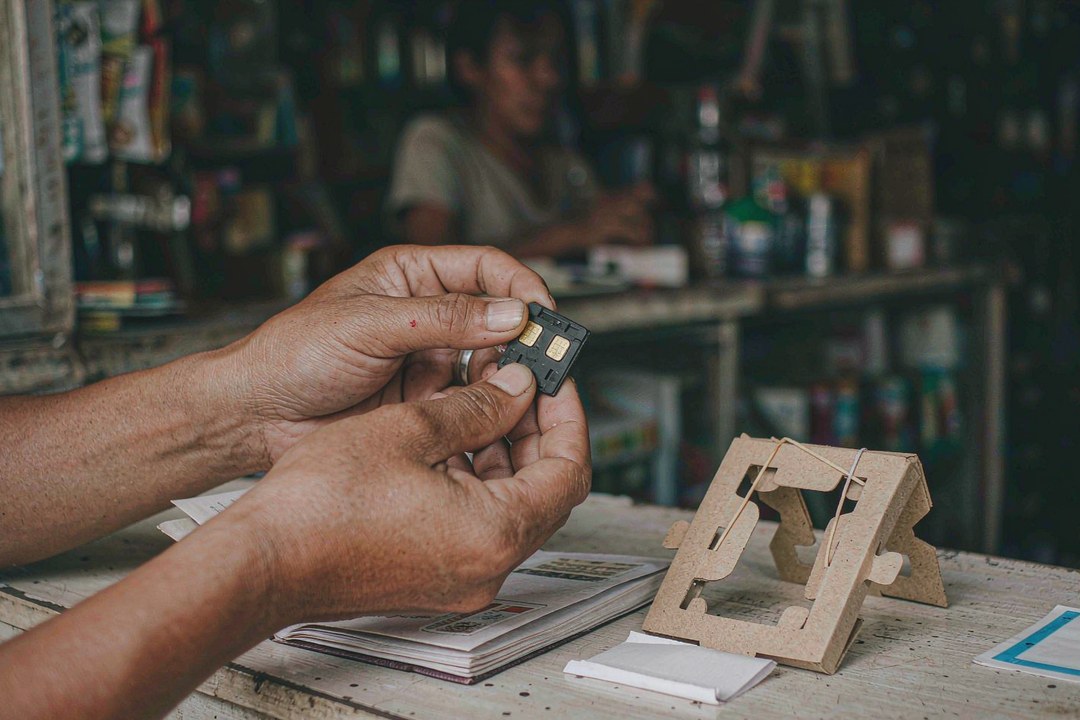
Nothing else is needed. No address in Morocco, no local reference, no deposit. Visitors sometimes arrive braced for a residency test and are surprised by how little is asked. Whatever pack you end up with, the SIM card Morocco’s operators issue at a counter is the same plastic, activated the same way. The barrier is the document, not the paperwork. The procedure itself is identical in Tangier, Rabat or Agadir: passport, form, registration, done.
The rule is not a tourist tax and it is not new. It is the reason a second-hand SIM bought from someone else is worthless, and the reason a card that has been “already registered for you” by a helpful stranger should be handed back and not paid for.
Three Counters at Casablanca, and What Each One Sells
Casablanca’s Mohammed V is the airport where the counter route is easiest, because the airport authority’s own published list of telecom shops names all three operators there. Marrakech Menara has counters in the arrivals area, but the published list does not name which operators staff them, so what you find depends on the day.
What you will be offered depends on who is behind the desk.
Maroc Telecom sells the standard prepaid range, which is a data-first ladder built for residents and priced accordingly. Orange sells a prepaid card with credit already loaded, plus seasonal visitor bundles that bundle calls and messages with the data. inwi sells its own visitor recharge, which is the most call-heavy of the three.
Ask each of them the same question and the comparison takes ninety seconds: how many dirhams for how many gigabytes, and how many days. The answer, written on the back of a receipt, is the only comparison that survives the noise of an arrivals hall.
One warning about stock. Airport counters carry what sells, and what sells at an airport is the bundle with calls included. The plain data tier is usually available but not usually offered, because the bundle is the product the counter is staffed to move. Say the words “the standard prepaid pack” and watch what appears.
The Counter Will Offer You a Visitor Pack. Ask for the Standard One.
Visitor bundles are not a scam and they are not automatically worse. They are a different shape, and the shape is the thing to check.
A visitor bundle normally carries a data allowance plus a block of national minutes plus a block of SMS, sometimes with a little international calling. A standard prepaid tier normally carries data and a small credit balance, and the calls are charged from that balance at the operator’s per-minute rate. If you will make six local calls in a fortnight, the standard tier is cheaper by a wide margin, because you are not paying in advance for minutes you will not use.
If you are calling home daily, or you are travelling with someone you need to ring rather than message, the bundle can be the better purchase — a hundred dirhams of bundled international minutes is a different product from a hundred dirhams of data.
Two checks settle it at the desk. Divide the price by the gigabytes and compare that number across the three operators; that is the metric that matters if data is what you came for. Then ask what the calls cost if you do not take the bundle, because a per-minute rate quoted at four dirhams and a bundle that includes an hour of calls are two different guesses about your behaviour, and only one of them is yours.
The trap is not the bundle itself. It is buying the bundle because it is the thing on the counter, then discovering on day three that the data inside it expires before the minutes do, or the reverse. Ask for the validity of each component separately. If the seller cannot answer, that is information too.
Why Your Data Stays Off Until You Make a Call
This is the step that generates more panic than any other in Morocco, and it is a design feature rather than a fault.
On the incumbent’s prepaid range, the allowance does not release until a first outbound call is placed from Moroccan territory. The card is registered, the phone shows signal, the balance exists, and nothing loads. The phone is not broken, the SIM is not dead, and the shop has not sold you a dud. The line is waiting for one call.
The fix takes thirty seconds. Dial any number — the operator’s own customer service number printed on the card is the safest, because it costs nothing and always answers — and let it connect or ring out. The allowance releases. Data works from that moment.
Two details worth knowing. The call has to be outbound; receiving a call does not do it, so a line that rings but will not load is not evidence that the rule has been satisfied. And if the call is placed and the data still does not load, check the APN — the access point name field should hold the operator’s default, and on a handset that has carried several profiles it is sometimes blank. And it has to be placed from Morocco, so there is nothing to do about it at home before you fly, however early you buy the card.
The failure mode this creates is specific and worth planning around: a late arrival, a closed counter, a taxi waiting, a phone with four bars and no data. If your flight lands after midnight, buy the card the next morning and use airport wifi to get to the riad, or carry a data profile for the first night and buy the local line when the counter is staffed. The main Morocco guide sets out how the two purchases fit together.
Find the Number Before You Lose the Cardboard
The number is on the packaging, and the packaging goes in a bin within an hour. Write it down before that happens.
The reliable way to recover it is the operator’s own service code, which displays the number on screen. The incumbent publishes it as #99#, and its 555 short number reads the same information back. Both work from the handset the card is in, and neither needs data.
Do it while you are still standing at the counter, and do it in front of the seller, because a number that does not display is a registration that did not complete properly and the desk is the only place that can fix it without a second queue.
Save it in the phone under something you will recognise, and send it to yourself in a message to the person you are travelling with. The number is the one thing about this purchase that cannot be reconstructed from a receipt, an email or an app: the card is the identity, and the identity is what everything else — topping up, checking the balance, replacing the card after a loss — is keyed to.
There is a second reason to write it down. If you later buy a data profile as well, the two lines look identical in the settings menu, and the one labelled “Morocco” is not necessarily the one with the number. Label them by function rather than country.
Orange Is the Only Operator That Skips the Counter
There is one route to a Moroccan line that does not involve standing in a queue, and it is not advertised in English.
Orange’s own online boutique sells prepaid lines directly. You choose a physical SIM or an eSIM, enter your identification details, pay, and for the eSIM you receive a QR code by email and scan it. The prepaid card comes with twenty dirhams of credit included. The operator’s seasonal visitor bundles are sold through the same shop, and top-ups extend validity rather than restarting a fixed clock, which is a useful property on a trip that runs long.
This matters because it collapses two purchases into one. An Orange prepaid eSIM is a real Moroccan line, registered to a passport, with a number that rings and a validity measured in weeks — not a roaming profile with a Moroccan-looking flag on it. A visitor who wants a local number and does not want to spend the first morning of a holiday at a desk can have both, provided the identification step goes through.
That proviso is doing real work. The online form lists passport, national identity card and residence card as acceptable documents, and there are reports of the checkout rejecting a passport with an error asking for a CIN — the Moroccan national identity card a visitor does not have. When that happens the purchase dead-ends online and the answer is a shop or an airport counter, which is why the counter procedure in this article still matters even for the online route.
The operator-by-operator purchase mechanics are on their own page, including what the identification screen accepts and what to do when it does not. The short version: try the online route, keep the airport counter as plan B, and if the trip starts within twenty-four hours of booking, treat the counter as plan A.
inwi’s Counter Is the One You Should Expect to Visit
inwi is the operator most likely to hand you a plastic card rather than a QR code, and the one whose counter purchase is most worth understanding before you queue.
Its eSIM is sold mainly in store. The website will point you at a branch rather than complete a sale, which for a visitor abroad means the purchase happens after landing or not at all. Its visitor recharge is the most generous of the three on calls: a hundred dirhams buys ten gigabytes, ten hours of national calls, two thousand messages and ninety minutes of international calling, over thirty days. Higher tiers take the data unlimited for fourteen or thirty days with national calls included.
That shape suits a specific traveller: someone who will ring the riad, ring a guide, ring home, and use data mostly for maps and messaging. It suits less well the traveller who wants the cheapest gigabyte, because the calls inside the pack are being paid for whether or not they are used.
The reason to mention inwi’s market position at all is that it reframes the question people actually ask at a counter — which operator is best here. In the regulator’s final-quarter count for 2025, inwi held the largest share of active mobile subscriptions at about 34.1 per cent, ahead of Orange at 33.6 and the incumbent at 32.3, in a market of roughly 59 million subscriptions and 160 per cent penetration. inwi also leads on postpaid. None of that makes its network the fastest, and the measured speeds still favour the incumbent. It does mean the operator at the smaller counter is not the small operator.
Counting the Hour the Counter Costs You
The honest argument for the counter is arithmetic, so run it with your own trip in it.
A twenty-gigabyte local pack at a hundred and twenty dirhams is about twelve dollars. A ten-gigabyte tier from a travel brand, bought before you fly, is around twenty-one dollars on this site’s ladder. So the counter gives you twice the data for a little over half the money, and the saving on that single comparison is somewhere between nine and thirty dollars depending on which tier you would otherwise have bought.
Now price the hour. If the queue is fifteen minutes and the registration is five, the counter wins on any trip. If the queue is an hour and the shop is a taxi ride from where you are staying, the hour is competing with the one thing you cannot buy more of. On a five-day trip, an hour is a fifth of a usable day and no data saving compensates for it. On a fortnight, an hour on day one is noise.
There is a second cost that does not appear on any receipt: attention. A purchase that goes wrong at a counter is a purchase you fix at a counter, in a language you may not speak, on a timetable you do not control. A profile that fails to install can be fixed from a café with wifi. That asymmetry is worth something, and it is the reason the comparison of the travel brands exists as a separate decision rather than a footnote to this one.
The break-even is roughly a week. Below it, buy the profile and keep the queue for the return trip. Above it, the counter is the better purchase on both data and money, and the only thing you are spending is the hour.
Two Travellers, Two Passports, Two Registrations
The group case is where the counter route gets awkward, and the awkwardness is administrative rather than financial.
Two lines mean two registrations, two passports at the desk, and two activations. That is not a formality to be argued with: a seller who registers a second line against one passport is creating a record that will fail the first time it is audited, and the person who suffers is the traveller whose line stops accepting top-ups three weeks later.
The alternative is one line and tethering, and it is worth being clear about what that trades. A hotspot is one registration, one queue, one purchase. It is also one battery, one point of failure and one device that gets warm in a pocket. Two people on one hotspot are two people whose connection dies together.
For a couple, the arrangement that survives a two-week trip is usually two small lines rather than one large one, bought in the same visit, registered against both passports. For a family, it is one adult line with a hotspot plus one spare, so a lost phone is an inconvenience rather than a blackout.
Prices are close enough between the three operators that the brand decision can wait until you are at the desk. The registration decision cannot, because it needs documents from every person who wants a line, and they are all standing in the queue with you or they are not.
Four Sentences in French, and Where English Runs Out
Airport counters in Morocco handle visitors all day and usually have English. A shop in a medina, a franchise selling top-ups, a counter at a small regional airport — those are French conversations, and occasionally Arabic ones.
Four sentences carry the whole purchase:
“Bonjour, je voudrais une carte SIM prépayée.” I would like a prepaid SIM card.
“Combien de gigas, et pour combien de jours?” How many gigabytes, and for how many days?
“Est-ce que je peux payer par carte?” Can I pay by card?
“Quel est mon numéro?” What is my number?
Numbers are the part that trips people up, because French counts in a way that does not map onto English ears. Ninety is quatre-vingt-dix, literally four-twenty-ten, and a price of a hundred and twenty is cent vingt. If the number matters — and at a counter it always does — ask the seller to write it on the receipt and read it back rather than trusting your ear.
Two habits help more than vocabulary. Point at the pack you want rather than describing it, because the packaging carries the gigabytes and the price in digits. And keep a translation app open on a phone that still has data, which is the one thing you definitely have before the local line is registered.
Paying with a Card, a Note, or the ATM Behind You
Cards are accepted at operator counters and at airport shops, and cash is accepted everywhere. Both work; the difference shows up in what you do with the change.
A card payment in dirhams is converted by your bank at whatever rate and fee it applies, and those vary enough that two travellers buying the same pack can pay noticeably different amounts. A cash payment needs an ATM, and the ATM in an arrivals hall is a machine with a queue of its own and a withdrawal limit that is sometimes lower than the price of the pack plus a taxi.
The practical sequence that avoids both problems: withdraw once, take a round number, and pay for the SIM and the taxi from the same notes. Then keep the small notes, because a hundred-dirham note for a fifteen-dirham coffee is a conversation nobody enjoys at eight in the morning.
One detail about the credit that comes with the card. A prepaid pack quoted with twenty dirhams of credit included is not twenty dirhams of data; it is account balance, spent at the operator’s per-unit rates unless you buy a pack with it. Ask the seller what that balance buys, and if the answer is unclear, treat the credit as a rounding error rather than a feature.
The Form Asks for a CIN. You Have a Passport.
The CIN is the carte d’identité nationale, and it is what most Moroccan registration screens are built around. A visitor does not have one, which is exactly the friction the 2014 registration rule creates for anyone arriving from abroad.
At a counter this is a non-issue. The seller selects the foreign-passport option, types the number, and the system accepts it — that path exists precisely because visitors buy lines. If a seller tells you a passport is not accepted, you are at a reseller rather than an operator counter, and the fix is to walk to one of the three operators’ own desks.
Online is where the CIN becomes a problem. Orange’s checkout lists passport, identity card and residence card as acceptable documents, and there are reports of it returning an error that accepts only a CIN or a residence card. That is a bug in a form rather than a rule, but it is a bug that stops a purchase, and the only workarounds are a different document or a different channel.
So plan for one dead end. If the online route rejects your passport, do not spend an afternoon re-entering the same details: go to a shop, or to the airport counter on arrival, and buy the identical line over a desk where a human can select the right option. The line is the same product either way.
Thirty Days of Validity on a Trip That Ends in Ten
Every prepaid tier in this market is built on a monthly clock, and a ten-day trip spends a third of what it pays for. That is a known and unavoidable waste, and it is not the problem worth solving.
The problem is the trip that runs longer than the clock. A three-week stay on a thirty-day pack is comfortable. A five-week stay is not, and the fix is a top-up rather than a second registration — the number stays, the validity extends, and nothing about the identity record changes. On Orange, top-ups extend validity by up to three months at a time, which is more generous than most visitors need and useful for anyone who might come back.
The unlimited tier complicates this, because its validity is shorter than the metered tiers’ — fourteen days rather than thirty on the incumbent’s range. A three-week trip on that tier needs a second purchase mid-trip, and the second purchase is a top-up of the same line, not a new card.
Expiry itself is undramatic. Data stops, calls stop, and the line sits dormant while the number remains attached for a while before the operator reclaims it. What matters is the ordering: top up before the deadline rather than after, because a lapsed line can require a reactivation that is harder than a top-up and, in the worst case, a new registration.
Where to Recharge When the First Shop Is Gone
Everything after the purchase runs through that number, which is where a lost receipt stops mattering and a lost number starts costing.
Three channels work. A scratch card from a corner shop, sold everywhere and redeemed by code. The operator’s own app, which needs data or wifi to open. And a reseller who will top up your number from their terminal for a small commission, which is the fastest option when you have no data and no card.
The code entry is where people go wrong. A scratch card’s number is long, and entering it on a phone keypad in a busy street produces a failure that looks like a dead card. Enter it once, slowly, on the operator’s USSD menu, and check the balance afterwards rather than assuming success.
Two operational notes. Top-ups do not reset the clock the way a new pack does — they extend it — so a line topped up on day twenty-eight does not get a fresh thirty days from that moment in most cases, it gets an extension from the existing expiry. A top-up also never lifts a daily throttle, because the throttle belongs to the pack rather than the balance. And one bought from a reseller is applied to the number, not the card, so the phone has to be on and reachable for the confirmation to arrive.
The one thing to avoid is buying a top-up for a line registered to someone else’s passport in the belief that the registration does not matter. It matters at exactly the moment something goes wrong, which is the moment you are buying a top-up.
The Counter Route Fails in Four Specific Ways
Four failure modes account for almost every bad counter story, and each has a cheap prevention.
No original passport. The purchase cannot complete, and no amount of explanation changes the system’s requirement. Carry the passport you travelled on, in the bag you will have at the airport, not in the suitcase that went to the belt.
A registration typed incorrectly. The line works, then refuses a top-up three weeks later. Check the printed name and number against the passport before leaving the desk, and photograph the receipt.
No first outbound call. The card is in, the phone shows signal, nothing loads, and the traveller concludes the SIM is faulty. Dial once. That is the whole fix.
A phone that cannot take the card. A Morocco SIM card needs a tray, and some recent handsets do not have one: a carrier-locked model, an eSIM-only design, a tray that takes a pin nobody packed. Check the device list before you commit to a plastic purchase, and if the phone is eSIM-only, the counter cannot sell you anything except an Orange eSIM, which brings the online route back into play.
A fifth failure is nobody’s fault: arriving when the counter is closed. Counters keep airport hours rather than flight hours, and a two-in-the-morning arrival meets a shutter. That is not a reason to avoid the counter, it is a reason to have data for the first twelve hours.
Where Should You Buy It: Airport or Town?
The airport counter is the one place where you can buy a registered Morocco SIM card without leaving the building, and that convenience is real. Coverage does not change depending on where you buy, so the choice here is queue against travel time, nothing more. It is also the place where the queue is longest, because a planeload of people arrive at once and the desk is staffed for an average hour rather than a landing.
A shop in town is the alternative, and it is a better purchase in three specific ways. The queue is shorter. The staff have time to answer the questions the airport desk cannot. And the stock is deeper, which matters if you want a specific tier rather than whatever the airport carries.
It is worse in one way that decides the question for short trips: you need to get to the shop, which means either knowing where it is or having data to find it. Neither is guaranteed on the first morning.
The division that works: land, get to the accommodation on airport wifi or a pre-installed profile, and buy the local line from a shop the next morning when the city is awake and the queue is four people rather than forty. The exception is a trip that starts with a long drive from the airport, where the line is needed in the car park rather than in the medina.
Either way, buy from an operator’s own shop rather than a reseller, for the same reason the registration rule exists: the identity record is the product, and only the operator can create it properly.
Six Things Travellers Ask While Holding the Form
Do I need a Morocco SIM card if I already have a data eSIM? Only if you need to be reachable on a Moroccan number, or you need local SMS codes. A data profile handles maps, messaging and bookings without one.
Can I buy a SIM with a photocopy of my passport? No. The original is required and copies are refused at operator counters.
Why is my data not working when the phone shows full signal? On the incumbent’s prepaid range, place one outbound call from Morocco first. The allowance releases after that, not before.
Can I get a Moroccan number before I fly? Through Orange’s online boutique, which sells a prepaid eSIM with a QR code by email. The identification step can reject a passport, so keep a counter as the fallback.
What happens if I lose the card? The number is registered to your passport, so a replacement is possible at an operator shop. Without the number written down, the process starts with proving who you are rather than with a swap.
Is the cheapest pack the right one for a five-day trip? No. The cheapest tier is a messaging plan with a small data allowance behind it, and a trip that navigates all day will spend it in forty-eight hours. Buy the tier above it or buy a travel profile shaped in days.
When Does the Counter Beat Every Profile?
Two trips justify the queue completely, and neither is about price.
The first is the trip that needs a number: a long stay, a family visit, a work trip where people ring rather than message, a rental arrangement that runs on local calls. For those, no profile in the market is a substitute, because the missing feature is not data, it is an identity that can be dialled.
The second is the trip that runs past a fortnight, where the counter’s per-gigabyte advantage stops being theoretical and starts paying for the hour several times over. Twenty gigabytes for twelve dollars beats ten gigabytes for twenty-one on any reading, and on a long trip you will use both.
Everything else — a long weekend, a week between two cities, a first visit built around a riad and three restaurants — is a purchase the counter was not designed for, and buying it anyway means paying for a month to use a fifth of it. The eSIM route in full covers what to install instead, and the carrier hub goes deeper on the networks themselves if the choice between operators is the part you are stuck on.
Whichever you choose, do the document check before you leave home. A passport in the cabin bag turns the counter from a risk into an option, and an option is worth more than a plan.