Singapore SIM Card vs eSIM: The Counter, Costed

Roami Team
Roami offers reliable eSIM plans, serving over 1 million travelers annually, and supports automatic local network switching to help travelers stay connected globally.
📑 Table of Contents
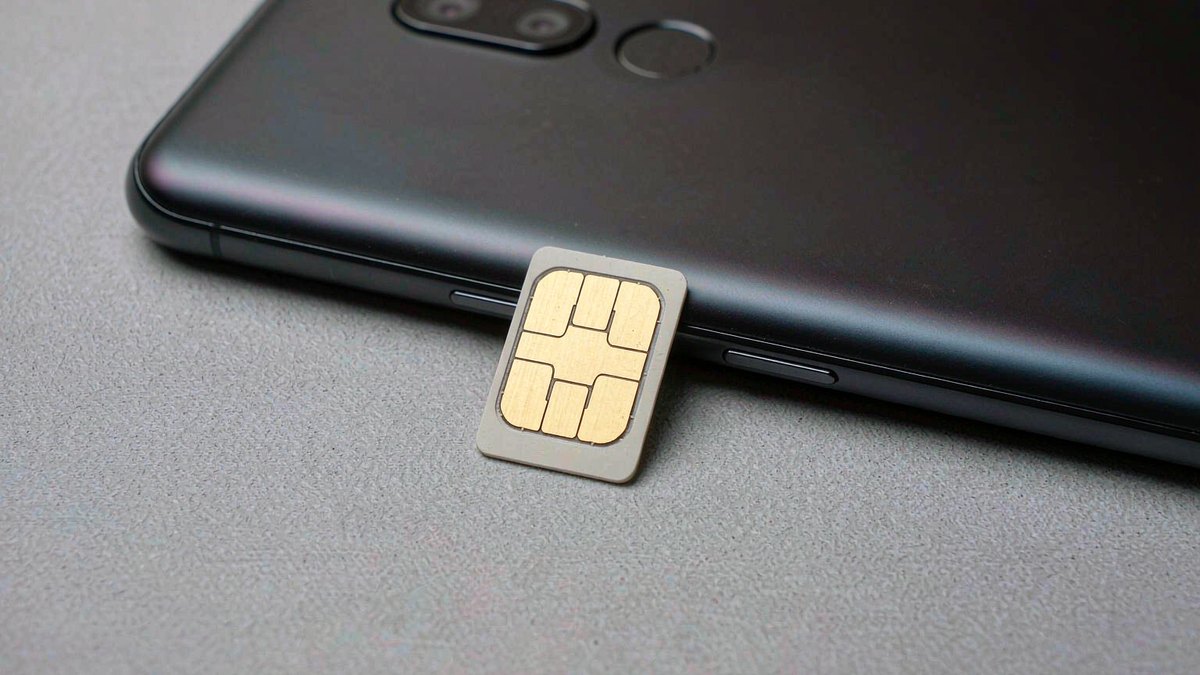
The counter at Changi sells something slightly different from what most arrivals expect. A Singapore SIM card is not a data bundle you insert and forget; it is a registered mobile line, opened in your name against your passport, with a number, an expiry date and a legal obligation attached. The data is generous and the process is quick, but the product is a subscription, and treating it as a disposable data card is how people end up with a phone that stops working on day 31.
That distinction is the whole argument in the SIM versus eSIM decision, and it is not the argument most comparison pages make. Those usually compare price per gigabyte, a contest the physical card wins by a factor of fifteen and which has almost nothing to do with whether your trip goes well.
This page costs the counter honestly — the queue, the tiers, the bundles, the registration, the failure modes — and states where a physical SIM is still the right purchase in 2026 and where it is simply a slower route to the same connection.
The decision, before the detail: if your phone supports eSIM and your trip is under two weeks, a travel eSIM is faster, cheaper in total and involves no paperwork. Buy the physical Singapore SIM card if your phone has no eSIM, if you are travelling with a child’s handset, if you want the transport or attraction bundles that come with some packs, or if you are staying long enough that 500 GB for S$12 is too good to ignore.
Before you choose: Every prepaid SIM in Singapore requires passport registration, and a line registered on a foreign passport expires after 30 days with no refund on the balance. Each passport holds three lines across all operators, and registration requires the traveller to be 15 or older. Airport counters in Terminals 1–4 are mostly 24 hours, but the queue is the slow part. Some tourist packs include an EZ-Link card with stored value or an attraction ticket, which can be worth more than the queue costs you. And no travel eSIM gives you a Singapore number, which is the one thing a SIM card always does.
What the counter is actually selling
Four products get called a Singapore SIM card, and they behave differently.
| Product | Who it is for | What it includes | Registration |
|---|---|---|---|
| Tourist SIM | Visitors | 100–700 GB, calls, sometimes bundles | Passport at the counter |
| Prepaid SIM | Anyone, long-stay visitors | Smaller data bundles, calls | Passport at the counter |
| SIM-only postpaid | Residents | Contract, number, roaming add-ons | Singapore ID and contract |
| Travel SIM sold abroad | Visitors | Data only, sometimes a foreign number | Often none |
The Singapore SIM card for tourists is the tourist pack, and it is what the airport counters sell — Singtel, StarHub and M1 all publish the tiers — and it is the product this page is about. Locals call it an SG SIM card; the carriers call it a hi!Tourist or Traveler pack. The SIM card Singapore visitors actually walk away with is almost always this one. Its shape is consistent across the three carriers: a large local data allowance, a slice of regional roaming, unlimited or generous local calls, and 30 days of validity — tied to a passport registration that also expires at 30 days.
The fourth row is worth knowing about because it confuses the comparison. A “Singapore SIM card” bought from a travel retailer in your home country is usually a roaming profile on a physical card: it has no Singapore number, no local registration, and often a much smaller allowance. It is a travel product wearing the same name, and the price reflects the packaging rather than the data.
The counter, costed in time
The queue is the most under-reported cost in every SIM guide, and it varies enormously by terminal and hour.
| Terminal | Counters | Typical wait at peak | Typical wait at 2 am |
|---|---|---|---|
| T1 | Changi Recommends (#01-K4), Prosegur (#01-K25, #01-K27), Travelex (#01-K24, #01-K26) | 15–30 min | 5 min, one staffer |
| T2 | Cheers (arrival hall), Prosegur (#01-181), Travelex (#01-78) | 15–30 min | Money changers only |
| T3 | Cheers (#01-24), Travelex opposite belts 43–44 and 46–47 | 20–40 min | 10 min |
| T4 | Prosegur near belt 4 (#01-07), Xplore SG (#01-K4) | 5–15 min | 5 min |
Counter locations and typical hours as published by the carriers and airport partners, October 2026. Convenience-store counters are not 24 hours even where the money changers next to them are.
Add the transaction itself: five to ten minutes for plan selection, passport scanning, payment and SIM insertion. Add the part nobody plans for — the wander while your phone finds a network, and the moment you discover the plan does not include calls the way you thought.
The realistic airport total is 20 minutes at a quiet hour and 45 at a busy one. A travel eSIM’s equivalent is four minutes at home, two days before you fly, with a cup of tea.
Buying at the airport versus in town
Airport pricing for tourist SIMs is roughly the same as the carriers’ own online prices, which is unusual by international standards — Singapore does not gouge arrivals on SIM cards. What the airport costs you is time, and what it offers is convenience and the full tier range at 3 am.
In town, carrier shops in malls sell the same tiers with shorter queues, and SIMBA sells only in town, at the lowest price per gigabyte on the island. The trade is that you need to get into town without data to buy it, which for most arrivals means a first hour of airport Wi-Fi and a printed map. That is a reasonable trade for a long stay and a poor one for a weekend.
| Where | Price | Queue | Works on arrival day |
|---|---|---|---|
| Airport counter | Carrier rate | 15–45 min | Yes, before you leave the terminal |
| Mall carrier shop | Carrier rate | 5–15 min | Only after you reach town |
| SIMBA town shop | Lowest per GB | 5–15 min | Only after you reach town |
| Travel eSIM, bought at home | $4–16 | None | Yes, before you land |
The registration rules, which the SIM cannot avoid
Three rules, set by IMDA rather than by the carriers, and all of them applying equally to a physical SIM and a locally sold eSIM.
A passport is required. No registration, no line. The counter scans your passport; there is no workaround and no “data only, no ID” product sold legitimately in Singapore.
The line expires at 30 days. Since 15 July 2024, a prepaid line registered on a foreign passport is valid for a maximum of 30 days. When it lapses, the number goes, the balance is not refunded, and re-registration requires a Singapore-issued identity card, employment pass, student pass or similar.
Three lines per passport, across all operators. Singtel, StarHub and M1 share the cap. Some data-only variants are excluded, but the voice-and-SMS tourist packs are not.
Two smaller rules worth knowing: the minimum registration age is 15, so a child cannot hold their own line, and re-entering Singapore does not restart the clock — the 30 days runs from the original registration.
| Situation | Physical SIM | Travel eSIM |
|---|---|---|
| 4-day trip | Fine, 20–45 min of your arrival | Fine, installed at home |
| 14-day trip | Fine | Fine |
| 31-day stay | Line suspends, no refund | Plan validity set by the seller |
| Second visit within 30 days | Original clock still running | Reusable if still valid |
| Travelling with a child | Child cannot register a line | Data-only profile, no ID |
What a physical SIM gives you that an eSIM does not
Three things, and only the first is unavailable any other way.
A works-on-anything card. If your phone lacks eSIM support, or is carrier-locked, or is an older handset that has trouble with VoLTE, a physical SIM slots into the only thing that still works. This is the single strongest argument for the card in 2026, and it is the reason airport counters still have queues.
Bundles that are worth real money. Some Singtel tourist packs bundle an EZ-Link transport card with stored value, or an attraction ticket — a Universal Studios or Singapore Oceanarium admission. If you were going to buy that ticket anyway, the bundle can be worth more than the S$12 you pay for the pack, which makes the physical route cheaper than the eSIM route in real terms. These bundles are sold through offline channels, not on the carrier’s website.
Something to hold. For travellers who have been burned by a failed eSIM install, a card that a human hands over and that visibly works is worth a premium. It is a psychological benefit rather than a technical one, and it is real.
| Advantage | How much it is worth |
|---|---|
| Works on non-eSIM phones | The entire purchase, if that is your situation |
| Transport or attraction bundle | S$10–70 depending on the pack |
| Human setup and immediate test | 20–40 minutes of certainty |
| Physical backup if the phone is wiped | Rarely needed, occasionally priceless |
What an eSIM gives you that a SIM does not
Four things, in order of how often they matter.
No queue and no paperwork. This is the main one. The eSIM is installed before you leave home, works the moment you land, and requires no passport, no counter and no conversation.
A cheaper total for a short trip. A 5 GB travel eSIM at $9.99 against a S$12 prepaid pack at about $9.25 is a wash on price — but the eSIM involves no queue and no line that expires. For a four-day trip, the travel eSIM is the cheaper purchase once time is valued at anything at all.
Your home line stays live. A dual-SIM setup keeps your own number receiving bank codes and airline messages while the local profile carries data. A physical swap removes your home SIM from the phone unless you have a second slot — which most phones do, but a second physical slot is increasingly rare on flagships.
Reversibility. A travel eSIM can be tested in the first hour and abandoned if it fails. A registered prepaid line is a commitment whose refund policy is measured in “no”.
| Advantage | When it matters |
|---|---|
| No queue, no passport | Every arrival, especially late ones |
| Installed before flying | Trips where the first hour has a booking |
| Home number stays active | Bank codes, airline messages |
| Cheaper total under 10 days | Short city breaks |
| Reversible | Anyone who has had a plan fail |
Who should still buy the physical card
The cases where the SIM wins outright, stated plainly so you can check yourself against the list.
Your phone does not support eSIM. Check by dialling *#06# — no EID means no eSIM, regardless of what the marketing says. Older Android handsets, some grey-import models and a few dual-SIM devices fall here.
You want the bundle. A pack that includes an EZ-Link card with stored value, or a Universal Studios ticket, can be worth more than the connectivity. Do the arithmetic on the bundle, not the data.
You are staying more than a month and hold a pass. A local line that can be re-registered is the only way to keep a number long term, and that means a local registration.
You are travelling with a child’s phone. A physical SIM in a child’s handset needs registration too — and a child under 15 cannot register. In practice this means the parent registers the line, which is a counter conversation rather than an app one.
You want to test before you commit. A counter purchase lets you verify that data works, calls connect and the phone holds the network before you leave the terminal. An eSIM can be tested the same way, but only if you installed it before flying.
Where the SIM card still fails
The failure modes, because they are the part of the counter nobody warns you about.
Data works, calls do not. Singtel notes that calls and SMS may need enabling at a retailer with passport verification. If voice is the reason you bought the pack, test it at the counter, not at the hotel.
The plan is not what you read online. Counter stock varies by terminal, and the cheapest tier may not be available. The S$8 Singtel hi! SIM, for instance, is explicitly not stocked at Changi.
The line dies at 30 days. The most common complaint, and it is not a fault. The registration expired, and no top-up prevents it.
The phone does not support VoLTE. Singapore switched off 3G, so a 3G-only or non-VoLTE handset cannot use the network at all. The SIM will insert, register, and produce nothing. This is the worst failure mode because the counter staff cannot fix it.
The second line is the wrong slot. On dual-SIM phones, the secondary slot may be data-only or lack VoLTE. If calls fail on a fresh SIM, check which slot it is in before blaming the carrier.
| Symptom | Likely cause | Where to fix it |
|---|---|---|
| No data after insertion | Not registered, or wrong slot | Counter, same visit |
| Data but no calls | Voice not provisioned | Any carrier shop, passport needed |
| “No Service” permanently | Non-VoLTE handset | A different phone |
| Works, then dead at day 31 | Registration expired | New line, no fix |
| Slow in one location only | Congestion | Nothing, it is the cell |
“Phone card” and other names for the same thing
Searches for a Singapore phone card, a SIM card or a prepaid card mostly point at the same product, with one exception worth naming.
A phone card Singapore retailers stock is always a prepaid SIM, whatever the label on the shelf says, and the terms are used interchangeably by customers and staff. Singapore calls them prepaid SIM cards, tourists call them phone cards, and the airport signage uses both. If a shop assistant looks blank, “prepaid SIM” is the term that works.
A calling card is a different product. International calling cards sold for landline use are almost extinct in Singapore, and the ones that remain are for outbound international calls, not data. Nobody under 40 will know what you mean.
An eSIM is not a card. There is no physical eSIM card, whatever a marketplace listing implies. An eSIM is a profile downloaded into the phone’s chip; a product described as an “eSIM card” is either a travel SIM with a QR code or a mistranslation.
| Term you might use | What it means in Singapore |
|---|---|
| Phone card | Prepaid tourist SIM |
| Prepaid SIM | The standard product name |
| SIM-only plan | A postpaid contract without a handset |
| Calling card | Outbound international calls, not data |
| eSIM card | Does not exist as a physical object |
| Travel SIM | Usually a roaming profile sold abroad |
Step by step: buying at Changi
The sequence, if you have decided on the card.
- Clear immigration and collect your bag. Counters are in the arrival hall, after baggage claim, not before.
- Pick a counter. Money changers and Changi Recommends booths are the official collection points for Singtel packs; carrier shops are also present in some terminals.
- Choose the tier by trip length. Under a week: the seven-day pack. Longer: the 30-day pack. Only take the largest tier if you are tethering a family.
- Hand over your passport. Registration happens at the counter and takes a couple of minutes.
- Pay by card. Contactless works everywhere; cash is accepted.
- Insert the SIM and confirm data works before you walk away. Open a map. If nothing loads, the problem is solvable while you are still standing there.
- Ask for voice and SMS to be enabled if the pack includes calls.
- Photograph the packaging with the number and the expiry date printed on it. You will want both later.
| Step | Time | What can go wrong |
|---|---|---|
| Immigration and bags | 20–40 min | Nothing SIM-related |
| Queue at counter | 5–40 min | Peak-hour arrival |
| Plan selection and registration | 5–10 min | Tier out of stock |
| Payment and insertion | 2 min | Card declined |
| Verify data | 2 min | Needs a config change |
What to do before you leave the counter
Three checks, ninety seconds: a map loads, a call connects (if calls are included), and the network name in settings shows the carrier you paid for. All three are fixable on the spot and painful to fix from a hotel at midnight.
Three trips, two formats, costed end to end
Abstract comparisons hide the thing that actually differs: the first hour. Three itineraries, with the counter time priced at a modest $20 an hour.
The four-day trip, two travellers, arrive 9 pm
SIM route: 25 minutes in the queue at T2, S$12 each for 30-day packs, about $18.50 for two, plus $8.30 of valued time. Total about $27. They arrive at the hotel at 10:20 instead of 9:45.
eSIM route: two 3 GB travel eSIMs at $6.50 each, installed at home. Total $13, no queue, no paperwork. They are in a Grab by 9:20.
Verdict: the eSIM wins by $14 and 35 minutes, and the 30-day packs would have expired long after the trip ended.
The fourteen-day trip, one traveller, needs a number
SIM route: 20 minutes at T3, S$12 for a 30-day pack with 12 GB of APAC roaming, a +65 number and unlimited local calls. Total about $9.25 plus $6.70 of time.
eSIM route: 20 GB travel eSIM at $21, data only, no number. A second plan would be needed for the Malaysia side trip.
Verdict: the SIM wins clearly, because the trip is long enough to amortise the queue and the roaming bundle covers the border crossing. This is the case where the counter is genuinely the better purchase.
The one-month stay, holding a student pass
SIM route: S$12 in town, then re-registration with the pass at day 30 to keep the number. Total S$12 plus one shop visit per month.
eSIM route: two 30-day travel plans at $14–21 each, no number, no re-registration.
Verdict: the SIM wins on price and on keeping a number, and the eSIM wins on not visiting shops. Anyone who needs the number chooses the SIM; anyone who does not, saves the visits.
| Itinerary | SIM total | eSIM total | Winner |
|---|---|---|---|
| 4 days, two people | ~$27 with time | ~$13 | eSIM |
| 14 days, one person, needs number | ~$16 with time | ~$21 | SIM |
| 30 days with a pass | ~$9.25 plus visits | ~$28–42 | SIM |
| 10 days, no number needed | ~$16 with time | ~$14 | eSIM, narrowly |
The pocket Wi-Fi alternative, and why it rarely wins
There is a third option at Changi that predates both: a pocket Wi-Fi router, rented for about S$10 a day, supporting up to five devices, collected and returned at the airport.
Where it wins. A family of five with one adult carrying a bag, no eSIM-capable phones, and a need for everyone to be online at once. S$10 a day for five devices is cheaper than five plans, and the router’s battery lasts a day.
Where it loses. Everything else. You carry a second device and charge it. You queue twice, once to collect and once to return, and the return queue is the one that runs close to your flight. The router is a single point of failure with no fallback. And at S$10 a day, a ten-day trip costs S$100, against S$12 for a prepaid pack that does more.
| Option | Cost, 10 days, one person | Devices | Failure mode |
|---|---|---|---|
| Prepaid SIM | ~S$12 | One | Registration expiry |
| Travel eSIM | $14–21 | One plus hotspot | Install failure |
| Pocket Wi-Fi | ~S$100 | Up to five | Battery, return queue |
| Home roaming | Usually the most expensive | One | Bill shock |
The honest use case is narrow: a group whose phones cannot do eSIM or whose home carriers charge punitive roaming. For everyone else, it is a device to carry and a queue to stand in twice.
If you lose the phone or the SIM
The recovery paths differ, and knowing them before you lose something is the point.
Lost physical SIM, phone intact. Go to a carrier shop with your passport. The line can usually be replaced on the same registration, keeping the number; expect a small fee and a queue.
Lost phone with a physical SIM inside. Same as above, plus the phone. The SIM cannot be used by whoever found it without the PIN, but report it anyway.
Lost phone with an eSIM inside. The profile is gone with the device and cannot be re-scanned from the original QR code in most cases. You need a reissue from the provider, which may carry a fee, and you need a device to install it on. This is where eSIM is genuinely worse than plastic: a borrowed phone and a spare SIM solves the plastic case in ten minutes.
SIM stolen or line abused. Report to the carrier immediately so the line can be suspended. Prepaid lines have limited liability but the number is the identity attached to them.
| Scenario | Recovery | Downtime |
|---|---|---|
| Lost SIM, phone intact | Replacement at a carrier shop | An hour |
| Lost phone, physical SIM | New SIM, same number | A day, plus a new phone |
| Lost phone, eSIM | Reissue from provider | Hours to a day |
| Stolen line | Suspend, then replace | An hour |
Crossing the border with a Singapore SIM
Singapore’s geography makes this a live question: Johor Bahru is a bus ride away, Batam is a ferry, and both are common day trips.
With a tourist pack, Malaysia and Indonesia data is included on most tiers above the entry level. Singtel’s S$12 pack carries 12 GB of APAC roaming covering Malaysia, Indonesia, Thailand and Hong Kong; M1’s S$12 pack carries 3 GB of APAC data. Check the destination list, not the number.
With a travel eSIM, Singapore-only plans stop at the border. You either buy a separate Malaysia plan or a regional Asia plan from the start.
With home roaming, you are paying your home carrier’s rate, which is usually the worst of the three options for a two-day trip.
| Format | Johor day trip | Batam day trip | Multi-week regional trip |
|---|---|---|---|
| Singapore tourist pack | Covered on most tiers | Covered | Good, within APAC |
| Singapore travel eSIM | Not covered | Not covered | Buy a regional plan instead |
| Home roaming | Charged per day | Charged per day | Avoid |
One practical note: at the land checkpoints, phones often latch onto a Malaysian network before you clear immigration, and a Singapore-only plan will then show “No Service” for a minute. It is not a fault, and it resolves when you return to a Singapore cell.
For residents: SIM card versus eSIM on a contract
If you are moving to Singapore rather than visiting, the tourist question is irrelevant and a different one applies: a physical SIM or an eSIM on a postpaid plan.
Most Singapore postpaid plans support eSIM at no extra cost, and eSIM removes the small annual ritual of finding a shop and a paperclip. The trade-offs are practical rather than financial. Moving an eSIM between handsets often needs carrier involvement or a fee, whereas a physical SIM moves with a paperclip. And if you travel with a second phone, a physical SIM can be swapped in seconds, while a second eSIM needs a separate plan.
The pattern most new arrivals settle on: eSIM for the daily phone, physical SIM in the drawer as a backup and for the second device.
What the pack includes that the label does not say
Reading a tourist SIM label carefully saves more money than shopping around does, because the numbers that matter are often in the small print rather than the headline.
The validity start. On a card, validity begins at registration, and registration happens at the counter. That is the safer model than the eSIM equivalent, where validity can start at purchase. It also means a card bought and registered on arrival day wastes nothing.
Whether calls are provisioned. A pack can advertise unlimited local calls and still need voice enabling at a retailer. If calls matter, ask at the counter and test one.
Whether the roaming is data only. The regional allowance is data; local calls included in the pack do not travel with you to Malaysia. Calling from Johor on a Singapore pack is IDD.
Whether the pack can be topped up. Most tourist packs cannot be extended, and the ones that can usually charge the entry-tier rate. If your stay might lengthen, buy the longer validity now.
What the bundle actually contains. An EZ-Link card with S$3 of stored value is worth S$3 plus the card fee; a Universal Studios ticket is worth considerably more. Do the arithmetic against what you would have bought anyway.
| Label claim | What to check | Why it matters |
|---|---|---|
| “Unlimited local calls” | Whether voice is enabled | Data working, calls failing |
| “30 days” | Whether that is the pack or the registration | Both expire, sometimes together |
| “12 GB regional data” | Whether it is data only | Calls abroad are charged |
| “Includes EZ-Link card” | Stored value amount | S$3 is not a transport budget |
| “Free top-up” | Terms and expiry | Often expires with the line |
Questions about Singapore SIM cards and eSIMs
Can I buy a Singapore SIM card at the airport? Yes, in the arrival halls of Terminals 1–4, from Travelex, Prosegur, Changi Recommends and convenience-store counters. Most money-changer counters are open 24 hours; the convenience stores are not.
How much does a Singapore SIM card cost? Tourist packs run S$10–30 for 100–700 GB with calls and regional roaming, depending on carrier and validity. A seven-day Singtel pack is S$10; a 30-day pack with 12 GB of APAC roaming is S$12.
Do I need a passport to buy a SIM card in Singapore? Yes, and there is no exception for data-only products. Registration is a legal requirement and the line will not activate without it.
How long does a Singapore tourist SIM last? Thirty days from registration, or seven days on the short tier. Passport-registered lines cannot be extended beyond 30 days without a Singapore-issued pass.
Is a SIM card cheaper than an eSIM? Per gigabyte, about fifteen times cheaper. In total, for a week, they are within a dollar or two of each other, and the eSIM saves the queue. For two weeks or more, the SIM wins on price and regional roaming.
Can I use a Singapore SIM card in my home country? For roaming, yes, at the carrier’s roaming rates, which are not cheap. The pack is designed for use in Singapore and its regional bundle.
Can I buy a Singapore SIM card without a passport? No. Registration is compulsory for every prepaid line, physical or eSIM, and the counter will ask for the passport you travelled on. There is no legitimate data-only exception.
What is the difference between a tourist SIM and a prepaid SIM? Mostly the bundle and the counter. Tourist packs include calls and roaming and are sold at airports; standard prepaid packs have smaller data allowances and are sold everywhere. Both require the same registration.
Can I keep my number if I switch from SIM to eSIM? On a postpaid plan, usually yes, through a carrier conversion. On prepaid, the number follows the registration, so a conversion while the line is active keeps the number.
Will a Singapore SIM card work in an iPhone? Yes, in any carrier-unlocked iPhone with a physical SIM slot. Note that recent US-market iPhones have no physical SIM slot at all, which makes an eSIM the only option for those handsets.
The decision, in one line
Phone supports eSIM and the trip is under two weeks: travel eSIM, installed at home, no queue, and a total cost that is usually lower once the first hour is priced in. Phone does not support eSIM, or the bundle is worth real money, or the stay runs past a month: buy the card at the counter, bring the passport, and check that data and calls work before you leave the terminal.
The registration rules in full are in the tourist pack basics, the tier and price arithmetic is in the price arithmetic, and if a local number is the reason you are considering the card, the number guide explains what it does and does not get you. For the country-level picture, including networks and the 3G shutdown, start with the full country guide.