Best eSIM Croatia: Five Checks Before You Pay a Cent

Roami Team
Roami offers reliable eSIM plans, serving over 1 million travelers annually, and supports automatic local network switching to help travelers stay connected globally.
📑 Table of Contents
Every “best eSIM for Croatia” list on the first page ranks the same three things: price, gigabytes, and a guess about which local network the plan rides on. Two of those are easy to check. The third is not published by anyone, which means most of the ranking criteria you will read today are decoration.
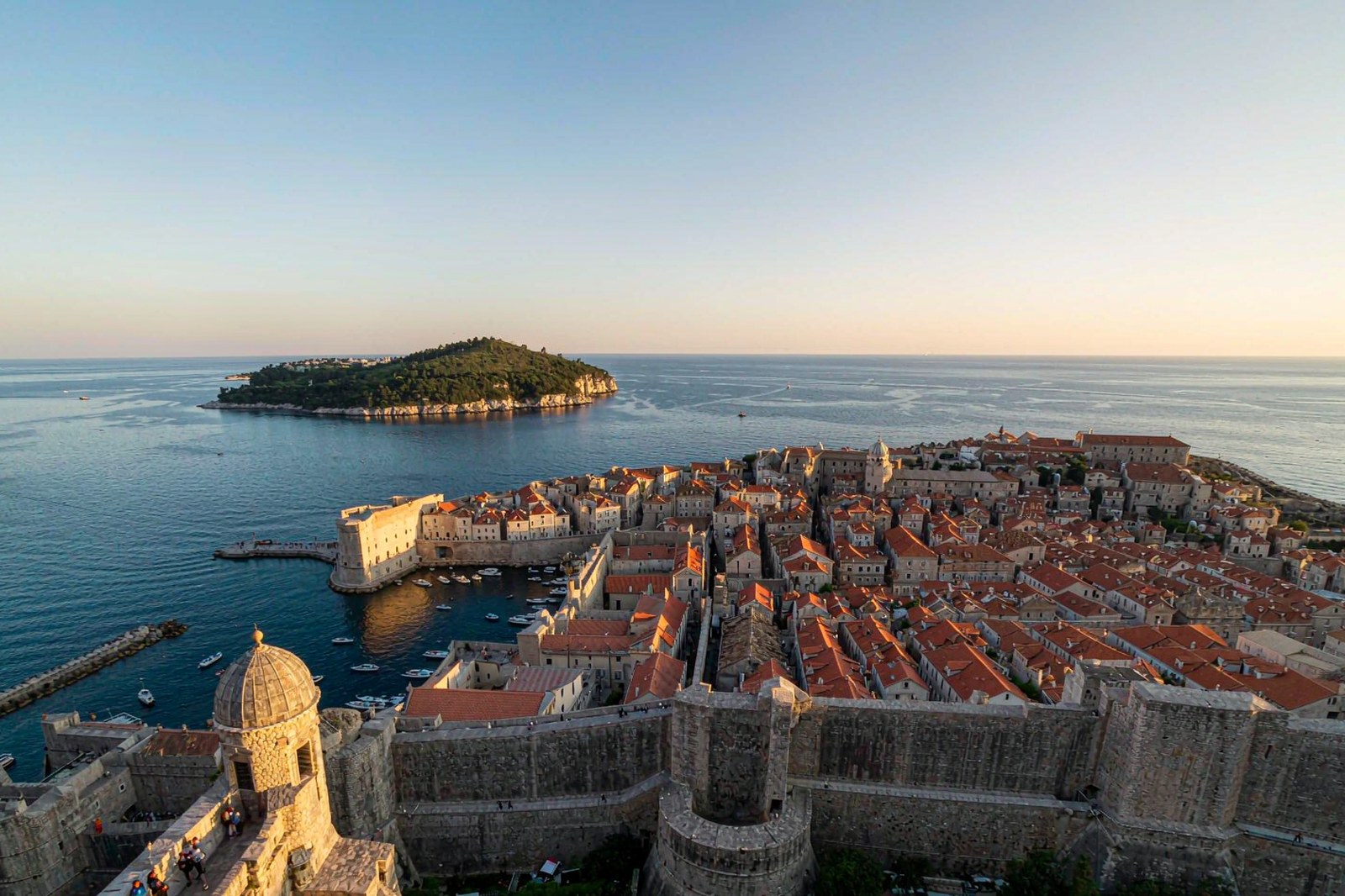
Croatia has a specific shape that changes what “best” means. The population is under four million. The tourist season concentrates eight figures of visitors onto a coastline of islands reached by ferry. Three operators run the networks, all of them sell a tourist prepaid card near EUR 10, and none of the travel eSIM brands you are comparing will tell you which of the three you end up on.
The verdict before the detail: for a one-week coastal trip, buy the smallest plan that covers your data need rather than the cheapest headline price, install it at home, and accept that you cannot verify the host network. If you are heavy on data and staying ten days or more, a EUR 11.49 card from a kiosk in arrivals beats almost every travel eSIM on price. If you are arriving by ferry and leaving by ferry, the eSIM still wins on setup time. The rest of this page is the reasoning, the numbers, and the four situations where the whole comparison stops mattering.
Does anyone actually tell you which Croatian network you get?
No. And that single fact reorganises the entire comparison.
Saily describes its Croatian coverage as coming from “Croatia’s best networks” and does not name a carrier anywhere on its Croatia page. Airalo, Nomad and Holafly are the same in their own listings. One comparison site published an attribution naming Hrvatski Telekom for a specific provider, then withdrew it and wrote that nothing in its records supported the claim. When a competitor retracts a network attribution in public, that is the market telling you the data does not exist outside the providers’ internal contracts.
Why it matters differently in Croatia than in, say, Germany: Germany has three networks with visibly different rural performance, so the choice has consequences. Croatia’s three operators cover the inhabited coast and the inhabited islands broadly, and the gaps are geographic rather than operator-specific — a cove on a small island, an inland ridge, the middle of a ferry channel. If the gaps are the same regardless of who sells you the plan, then paying a premium for a supposedly better host network is paying for a story.
What to do with this: stop ranking on network. Rank on the things the provider actually controls and publishes: when the clock starts, whether hotspot is capped, what the top-up costs, what happens at the data threshold, and whether support answers during Croatian evening hours. If you genuinely need to know the towers under your feet, the only honest route is a local prepaid card from A1 or Telemach, where the network is on the packaging. The carrier-by-carrier comparison covers that route in detail, including what each operator’s tourist bundle contains.
One more consequence. A plan that cannot switch networks has no escape route when a cell gets congested — and Croatian coastal cells do get congested in August, when a ferry empties a few hundred phones onto the same waterfront at once. A plan with automatic switching can move. That is a real, checkable difference, and it is not the same thing as “which network”.
Is there a best eSIM card for Croatia, or are they all the same?
This is the most-searched confusion in the category, so it deserves a direct answer. There is no such object as an eSIM card. An eSIM is a chip soldered into your phone; what you buy is a profile — a small file delivered as a QR code or an in-app install — that the chip loads. Nothing arrives in the post, nothing goes in a tray.
People search “eSIM card Croatia” for three different reasons, and each has a different answer:
| What you actually want | What to buy | Where |
|---|---|---|
| Data on arrival without touching a shop | An eSIM profile from a travel provider | Online, before you fly; QR code by email or in the app |
| A physical card to put in a phone without eSIM support | A prepaid SIM card | Tisak kiosks in the arrivals hall at Zagreb, Split, Dubrovnik and Zadar; operator shops in any town |
| A data card for a tablet or a hotspot puck | Usually a physical prepaid SIM | Same kiosks, but check the device is not carrier-locked |
The physical version is not obsolete in Croatia. If your phone is older than the eSIM era, or if it is carrier-locked to a home operator, a plastic card from a kiosk is the only route — and it costs roughly EUR 10 to EUR 11.50 for ten days of unlimited data on a Croatian-only basis. That last part matters and I come back to it below.
What you should not do is buy a “Croatia eSIM card” from a reseller that mails you a plastic SIM with an eSIM label on the envelope. That is a physical SIM with marketing language attached, and it usually costs more than the kiosk while adding a week of postage.
What €11.49 at a Tisak kiosk does to every price you see online
Kiosks in Croatian arrivals halls sell tourist prepaid cards. As of October 2026 the three operators were quoting roughly these numbers, all in euro, all Croatia-only:
| Operator | Tourist bundle | Price | EU roaming included |
|---|---|---|---|
| Hrvatski Telekom | Unlimited data, 10 days | €11.49 (top up €8 for 10 more days) | No |
| A1 Hrvatska | Unlimited data + 100 min/SMS, 10 days | ~€10 | No |
| Telemach | Unlimited data, 10 days, or 10 GB + 200 min/SMS, 30 days | €9.95 | No |
Read that table again next to a travel eSIM price list and something uncomfortable happens. A 10 GB / 30-day eSIM at $17.99 is more expensive than ten days of unlimited local data at €11.49, which is about $13.45 at the rates quoted in October 2026. For a data-hungry traveller staying a week or more, the local card is not a compromise — it is the better product at a lower price.
So why do most visitors still buy the eSIM? Four reasons, and only one of them is about money:
- The queue. The kiosk is in the terminal, but the queue is real in July and August, and it moves at the speed of passport checks and till procedures.
- The clock. Ten days is ten days from activation. An eleven-day trip needs a top-up or a second card.
- The number swap. A physical card replaces your home SIM unless you have a spare tray, which means your bank’s verification SMS goes to a card in a drawer.
- The EU clause. Croatian tourist bundles are domestic-only. If your trip continues to Slovenia, Italy or Greece, the cheap card stops working at the border while a regional eSIM keeps going. For an EU resident the calculus flips entirely, because your home plan already roams here at domestic rates.
That is the trade-off in plain terms: the local card wins on price for a Croatia-only trip of ten days or less; the eSIM wins on continuity, on trips that cross borders, and on any arrival after 22:00 when the kiosk shutters are down.
Five plans, five sizes: where the per-gigabyte line crosses
Here is the price ladder as published in August 2026 by the three providers most people end up choosing between, plus two smaller ones for range. All figures are the providers’ own published prices on the dates noted; they move, so treat this as shape rather than gospel.
| Size | Saily | Nomad | Airalo | eSIM4 |
|---|---|---|---|---|
| 1 GB | $3.99 / 7d | $4.00 / 7d | $4.00 / 3d | $2.98 |
| 3 GB | $7.99 / 30d | $7.00 / 30d | $7.50 / 7d | — |
| 5 GB | $10.99 / 30d | $9.00 / 30d | $10.50 | — |
| 10 GB | $17.99 / 30d | $15.00 / 30d | $17.00 | $15.98 / 30d |
| 20 GB | $27.99 / 30d | $21.00 / 30d | $25.50 | — |
| 50 GB | not offered | $31.00 / 30d | $35.00 | $35.00 |
Now the same table as cost per gigabyte, which is the only column that compares anything:
| Size | Saily | Nomad | Airalo |
|---|---|---|---|
| 1 GB | $3.99 | $4.00 | $4.00 |
| 3 GB | $2.66 | $2.33 | $2.50 |
| 5 GB | $2.20 | $1.80 | $2.10 |
| 10 GB | $1.80 | $1.50 | $1.70 |
| 20 GB | $1.40 | $1.05 | $1.28 |
| 50 GB | — | $0.62 | $0.70 |
Three things fall out of that.
The 1 GB tier is a loss leader, not a recommendation. At $3.99 it looks like the cheap option and it is the most expensive data in the table by a factor of six against the 50 GB tier. It is also the plan most people buy. If your trip is four days and your phone is mostly on café Wi-Fi, 1 GB is genuinely enough — but know that you are buying convenience, not value.
The curve flattens between 3 GB and 10 GB. Moving from 3 GB to 10 GB costs roughly $10 and multiplies your data by three. There is almost no trip length where 3 GB is the right buy and 10 GB is not, unless you are staying four days and have hotel Wi-Fi.
The 50 GB tier exists and nobody mentions it. At $31 for 30 days it is the cheapest per gigabyte in the country by a wide margin. It makes sense for a two-week island-hopping trip with tethering, a family sharing one plan, or anyone working remotely from a flat in Split.
The one-line rule: pick the size where the per-gigabyte cost falls below $2, then check whether the total volume fits the trip. Below $2 per GB starts at 5 GB on Nomad, 10 GB on Saily and Airalo. Anything under 3 GB is paying for convenience.
The Sarajevo detour: what happens when your phone finds a Bosnian mast
Croatia’s southern coast is a narrow strip with a border at each end of the far south. Near the Neum corridor and again near the Montenegrin border at Debeli Brijeg, a Croatian phone can attach to a Bosnian or Montenegrin mast because the signal is stronger where you are standing than the domestic one.
In practice this looks like this: you are on the Pelješac peninsula, your phone shows full bars, and nothing loads — or worse, it loads and your provider charges roaming. It is one of the few connectivity problems in Croatia that is neither the network’s fault nor your plan’s fault.
Three defences, in order of reliability:
- Turn off automatic network selection for the days you are in the far south, and pick a Croatian network manually. You will drop to one bar in the worst spots and keep working.
- Check the carrier name in the status bar, not the signal bars. If it says a non-Croatian operator, you have roamed.
- Buy a plan whose roaming terms you have read, because a data-only travel eSIM that includes “Europe” may treat Bosnia as included while a Croatia-only plan treats it as an error.
The same advice applies to a day trip to Mostar or Kotor, which a lot of Dubrovnik itineraries include. Those are different countries with different rates, and neither is covered by a Croatia-only product. If your itinerary has a border in it, the multi-country route is worth pricing before you commit to a Croatia-only plan.
Which plan dies first on a ferry from Split to Hvar?
All of them, for part of the crossing, and this surprises people who bought a plan specifically because they were island hopping.
A ferry from Split to Hvar runs about an hour to Stari Grad or a little over an hour to the town of Hvar on the fast catamaran. In the middle of the channel there is no cell site within range of a passenger deck, so the connection drops. It comes back as you approach the island. The same happens on Korčula, Brač, Vis and the longer Mljet crossing, where the gap is longer.
This is normal and it is not a reason to change providers — the physical geography is the same for everyone. What it does change is your planning:
- Download the island map before boarding. Every ferry company’s app, every ticket QR code and every apartment check-in message needs to work offline.
- Screenshot the return timetable. The Jadrolinija and Krilo timetables are PDFs that will not load in the channel.
- Do not schedule a video call across a crossing. It will fail mid-sentence, and reconnecting costs more data than the call.
- Expect island coverage to vary by island, not by provider. Hvar and Brač behave like the mainland. Korčula and Vis are more variable. The small outer islands — Mljet, Lastovo, Susak — can be weak enough that a text message is the realistic ceiling.
If your plan is a fixed-size bucket rather than unlimited, the ferry gap is also free data: an hour with no signal is an hour you are not spending gigabytes. I have never seen that argued in a comparison table, and over a two-week island trip it is not nothing.
What the 180-day activation window is really worth
Saily’s Croatia plans can be bought and left unactivated for 180 days, and the clock starts when you first connect in the destination rather than at the moment of purchase. That is the longest window in this market and it is worth understanding, because the alternative is worse in a way that costs real money.
Plans that start counting at installation have a specific failure mode: you install on a Tuesday to “get it out of the way”, fly on Sunday, and land with five of your seven days left. On a short trip that single mistake can halve the value of the plan. On a 30-day plan it barely matters.
Two questions to ask at checkout, in this order:
- Does the clock start at purchase, at installation, or at first connection in Croatia? First connection is the only answer that costs you nothing.
- How long can the profile sit uninstalled? Anything under 30 days is a planning constraint; 180 days means you can buy in a sale and use it next summer.
If a provider will not answer either question on the product page, that is information too.
Is one Europe plan cheaper than a Croatia plan for your route?
For a Croatia-only trip, a regional plan is usually the more expensive way to buy the same gigabytes. For anything with a border in it, that reverses.
| Itinerary | Croatia-only plan | Europe regional plan |
|---|---|---|
| Zagreb in, Dubrovnik out, 7 days | Cheaper | Overpaying for coverage you never use |
| Croatia + Slovenia + Italy, 14 days | Fails at the first border | Cheaper than two or three separate plans |
| Croatia + Bosnia day trip from Dubrovnik | Fails at Neum | Depends on whether the plan lists Bosnia by name |
| Croatia + Montenegro, 10 days | Fails at Debeli Brijeg | Usually the only sane option |
| Cruise with stops in Greece and Italy | Fails after the first port | Clearly cheaper |
The trap is the word “Europe” itself. A regional product that covers 40 countries may not cover Bosnia, Montenegro, Albania or Kosovo, and the Balkans are exactly where Croatian itineraries leak across borders. Check the country list by name rather than trusting the label. The Europe-wide breakdown has a table for the Balkan gap specifically.
There is also a reader-identity question that most Croatia pages skip. If you live in the EU or EEA, your home SIM already works in Croatia at domestic rates under Roam Like at Home, so the correct purchase may be nothing at all. If you are travelling from the United States, Canada or the UK, nothing about your home plan applies and you need a product. Same destination, opposite answer.
Three trips, three correct buys
Abstract comparisons are useless without a trip attached. Here are the three itineraries that cover most visitors, with the purchase each one implies.
The four-day Dubrovnik city break. Fly in, stay inside the walls, walk everywhere, eat out, leave. Data need is maps, restaurant lookups, a boarding pass and messages: under 1 GB for most people. Buy the smallest plan available, ideally the $2.98–$3.99 tier, and do not pay for 30 days of validity you will not use. A local card is a waste of a queue here.
The ten-day island hop. Split, Hvar, Korčula, maybe Vis, ferries between each. Data need is maps, ferry timetables, apartment messages, photos uploaded from the boat, and no fixed Wi-Fi for days at a time. This is the trip where 10 GB is correct and 1 GB is a mistake — not because you will stream, but because there is no hotel Wi-Fi to fall back on for four days in a row. Buy the 10 GB tier or the EUR 11.49 local card, and accept the kiosk queue if the price difference matters to you.
The two-week remote-work stay. A flat in Split or Zadar, calls in the morning, afternoons out. Video calls are the expensive part: an hour of HD calling is roughly 1 GB. Two weeks of daily calls plus normal use lands near 30–50 GB. This is the only itinerary where the 50 GB tier at $31 is obviously right, and the only one where tethering rules deserve a second look before you buy.
Three trips, three different tiers, and in none of them does the host network matter. That is the point.
What a 1 GB plan is genuinely enough for
Since the 1 GB tier is the most-purchased and the worst value, it is worth being concrete about what it buys.
| Activity | Data | What 1 GB covers |
|---|---|---|
| Map navigation, 1 hour | ~5–10 MB | Effectively unlimited navigation |
| Ride-hailing app, per ride | ~1–2 MB | Hundreds of rides |
| Messaging with photos | ~2–5 MB per photo | A few hundred photos |
| Music streaming, 1 hour | ~50–100 MB | 10–20 hours |
| Video streaming, 1 hour SD | ~250–500 MB | 2–4 hours |
| Video call, 1 hour HD | ~800 MB–1 GB | One call |
Read down the right-hand column and the verdict is unavoidable: 1 GB is a maps-and-messages plan. It is enough for a city break where you sleep somewhere with Wi-Fi. It is not enough for a single evening of streaming, and it is not enough for one work call. If your trip includes either, buy 5 GB or more — the price difference is smaller than the cost of topping up in a panic at 23:00.
What your home operator charges for Croatia if you do nothing
Most people comparing six eSIM brands are forgetting the option they already own, which is to do nothing and let their home plan absorb the trip. That option is worth pricing because for some readers it is cheaper than every plan in the tables above, and for others it is where the real damage happens.
Two models dominate. Day passes charge a fixed fee per day of use, typically in the $10–15 range for a US or UK operator, and only on days you actually use data. Free-but-throttled roaming includes data at no extra cost and caps the speed hard — T-Mobile’s Croatia terms in 2026 advertised free data at 256 Kbps, with a $15/day add-on to lift the cap. At 256 Kbps a restaurant menu takes a while and a map tile is slow but functional; a video call is not happening.
Do the arithmetic for a seven-day trip:
| Route | Cost | What you get |
|---|---|---|
| Do nothing, throttled roaming | $0 | Messages and slow maps, no video, no tethering |
| Day pass, 7 days | ~$70–105 | Home allowance, full speed, your own number |
| Croatia eSIM, 5 GB | ~$9–11 | 5 GB at local speed, no number |
| Croatia eSIM, 10 GB | ~$15–18 | 10 GB at local speed, no number |
| Kiosk card, 10 days | ~€11.50 | Unlimited domestic data, no number, one queue |
The day-pass column is the one that surprises people. Seven days of passes can cost five to eight times a 10 GB eSIM, and the eSIM is faster in most coastal locations because it is not being routed back through your home network. Where the day pass wins is short trips — two or three days, when the pass costs $20–30 and the eSIM costs $10 but adds an install step — and any trip where you must keep your own number live for calls from home.
There is one more case worth naming: the traveller who keeps their home SIM active for SMS banking codes and expects data to work as well. It does, at the throttled speed, until it does not. If your bank’s two-factor authentication is the only reason you are keeping the line, turn data off on that line entirely and let the eSIM handle data. Your codes still arrive; your maps still load.
Two phones, one plan: the split that surprises couples
The second-most-common mistake after buying 1 GB is buying two of everything. Two travellers, two 5 GB plans, $22 spent — when one 10 GB plan with hotspot at $17.99 would have covered both, or one local card at €11.49 would have covered both with unlimited data.
Three configurations, with what each actually costs and where each one fails:
Two separate plans. Best when you will split up — one of you on a ferry, one in the old town — and when either of you might need to make a call. Worst on price. Also the only configuration where a plan failing on one phone does not take the other person offline.
One plan plus hotspot. Cheapest by a wide margin and works well for a couple that stays together. It fails in three specific ways: the host phone’s battery drains noticeably faster with the hotspot on, the guest phone loses data whenever the host walks away, and a few providers permit tethering but throttle it to the point where the second device is only good for messages.
One plan, two profiles. Some providers let you install the same purchase on a second device or issue a companion profile. Where it exists it is the best of both, and where it does not exist the support agent will usually suggest the hotspot instead. Ask before you buy rather than after.
The number that decides it: a hotspot session on a modern phone draws roughly 10–15% of a battery per hour of active use. On a ferry with no socket, that is the difference between navigating the arrival and asking a stranger for directions. A small power bank costs less than the second plan and solves it.
What to screenshot before you close the checkout page
The single most useful thing you can do for yourself in this category is build a small evidence file in the first ten minutes, because every refund argument is won or lost on what you can show.
- The plan description as sold, including the data volume, the validity period, and any fair-use or hotspot line. Screenshot the product page, not the order confirmation.
- The activation timestamp, from the app or the email that says when the profile went live.
- A speed test taken in the destination, with the server name and the timestamp visible.
- The usage counter in both the provider’s app and your phone settings, side by side. They will not match; the gap is your evidence if a plan expires early.
- Any support conversation, in the app’s chat rather than a phone call, so it is text you can forward.
This takes four minutes and it is the difference between a refund and an argument. The evidence method I use for plan disputes was written for a different country but the checklist is identical.
Does 5G actually change anything on a Croatian island?
Croatia’s mobile networks are fast by regional standards — independent testing in August 2026 put the national median mobile download at about 120 Mbps and the 5G median near 194 Mbps. Those are good numbers. They are also measured where people live, which is not where you will be standing.
On the coast and in the cities, 4G is already faster than anything you will do with it. On the islands, 5G exists in the main towns and thins out quickly as you move along the shore. What you will notice is not the generation but the load: a waterfront café in Hvar at 19:00 in August has several hundred phones on one cell, and no generation fixes congestion.
So the practical answer is that 5G is not a reason to pay more, and no plan should be chosen on the strength of the letters “5G” in its marketing. The things that actually determine whether your connection feels good on an island are: how close the nearest site is, how many people are on it, and whether your plan can move to another network when the first one is saturated.
Frequently asked questions
What is the best eSIM for Croatia overall?
There is no single winner, because the answer depends on size and trip shape. At 1 GB, the cheapest entry tier in the market wins and that is currently around $3–4. Between 3 GB and 20 GB, the ranking shifts by size and one provider that leads at 1 GB is the most expensive of the three at every larger tier. At 50 GB, only two providers sell the size at all. Choose the size first, then compare within it.
Is Saily good for Croatia?
It is competitive at the entry tier and honest about its limits. Its 1 GB week at $3.99 is the cheapest published Croatia entry price, its plans allow hotspot without limits, and its 180-day activation window is the most forgiving in the market. Above 1 GB it is priced higher than Nomad at every size. The full Saily review for Croatia has the plan-by-plan arithmetic.
Do I need a Croatia eSIM if I already have EU roaming?
Only if you live outside the EU or EEA. Under Roam Like at Home, an EU or EEA home plan works in Croatia at domestic rates, so a separate purchase is usually unnecessary. Visitors from the US, Canada, the UK and elsewhere outside that bloc get no such treatment, and their home operators’ day passes are typically more expensive than a Croatia eSIM for anything longer than a few days.
Can I buy an eSIM card at Zagreb airport?
You can buy a physical prepaid SIM card at the Tisak kiosk in the arrivals hall, and you can buy a data eSIM from your phone before you fly — but not from the airport, because an eSIM is delivered online. The kiosk route costs about EUR 10 to EUR 11.50 for ten days of unlimited domestic data; the eSIM route costs less for small data volumes and more for large ones.
Which Croatian network do travel eSIMs use?
The providers do not publish it. Saily says only “Croatia’s best networks”; the other major brands are equally vague. Any page that names a specific Croatian carrier for a specific travel brand is repeating marketing copy or guessing — one comparison site withdrew exactly that claim. If the network identity is essential to you, buy a local prepaid card where the operator is on the packaging.
Is 10 GB enough for a week in Croatia?
For a coastal trip with hotel Wi-Fi most nights, yes, with margin. For an island-hopping week with four consecutive nights away from reliable Wi-Fi, 10 GB is the right size rather than a generous one — ferry timetables, maps, photo uploads and apartment messages add up faster than people expect. For a remote-work week with daily video calls, no; budget 2–3 GB per working day.
Does a Croatia eSIM work in Dubrovnik, Split and on the islands?
Yes, on the same profile and with no settings change. Croatia is small and its networks cover the inhabited coast and inhabited islands broadly. The exceptions are geographic: the middle of a ferry channel, inland ridges, and the smallest outer islands, where coverage can drop to a weak signal or nothing. None of those gaps depend on which travel brand you bought.
How much should a Croatia eSIM cost for a week?
For a phone-only week with Wi-Fi at night, the honest range is $8 to $18, and anything in that band is a fair price. Below it you are buying a bucket too small for the trip; above it you are paying for a validity window or a brand. The trap is the $3.99 entry tier, which is the cheapest product in the country and the most expensive data in it per gigabyte — correct for a four-day city break, wrong for a week of island hopping. Compare within a size rather than across sizes, and the market stops looking confusing.
What happens if my Croatia eSIM does not work on arrival?
Work through four things in order: confirm the eSIM line is enabled and set as the mobile data line, confirm data roaming is switched on for that line (travel eSIMs roam onto the local network by design), confirm you have not hit a device-level data block, then restart the phone once. If it still fails after ten minutes, open a support chat and screenshot the error before you change anything else — the first-hour walkthrough has the step-by-step version.
The version to keep in your head
Four sentences, in the order that matters:
Rank on the clock and the threshold, not on the network, because nobody publishes the network. Compare within a size, not across sizes, because the per-gigabyte curve rewards volume and punishes short trips. Let the itinerary pick the size — city break 1 GB, island hop 10 GB, remote work 50 GB — and let the size pick the provider. And if you are staying ten days or more with no border crossing, price the EUR 11.49 kiosk card before you check out, because it is the real benchmark and most comparison pages will not show it to you.
If you would rather skip the arithmetic, the Croatia plans on Roami start at $1.99 and the activation walkthrough covers the first ten minutes after landing. Either way, install before you fly, screenshot the plan as sold, and download the island map while you still have signal.