Saily eSIM Croatia: What $3.99 Actually Buys You

Roami Team
Roami offers reliable eSIM plans, serving over 1 million travelers annually, and supports automatic local network switching to help travelers stay connected globally.
📑 Table of Contents
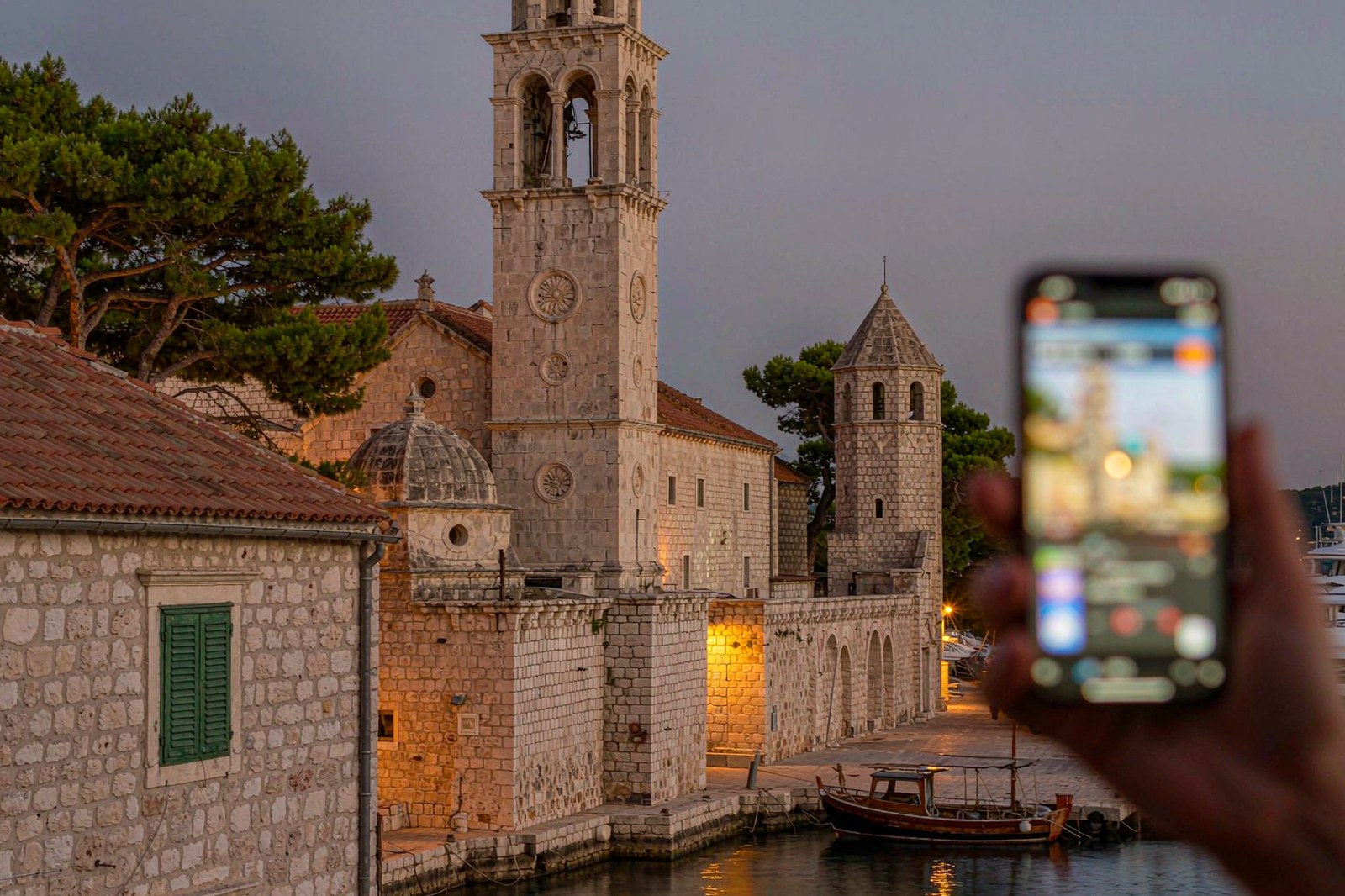
Saily is the eSIM brand built by the team behind NordVPN, which explains both its strengths and its shape: a clean app, a security-company instinct for privacy defaults, and a pricing grid that is easy to read at a glance. For Croatia it sells six products. One of them is the cheapest entry-level plan in the country. The other five are not.
The straight answer: if your trip is about a week and your data need is genuinely small, Saily’s $3.99 tier is the best-value entry point in the Croatian market and worth buying. If you need 3 GB or more, two competitors undercut it at every single size, and a €9.95 prepaid card from a kiosk at the airport gives you ten days of unlimited data for less than Saily’s 10 GB plan. This review is the arithmetic behind those three sentences.
I read every price on this page from Saily’s own Croatia listing, and the competitor figures from their own sites, in August 2026. Prices in this category move. Treat the shapes as durable and the exact numbers as a snapshot with a date on it.
What exactly does $3.99 buy in Croatia?
Six products, and the grid is deliberately simple: one price per size, most of them valid for 30 days.
| Plan | Price | Validity | Cost per GB |
|---|---|---|---|
| 1 GB | $3.99 | 7 days | $3.99 |
| 3 GB | $7.99 | 30 days | $2.66 |
| 5 GB | $10.99 | 30 days | $2.20 |
| 10 GB | $17.99 | 30 days | $1.80 |
| 20 GB | $27.99 | 30 days | $1.40 |
| Unlimited | from $38.99 | 5–30 days, priced by length | not computable |
Two structural things to notice before the price comparison.
The 30-day validity on everything except the entry tier is generous and slightly misleading. A 3 GB plan valid for 30 days sounds like a month of data. It is 3 GB, and if you use it in the first four days the remaining 26 days are just an expiry date. Validity is a constraint, not a feature — it only becomes valuable when your trip is long and your usage is light.
The per-gigabyte curve falls by 65% between 1 GB and 20 GB. That is normal for the category and it is why the entry tier, which is the most-bought plan in Croatia, is also the worst value per unit. Saily is not doing anything cynical here; every provider’s curve looks like this. The mistake is the buyer’s, not the seller’s.
For a concrete Croatian trip: four days in Dubrovnik with hotel Wi-Fi needs about 1 GB and the $3.99 tier is correct, no argument. Ten days island hopping between Split, Hvar and Korčula needs 10 GB, and at $17.99 you are paying more than the local kiosk card for a smaller allowance.
The 180-day window, and why it is the most useful thing here
Saily’s plans can sit unactivated for 180 days, and the clock starts when you first connect in Croatia rather than when you pay. Nothing else in this market matches that, and it solves a problem most travellers do not know they have until they have it.
The problem: you buy a plan three weeks before the trip because you are organised, install it the same evening to “get it out of the way”, and land to discover that six of your seven days are gone. Plans that start counting at installation punish exactly the behaviour that travel advisers recommend. On a 7-day plan that mistake can halve the value; on a 30-day plan it is noise.
With a 180-day window and connection-start activation, the sequence becomes: buy whenever, install whenever, and the meter only begins when a Croatian cell accepts the profile. You can buy in a sale in February for an August trip and lose nothing.
Two practical consequences:
- Install it before you fly, but do not switch the line on. Installing while you are still at home on Wi-Fi means the profile is on the phone and tested; the line stays inert until it sees a Croatian network. This is the sequence that avoids both the “expired before I landed” failure and the “no internet on the tarmac” panic.
- Do not buy two plans for one trip “just in case”. The window is long enough that a spare is unnecessary; if the first plan fails, buying a second from the airport Wi-Fi takes four minutes.
The one thing the window does not do is protect you from a plan that activates early because your phone briefly saw a Croatian cell from a neighbouring country. Near the Bosnian and Montenegrin borders on the southern coast, that is a real edge case — it is the same accidental-roaming problem covered in the ranking page, and the fix is to keep the line switched off until you are inside Croatia proper.
Does Saily say which Croatian network it uses? No — here is what that costs you
Saily’s Croatia page says the connection comes from “Croatia’s best networks”. It does not name Hrvatski Telekom, A1 Hrvatska or Telemach anywhere. Neither do Airalo, Nomad or Holafly in their own listings.
In most countries that opacity is annoying but tolerable. In Croatia it has a specific consequence worth understanding: you cannot choose your plan on the basis of network quality, because the information does not exist, and any page that supplies it is guessing. One comparison site published a carrier attribution for a Croatian eSIM and later withdrew it in public, writing that nothing in its records supported the claim. That is the whole story in one sentence.
What you can do instead:
- Test the network in the first hour and keep the result. A speed test with the server name and timestamp is the only trustworthy data point you will have.
- Buy a plan that can switch networks if the provider states it can. Congestion, not coverage, is the realistic problem on the Croatian coast in August.
- If the identity of the network is genuinely decision-critical — you are working from a fixed address and need the best site — buy a local prepaid card where the operator is printed on the card, and use the carrier comparison to pick between them.
This is not a reason to avoid Saily. It is a reason to stop paying a premium for a network claim nobody can verify.
Where Saily is beaten: the 3 GB to 20 GB range
Here is the part a sponsored review would leave out. At every metered size above 1 GB, Saily was the most expensive of the three major brands in August 2026.
| Size | Saily | Nomad | Airalo | Gap at Saily’s end |
|---|---|---|---|---|
| 3 GB | $7.99 | $7.00 | $7.50 (7 days) | +$0.99 |
| 5 GB | $10.99 | $9.00 | $10.50 | +$1.99 |
| 10 GB | $17.99 | $15.00 | $17.00 | +$2.99 |
| 20 GB | $27.99 | $21.00 | $25.50 | +$6.99 |
| 50 GB | not sold | $31.00 | $35.00 | no product |
The gaps are small at 3 GB and widen badly at 20 GB. Nomad undercuts Saily at all four sizes, by a dollar at the bottom and seven at the top, and Nomad also sells a 50 GB month at $31 that Saily simply does not offer. Airalo sits between them at three of the four sizes.
Three honest caveats on that table. Prices were read on different days in August 2026 and providers run promotions constantly, so a 20% discount code can flip any of those rows. Validity differs — Airalo’s 3 GB tier is a 7-day plan while Saily’s and Nomad’s are 30-day, which matters if your trip is long. And none of the three publishes its Croatian host network, so the comparison is price against price, not quality against quality.
The conclusion stands anyway: above 1 GB, Saily’s case has to be made on the app, the window and the support — not on price.
What €9.95 at a Croatian kiosk does to a $48.99 unlimited plan
Saily’s unlimited tier is the most expensive product in its Croatia range, and Croatia is the worst market in Europe to buy unlimited data from a travel brand. The reason is the local competition.
| Product | Price | Data | Validity |
|---|---|---|---|
| Saily unlimited | from $38.99 (shortest length); a 15-day tier was listed at $48.99 | Unlimited with a daily high-speed cap | 5–30 days |
| Telemach tourist card | €9.95 | Unlimited, domestic only | 10 days |
| A1 tourist card | ~€10 | Unlimited + 100 min/SMS, domestic only | 10 days |
| Hrvatski Telekom tourist card | €11.49 | Unlimited, domestic only; €8 to extend 10 more days | 10 days |
Read those side by side and the unlimited decision becomes uncomfortable for every travel brand, not just this one. Ten days of unlimited local data for under €10 — roughly $11.70 at October 2026 rates — against a travel SIM’s unlimited tier at four times the price.
The travel version is not a scam. It buys you four things the kiosk card does not: activation before you land, no queue and no passport conversation, a plan that works if your trip crosses into Slovenia or Italy, and no need to swap your home SIM out of the phone. For a cruise passenger with an eight-hour Dubrovnik stop, those four things are worth more than the difference. For a family of four staying ten days in one apartment, they are not.
The break-even is easy to state: the travel unlimited plan pays for itself only when your trip has a border in it, or when your arrival time is outside kiosk hours, or when you place a real value on not queueing. Otherwise the kiosk wins on price by a factor of three to four.
Saily’s daily high-speed allowance on unlimited tiers is reported at 5 GB per day before the throttle, which is generous against rivals that cap at 2 GB. That matters if you tether or stream. It does not matter if you are checking ferry times. The unlimited-data arithmetic covers what actually happens after the cap in detail.
Hotspot, calls and the US number add-on
Three details that decide whether a plan is usable for a couple or a family, all of them published by Saily rather than inferred.
Hotspot is not restricted. Saily states no hotspot limitations on its Croatia plans. That is better than several competitors, which permit tethering but throttle it, and it makes the “one plan, two phones” configuration viable. At 1 GB the feature is academic; at 10 GB it is the difference between buying one plan and two.
Calls and SMS are an add-on, not a default. The data plans are data-only. Saily sells a phone-number product with a US number and a minutes/text allowance attached, which is useful if you need a number that receives verification codes or if you want to make ordinary calls without an app. For most Croatia trips this is unnecessary — restaurant bookings happen over WhatsApp or in person, and receive-only SMS for banking works on your home line while roaming.
Credits come back on every purchase. Three percent of the plan price returns as Saily credit, usable on a future plan. On a $17.99 purchase that is about 54 cents. It is not a reason to buy, and treating it as one is how people end up over-buying to chase a discount. It is a mild reason to consolidate future trips onto one account rather than spreading purchases across three brands.
The app: activation, top-ups, and what support can actually do
The install flow is the standard eSIM sequence, and Saily’s version is cleaner than most because the app holds the profile rather than emailing you a QR code image that you then have to find in your inbox at a taxi rank.
The sequence, in the order that avoids problems: install the app at home, buy the Croatia plan, install the profile while on Wi-Fi, leave the line switched off, then switch it on after landing with data roaming enabled. Saily’s plans activate automatically when the profile reaches a Croatian network, which means the second switch-on is the only step you have to remember at the airport.
Top-ups happen in the app against the active plan. Two things to know: top-up pricing per gigabyte is usually worse than the original purchase, so sizing correctly at checkout is cheaper than fixing it later; and a top-up extends your allowance, not your validity — if the plan expires tomorrow, the extra data expires with it.
Support is 24/7 chat inside the app. In practice what chat can do is narrow and worth knowing in advance: it can reissue a profile, confirm activation status, adjust an expiry that failed, and escalate a refund. It cannot tell you which Croatian carrier you are on, because the information is not in the agent’s console either. Screenshot the error before you open the chat — the first three questions will be about what you see on screen.
Refunds: the window, the conditions and what disqualifies a claim
Every eSIM brand has a refund policy that reads generously and behaves narrowly. The market norm, Saily included, is a short window — typically measured in days from purchase, not from activation — conditioned on the plan being unused or the fault being demonstrable.
What that means practically:
- An unused plan inside the window is usually refundable. Keep the purchase unactivated and ask early.
- A plan that activated and did not work needs evidence, not assertion. A screenshot of the error, a speed test with a timestamp, and the app’s usage counter are what turn a complaint into a case.
- A plan that worked for four days and then expired will not be refunded unless you can show the expiry was earlier than the terms stated. Which is why the product page screenshot, taken at checkout, matters more than the receipt.
The evidence checklist in the ranking page is four minutes of work and it is what I would do before opening any support chat, for any brand.
Three travellers who should buy it, and two who should not
Buy it if you are the one-week, one-gigabyte traveller. A city break in Dubrovnik or Split, sleeping somewhere with Wi-Fi, needing maps, messages and a boarding pass. $3.99 is the cheapest entry in the market, the window means you can buy it early, and hotspot support means a second device can piggyback in an emergency.
Buy it if you book far ahead and cannot predict the dates. The 180-day activation window is the single most forgiving in the category. If your trip might move by a month, this is the product that survives the change.
Buy it if you want one app for several countries. Saily sells 200-plus destinations through one profile and one account, so a Croatia trip that continues into Slovenia and Italy can be handled without installing three sets of profiles.
Do not buy it if you need 10 GB or more and nothing else. Nomad is cheaper at every size from 3 GB up, by up to $7 at 20 GB, and sells a 50 GB month that Saily does not.
Do not buy it if your trip is ten days, Croatia-only, and you land before 22:00. The kiosk card at €9.95–€11.49 gives you unlimited domestic data for less than Saily’s 10 GB plan. The queue is real; it is also shorter than the price gap.
A day-by-day data diary for an island week
Price tables tell you cost per gigabyte. They do not tell you whether 5 GB covers your trip, which is the question that actually decides the purchase. So here is the same week two ways: what the phone really does, and what it costs in data.
The trip: Split in, ferry to Hvar, three nights, ferry to Korčula, two nights, ferry to Dubrovnik, two nights, fly out. Eight days, no apartment Wi-Fi assumption, photos uploaded daily, one work call.
| Day | Where | What the phone did | Data |
|---|---|---|---|
| 1 | Split → Hvar | Maps, ferry e-ticket, apartment messages, 60 photos uploaded, one hour of maps on the island | ~0.9 GB |
| 2 | Hvar | Navigation, restaurant lookups, 120 photos, 40 minutes of streaming in the evening | ~0.8 GB |
| 3 | Hvar, day on the water | Offline map used, camera only, no signal for two hours mid-afternoon | ~0.5 GB |
| 4 | Hvar → Korčula | Ferry timetable, 80 photos, one 40-minute video call | ~1.2 GB |
| 5 | Korčula | Maps, two bookings, 90 photos | ~0.6 GB |
| 6 | Korčula → Dubrovnik | Ferry, arrival navigation, 50 photos | ~0.5 GB |
| 7 | Dubrovnik | City walls navigation, tickets, queue-time browsing, 150 photos, one hour of streaming | ~1.1 GB |
| 8 | Dubrovnik → airport | Ride-hail, boarding pass, messages | ~0.4 GB |
Total: roughly 6 GB. Which means:
- 5 GB is the honest floor for this trip and it leaves no margin. One extra video call, or one evening where the apartment Wi-Fi does not work, puts you over.
- 10 GB is the correct purchase for this itinerary at $17.99 — not because you will use it all, but because being 2 GB short on Korčula means finding a shop that sells a top-up, and island shops close earlier than you expect.
- 1 GB is only viable if every night has working Wi-Fi. On an island hop, that assumption fails at least once.
The photo numbers surprise people most. A modern phone uploads a backed-up photo library in the background without asking, and a hundred photos a day is normal for a coastal trip. If your library sync is on and your camera roll is large, add 30–50% to every day above.
Reading the fair-use and expiry lines before you pay
Four lines in the terms decide more than the price does. They are written to be skimmed, so read them in this order.
What “unlimited” means on the tier you are buying. Saily’s unlimited plans carry a daily high-speed allowance, reported at 5 GB per day before the throttle. That is generous against rivals that cap at 2 GB, but it is a daily cap: unused allowance does not roll into tomorrow, and a heavy first day does not buy you a lighter second one.
Where validity ends versus where data ends. On metered plans the two are separate clocks. A 10 GB plan valid for 30 days can run out of data on day four and stay “active” for 26 more. A top-up adds data to the existing validity rather than extending it, so topping up on the last day is money spent on an expiring plan.
Whether hotspot is included and at what rate. Saily states no hotspot restrictions, which is better than the market norm, where tethering is permitted but throttled hard enough to make a second device useless for anything but messages. Check this line specifically, not the marketing bullet above it.
What the credits expire against. The 3% credit back is real money in the account and it expires. On a single $17.99 purchase it is small enough to forget, which is exactly why it accumulates unused. If you travel twice a year, it is worth checking the credit balance before buying the next plan rather than letting it lapse.
Does one Saily account beat buying country by country?
A lot of Croatia trips are not Croatia-only. Dubrovnik to Kotor, Split to Ljubljana, or a cruise that touches Venice and Corfu. Saily’s model is one eSIM profile and one account across 200-plus destinations, so the question is whether that account structure is cheaper than buying each country separately — and the answer depends on how many borders you cross.
| Route | One account, per-country plans | Regional Europe plan |
|---|---|---|
| Croatia only, 8 days | Cheapest option | Overpaying for unused coverage |
| Croatia + Slovenia, 12 days | Two plans, two purchases, no reinstall | Usually cheaper than two country plans |
| Croatia + Bosnia day trip | Bosnia must be bought separately | Only if the plan names Bosnia |
| Croatia + Italy + Greece cruise | Three plans, or a regional product | Clearly the better structure |
The structural advantage of a Saily eSIM for Croatia is not price — it is that the profile stays installed and the app attaches a new destination plan when you cross a border, rather than making you scan a new QR code in a bus station. If your itinerary is genuinely multi-country, that is worth paying a small premium for. If it is not, the account model is a feature you will never use, and price should decide.
One warning about the multi-country plan: check the country list by name. A “Europe” product that covers 40 countries often excludes Bosnia, Montenegro and Albania, and those are exactly the borders a Croatian itinerary crosses. The Balkans coverage gap is documented country by country.
Day four, 80% used: the three options ranked
The moment that decides whether a plan was a good buy is not checkout. It is day four, when the counter says 80% consumed and the trip has three days left. Three options exist and they are not equal.
Top up in the app. Fastest, works at any hour, and the most expensive per gigabyte — top-up tiers are priced for urgency, typically 20–50% worse per GB than the original purchase. It also adds data to a validity clock that may be about to expire, which is the part people miss.
Buy a second plan in the app. Often cheaper per gigabyte than a top-up because you are buying a fresh plan rather than a rescue pack, and it comes with its own validity window. The cost is a second profile and a second line to manage, which on iOS means choosing which line carries data after the install.
Walk into a shop or kiosk and buy a local prepaid card. Cheapest per gigabyte by a wide margin in Croatia — €9.95 to €11.49 for ten days of unlimited — but it requires a physical swap or a spare SIM slot, a queue, and business hours. At 21:00 on a Sunday on Hvar, this option does not exist.
The ranking that follows: if you are in a city during the day, the kiosk wins on price. If you are on an island, in the evening, or leaving in 48 hours, buy in the app and accept the premium. If you have more than five days left and no border crossing, the kiosk card is worth the walk even at island prices, because ten days of unlimited for €11 beats another 5 GB for $10.99.
There is a fourth option nobody lists: stop using data. It sounds facetious and it is not. On day four of an island trip, the heavy consumers are usually photo backup and video, both of which can wait for Wi-Fi. Turning off background photo sync mid-trip typically recovers 30–40% of daily consumption, which on a 10 GB plan is the difference between a top-up and no top-up.
Does any of this change in May or October?
The prices do not move much with the season; the experience does.
Queues. The kiosk queue in Zagreb or Split arrivals in July and August can run 15–20 minutes behind a single coach arrival. In May and October it is usually two or three people. That changes the arithmetic of the local card, because the main non-price reason to prefer an eSIM is the queue.
Congestion. A waterfront cell in Hvar town at 19:00 in August carries several hundred devices. The same cell in May carries dozens. No plan fixes congestion, so if your trip is outside peak season, the network-quality argument for paying more mostly evaporates — and with it the reason to care which network you are on.
Ferry schedules. Off-season timetables are thinner, which makes the offline-screenshot advice more important rather than less: a cancelled catamaran with no signal to rebook is the worst version of this trip.
Daylight and battery. Shoulder season means fewer hours of screen-on navigation per day, which lowers data and battery consumption together. A 5 GB plan that is tight in August has margin in October.
What does not change: the activation window, the per-gigabyte curve, the unnamed host networks, and the fact that a Croatia-only local card stops working the moment your itinerary crosses into Bosnia or Montenegro.
Three phones that quietly refuse the profile
The most common failure with any travel eSIM is not the network. It is a phone that cannot hold the profile, discovered at a ferry queue rather than at home. Three cases account for most of it in Croatia.
A phone bought on a carrier instalment plan in the US. Some carrier-locked handsets accept the download and then refuse to register on a foreign network. The profile looks installed; nothing works. Carrier locks are a device setting with the operator, not something an eSIM provider can fix, and it is worth confirming before you buy rather than after.
A mainland-China iPhone with two physical SIM slots. Those models have no eSIM hardware at all, regardless of what the model name suggests. If your phone has two plastic trays and no eSIM menu in settings, no plan in this article applies to it, and the kiosk card is your route.
An older handset at the edge of the support list. eSIM support arrived at different times across manufacturers, and a phone that supports it on one firmware version may not on another. Our device list is the fastest check; if your model is not on it, assume it is not supported rather than hoping.
What the three have in common: the failure is silent. Nothing errors, nothing warns, and the phone simply behaves as if no plan exists. That is why the install-before-you-fly advice is not about convenience — it is the only way to discover a device problem while you still have a week to solve it.
Frequently asked questions
Is Saily a legitimate eSIM provider?
Yes. Saily is operated by Nord Security, the company behind NordVPN, and it is one of the larger travel eSIM brands by destination count. The relevant caveats are commercial rather than legitimacy: it does not publish its host networks, its metered prices sit above two competitors in Croatia, and its refund window is short like everyone else’s.
How much does Saily cost for Croatia?
Six products as of August 2026: $3.99 for 1 GB over 7 days, $7.99 for 3 GB, $10.99 for 5 GB, $17.99 for 10 GB and $27.99 for 20 GB, all on 30-day validity, plus an unlimited tier starting at $38.99 for the shortest length. Per gigabyte that runs from $3.99 down to $1.40.
Does Saily work on Croatian islands and ferries?
The plan works on the same networks as every other travel eSIM, so island coverage is broadly fine on Hvar, Brač and the main Dalmatian islands and weaker on the smallest outer islands. Ferry crossings drop signal mid-channel regardless of provider, because there is no cell site in the middle of the water. Download maps and timetables before boarding.
Can I use Saily as a hotspot in Croatia?
Yes. Saily states no hotspot restrictions on its Croatia plans, so tethering a laptop or a second phone is permitted. Two limits apply in practice: your data allowance, and battery — an hour of active hotspotting costs roughly 10–15% of a phone battery.
When does a Saily Croatia plan start counting?
At first connection to a Croatian network, not at purchase and not at installation, and the profile can sit uninstalled for up to 180 days. This is the longest activation window in the market and the main reason to consider Saily for a trip whose dates might shift.
Is Saily cheaper than a Croatian prepaid SIM card?
At 1 GB, yes — $3.99 against roughly €10 for the cheapest kiosk card. At anything larger, no: the kiosk card gives unlimited domestic data for ten days at €9.95–€11.49, which undercuts Saily’s 10 GB and 20 GB plans. What the eSIM buys instead is pre-flight activation, no queue, and coverage that survives a border crossing.
Does Saily give you a Croatian phone number?
No. The data plans are data-only and attach no local number. Saily sells a separate phone-number product built around a US number with a minutes allowance, which is useful for verification codes but is not a Croatian number and does not give you local calling rates.
Can I get a refund if I never activate the plan?
Usually yes, if you ask inside the provider’s refund window and the plan is untouched. Saily’s window runs from purchase rather than from activation, which matters because its plans can sit uninstalled for 180 days — the refund clock and the activation clock are not the same clock. Ask in writing through the app’s chat so the request is timestamped, and leave the plan uninstalled while you wait. A plan you installed “just to check” is no longer unused, and that is the most common reason a legitimate refund claim fails.
What happens if Saily does not work when I land in Croatia?
Check four things in order: the Saily line is enabled and selected as the mobile data line, data roaming is switched on for that line, the phone is not in a device-level data block, and the profile shows as installed rather than pending. Then restart once. If it still fails after ten minutes, screenshot the error and open the in-app chat — the arrival walkthrough has the screen-by-screen version.
The verdict, in one paragraph
Saily’s Croatia range is a well-built product with one genuinely excellent tier and five unremarkable ones. The $3.99 week is the cheapest way into the Croatian market and the 180-day activation window is the most traveller-friendly feature any brand here offers. Above 3 GB the price argument disappears — Nomad beats it at every size and the €9.95 kiosk card beats it on unlimited data for any Croatia-only trip of ten days or less. Buy it for short trips, flexible dates and multi-country itineraries; buy something else, or buy local, when volume is the point.
If you want the same arithmetic across all six brands before deciding, the Croatia ranking page puts them in one table and picks by trip shape. If you have already decided and only want the install sequence, start with the first-ten-minutes guide.