The Best eSIM for Ireland Depends on One Question

Roami Team
Roami offers reliable eSIM plans, serving over 1 million travelers annually, and supports automatic local network switching to help travelers stay connected globally.
📑 Table of Contents
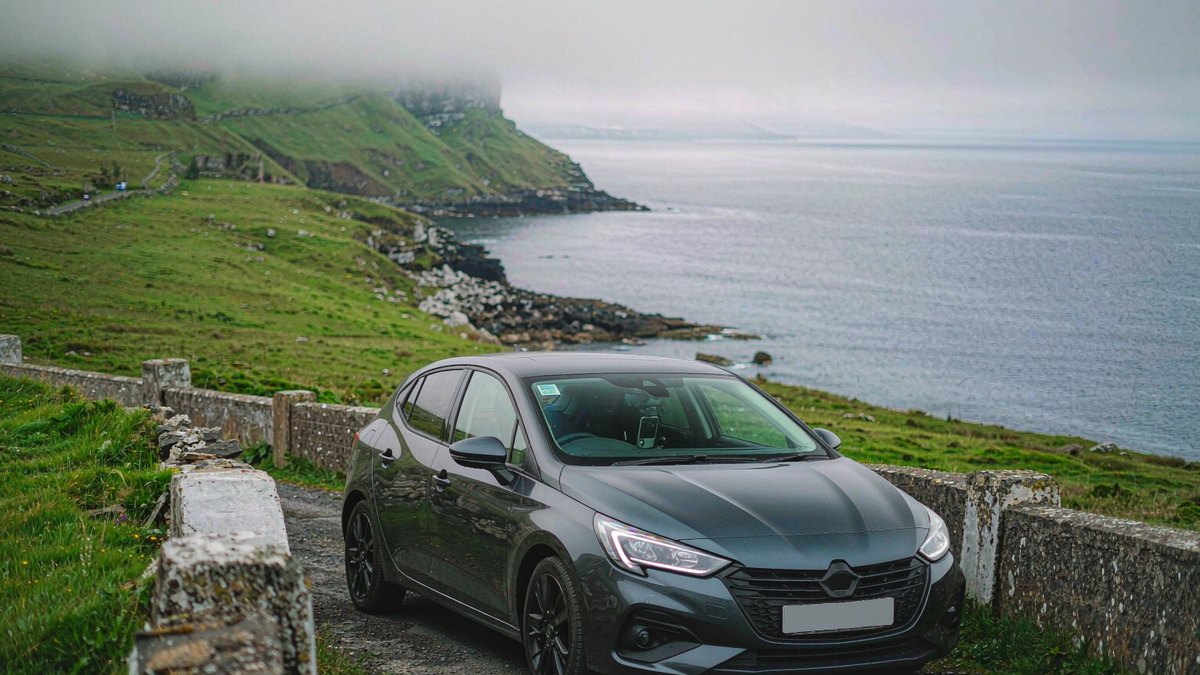
Most Ireland eSIM rankings are decided in Dublin, which is the wrong place to decide them. The city centre is the easiest coverage in the country: Three posts a median download of 82.44 Mbps there, every network has small cells on the same streets, and any plan will feel fast. The trip that actually tests a purchase is the one where you leave the M50, turn onto a single-track road in Connemara, and discover that your chosen provider has one partner network in Ireland and it is not the one with a mast on that hill.
That is the single question that separates the eight options below, and it is not the question the price comparison sites ask. An Ireland eSIM that switches between Vodafone, Three and Eir behaves completely differently on the western seaboard from one locked to a single carrier, at roughly the same price. Ask ten people for the best eSIM for Ireland and you will get ten answers, nearly all of them decided in a city where the choice does not matter.
If you have thirty seconds: for a trip under two weeks, a multi-network travel eSIM bought before you fly is the low-risk choice, and $10 to $20 covers a normal fortnight with room to spare. If your trip starts and ends in Dublin and never leaves the east, a local Three tourist tier at €15 for 7 days is excellent value and comes with an Irish number. If Belfast is on the route, none of the Ireland-only options work and you need a regional plan instead.
What the eight are actually competing on: not headline gigabytes, which are cheap everywhere, but three things — how many Irish networks the profile can attach to, whether it issues an Irish number, and what happens in the two weeks after you land when something stops working.
What “best” has to mean in a country with three networks
Ireland has three radio networks. Vodafone, Three and Eir own the masts; the other eight brands resell one of them. That structure matters more here than in most countries because the three do not cover the same ground.
On Ookla’s second-half 2025 measurements, Three won Best Mobile Network with a Speedtest Connectivity Score of 74.84 and the fastest median 5G download at 139.87 Mbps. Vodafone took the highest Consistency Score at 83.5 but the lowest 5G Availability at 58.7 percent, meaning more of your day lands on 4G. Eir led 5G Availability at 82.6 percent with a Speedtest Connectivity Score of 53.36, and Opensignal has recognised it as Ireland’s leading network for 5G coverage and availability. The carrier-by-carrier breakdown covers the provincial detail.
So “best eSIM for Ireland” cannot be answered by a single network ranking, because your trip does not stay in one place. It has to be answered by asking how many of those three networks your profile can reach.
| Criterion | Weight | What full marks looks like |
|---|---|---|
| Network spread | 30% | Attaches to all three Irish networks without manual selection |
| Price per gigabyte at 15 GB | 20% | Under $1.50/GB on a bundle that finishes a fortnight |
| Install friction | 20% | No Irish address, no QR ceremony, clock starts at first connection |
| Rural behaviour | 15% | Works on the N59 and the Donegal coast without losing the plot |
| Support | 8% | A human reachable during Irish waking hours |
| Voice | 5% | An Irish number and domestic minutes included |
| Reinstall allowed | 2% | Can be deleted and re-added after a troubleshooting mistake |
A single-carrier plan reaches one. A multi-network travel eSIM reaches all three in principle, and the practical difference shows up exactly where you would expect: the N59 through Connemara, the roads north of Killarney, the coast road below the Cliffs of Moher, and anywhere in Donegal that is not a town.
How these eight were scored
Six criteria, weighted for a visitor rather than a resident. Price is measured per gigabyte on a representative two-week bundle, not on the cheapest headline tier, because the cheapest tier is usually too small to finish the trip.
Network spread is the heaviest weight. A profile that can attach to all three Irish networks gets full marks; one locked to a single carrier loses a third of that category regardless of how fast that carrier is in Dublin.
Install friction covers whether you can buy before you fly, whether the profile needs an Irish address, whether activation is automatic or QR-based, and whether the clock starts at purchase or at first connection. Rural behaviour is a qualitative score drawn from the coverage picture above. Support is judged on whether there is a human reachable during Irish hours. And voice covers whether an Irish number and domestic calls are included, which most travel eSIMs do not offer at all.
Why the switching does not always happen when you want it to
A multi-network profile does not switch the way a passenger changes trains. It attaches to the network it considers best at that moment and holds on until the signal degrades past a threshold, and the threshold is deliberately generous because switching costs battery and interrupts data.
In practice that means a phone will sit on two bars of a familiar network rather than move to four bars of another one, and the reason is hysteresis: the modem is tuned to avoid flapping. On a road trip this shows up as a stretch of slow data where the mast you can see belongs to a different operator.
Three things move the phone off a weak network faster. Airplane mode for fifteen seconds forces a fresh scan and attach. Restarting the phone does the same more thoroughly. Setting network selection to manual, picking the strongest name, and then returning it to automatic after a minute resets the choice entirely.
The one thing that defeats it: leaving network selection on manual. This is the single most common self-inflicted problem in the category, usually the residue of a fix applied near the border or on a ferry. If your multi-network eSIM is performing worse than a single-network one should, check that setting first.
The eight options, scored
Prices below are indicative for a two-week trip in late 2026 and move often. Treat the scores as the durable part and the numbers as a snapshot. Current tiers for the multi-network option sit on the Ireland eSIM plans page.
| Option | Networks | Irish number | Buy before you fly | Price band | Score |
|---|---|---|---|---|---|
| Roami Ireland eSIM | All three, auto-switching | No | Yes | $10–20 for 10–20 GB | 9.0 |
| Three Visit Ireland | Three only | Yes | Yes, no Irish address | €15 / 7 days, €25 / 28 days | 8.6 |
| Vodafone Data Unlimited | Vodafone only | Yes | Yes | €20 per 28 days | 8.3 |
| Airalo Ireland | One Irish network | No | Yes | $9–22 | 8.1 |
| Nomad Ireland | One to two networks | No | Yes | $10–24 | 8.0 |
| Saily Ireland | One Irish network | No | Yes | $3.99–17.99 | 7.8 |
| Ubigi Ireland | One Irish network | No | Yes | $9–20 | 7.6 |
| Holafly Ireland | One to two networks | No | Yes | $27–47 unlimited | 7.0 |
The two local carrier rows score well for reasons that have nothing to do with data. Three and Vodafone both sell to a new customer online with no Irish address and no store visit, both issue an eSIM, and both hand you an Irish number with domestic calls attached. Three’s tourist tiers are the sharpest in the country: €15 buys 5 GB over 7 days with 50 Irish minutes, and €25 buys 25 GB over 28 days with 250 minutes and texts plus 50 international minutes.
What they give up is reach. A Three plan is on Three, and Three is not the strongest network in Connemara or Donegal. A Vodafone plan is on Vodafone, which has the best consistency in the country and the weakest 5G availability at 58.7 percent. Neither will move to a better mast when one exists.
Airalo in Ireland: what the biggest name does here
Airalo is the name most people search first, and it deserves a fair hearing rather than a dismissal. Its Ireland product installs cleanly, the app is the most polished in the category, and the price for a mid-size bundle is competitive with anyone.
The thing to check before you buy is which Irish network your profile lands on. Airalo’s country plans generally ride a single local partner in each market, and in Ireland that means one of the three rather than automatic switching between them. On an east-coast itinerary you will never notice. On a western drive the difference between landing on Three and landing on Eir is the difference between signal at your guesthouse and a walk to the end of the lane.
The second thing to check is the validity clock. Some Airalo packages start counting from installation rather than first connection, which punishes anyone who installs two weeks early to be organised. Read the plan’s own terms rather than the marketing page.
Where Airalo wins is breadth. If your trip continues to another country, a regional product covering Ireland plus the rest of Europe solves a problem that a local Irish SIM cannot.
Saily and the cheap-data argument, tested
Saily’s Irish pricing is the most transparent in the market and the cheapest at the small end: roughly $3.99 for 1 GB over 7 days, $10.99 for 5 GB over 30 days, and $17.99 for 10 GB over 30 days. That last tier is the one worth comparing, because 10 GB over a month is a realistic Irish fortnight with room spare. The plan page lists every tier without a bundle maze, which is rarer than it should be.
The catch is the same as Airalo’s: one Irish network, no switching. At $17.99 for 10 GB on a single network, you are paying slightly less than a €25 Three tourist tier for a bit less data and no Irish number — which is a reasonable trade if you do not need to be called.
The 1 GB tier deserves a warning rather than a recommendation. It exists to make the entry price look small, and on a real holiday it covers about a day and a half of normal use before you are buying a top-up at a worse rate than the 10 GB bundle you should have chosen. Ireland’s own regulator puts average mobile data use at 21 GB a month per subscriber, and that is a resident with home Wi-Fi doing most of the heavy lifting.
Nomad, Holafly, Ubigi and the rest of the field
Nomad sits close to Airalo on price and quality, with a slightly broader regional catalogue and comparable install mechanics. Its Irish plans land in the same one-network-or-two range, so the same question applies.
Holafly sells unlimited data, which sounds like the answer to the data-sizing problem and is not quite. Unlimited plans in this category are subject to a fair-use threshold after which speed drops sharply, and the drop is severe enough to end video but not maps. Holafly also prices highest of the eight, at roughly $27 to $47 depending on length, and issues no Irish number. For a heavy streamer who wants to stop thinking about gigabytes it is defensible; for a driver who needs maps and messages it is expensive.
Ubigi is the quiet option: Japanese-owned, well regarded for reliability, slightly narrower in Irish coverage terms and not the cheapest. It suits someone who values a stable connection over a low price and does not need voice.
Worth naming even though they are not travel brands: Eir issues eSIMs on its own plans and leads the country on 5G availability, but confirm at the checkout that you are buying an eSIM and not a plastic card, because the visitor-facing prepay route is less consistent than Three’s or Vodafone’s. Lycamobile issues an eSIM on Eir’s network at €12.99 to €15 per 28 days, but the profile has to be activated on Irish soil, which rules it out as a buy-at-home option. GoMo is €12.99 a month on Eir and app-only, built for residents. And 48, Clear Mobile, Virgin Media, Tesco Mobile and An Post Mobile all post a plastic SIM, so a phone without a SIM tray cannot use any of them however attractive the price.
Price per gigabyte is the metric that misleads most
Divide price by gigabytes and you get a number that rewards the plan you should not buy. Here is the same field on that metric, with the denominator that actually matters next to it.
| Option | Price | Data | Per GB | Will it finish a 12-day drive? |
|---|---|---|---|---|
| Three Visit Ireland 5 GB | €15 | 5 GB | €3.00 | No, short by half |
| Saily 1 GB | $3.99 | 1 GB | $3.99 | No |
| Saily 10 GB | $17.99 | 10 GB | $1.80 | Yes, comfortably |
| Three Visit Ireland 25 GB | €25 | 25 GB | €1.00 | Yes, with slack |
| Vodafone Data Unlimited | €20 | Unlimited | Approaches zero | Yes, subject to fair use |
| Holafly unlimited | $27–47 | Unlimited | Approaches zero | Yes, speed-limited |
Read down the per-GB column and the winner is a local carrier plan every time, which is correct for a long stay and misleading for a short one. A €25 Three tier is the cheapest data in Ireland and it will not work in Belfast, will not move off Three when Three is weak, and requires you to complete an online purchase that is fine but not instant. Per-gigabyte pricing ignores every one of those.
The fair comparison is total cost for the trip, including the cost of the failure you are trying to avoid. A $15 travel eSIM that keeps working in Connemara beats a €25 local plan that does not, and it beats it by more than the €10 difference once you factor in the hour you spend finding Wi-Fi to fix it.
Where each of the eight breaks, and how it looks when it does
Failure modes are more useful than feature lists, because every option works in Dublin.
Roami, Nomad and other multi-network profiles. The realistic failure is a phone that will not switch networks when it should, usually because network selection is locked to manual after an earlier fix. The symptom is full bars and slow data in a place where a competitor is fast. Fix: set network selection back to automatic.
Three Visit Ireland. Fails at the border, by design. The plan’s own terms state that the allowance is for use in the Republic of Ireland, and its coverage does not extend to Northern Ireland. It also fails if you assumed the marketing line about EU data means European roaming — read the terms as the contract.
Vodafone Data Unlimited. Fails where 5G is the point, because Vodafone has the lowest 5G availability of the three at 58.7 percent. It will work; it will just spend more time on 4G than the other two. If your accommodation has no Wi-Fi and you planned to work on 5G, that matters.
Airalo, Saily, Ubigi. Fail quietly in the west, where the single partner network thins out. Nothing announces it; the phone simply shows one bar where the car next to you has four.
Holafly. Fails at the throttle. Unlimited becomes roughly 256 Kbps after the fair-use threshold, which is enough for maps and messages and not enough for video, and the transition is not always obvious because the phone still shows a strong signal.
Lycamobile. Fails if you install it at home. The profile must be activated in Ireland, so an install completed before departure does not do what you expect on landing.
Four trips, costed against each option
Scores are abstract. Here is what four realistic Irish itineraries actually cost on the options above, including the cost of the mistakes each one invites.
| Trip | Best value | Cost | Runner-up | Cost | What the difference buys |
|---|---|---|---|---|---|
| 4 days, Dublin only | Three 7-day 5 GB | €15 | Any 3 GB travel eSIM | $6–9 | An Irish number and 50 minutes |
| 10 days, Dublin, Galway, Kerry | 10 GB multi-network | $11–18 | Three 28-day 25 GB | €25 | Multi-network reach for $10 less |
| 14 days, Wild Atlantic Way | 20 GB multi-network | $15–20 | Vodafone unlimited | €20 | Switching between all three networks |
| 7 days, Dublin plus Belfast | Regional Ireland and UK | $16–24 | Two separate plans | $20–30 | One activation instead of two |
The 4-day row is the one where the local plan wins outright and the travel eSIM is buying convenience rather than coverage. The 7-day cross-border row is the one where the cheap answer is the wrong answer, and the €5 you save by buying two plans is repaid with an afternoon of confusion at Newry.
What to do when your first choice has no signal
Every option in this list will have a dead afternoon somewhere, and the response is the same regardless of which brand is on your phone.
Do not reinstall. Reinstalling is the step that destroys evidence and, on some profiles, the profile itself. Work up from cheapest to most disruptive instead. Check which SIM is carrying data. Toggle airplane mode. Restart the phone. Switch network selection to manual, pick a named Irish network, then set it back to automatic. Check the APN is populated. Then, and only then, consider a reinstall, having first confirmed the plan allows one.
The reason this matters in Ireland specifically is that the failure is usually geographic rather than technical. If you have driven into a valley in Connemara, no amount of troubleshooting will produce a signal, and the correct action is to open the offline map you downloaded and drive on. The full Ireland guide maps where the dead zones actually are so you can tell the difference between a broken plan and a bad valley.
Buying one while you are already in Ireland
If you landed without a plan, you have three routes and only one of them is good.
The good one: buy a travel eSIM over airport Wi-Fi before you leave the terminal. Any provider with an instant checkout will sell you one, the profile arrives by email in a minute or two, and it costs the same as it would have at home. This works from the arrivals hall, from a bus, or from a hotel an hour later.
The tolerable one: buy a local carrier eSIM online. Three and Vodafone both sell to visitors with no Irish address, and both activate automatically on a compatible handset. It is a slightly longer checkout than a travel eSIM and it comes with an Irish number, which may be exactly what you wanted.
The bad one: buy from a vending machine or a counter. The vending machines work, the price is what it is, and 48 in particular is a fine product — but a third of the brands sold this way issue a plastic SIM, and if your phone has no SIM tray you have bought a coaster. Check the product is a download before you insert a card.
If you have a long weekend in Dublin
Do not buy a 28-day plan for four days. Three’s €15 seven-day tier is the right shape and comes with an Irish number and 50 minutes, which covers a restaurant booking and a taxi. If you would rather not visit a shop, any 3 to 5 GB travel eSIM is enough; a city break will not consume more than 2 GB unless you are streaming.
Buy whichever is already on your phone. This is the one trip shape where convenience genuinely outweighs optimisation.
If you have one week and a car
This is the most common Irish itinerary and the one where the network question starts to bite. Dublin to Galway to the Cliffs to Killarney and back to Dublin covers enough of the west that a single-network plan will have at least one bad afternoon.
Take a multi-network 5 to 10 GB plan. Download offline maps for the whole loop before you leave Dublin rather than for each leg. If you want an Irish number for the car hire desk, either add a cheap local plan alongside the eSIM or give them your home number, which works fine for inbound calls.
If your trip runs two weeks or more
Two weeks is where the local carrier plans start winning on pure economics and where the travel eSIM wins on everything else. A €25 Three tier gives 25 GB over 28 days and 250 minutes; a comparable travel eSIM costs similar money and gives less data, no number, and multi-network reach.
The tie-breaker is where you are sleeping. Two weeks based in Dublin, Cork and Galway with hotel Wi-Fi every night: buy local. Two weeks driving the Wild Atlantic Way with guesthouses and poor Wi-Fi: buy the multi-network profile and treat the data as part of the trip budget.
Run the per-day and per-gigabyte comparison before you commit, because the crossover point moves with the bundle size you pick.
If a laptop is coming with you
Working from Ireland changes the arithmetic completely, and it also rules out most unlimited plans. A single video call runs 5 to 8 MB a minute, so two hours of meetings is roughly 700 MB; add cloud sync, file uploads and a remote desktop session and a working day lands between 1.5 and 3 GB. A ten-day working trip is 15 to 30 GB before you have streamed anything.
Buy a fixed bundle in the 20 GB range rather than an unlimited plan, because unlimited plans here are throttled after a fair-use threshold and the throttle arrives at the worst possible moment. Check that hotspot is permitted, which it is on every option listed, and remember that tethering a laptop drains the phone battery fast enough that a power bank stops being optional.
If you would rather carry a pocket Wi-Fi
Pocket Wi-Fi still exists in Ireland and it still loses to an eSIM on almost every measure that matters to a leisure traveller, with one exception.
It loses on cost. A rental runs roughly €5 to €9 a day plus a deposit, so a fortnight is €70 to €125 against €15 to €25 for a data plan. It loses on logistics: you collect it, you return it, you charge it, and you carry a second device with its own failure modes. It loses on coverage, because a pocket router attaches to one network exactly as a single-carrier eSIM does, with none of the switching.
It wins on one thing: a group of five or six people who all want to be online at once from separate devices, where a single hotspot with a decent battery genuinely beats five separate plans. And it wins for someone whose phone cannot take an eSIM at all, which is an older handset rather than an unusual one.
For everyone else the arithmetic is straightforward. One phone, one eSIM, one less thing to charge.
If you are travelling with children
Two plans beat one plan plus hotspot for a family with teenagers, and one plan plus hotspot beats two plans for a family with young children. The reasoning and the data estimates are worked through in the full Ireland guide, including the battery cost of running a hotspot in a moving car.
The Irish-specific point is coverage rather than data. A tablet streaming in the back seat is fine on any network in the midlands and will buffer on the N59 regardless of which one you bought. Download the content before the drive.
If Belfast is on the itinerary
None of the eight Ireland-only options above will work in Northern Ireland, and this is the purchase that cannot be fixed cheaply later. Northern Ireland is the United Kingdom and runs on UK networks; an Irish plan that lists only the Republic either stops or roams at a rate you did not check.
Two workable arrangements. Buy a regional plan that lists both Ireland and the United Kingdom on one allowance, which is the clean answer and the one the Ireland and UK plan guide works through in detail. Or buy an Irish plan for the southern leg and a separate UK plan for the northern one, which costs more and requires you to remember to switch at Dundalk.
There is a third failure worth knowing before you go: near the border your phone can attach to a Northern Irish cell while you are still in the Republic, and ComReg warns that this can trigger cross-border charges. Set network selection to manual and choose an Irish network by name for the border counties.
What to check on the checkout page before paying
Does the coverage list name the United Kingdom? If it says Ireland and means the Republic, Belfast is not covered. This is the most expensive mistake in the category.
Which Irish network does the profile use? If the answer is not stated, ask support or choose a provider that publishes it. A single-network plan is a legitimate choice; an undisclosed single-network plan is a gamble.
When does the clock start? At purchase, at installation, or at first connection to an Irish network. Only the third lets you install at home weeks early without cost.
Is there a fair-use threshold on unlimited plans, and what speed follows it? If the answer is 256 Kbps, plan your video around hotel Wi-Fi.
Is a reinstall permitted? Some profiles are one-shot. If you delete it while troubleshooting, you may be buying again.
Does it issue an Irish number? Most travel eSIMs do not. If a car hire desk or a guesthouse needs to reach you, know the answer before you fly, and read the Irish number options if it matters.
Buy timing: what the validity clock actually counts
The single most common waste in this category is buying three weeks early for a good price and finding the plan half-expired on arrival. The second most common is buying at the airport on arrival and paying the counter price.
The rule that resolves both: buy early, install early, activate late. Almost every reputable travel eSIM starts its countdown at first connection to a network in the destination country, so an install finished at home on a Sunday has no effect on a plan you switch on in Dublin two weeks later. The exceptions are plans that count from installation and carrier plans that count from purchase, and both are stated in the terms.
Check the handset before any of this, because a locked phone will refuse the profile no matter how carefully you timed the purchase. The compatibility checker confirms eSIM support and lock status in one pass, and the activation walkthrough covers the install itself.
Test it before you leave the airport
Ninety seconds of verification at the gate saves the hour you would otherwise spend on it at a guesthouse with no Wi-Fi to troubleshoot over.
Switch the Irish line on, leave your home line active, and set the Irish profile as the data line. Wait for a network name to appear — it should be Vodafone, Three or Eir, or a local partner name if the profile presents one. Turn off Wi-Fi deliberately, and load a page. If it loads, you are done and you can stop thinking about it.
If it does not load, do not start reinstalling. Check the three things that account for almost every first-boot failure: data roaming enabled on the Irish line, the APN populated, and the correct line selected as the data default. Each takes seconds and each is more likely than a bad profile.
Then send one test message and, if the plan includes voice, make one short call. Voice is the part that fails silently, because a data-only failure is obvious and a voice failure only shows up when a car hire desk is trying to reach you.
When it fails completely: refunds, replacements and chargebacks
Every category has a failure rate and this one is no different. What differs is how recoverable the failure is, and that depends on how you paid.
Travel eSIM providers almost universally offer a replacement profile rather than a refund, because the product is delivered the moment you buy it. Ask for a replacement and keep the failed profile installed until the new one works, so support can see the install. The providers that handle this well respond within hours; the ones that handle it badly take a day, which on a five-day trip is most of the trip.
Local carrier plans are a different regime. An Irish prepaid eSIM bought from Three, Vodafone or Eir is a regulated consumer product with a cooling-off period, and the carrier has a support line during Irish hours. If the eSIM never worked and the handset is compatible, the reasonable ask is a replacement or a refund, and both are usually granted without much argument.
A chargeback is the last resort, not the first. It works, it is slow, and it permanently closes your account with that provider. Reserve it for a provider that has stopped responding entirely, and keep the order confirmation, because the card issuer will want it.
The preventive measure that costs nothing: pay with a card rather than a balance, and confirm the plan’s reinstall policy before you fly. A one-shot profile plus a payment method with no recourse is the combination that turns a €15 purchase into a ruined afternoon.
What the scores do not measure
Two things sit outside the table and both matter more than a tenth of a point.
The first is how the provider behaves when something goes wrong at 9pm on a Sunday in Killarney. A brand with a slightly worse per-gigabyte price and a support team that answers in twenty minutes is worth more than a cheaper one with a chatbot that loops. This is the single most underrated criterion in the category and no comparison site scores it.
The second is how easily you can stop thinking about the plan. Some products require you to remember which line is active, which app holds the profile, and whether the clock has started. Others disappear into the phone and simply work. The second kind is worth paying for on a holiday, because attention is the scarce resource and data is not.
Questions about picking an Ireland eSIM
Which eSIM is best for Ireland overall? For most visitors, a multi-network travel eSIM in the 10 to 20 GB range, bought before flying. It costs roughly the same as a local plan, works on all three Irish networks, and needs nothing at a counter.
Is Airalo good for Ireland? It is a solid product with the best app in the category. Check which Irish network it rides and when its validity starts before you buy, because both vary by plan.
Is Saily cheaper than the alternatives? At the small end, yes, clearly. At the 10 GB tier it is roughly level with a local Three plan that also gives you an Irish number.
Do I need an Irish number? Only if a car hire desk, guesthouse or taxi app needs to ring you. If they only need to text, your home number works.
Can I use a local Irish eSIM instead? Yes, and for a stay over a month you should. Three and Vodafone both sell to visitors online with no Irish address, and the data is cheaper per gigabyte than any travel eSIM.
What about Eir? Eir has the best 5G availability in the country and issues eSIMs, but confirm at the checkout that you are buying an eSIM rather than a plastic card, because the visitor route is less predictable than the other two carriers'.
Will any of these work in Northern Ireland? Only if the coverage list names the UK. Assume an Ireland-only plan stops at the border.
Is unlimited worth paying for in Ireland? Rarely. A 20 GB fixed bundle covers a two-week drive with room to spare, and the unlimited plans in this category are throttled after a threshold anyway.
The pick, in one line
Buy a multi-network 10 to 20 GB travel eSIM before you fly, unless your trip stays east of the M50 and under a week, in which case Three’s €15 seven-day tier is better value and comes with a number — and unless Belfast is on the route, in which case buy a regional plan and ignore this entire comparison.
One last thing the comparison cannot do for you. Every score above assumes a phone that is unlocked and eSIM-capable, and that assumption fails more often than the category admits, particularly on handsets bought on an instalment plan. If the profile installs and refuses to attach, the plan is rarely the problem. The device check takes a minute and settles it before you spend anything.