A Vietnam eSIM with a Phone Number: What You Can Actually Buy

Roami Team
Roami offers reliable eSIM plans, serving over 1 million travelers annually, and supports automatic local network switching to help travelers stay connected globally.
📑 Table of Contents
The honest answer to what a Vietnam eSIM with a phone number is: it is two products sold under one search term, and only one of them exists.
Every travel eSIM sold to visitors is data-only. It has no Vietnamese number, cannot receive an SMS sent to one, and never will, because it is not a Vietnamese subscription at all. It is a roaming profile that a foreign seller buys wholesale and resells to you. A real Vietnamese number comes from a local carrier, requires passport registration at a counter, and arrives on a physical SIM or on a carrier-issued eSIM that tourists can rarely buy.
That distinction decides everything on this page. If you want the number for restaurant bookings and a local call to a driver, a physical card is the answer and it costs less than you think. If you want it for bank verification or a government portal, no tourist product will do it and no amount of shopping will change that. Working out which of those two you actually need is the whole exercise.
No travel eSIM sold in the US comes with a Vietnamese number
Start with the mechanics, because they explain every later limitation.
A travel eSIM works by roaming. Your profile is issued by a company outside Vietnam, which has a wholesale agreement with a Vietnamese carrier. Your phone attaches to that carrier’s tower as a visiting device, the same way your home SIM would attach abroad. The billing relationship is between your seller and the carrier, and you are not a party to it. No subscription, no subscriber record, no number.
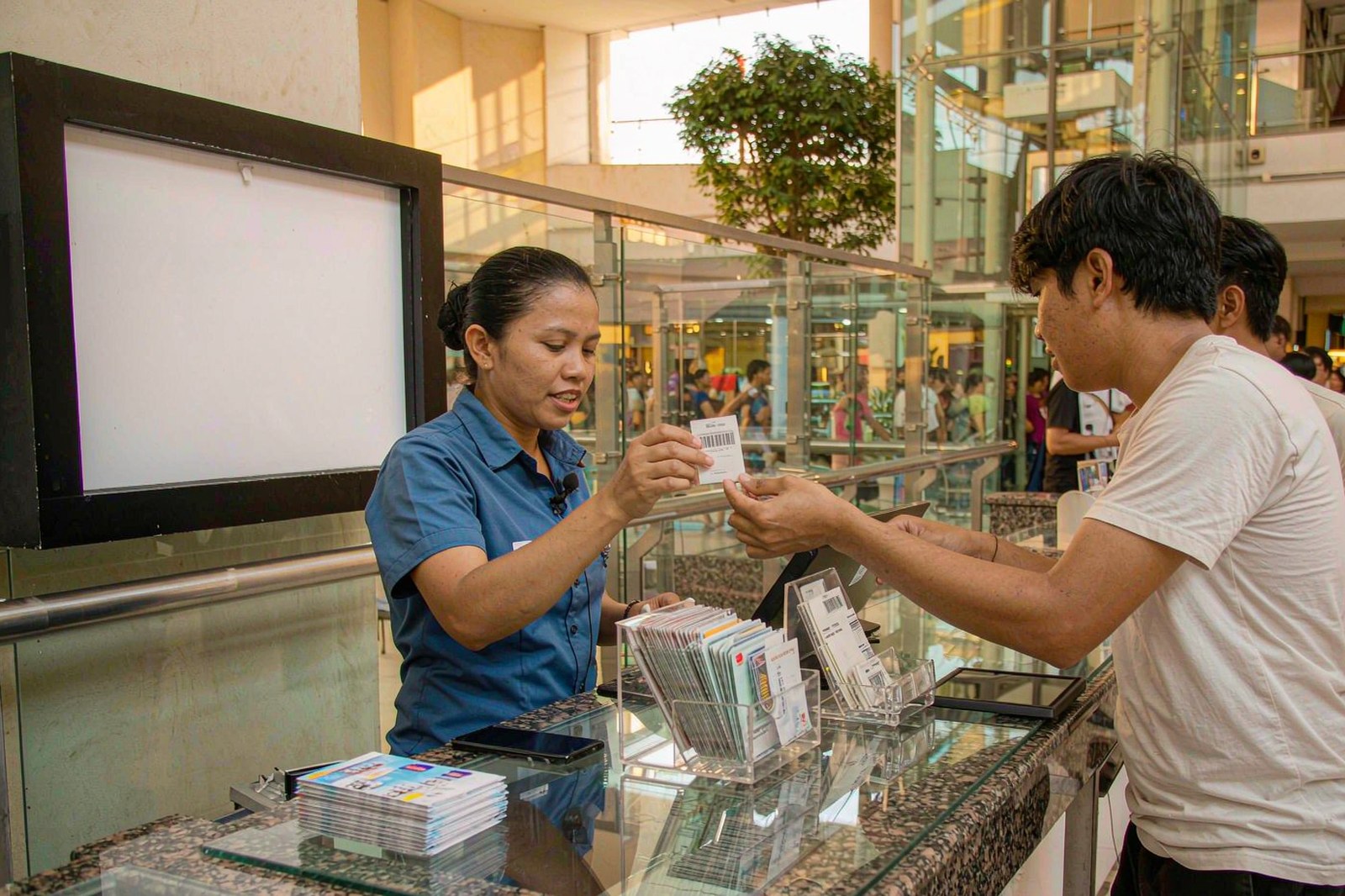
A Vietnamese prepaid card is the opposite. It is a domestic subscription registered to a verified identity, issued by Viettel, Vinaphone or Mobifone, with a number allocated from that carrier’s range. That is why it needs your passport, why it has a number, and why it can be registered, replaced and reclaimed.
| What you are buying | Has a Vietnamese number | Needs your passport | Can receive SMS to that number |
|---|---|---|---|
| Travel eSIM from a US seller | No | No | No |
| Carrier eSIM sold in Vietnam | Yes | Yes | Yes |
| Physical tourist SIM | Yes | Yes | Yes |
| Local prepaid card | Yes | Yes | Yes |
The middle row is the one people hope for and rarely get. Viettel, Vinaphone and Mobifone do sell eSIM, but their eSIM products are aimed at postpaid subscribers and at residents, and the tourist-facing version is thin. Viettel and Mobifone both publish their eSIM pages on their own sites, in Vietnamese, which is part of why the visitor-facing version stays thin. A visitor who wants a Vietnamese number should plan on plastic, not on a profile.
What that means in practice: the realistic setup for most travelers is a data-only eSIM for internet plus, if a number is genuinely needed, a cheap physical local card as a second line. That combination costs less than most people expect and covers both jobs.
A Vietnamese mobile number is ten digits and starts with zero
Vietnamese mobile numbers were shortened to ten digits in 2018, and the change still trips up travelers entering a number into a booking form.
Every mobile number now begins with 0 followed by nine digits. The first two digits after the zero identify the original carrier block, which is why numbers starting 09 were historically Viettel, 091 and 094 were Vinaphone, and 090 and 093 were Mobifone. Number portability has blurred that mapping, so the prefix is a hint rather than a fact.
Landlines follow a different pattern after the 2017 area code reform: Hanoi numbers begin 024, Ho Chi Minh City numbers begin 028, and the rest of the country uses two- or three-digit provincial codes.
Three practical consequences:
- Ten digits, not eleven. A number copied from an old guidebook with eleven digits will fail validation. Drop the leading zero and use the country code +84 if a form asks for an international format.
- The country code replaces the zero. +84 9xx xxx xxx, not +84 09xx xxx xxx. Double-prefixing is the most common data-entry error on Vietnamese booking forms.
- Emergency numbers are not in either pattern. Police is 113, fire is 114 and ambulance is 115. A tourist card can dial them; a data-only eSIM cannot, which is a real argument for keeping your home line dialable in an emergency.
That last point is worth pausing on. A data-only eSIM gives you maps, messaging and ride-hailing, which covers almost every emergency in practice because you can call for help through an app. It does not let you dial 115 from the phone’s dialler. Most travelers never need to. Some do.
The four forms that reject a Vietnamese number, and what each one wants
Buying a number and using one are different problems. These are the four places on a normal trip where the format matters, and no two of them ask for it the same way.
- Airline and train bookings. Vietnamese carriers want a contact number in local format, beginning with zero. Typing +84 into that field usually fails validation rather than being converted for you.
- Hotel and homestay check-in. The paper form takes the local format, and the passport number belongs in the next box. The two are not interchangeable however similar they look.
- WhatsApp or Telegram registration. These want the international format: +84 plus nine digits, zero dropped. Register the local format and you end up with a number nobody can message.
- Card and bank verification. Most banks will not send a one-time code to a number registered in another country, so a fresh Vietnamese number is no help there. The home line stays the one that receives those.
Write both formats down somewhere you can reach without data: 0xxxxxxxxx for anything local, +84xxxxxxxxx for anything international. Getting that right once saves a counter conversation in a language you do not speak.
Four situations where the number pays for itself
Most visitors do not need a Vietnamese number. The four cases below are the ones where the purchase is not a waste of money.
You are booking through a Vietnamese service that calls back to confirm. Small hotels, tour operators and some restaurants confirm by phone rather than email. If you cannot receive that call, the booking quietly does not happen.
You are staying somewhere with a front desk that needs to reach you. A homestay, a guesthouse, a language school, a gym. The administrative failure mode of not being reachable is disproportionate to the cost of a card.
You need a delivery. Food delivery and parcel delivery both call. Grab and ShopeeFood can work through the app, but the driver calls when they cannot find the entrance, and the entrance is usually the problem.
You are buying tickets for something that requires a local number at checkout. Some Vietnamese ticketing and membership sites will not complete a booking without a number that passes a format check, and a foreign number with the right digits does not always pass.
What these four have in common is that they need a number which can receive a call or a text. None of them needs a number that proves who you are. That is the next distinction, and it is the one people miss.
Three worked cases: a guesthouse, a landlord and a ticket desk
Abstract advice is hard to act on, so here are three situations that cover most of the demand, with what each one actually requires.
A guesthouse in Hanoi that confirms by phone. You booked through a platform and the property sends a message asking you to call to confirm the arrival time. A data-only eSIM cannot place that call, but Zalo can, and the guesthouse almost certainly has Zalo. What the number would have bought you here is a five-minute call instead of a message exchange. Cost of the number: a card from a city shop, roughly the price of two coffees.
A landlord in Da Nang, for a two-month stay. This is the case where the number stops being optional. A landlord wants to reach you about the water bill, the motorbike, the neighbor. They will not install an international app for one tenant, and they will call. They will not install an international app for one tenant, and they will call. At two months you are also close to the point where a residence document starts to matter, so the sequence is: tourist card now for the calls, residence document in parallel, postpaid contract when it clears.
A ticket desk for a show in Ho Chi Minh City. The platform requires a number at checkout and sends a confirmation SMS. A Vietnamese number satisfies the field; a foreign number sometimes does not, depending on how the platform validates. This is the narrowest case of the four and the one most likely to be solved by paying at the venue instead.
Notice that none of these three needs the number to prove identity. All three need a phone that rings. That is a much cheaper requirement than most of the search results around this topic imply.
What the carrier’s own eSIM is, and why tourists rarely get one
Viettel, Vinaphone and Mobifone all sell eSIM. That sentence is true and misleading, because the products are built for subscribers rather than visitors.
A carrier eSIM in Vietnam is typically issued as part of a postpaid subscription or a long-validity prepaid package bought in a store, with the same identity verification as a physical SIM. The profile is tied to a subscription record, which is exactly what makes it able to hold a Vietnamese number. It also means you cannot buy one from a website before you arrive, and you cannot install it without walking into a branch with your passport.
For a visitor on a two-week trip the practical result is that the carrier eSIM route costs more time than it saves. A physical tourist SIM at the same counter achieves the same thing in five minutes, and the plastic card works in any handset including the ones that cannot take a profile.
The carrier eSIM becomes interesting in one scenario: you are staying for months, you have or will have a residence document, and you want a proper subscription without a plastic card. At that point it is the right product and the counter staff will sell it to you. Before that point, asking for one tends to produce a polite explanation and a suggestion to buy a tourist SIM instead.
There is a third option that some travelers ask about: a carrier eSIM bought by a friend or a local contact and transferred to you. It does not work. The profile binds to the subscription and to the first device that installs it, and it cannot be reissued to a different person without the registration being redone.
When your home number is the one that fails
The two-line setup assumes your home carrier supports Wi-Fi calling in Vietnam. Most major US carriers do. The exceptions are worth knowing before you rely on them.
Prepaid home plans. Several prepaid brands restrict Wi-Fi calling to domestic use, which means the feature works at home and quietly stops working abroad. If your US line is prepaid, test Wi-Fi calling on a foreign network before you travel, or assume it will not be there.
Older devices and specific models. Wi-Fi calling needs an unlocked handset and a carrier-approved model. A phone bought in another market may not be on the carrier’s list, and the setting will simply be missing rather than broken.
Accounts that treat Wi-Fi calling as roaming. A small number of carriers bill Wi-Fi calling abroad as if it were a roaming call. Check the terms for the specific feature rather than for roaming in general, because the two are priced differently.
If your home line turns out to be unusable, the fallback is the arrangement this article has been steering you away from: a Vietnamese card for the number, and an eSIM for the data, with the home line switched off entirely. It costs more and it works everywhere. The carrier guide lists what each Vietnamese operator includes in its tourist packages, which is the part that decides how much of the calling you can do on the local card.
Passport or residence card: the line that changes what you can buy
Vietnamese law requires every prepaid line to be registered to a verified identity, under Decree 49/2017 and the enforcement that followed. What you can register with decides what you can buy.
Passport. Tourist SIMs, tourist eSIMs sold by carriers, and prepaid cards. Short validity, typically up to 30 days, sometimes 90. Registration happens at the counter in a few minutes with a form and a photograph of you holding the document. This is what a visitor can buy.
Residence card, or a work permit plus visa. The route to a postpaid contract, monthly billing, number portability and full access to Vietnamese digital services. It requires a resident visa and, in practice, weeks rather than hours. Anyone staying past 90 days ends up here, and it starts at the immigration office rather than at a phone shop.
The gap between those two tiers explains almost every complaint foreigners make about Vietnamese phone service. A passport-registered line exists in the carrier’s records. It does not exist in the identity systems that banks, e-wallets and government portals query. It can make calls and receive texts. It cannot prove who you are.
For a two-week trip that gap is irrelevant, because nothing you do requires proof of identity. For a three-month stay it is the central problem, and the same guide sets out what each operator asks for before it will register you.
The bulk-registered card is the trap under the counter
There is a version of the tourist card that looks identical, costs the same and is registered to somebody else.
Because registration used to be loosely enforced, a large number of cards in circulation were activated in bulk by shops, under a business registration or an employee’s identity, and sold on to travelers. The card works. It has a number. It can receive SMS. Three things about it are different:
- The subscriber on file is not you. If the line is cut, blocked or duplicated, you have no standing to have it restored.
- A carrier branch cannot service it. Staff will tell you, correctly, that the line is not yours.
- It behaves differently at verification. A line registered to a company or an unrelated individual is not the same object as a line registered to your passport, and some systems treat it accordingly.
You cannot spot one by looking at the card. You can avoid one by buying from a carrier’s own counter rather than a reseller stand, and by asking for the registration slip that shows your passport number. Keep that slip. It is the only document that makes the line yours in an argument.
The eSIM side of this problem does not exist, which is the one clear advantage of buying data as a profile: no registration, nothing to inherit, nothing to lose.
Zalo, Grab and MoMo: three apps, three different answers
The apps that matter in Vietnam have three different relationships with phone numbers, and knowing which is which saves you from buying a card you did not need.
| App | What it does | Does it need a Vietnamese number |
|---|---|---|
| Zalo | The default messaging app in Vietnam | No. Foreign numbers register, though some features differ |
| Grab | Rides, food, delivery | No. Any number that can receive the signup code |
| MoMo | The dominant e-wallet | Effectively yes, for anything beyond a basic account |
| ZaloPay | Payments inside Zalo | Yes, and it needs Vietnamese identity documents |
| Shopee, Lazada | Shopping with cash on delivery | No to order, but the driver calls on delivery |
| Vietnamese banks | Accounts and cards | Yes, plus a residence document |
Read the table as three tiers. Grab and Zalo work with your home number, which means a data-only eSIM is enough for the two apps that make a trip run. MoMo and the payment wallets need a Vietnamese number and Vietnamese identity, which no tourist product provides. The shopping apps sit in between: the order goes through, the delivery call is the friction.
The practical upshot is that a data-only eSIM plus your home number covers more of a normal trip than most people assume. The number becomes worth buying at the point where you are dealing with a business that only knows how to phone.
Why a tourist number cannot open a Vietnamese bank account
This is the question behind most searches for a Vietnam eSIM with a phone number, and the answer is a flat no, for reasons that have nothing to do with the SIM.
Opening a Vietnamese bank account as a foreigner requires a passport, a valid visa or temporary residence card, and in most banks proof of address or a work contract. Since 2024 several banks have offered remote or simplified onboarding for foreigners, but the eligibility bar is a residence document, not a phone number.
The number is a prerequisite, not a qualification. Having a Vietnamese number registered to your passport puts you in the queue; the residence document is what opens the account. A traveler on a thirty-day visa is not in that queue at any price.
The same logic applies to government portals, the national digital identity app and the tax systems. Each is built around a citizen or resident identity record, and a passport-registered prepaid line does not create one. If your reason for wanting a number is anything administrative, buy the number for calls and plan to do the administration through your home country.
Two lines on one phone: which one carries the code
The setup most experienced travelers run is two active lines: the home line for anything that needs your real number, and the travel eSIM for data. Getting it right takes about three minutes and prevents the most common billing surprise.
The order matters.
- Install the travel profile before you fly, while you have reliable Wi-Fi and time to troubleshoot.
- Leave the travel line switched off and set it as the data line for later. It activates when the phone first sees a Vietnamese network.
- Turn off data roaming on your home line. This is the step people skip, and it is the one that costs money, because background data on a roaming home line bills at international rates even while your eSIM carries the traffic.
- Turn on Wi-Fi calling on the home line if your carrier supports it in Vietnam. Calls and texts then arrive over your Vietnamese data connection at domestic rates.
- Label both lines. “Home” and “Vietnam” in the phone’s settings, so you never answer on the wrong one.
With that arrangement, bank codes sent to your home number still arrive, because they travel over Wi-Fi calling across the eSIM’s data connection. What you give up is the ability to send an SMS from your home number over the Vietnamese network, which almost nobody needs.
If your phone refuses to keep both lines alive, the dual-SIM fix list covers the twelve causes in order of likelihood. The most common is a carrier-locked handset, which accepts the profile and then declines to register.
A phone that holds only one line changes the plan. If your handset allows a single active connection, the choice is between being reachable on your home number and having data, and the answer is almost always data: a missed bank code can be re-requested later, a missing map cannot. The workaround for a single-line phone is to keep the eSIM as the data line and check messages during Wi-Fi moments, which turns the code from an inconvenience into a morning routine.
Why a Google Voice number gets rejected at checkout
Every guide suggests a VoIP number as a free alternative. In Vietnam it works for some things and fails at exactly the point where it matters.
VoIP numbers fail in two ways. Some services check the number’s type against a database of landline and mobile ranges and reject anything that comes back as virtual. Others send a verification code to a number that cannot receive it, because the VoIP provider does not support the short-code route that Vietnamese services use.
The pattern in practice: a Google Voice number will usually let you sign up for a social or shopping account, and will often fail at a bank, at a ticketing platform and at anything that treats the number as an identity claim. If your plan B is a VoIP number, test it before you fly on the specific service you need, not after you land.
The reliable alternatives, in order: your home number kept alive over Wi-Fi calling, then a physical Vietnamese card, then a VoIP number. The order is not an accident.
Calling home from Vietnam: five routes, priced
| Route | Cost | Works without a Vietnamese number | Catch |
|---|---|---|---|
| Wi-Fi calling on your home line over eSIM data | Domestic rates | Yes | Carrier must support it in Vietnam |
| Data-based apps (WhatsApp, Zalo, FaceTime) | Free | Yes | Both ends need the app |
| A Vietnamese card’s international minutes | Per-minute, prepaid | No | Rates are poor compared with apps |
| Hotel or guesthouse phone | Usually free for local calls | No | International calls often blocked |
| Your home carrier’s roaming voice | Highest of the five | Yes | Billed per minute on top of any day pass |
For almost everyone, the first two rows cover it. The third row exists for people who need to call a landline, which is a narrower requirement than it sounds: banks, insurers and government offices are the usual cases, and they are also the cases where a Vietnamese number would not have helped anyway.
One code, ninety seconds: the cheapest way to get it
A common situation: you need exactly one SMS verification code from a Vietnamese service during the trip, and nothing else.
Do not buy a card for this. Three cheaper routes, in order of reliability:
Keep your home line reachable over Wi-Fi calling. The code arrives at no charge as long as the phone can hold a data connection, which the eSIM provides. This works on the major US carriers and requires nothing bought in Vietnam.
Ask the service to send the code to email or an authenticator app. Many Vietnamese platforms now offer this, and it costs nothing to check before you travel rather than during.
Buy a minimal local card on arrival and use it once. The last resort, and the most expensive per unit of value.
What does not work: a data-only eSIM, a VoIP number, and asking someone to read you a code, because codes are single-use and time-limited.
Past ninety days, the answer changes completely
A tourist line is a short-term product. What happens at the end of it depends on how long you are staying.
| Length of stay | Sensible setup | What you give up |
|---|---|---|
| Under two weeks | Data eSIM, no Vietnamese number | Local calls, covered by hotel desks and apps |
| Two weeks to a month | Data eSIM plus a tourist card if calls are expected | Bank and government verification |
| One to three months | Long-validity prepaid package from a carrier shop | Number portability, and verification still |
| Three months and beyond | Residence card first, then a postpaid contract | Nothing, once the paperwork clears |
Two things change at the ninety-day mark. Prepaid packages stop being the cheapest option, because a postpaid contract with a residence document costs less per month for more. And the number becomes worth keeping, because a number you have given to a landlord or an employer is a number you cannot easily replace.
If your stay is three months or more, plan the residence document first and the SIM second. The prepaid number you get as a visitor will not carry over to a postpaid contract, so there is little point optimising that first step.
Two days before you fly: six things to confirm
Each of these has a real failure behind it.
- Your phone is unlocked. Check Settings, General, About on iPhone, or search “carrier lock” plus your model on Android.
- Your handset supports eSIM. The compatibility list names the models; a free trial profile proves it about your actual device.
- Wi-Fi calling is enabled on your home line, and your carrier supports it in Vietnam.
- Data roaming is off on your home line and you know where that switch lives.
- Your banking app is set up to receive codes on the number you will still have access to.
- The travel eSIM is installed and dormant, not sitting unopened in an email.
Six checks, ten minutes, and they remove almost every scenario in this article.
What arriving without a number actually looks like
It is worth walking through the first hour, because the fear of arriving unreachable is usually larger than the reality.
You land, switch the travel eSIM on, and the phone shows a Vietnamese network before the immigration queue clears. Grab installs and signs up with your home number over that data connection; the SMS code arrives because your home line is reachable over Wi-Fi calling. The hotel booking is already confirmed by email. You order the car, and the driver messages through the app rather than calling, because that is what the app is for.
Nothing in that sequence needed a Vietnamese number. The one moment it could have mattered is a driver who cannot find the entrance and calls instead of messaging, which is why the app’s in-app chat exists.
The second day is where the gap sometimes appears. A tour operator confirms by phone, or the guesthouse asks you to ring back. At that point you have two options: ask them to message on Zalo, which usually works because every Vietnamese business uses it, or walk to the phone shop on the corner and buy a card for the price of lunch. Neither requires you to have planned it from home.
The reason to spell this out is that the planning anxiety pushes people into buying the wrong thing: an expensive voice package bought at the airport at midnight, when what they needed was data at $1.99 and a decision postponed by twenty-four hours.
What a number costs you besides money
The fee is the smallest cost. Three others are worth weighing before you buy.
An hour of your trip. Airport counters run 15 to 40 minutes at peak arrivals. A city shop is quicker but needs a detour.
A document you have to carry. Registration requires the physical passport at the counter, not a photocopy. That means carrying it on arrival day rather than leaving it in the hotel safe.
A number that is not really yours. Prepaid numbers get recycled, so the number you register an app with may have belonged to someone else last month, and may belong to someone else next month. Never use it for account recovery.
Against those, the benefit is narrow and concrete: a number that can receive a call. If you cannot name the business that will call it, you probably do not need it, and a data-only eSIM at $1.99 is the better purchase. The plan comparison prices the data side, and the SIM card guide prices the card side, so the two halves of this decision are covered.
Who should skip the number entirely
Five traveler types, and only one of them needs a card.
The city break. Three or four days in Ho Chi Minh City or Hanoi. Maps, Grab, Zalo, hotel Wi-Fi. Skip the number.
The beach week. Phu Quoc, Nha Trang, Da Nang. Nothing calls you. Skip it.
The backpacker on a long route. Buses, hostels, apps. The only case for a card is booking a tour through a local operator that phones back, and even that usually resolves over Zalo.
The family trip. One adult’s phone carries the data, the hotel has the number. Skip it.
The long-stay remote worker. Here the number starts to matter: a landlord, a school, a delivery, a gym. Buy the card, keep the slip, and expect to replace it once if the registration turns out to be the bulk kind.
If you are crossing into Cambodia or Thailand after Vietnam, none of this changes, but the data plan does. The three-country route covers what happens to your connection at each border.
Is a Vietnam eSIM with a phone number sold anywhere?
Yes, inside Vietnam, and the obstacle is the paperwork rather than the technology.
Viettel, Vinaphone and Mobifone all list eSIM among their options, and the profiles they issue carry a real local number. What the same pages show is the condition attached: the offers are built around monthly subscriptions and a Vietnamese identity document, with a prepaid visitor variant appearing on some carriers in some months and not in others.
That leaves three obstacles for a visitor. The product may not be on sale to you this month. The handset has to be one the carrier’s activation system accepts, which is a shorter list than the eSIM compatibility list you checked at home. And the airport tourist counters are the wrong place to ask, because they are moving plastic and the staff are not set up to provision a profile.
So the practical version of a Vietnam eSIM with a phone number is a combination rather than a single purchase: the data-only profile you install before you fly, plus a physical card bought with your passport on arrival. Two purchases, one of which you can finish at your kitchen table, and a total that usually lands below what people expect to pay for the number alone.
FAQ
Does any eSIM give me a Vietnamese phone number? Only a carrier-issued eSIM bought in Vietnam with passport registration. No travel eSIM sold outside the country includes a Vietnamese number, because those products are roaming profiles rather than Vietnamese subscriptions.
Can I receive SMS on a Vietnam travel eSIM? Not to a Vietnamese number, because you do not have one. You can still receive SMS sent to your home number if your home line is active with Wi-Fi calling over the eSIM’s data connection.
What is the cheapest way to get a Vietnamese number? A tourist SIM from a city phone shop, bought with your passport. Airport counters sell the same product at a premium, and the four buying channels, compared on price and time covers what each one actually costs you.
Will a Vietnamese number let me use MoMo or ZaloPay? Not fully. Both want Vietnamese identity documents for anything beyond a basic account, and a passport-registered tourist line does not satisfy that. Zalo and Grab, the two apps that matter most day to day, work without a Vietnamese number at all.
Do I need a Vietnamese number to book hotels and tours? Usually not. Most bookings complete by email or through a platform. The exception is small operators who confirm by phone, and that is the case where a cheap card earns its price.
Can I keep the number for my next trip? Only while the card stays active. Prepaid numbers are reclaimed after a period of inactivity, and a bulk-registered card can be cut sooner. Treat the number as belonging to one trip unless you are topping it up between visits.
Is a Vietnamese number useful in Cambodia or Thailand? Not for calls, and not cheaply. A Vietnamese prepaid line is a domestic product without regional roaming included, so the number stops working at the border. If the itinerary crosses borders, the data question changes shape and the three-country guide covers what to buy instead.
Do I need the number before I land, or can I sort it later? Later is fine for almost everything. Zalo, Grab and hotel bookings all work on data alone, so the number can wait until you have a reason for it. The one exception is a booking that depends on a call-back within hours of arrival, which is worth knowing about before you fly rather than after.