du eSIM or Etisalat eSIM: What a Visitor Can Actually Buy

Roami Team
Roami offers reliable eSIM plans, serving over 1 million travelers annually, and supports automatic local network switching to help travelers stay connected globally.
📑 Table of Contents
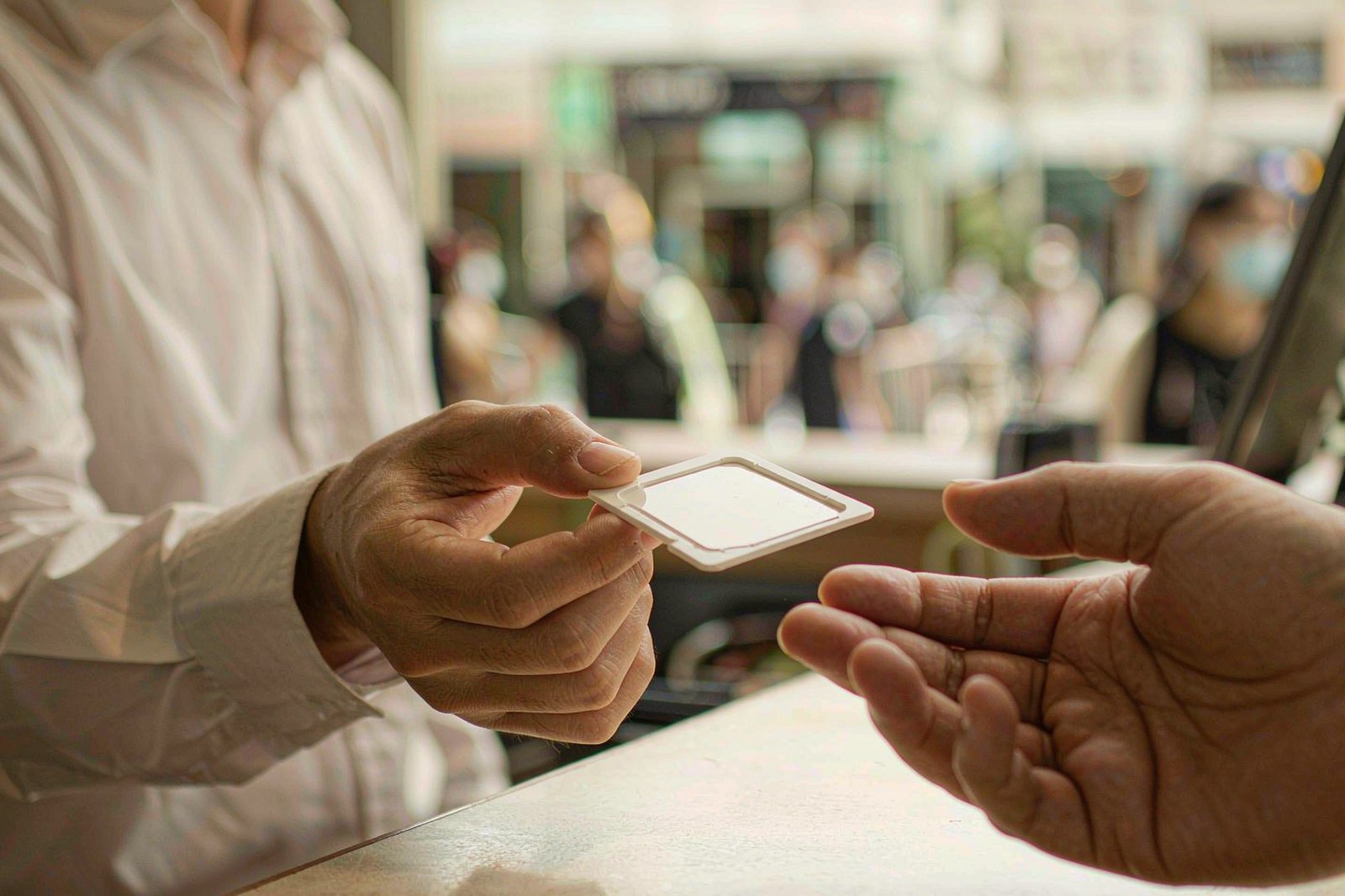
The two names that come up when you search for a UAE eSIM are du and Etisalat — now branded e& — and the search results are confusing for a specific reason: most of the pages about them are written for residents, not visitors. A resident can order an eSIM in an app in three minutes. A first-time visitor cannot, and the difference is not a policy quirk. It is the identity verification step.
Straight answer: both du and e& sell prepaid eSIM to tourists, both require a passport and an in-person verification for a first-time visitor, and both will generate a QR code at the counter. Neither will sell you a tourist eSIM entirely online before you arrive. If you land at Dubai International and walk to a counter with your passport, you can be connected within half an hour. If you want data the moment the doors open, buy an international travel eSIM before you fly instead.
This page is about the local route: what the counter actually asks for, what the bundles include, how du and e& differ, and the specific situations where an hour in a queue is the right purchase rather than an avoidable cost. For the travel eSIM route, start with the Dubai connectivity notes.
Can a visitor get a du eSIM without an Emirates ID?
Yes — a passport is sufficient for a tourist line. But the crucial qualifier is how you get it, and this is where most online guides are wrong or out of date.
Prepaid mobile services in the UAE are tied to identified subscribers. For a resident, identification means an Emirates ID. For a visitor, it means a passport plus proof of legal entry, and the operator completes a document and biometric verification step. For a first-time visitor without a resident visa, that verification happens at a counter, in person, and only then does the operator issue the eSIM QR code.
What this rules out is precise and worth stating plainly: you cannot buy a du tourist eSIM from your sofa in another country and have it appear on your phone. Any page that says otherwise is either describing a resident flow, describing the free digital arrival bundle loosely, or selling something that is not a du product.
What it does not rule out: getting a du eSIM as a visitor. You just do it on arrival, or at a store in the city later in the trip.
Three practical notes that follow from the rule:
- Bring the passport you entered on, not a photocopy and not a different document. The verification matches the entry record.
- Entry stamp or visa matters. Tourist visa on arrival, e-visa, or residency — the counter needs to see legal entry, and the process differs slightly by category.
- A second visit is easier. Once your line exists and is verified, top-ups and plan changes happen in the app. It is the first purchase that requires the counter.
If you are staying with family or at a hotel that can arrange it, some hotels will direct you to the nearest operator store rather than the airport counter, which is usually a shorter queue. Ask at check-in; it is a common request.
What happens at the du counter, step by step
Knowing the sequence removes most of the uncertainty, and it also tells you how long to budget.
Step 1: queue. At Dubai International the counters sit in the arrivals halls, and the queue is a function of how many flights landed with yours. Early-morning widebody banks are the worst; mid-afternoon is usually calmer.
Step 2: state what you want. Ask for a tourist bundle — the terminology matters, because it is a different product from a standard prepaid line. “Tourist SIM” and “tourist eSIM” both get you there.
Step 3: hand over your passport. The agent checks the entry stamp or visa, enters the details, and completes verification. This is the step that cannot be done remotely, and it is also the step that takes the longest.
Step 4: choose a bundle. Tourist bundles are tiered by validity — commonly 7, 14 and 28 days — and the larger tiers include more data and more calling minutes. Prices start around AED 49 for the entry bundle and climb steeply from there. Ask what the high-speed allowance is and what happens after it, because the answer varies by tier.
Step 5: receive and scan the QR code. For an eSIM, the agent displays or prints a QR code and you scan it on the spot. For a physical SIM, you get a card to insert. Either way, activation happens in front of you, which is the local route’s real advantage: if it does not work, there is a person to fix it.
Step 6: confirm it works before you leave the counter. Open a browser and load a page with Wi-Fi off. This is the single most useful habit at any SIM counter anywhere, and it takes twenty seconds.
Total realistic time: 20–60 minutes end to end, depending on queue depth and verification. Budget the upper end if you land between 06:00 and 09:00, and assume the lower end only if you arrive mid-afternoon with no widebody bank behind you. The variance is the point: this is the least predictable step of the whole purchase.
What the e& counter does differently
Etisalat, now branded e&, runs the same process with a different bundle structure and a different app. The verification requirement is identical because it is a regulatory requirement, not a company policy. In practice:
- e& counters are present at the airport and in malls, and its visitor line bundles start from a similar price point.
- e& also advertises a visitor starter option with a free data allowance valid for a short window, comparable to du’s arrival offer.
- The app experience differs, and the e& app is generally regarded as the more complete of the two for account management.
For a tourist buying once and leaving, the difference is not material. For a long stay where you will manage the line for months, it is worth choosing based on which app you find usable.
du tourist SIM bundles: what is actually inside
The bundle structure across both operators follows a similar logic, and understanding it prevents the most common over-buy.
Tourist bundles are sold as a package of data plus local and international minutes plus validity. The entry tier is the cheapest and the thinnest; the top tier is the longest and the most generous. Typical shape, current as of October 2026:
| Tier shape | What it typically includes | Who it suits |
|---|---|---|
| Entry, around AED 49 | A data allowance with a short validity, some local minutes | A 3–5 day visit with light data use |
| Mid, around AED 95 | More data, 14 days, more minutes | A two-week holiday with local calls |
| Top, around AED 165 | The largest data allowance, 28 days, most minutes | A month-long stay, or a family sharing |
Two things to check at the counter before you pay, because they are not always volunteered:
The high-speed allowance, not the headline data figure. Some bundles advertise a large total with a smaller high-speed portion. Ask directly: “how much at full speed, and what speed after that?”
Whether hotspot is included. If you plan to tether a laptop or a child’s tablet, ask. Local prepaid hotspot rules are generally more permissive than budget travel-eSIM rules, but confirm rather than assume.
Also worth knowing: du runs a free tourist eSIM with a 10 GB allowance valid for 24 hours, activated digitally, and has distributed free tourist SIMs at immigration counters at Dubai International. It is a genuine and generous arrival offer, and it is a good way to test whether the local route suits you before committing to a paid bundle. Full detail on the free option and how it compares is in the tourist setup page.
Etisalat eSIM: the e& side of the same decision
Etisalat rebranded its consumer business as e& in 2022, and both names still circulate — which is why “etisalat esim” remains a heavily searched phrase even though the app and the website carry the new brand. The product is the same: prepaid eSIM for residents and visitors, with the same in-person verification for first-time tourist purchases.
What e& brings to the comparison:
Network performance. e& holds a large contiguous block of mid-band spectrum and consistently posts the strongest measured 5G speeds in the country. For a tourist this shows up as better performance inside big buildings and at crowded events, rather than as a difference you would notice on a quiet street.
Coverage in the less-visited emirates. Both networks cover the country, but e& has historically been the stronger performer on the highways and in the northern emirates. If your trip includes Ras Al Khaimah, Fujairah or long drives, this is a mild point in its favour.
A visitor starter option. e& advertises a free visitor data allowance valid for a short window, similar in spirit to du’s arrival bundle. It is worth asking about at the counter.
The app. More complete account management, which matters little for a five-day trip and a lot for a five-month stay.
One thing to clear up, because it causes genuine confusion: Etisalat Egypt is a different company. If you are searching for an eSIM for Egypt, that is a separate product on a separate network — the Egypt eSIM page covers it. A UAE eSIM will not work in Egypt, and an Etisalat Egypt line is not a UAE product. The names overlap; the networks do not.
Virgin Mobile: the third name on the list
Virgin Mobile operates in the UAE as a mobile virtual network operator on du’s network, and it appears alongside du and e& in Apple’s carrier directory as an eSIM-supporting provider. For a visitor it behaves like du — same towers, different pricing and app.
Worth knowing: Virgin sometimes runs promotional pricing that undercuts both national operators on data-heavy bundles. It is not worth going out of your way for on a short trip, because the counter availability is thinner than at du and e&, and a first-time visitor still has to complete the same in-person verification.
Prices: local bundles against travel data plans
This is the comparison that decides the purchase, and it needs to be done honestly rather than in favour of either side.
| Local tourist bundle (du or e&) | International travel eSIM | |
|---|---|---|
| Entry price | Around AED 49, roughly $13 | From $3.99 |
| What the entry price buys | Data plus local and international minutes | Data only |
| Data per dollar at entry | Lower | Higher |
| Local phone number | Yes | No |
| Outgoing calls to UAE numbers | Yes | No |
| Time to obtain | 20–60 minutes, passport required | 3 minutes at home |
| Usable before landing | No | Yes |
| Top-up | Operator app or recharge card | Provider app or link |
| Works during a stopover elsewhere | No | Depends on the plan |
The honest read: the local bundle is better value if you will use the minutes and the number, and worse value if you will not. For a four-day sightseeing trip where all calls happen over apps, the local bundle’s advantages are mostly unused and you have paid roughly triple for the privilege of standing in a queue.
For a two-week stay with restaurant bookings, a car rental desk that wants a local contact number, and calls to family on a local rate, the local bundle is straightforwardly better — more data per dirham, plus capability you actually need.
There is a middle path that many experienced travelers take: a data-only travel eSIM for connectivity, plus a local line only if a specific need appears. The eSIM covers arrival and daily use; if you find you need a UAE number for a delivery or a booking, buy a cheap local prepaid line mid-trip at an operator store where the queue is short. Total cost is usually under $20 and you never stood in an airport queue.
Topping up and keeping the line alive
Two operational details that nobody mentions at the counter.
Top-up channels. For a local line, top-up happens through the operator app, the operator’s website — du’s is du.ae — a recharge card from a grocery or pharmacy, or a store visit. Recharge cards are widely available and are the simplest method if you do not want to install another app. For a travel eSIM, top-up happens inside the provider’s app or through the link in your purchase email.
Line expiry. UAE prepaid lines expire after a period of inactivity, and the rules differ between operators. If you plan to keep the number between trips, you need to top up periodically to keep it alive. A line that lapses may require re-registration, which means the counter again. If you are leaving and do not plan to return within a year, treat the line as disposable.
One more thing worth knowing for long stays: prepaid lines in the UAE generally do not support the same roaming generosity as postpaid. If you plan to use a UAE line while travelling to Oman or Europe, check the roaming rates before assuming they are included — they usually are not.
The verification rule that trips up first-time visitors
Of everything on this page, this is the part most likely to cost you an hour, so it gets its own section.
The requirement is that the subscriber is identified. For a visitor that identification is done in person. Three specific scenarios break people’s expectations:
Scenario 1: arriving late at night. Operator counters at the airport may be closed or unstaffed depending on the hour and the terminal. A 2 a.m. arrival is not the moment to plan a local SIM purchase. Plan for a travel eSIM on arrival and buy the local line the next morning in the city.
Scenario 2: buying for someone else. You cannot register a line in another adult’s name using your passport and hand them the QR code — the line is tied to the identified subscriber. Family lines need each adult present, or a different arrangement.
Scenario 3: buying online before you travel. This is the one that produces the strongest complaints, because some providers use language like “instant eSIM” in ways that suggest a remote tourist purchase is possible. It is not, for a first-time visitor. The product that installs remotely and works on arrival is a travel eSIM, and it is a different product from a different kind of company.
If you understand those three cases in advance, the local route is predictable: turn up, bring the passport, budget an hour, and confirm the connection before you walk away.
What the bundle’s minutes are actually for
Tourist bundles include local and international minutes, and most buyers never use them. That is not because the minutes are worthless — it is because nobody explains what they are for until after you have decided not to need them.
The four cases where a bundle’s minutes earn their money:
Restaurant and hotel callbacks. A reservation changed, a table is ready, the room is not. These arrive as ordinary phone calls to your UAE number, and if you have no UAE number, they arrive nowhere. This is the most common reason a traveler wishes they had a local line, and it usually happens on day two.
Drivers who want to call rather than message. At malls and at the airport, many drivers prefer a thirty-second call to a five-message exchange. Without a local number you will be typing your car park level into an app chat while the driver circles.
Local businesses that do not use apps. Small shops, tour operators, a car rental desk confirming a pickup time. In Dubai and Abu Dhabi most of these will message you, but a meaningful minority will call.
International minutes to home. Some bundles include a small allowance for international calls, which is occasionally cheaper than a roaming voice rate on your home SIM. Check the destination list before relying on it — “international” usually means a specific set of countries.
If none of those four describes your trip, the minutes are decoration and the bundle’s real value is data plus the number itself. That is a legitimate conclusion, and it is the conclusion most short-trip visitors should reach.
du Dubai shops instead of the airport counter
The airport counter is the most visible option and rarely the best one. If your schedule allows, buying in the city is faster, calmer and occasionally cheaper.
Where the stores are. Both operators run stores in the major malls — Dubai Mall, Mall of the Emirates, Ibn Battuta, Marina Mall and the Abu Dhabi malls among them — as well as standalone shops in commercial districts. A mall store has the same product, the same verification requirement and a shorter queue than the airport.
When they are quiet. Mid-morning on a weekday is the calmest window almost everywhere. Friday late morning through early afternoon is the worst, because of prayer hours and the weekend rhythm. If you land on a Friday, plan to buy on Saturday.
What to bring. The same passport, and the same expectation of a verification step. The process is identical; only the setting is more comfortable.
The practical itinerary that works: land with a travel eSIM already active, use it for the first day, and if you decide you want a UAE number, walk into a mall store on day two. You will spend fifteen minutes instead of an hour, you will have had a night’s sleep, and you will know by then whether you actually need the number.
This is also the cheapest version of the hybrid approach, because you only buy the local line if a need materialises. The cost comparison makes the arithmetic explicit, and the the Dubai airport and mall guide cover which malls are on the metro line if you would rather not take a taxi to a phone shop.
Registering a second line when you are travelling as a couple or family
The identification rule has a consequence that surprises families: each adult line needs its own identified subscriber, and that means each adult needs to be present with their own passport.
What this rules out: buying two eSIMs on one passport and handing one to your partner. The line is tied to the person who was verified, and using it in another person’s phone creates a mismatch that can cause problems later, particularly with top-ups and any support interaction.
What works:
- Both adults go to the counter together, each with a passport. Two lines, two verifications, one queue.
- One adult buys a line, the other keeps a travel eSIM. For a couple, this is often the best arrangement: the local number exists for bookings and callbacks, and the second person has data without a second registration.
- Children do not need a line, and generally cannot be registered as prepaid subscribers in their own name. If a child needs connectivity, they use a travel eSIM installed on their device, or the family hotspot.
For a family of four, the arrangement that minimises both cost and friction: two travel eSIMs (one per adult phone) plus, if needed, one local line in the name of the adult who handles bookings. Total cost is usually lower than four separate products and the setup happens at home rather than at a counter.
What happens if verification fails at the counter
It is rare but it happens, and knowing the three causes prevents a wasted trip.
Mismatch between the document and the entry record. You entered on one passport and presented another, or the entry stamp is in a different document. Bring the passport you travelled on.
An entry category the system does not handle smoothly. Visa on arrival, e-visa and residency are processed differently, and occasionally a specific category needs a supervisor. This is not a refusal; it is a delay.
A system or connectivity problem at the counter. More common at peak hours than anyone admits. The fix is to try a different counter or come back later.
If verification fails and you are leaving the country soon, do not spend the trip fighting it. A travel eSIM covers your data needs, and the only thing you lose is a local number. If your stay is long and the number matters, go to a flagship store rather than an airport kiosk — flagship staff deal with edge cases more often.
One warning that applies to all three cases: never accept a line registered to someone else’s document. It is not a shortcut; it is a line that will fail verification later, usually at the moment you need to top up.
Keep the printed slip. A prepaid line bought at a counter comes with a receipt carrying the mobile number, the plan name, the expiry date and often a top-up code. Photograph it before you leave the desk. The most common post-purchase problem is a line that works on day one and is dead on day four, because the bundle expired earlier than the buyer assumed, and the slip is what settles that conversation at any branch. It also lets a second person in the same family group re-register or top up the line later without repeating the whole verification.
What you actually get, by trip length
The right answer changes with the length of the stay, and the change happens earlier than most people expect.
| Trip length | Local tourist bundle | Travel data eSIM | What I would buy |
|---|---|---|---|
| 2–3 days | Around AED 49, plus an hour of your time | $4–8 for 1–3 GB, installed at home | Travel eSIM. The local line’s advantages do not have time to pay off |
| 5–7 days | Around AED 49–95 | $10–18 for 3–10 GB | Close call. Travel eSIM if you will not call anyone locally; local bundle if you will |
| 10–14 days | Around AED 95 | $20–30 for 10–20 GB | Local bundle starts to win on data per dirham, and the number earns its keep |
| 28–30 days | Around AED 165 | $25–45, plus permanent-roaming caveats | Local bundle, clearly. It is cheaper, compliant and gives you a working number for a month |
The crossover is around a week to ten days, and it moves depending on how much you value a local number. Someone who books restaurants and takes taxis will hit the crossover sooner; someone who orders everything through apps may never reach it.
There is one more line item worth adding to the local column: the value of your first hour. If you are on a four-day break, an hour in an arrivals hall is roughly 2% of your waking holiday. Put a number on that, and the local bundle’s economics look considerably worse than the price tag suggests.
What to say at the counter
A short script, because the difference between a good and bad purchase at a phone counter is usually the four questions you did not ask.
- “A tourist bundle, please — the eSIM version.” Say both words. “eSIM” alone can get you a resident product; “tourist” is the product family you want.
- “How much data at full speed, and what speed after that?” This is the question the bundle’s headline figure is designed to avoid.
- “Is hotspot included, and does it come out of the same allowance?” If you are travelling with a family, this decides the purchase.
- “When does it expire, and how do I top up?” Get the date and the mechanism, not just the validity in days.
- “Can you confirm the eSIM is active before I leave?” Then test it yourself with Wi-Fi off, at the counter, while the person who can fix it is still standing there.
Five questions, ninety seconds, and they eliminate the two failures that produce most complaints: a bundle whose high-speed allowance is smaller than assumed, and a line that activates but does not pass data.
One more habit, which costs nothing: photograph the bundle card before you leave the counter. It carries the validity date, the data allowance and the price, and it is the only document you will have when you need to prove what was sold to you. Travelers who discover on day six that their plan expired on day five have no recourse without it.
If the agent cannot answer question two or three, ask for a supervisor, or buy the smallest bundle and test it before committing to a larger one. And if you are being pushed toward a more expensive tier without a clear answer about what it adds, that is a signal to buy the entry tier and walk away — the per-gigabyte view tells you whether the upgrade is worth it.
When the local line is the right buy, and when it is not
A decision rule rather than a list of features.
Buy the local line if:
- You are staying 14 days or more, so the per-day cost of the bundle is low.
- You need a UAE number for restaurant bookings, deliveries, a car rental desk, or a building access system.
- You will make ordinary phone calls to UAE numbers, rather than app calls.
- You are travelling with someone who is uncomfortable with settings menus — the counter staff will configure it for them.
- Your phone is eSIM-capable but you want the physical SIM version for simplicity.
Skip it if:
- Your trip is under a week and all your calls happen over apps.
- You are arriving outside counter hours.
- You are transiting and leaving the airport within a few hours.
- You have a phone that is carrier-locked, in which case a local line will not work either.
The hybrid that most frequent travelers settle on: a travel eSIM bought before every trip, plus a local line only when a specific need for a UAE number appears. It costs a few dollars more than the pure local route and removes the queue, the passport step and the timing risk. If you want the arithmetic on that trade, the cost-per-gigabyte breakdown makes it explicit.
The counter version: Both du and e& sell prepaid eSIM to visitors, and both require a passport plus in-person verification for a first-time purchase. Tourist bundles start around AED 49 and include local minutes; travel eSIMs start at $3.99 and include none. The local route buys you a UAE number and local call rates at the cost of 20–60 minutes and a counter visit. The right choice depends on whether you will use a local number, not on price per gigabyte alone. Etisalat Egypt is a different company and a different network.
Frequently asked questions
Can tourists buy a du eSIM online before arriving?
Not a du tourist eSIM. First-time visitor purchases require in-person document verification, so the QR code is issued at a counter or store. What you can buy online from abroad is an international travel eSIM that roams onto du’s network — a different product from a different company, and the one that works before you land.
How much does a du tourist SIM cost?
Tourist bundles start around AED 49 for the entry tier, with mid and top tiers around AED 95 and AED 165 as of October 2026. The tiers differ in data allowance, validity and included minutes. Prices and inclusions change, so confirm at the counter or on du’s tourist page before you rely on a figure.
What documents do I need at the counter?
Your passport, with valid entry — an entry stamp, a visa on arrival, or an e-visa. The verification matches your entry record, so use the same passport you travelled on. A photocopy or a different document will not work, and residency status changes the process slightly.
Is Etisalat eSIM the same as e&?
Yes. Etisalat rebranded its consumer business as e& in 2022, and both names are still used in search and in conversation. The network, the app and the product are the same company. You will see both names on signage and in Apple’s carrier directory.
Which is better in the UAE, du or e&?
e& consistently posts the strongest measured 5G performance and is marginally better on highways and in the northern emirates. du is the operator behind most airport tourist desks and the free arrival bundle. For a tourist itinerary in Dubai and Abu Dhabi, the difference is small; for a trip that involves long drives, e& has a mild edge.
Do I need a local line to use Careem or Uber?
No. Both work on data, and you register with your home number, with the verification SMS arriving on your home SIM while roaming. A local number helps with mall pickups where the driver may want to call you, and with restaurant reservations, but it is not required for ride-hailing.
Can I keep my UAE number between visits?
Usually, if you top up periodically to keep the line active — expiry rules differ by operator and plan. If the line lapses, reactivating it may require re-registration with your passport, which means a counter visit. For most visitors the line is disposable; for repeat travellers it is worth a small top-up before it expires.
Why can’t I just use the free tourist eSIM for my whole trip?
Because it is designed for a day. The free arrival offers from du and e& carry a 24-hour validity, so they cover your first day rather than your trip. They are an excellent way to get online immediately and a poor substitute for a plan, and they still involve the counter and the identity step.
If you are still deciding at the airport counter
- Both operators sell to visitors, but only in person. Passport, verification, QR code at the desk.
- The local bundle buys a number and minutes. If you will not use them, a travel eSIM is cheaper and faster.
- Under a week, buy data before you fly. Two weeks or more, the local bundle earns its queue.
- Etisalat Egypt is not Etisalat UAE. Different company, different network, different product.
If you want the data layer handled before you land, Roami’s UAE line starts at $3.99 and connects to both du and e& — which means you get the local-route coverage without the local-route queue. For stays over two weeks the arithmetic reverses, and the counter becomes the better purchase.