Philippines SIM Card: Where the Airport Overcharge Hides

Roami Team
Roami offers reliable eSIM plans, serving over 1 million travelers annually, and supports automatic local network switching to help travelers stay connected globally.
📑 Table of Contents
A Philippine SIM card costs ₱40 to ₱100. That is between seventy cents and a dollar eighty. It is sold in every 7-Eleven, every Ministop, every sari-sari store and every mall in the country, and nobody will look at you twice.
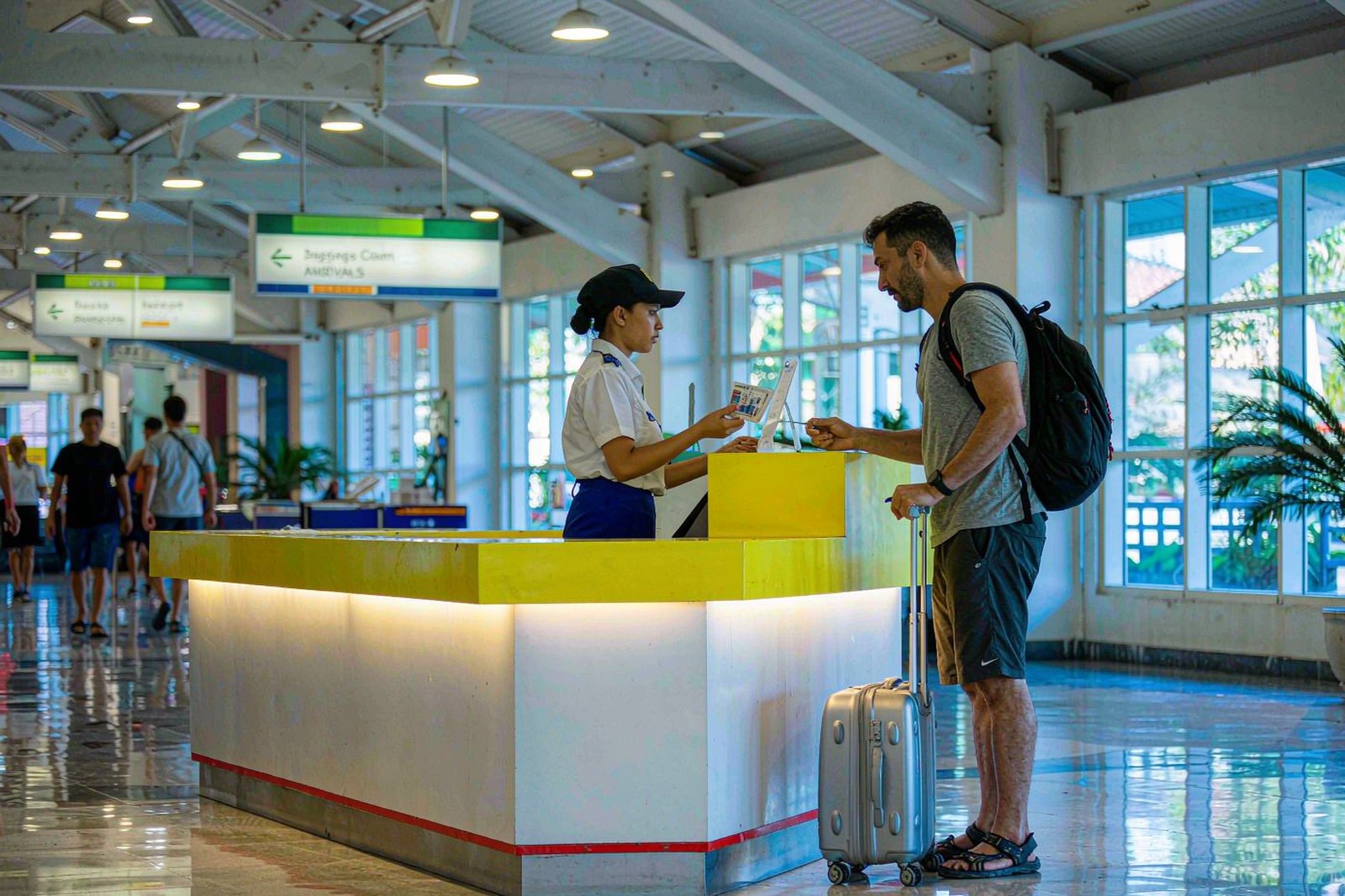
At NAIA the same category of product is sold for ₱2,000, ₱2,500 or ₱3,000, and the person selling it will open the conversation at the highest of those three numbers. The gap between those two facts — roughly twenty to seventy times, depending on how you count — is the single most useful thing to understand about buying connectivity in the Philippines.
The short answer: A base prepaid SIM is ₱40–₱100 anywhere outside an airport. The value is in the load you attach to it, not the plastic: Smart’s All Data 299 gives 24 GB for 30 days at ₱299, and Magic Data 549 gives 38 GB that never expires for ₱549. Airport counters sell bundled tourist packages at ₱1,500–₱3,500, which is not a scam but is three to seven times the city price for the same or less data. If you need a physical SIM, buy it at a mall, a 7-Eleven, or a carrier store in the city, attach a promo yourself, and register it on the spot with your passport, hotel address and return ticket. If your phone supports eSIM, buy before you fly and skip the entire transaction — including the 30-day cliff that deactivates tourist-registered SIMs.
There is a real argument for paying the airport premium, and this page makes it in full. But make it deliberately rather than because you were too tired to walk past the counter.
What a Philippines SIM Card Costs, Before the Airport Gets Involved
The plastic is nearly free and the data is where the money is. Locals ask for a PH SIM card, visitors ask for a Philippine SIM card, and it is the same ₱40 piece of plastic either way. That distinction explains almost every price you will see quoted.
| Item | Price (₱) | Approx. USD | Where |
|---|---|---|---|
| Base prepaid SIM, Globe or Smart | 40–100 | $0.70–1.80 | 7-Eleven, sari-sari, mall kiosk |
| Base prepaid SIM, DITO | 40–99 | $0.70–1.70 | DITO store, selected retailers |
| Globe Traveler SIM, 20 GB / 15 days | 500 | $8.60 | Globe store, GlobeOne |
| Globe Traveler SIM, 80 GB / 30 days | 1,500–1,750 | $25.90–30.20 | Globe store, GlobeOne |
| Globe Traveler SIM, 169 GB / 30 days | 3,000 | $51.70 | Globe store, airport booth |
| Smart Tourist SIM, unlimited | 1,599 | $27.60 | Smart store, online, airport |
| Smart All Data 299, 24 GB / 30 days | 299 | $5.16 | Any load channel |
| Smart Magic Data 549, 38 GB, no expiry | 549 | $9.47 | Any load channel |
The pattern is worth stating plainly: a ₱40 SIM plus a ₱549 Magic Data load gives you 38 GB that never expires for ₱589, or about $10.20. There is no airport package at any price that beats that on a per-gigabyte basis.
What the airport package buys instead is a completed transaction — registered, configured, tested, and working, with a human standing in front of you who will fix it if it does not.
The carrier promos, which is where the real price lives
A Philippines SIM card is cheap. The data attached to it is where the money goes, and the promo menu is deliberately hard to compare. Globe publishes its prepaid promo list and load denominations on its prepaid help pages, and Smart does the same on its own site; neither publishes a single table that puts every promo side by side, because the comparison is not in their interest.
If you buy a base SIM and load it yourself, you are choosing from a promo menu, not a product list. These are the structures as sampled in 2026.
Smart All Data — open-access data, time-limited:
| Promo | Data | Validity | Price (₱) |
|---|---|---|---|
| All Data 50 | 2 GB | 3 days | 50 |
| All Data 99 | 6 GB | 7 days | 99 |
| All Data 299 | 24 GB | 30 days | 299 |
| All Data 399 | 36 GB | 30 days | 399 |
| All Data 599 | 48 GB | 60 days | 599 |
| All Data 899 | 72 GB | 90 days | 899 |
Smart Magic Data — open-access data, no expiry:
| Promo | Data | Validity | Price (₱) |
|---|---|---|---|
| Magic Data 99 | 2 GB | None | 99 |
| Magic Data 149 | 3 GB | None | 149 |
| Magic Data 249 | 8 GB | None | 249 |
| Magic Data 349 | 16 GB | None | 349 |
| Magic Data 449 | 26 GB | None | 449 |
| Magic Data 549 | 38 GB | None | 549 |
Globe Go and GoSURF — Globe has no no-expiry product:
| Promo | Data | Validity | Price (₱) |
|---|---|---|---|
| Go+99 | 8 GB + 8 GB app data | 7 days | 99 |
| Go140 | 10 GB | 10 days | 140 |
| Go250 | 15 GB | 15 days | 250 |
| GoSURF299 | 8 GB | 30 days | 299 |
The single most important line in those three tables is that Smart’s Magic Data does not expire. It changes the decision for anyone staying longer than a couple of weeks, because unused data is normally money thrown away and here it is not.
What DITO costs, and why it is not the answer
DITO is the cheapest of the three and it is not a serious option for most visitors. Its monthly plans sit well below Globe and Smart on price, its city 5G is genuinely fast, and it keeps winning Ookla’s Top-Rated Mobile Network rating in the Philippines. But it lacks low-band spectrum, so its signal degrades faster than either competitor once you leave a city grid, and its eSIM availability at retail is unreliable — DITO’s own product list is the only reliable place to check what is currently sold.
For a Manila-only business trip where you will buy a SIM at a mall anyway, DITO is worth a look. For anything involving a ferry, an island or a province, buy Globe or Smart.
The Airport Price, Measured Against the City Price
This is the comparison the airport does not want you to run: the Philippines airport SIM card price vs city price, for the same 30-day tourist product. Both columns below are real, and the gap is not explained by better data.
For a SIM card in the Philippines, airport vs outside comes down to price and speed, and the speed is identical — the network does not know where you bought the plastic.
| Airport booth | City (mall, 7-Eleven, carrier store) | |
|---|---|---|
| Globe, 30 days | ₱2,000 for about 131 GB; ₱2,500 for 200 GB; ₱3,000 for 262 GB | ₱1,500–1,750 for 80 GB; ₱3,000 for 169 GB; or ₱40 SIM + promos |
| Smart, 30 days | ₱2,000–₱3,500 depending on bundle | ₱1,599 unlimited; ₱299 for 24 GB; ₱549 for 38 GB no-expiry |
| Base SIM only | Not sold | ₱40–100 |
| Registration | Staff does it | You do it, or staff does it in a store |
| Setup time | 15–40 minutes, in a queue | 10–30 minutes, in a queue |
| Data per peso | Lower | Higher |
The counter-intuitive finding: the airport sometimes quotes more data for the same money than the published website does — 131 GB at ₱2,000 against a published 120 GB at ₱2,000. The airport is not simply marking up the same product; it is selling its own bundles on its own cycle. That means you cannot prove you were overcharged by comparing like for like, which is precisely why the comparison is hard to win as a complaint.
What you can compare is the shape of the deal. At the city price, ₱1,500 buys 80 GB with unlimited calls and texts. At the airport, ₱2,000 buys 131 GB. Both are around ₱19 per gigabyte versus ₱15 per gigabyte — close enough that the airport premium is smaller than the folklore suggests if you buy the right bundle from a branded counter.
The folklore is about the other channel, and there the premium is enormous.
Reading a load menu you have never seen
Philippine prepaid vocabulary is its own dialect and no guide explains it, which is why visitors end up buying the wrong thing at the counter. Six terms decode almost all of it.
Load is credit, not data. It is money in the account, denominated in pesos, and it buys nothing until you convert it into a promo. A SIM with ₱300 of load and no promo has no data at all — the most common first-day confusion in the country.
Promo is a package bought with load. It converts credit into gigabytes plus a validity window. This is the actual product; the load is the wallet.
Unli means unlimited, and it is almost always qualified. “Unli 5G” means unlimited data on 5G only, which is a small fraction of the country geographically. “Unli calls and texts” is genuinely unlimited calls and texts. Read which noun follows the word.
Open access or all sites and apps means the data is not app-restricted. This matters, because a large share of cheap Philippine promos are app-specific — Magic Apps for Facebook, Instagram and WhatsApp; Magic Apps for TikTok; Magic Apps for YouTube and Google. Those are cheap and useless if you need Maps.
Magic Data is Smart’s no-expiry, open-access data. Not to be confused with Magic Apps, which is app-restricted, or Magic Data+, which bundles calls and texts.
Giga and Go are Globe’s naming families. Go+ is data plus app data, Go is plain data, GoSURF is longer validity with less data. None of them are no-expiry.
The USSD codes to know: *143# on Globe and *123# on Smart open the menu you can use without data. Useful on day one, when you have load but no connection to the app.
What the Counter Will Try to Sell You, and the Right Answer
Airport counters are staffed by salespeople with targets, and the script is predictable. Knowing it in advance is worth about ₱1,000.
The opening line: “Sir/Ma’am, this one has 262 GB, very fast 5G, ₱3,000.” That is the top tier and it is the first number you will hear regardless of what you asked for.
The right answer: “What is your cheapest 30-day package?” Not “what do you recommend.” Recommendation requests trigger the top tier.
The second line: “The ₱2,000 one is only 131 GB, for a short trip that is not enough.” This is where most people concede. It is also usually untrue — 131 GB across 30 days is more than most visitors use in a year.
The right answer: “I’ll take the ₱2,000 one.” If they push again, ask to see the printed price list.
The third line: “Do you want the eSIM or the physical SIM?” Both are legitimate; the eSIM costs ₱99 more at Globe. If your phone accepts eSIM, take it, because it leaves your SIM tray free.
The fourth line: “Do you want a case / power bank / insurance?” No, and no.
The pattern behind all four is that the counter optimises for the transaction value, not for your usage. That is normal retail behaviour and not a scam — but it means the price you pay is a function of how well you hold your position, which is an uncomfortable way to buy connectivity after eleven hours of flying.
Two sentences defuse the whole conversation: “I know the published price. What is the cheapest 30-day plan?” Ask it before they open, and the script never runs.
The bundle that looks cheapest and is not
One trap deserves its own paragraph, because it is arithmetic rather than salesmanship.
A 15-day, 20 GB Globe package at ₱500 looks like better value than a 30-day, 80 GB package at ₱1,500 — it is a third of the price for a quarter of the data, so per gigabyte it is slightly worse, and most people only compare the headline number. For a five-day trip the ₱500 package is correct and the ₱1,500 one is waste. For a twelve-day trip the 15-day validity is fine but 20 GB may not be, and the top-up you buy on day nine will be at a resort, at resort terms.
The test is not price per gigabyte. It is: will this package’s validity exceed my trip, and will its data exceed my usage? If either answer is no, move up a tier. Buying the tier above your estimate is almost always cheaper than topping up mid-trip.
The “speed” question, which is a red herring
Searches about airport versus city SIM prices often pair the two with “speed,” as though the airport sells faster data. It does not. A Globe SIM bought at NAIA and a Globe SIM bought at SM Makati attach to the same network, on the same bands, at the same throughput. There is no airport tier.
What does differ is which promo is loaded. A tourist bundle may carry 5G access that a cheaper promo does not, and a cheap promo may be capped at 4G. That is a promo difference, not a location difference, and it is worth checking on the package rather than assuming from the till.
Where to Get a SIM Card in the Philippines, Ranked by Price
| Channel | Price level | Hours | Registration | Notes |
|---|---|---|---|---|
| 7-Eleven, Ministop | Base SIM cheapest | 24 hours in cities | You do it | Fastest cheap option; staff may not help |
| Sari-sari store | Base SIM cheapest | Daylight | You do it | Everywhere outside cities; no English support guaranteed |
| Mall kiosk or carrier store | Published price | Mall hours | Staff does it | Best balance of price and help |
| Carrier store in a major mall | Published price | Mall hours | Staff does it | Queue can be 45 minutes at weekends |
| Airport booth (NAIA T1/T2/T3, Mactan, Clark, Caticlan) | Highest | Around the clock | Staff does it | The convenience premium |
| Telco Express near NAIA T1 immigration | ₱150–₱2,500 | Airport hours | Varies | Wider selection, less standardised pricing |
| Lazada, Shopee | Cheap | Delivery | You do it | Only useful if you are already in the country |
| Before you fly, as an eSIM | Mid | Instant | None for travel eSIMs | The only channel that removes the queue |
The ranking is not close. For a visitor who can wait two hours, the mall or the 7-Eleven wins on price by a factor of three to seven. For a visitor who lands at 11pm with a hostel address and no working phone, the airport booth is worth every peso of the premium — and that is a legitimate purchase, not a mistake.
The mistake is paying the airport premium and getting a bad bundle, which is what happens when you accept the first number quoted.
Where to get a SIM if you land somewhere other than Manila
Manila gets the attention, but the arrival point determines your options.
| Arrival point | Best option | Note |
|---|---|---|
| NAIA T1, T2, T3 | Branded Globe or Smart booth in arrivals | Open around the clock; cash and cards |
| Clark (CRK) | Globe booth, or a mall in Angeles | Fewer counters, longer waits |
| Mactan-Cebu (CEB) | Globe and Smart booths in arrivals | Same setup as Manila, shorter queues |
| Caticlan (for Boracay) | Globe booth at the jetty port | Small; expect a limited bundle range |
| Davao (DVO) | Carrier store in the city | Airport options are thin |
| Puerto Princesa (PPS) | Carrier store in the city | Plan for no airport SIM |
| Siargao (IAO) | Nothing reliable | Buy in Manila, Cebu, or bring an eSIM |
| Overland from another country | Not applicable | The Philippines is an archipelago |
The Siargao row is the one that ruins trips. There is no dependable SIM retail at Sayak airport, and the town’s options are limited and priced accordingly. If Siargao is your first stop, arrive with connectivity already sorted.
The Free SIM Touts, and What the Load Really Costs
Outside the branded counters at NAIA there is a cluster of people holding signs that say “free SIM.” The SIM is genuinely free. The load is not, and the load is where the transaction lives.
The mechanics are consistent enough to describe: you accept a free SIM, the seller explains that it needs a bundle to work, the bundle is quoted at ₱1,500 to ₱2,000, and what you receive is a plan that would have cost a fraction of that from a carrier channel. There is no posted price, no receipt worth keeping, and no recourse.
A traveller account from a 2025 arrival describes the branded counter experience clearly: the cheapest Globe option on offer was ₱1,500 for a month with 80 GB and calls, and staff opened the conversation by trying to sell the ₱2,500 tier first. That is normal sales behaviour at an official counter. The tout version of the same conversation ends with a smaller bundle and less money left.
Three rules that end the problem:
- Only buy where there is a posted price. If the number is spoken rather than printed, walk.
- Ask for the cheapest 30-day option first, not the best. The opening offer is always the top tier.
- Pay at a till or a branded counter. Cash to a person holding a sign is not a transaction you can undo.
The same logic applies inside the terminal: at NAIA there are airside stalls in the departure areas of Terminals 1, 2 and 3 selling SIM kits, and a Telco Express near Terminal 1 immigration with packages from ₱150 to ₱2,500. Those are legitimate businesses with legitimate prices. The distinguishing feature is a counter, a brand and a printed price list.
Registration at the Counter: What the Staff Will Ask For
Every SIM in the Philippines must be registered under Republic Act No. 11934 before it connects. At a branded counter the staff do it for you, which takes ten to fifteen minutes and is dramatically more likely to succeed than doing it yourself on a phone with 4% battery.
Have these ready before you reach the counter:
| Document | Tourists | Longer stays |
|---|---|---|
| Passport | Bio page and the page with your admission stamp | Bio page |
| Philippine address | Hotel booking, Airbnb confirmation, or lease | Same |
| Return or onward ticket | Required, with date and time of departure | Not required |
| Selfie | Taken live at the counter | Taken live |
| Visa documents | None | AEP, ACR I-Card, or school registration |
The three failures worth pre-empting:
A dimly lit selfie. Counters in arrivals halls are not well lit. If the photo comes out dark or filtered, registration is rejected, and the rejection message rarely says why.
An address you cannot produce. “I’m staying with a friend” without a booking confirmation is a problem. Have the booking on your phone, with the address legible.
A return ticket you cannot show. The requirement is real for tourists. Screenshot the itinerary before you fly, because airline apps log out.
Once registered, a tourist SIM is valid for 30 days and then deactivates automatically. If your trip is longer, file the visa extension with the Bureau of Immigration while the line is still live, then update the registration. Doing it in week four of a five-week stay is the difference between keeping the number and losing it.
Doing it yourself, if you bought at a 7-Eleven
The three portals are new.globe.com.ph/simreg for Globe, smartsimsregistration.com for Smart and dito.ph/sim-registration for DITO. The flow on each is the same: number, OTP, personal details, ID upload, address proof, selfie, submit.
Two things make the self-service route fail more often. The OTP arrives by SMS on the SIM you are registering, so the SIM must be in a phone that can receive SMS — which means you cannot register a SIM you have not yet inserted. And the address proof upload is where people stall, because a booking confirmation email is not the same as a booking confirmation document.
What You Get for ₱40 vs ₱1,500 vs ₱3,000
Three price points, three genuinely different products. This is the comparison that makes the decision obvious.
| ₱40 base SIM | ₱1,500 bundled | ₱3,000 bundled | |
|---|---|---|---|
| Upfront cost | ₱40 | ₱1,500 | ₱3,000 |
| Data included | None, or a tiny welcome bundle | 80 GB (Globe) | 169 GB (Globe) or 262 GB (airport) |
| Calls and texts | Charged from load | Unlimited to all networks | Unlimited to all networks |
| Validity | Follows the load denomination | 30 days | 30 days |
| What you still must do | Buy a promo, register | Register | Register |
| Total cost for 30 days of real use | ₱589 with Magic Data 38 GB | ₱1,500 | ₱3,000 |
| Data per peso | Highest by far | 53 MB per peso | 56 MB per peso |
The ₱40 route wins on unit economics by a factor of two, and it wins by more than that if you take Magic Data because the data never expires.
What it loses is time and certainty. You have to find a load channel, choose a promo from a menu you have never seen, and register yourself. On arrival day, that is a lot of work for a saving of about $20.
The honest recommendation splits by trip length:
- Under 5 days: take the bundled package. The saving is not worth the friction, and a 15-day 20 GB package at ₱500 is already cheap.
- 5 to 14 days: buy a base SIM in the city and load All Data 299 or Go250. Save the money.
- Over 14 days: buy a base SIM and load Magic Data. The no-expiry product is the only one where you cannot lose.
- Anything where you arrive after 9pm: buy at the airport, or buy an eSIM before you fly.
Globe or Smart: The Counter Question
At the counter they will ask which network you want, and most visitors have no basis for an answer.
| Globe | Smart | |
|---|---|---|
| Consistency | Stronger; award-winning above 87% | Good |
| Peak speed | Strong in cities | Slightly stronger nationally |
| Small islands and rural routes | Weaker on Siargao, parts of the Cordillera | Stronger |
| Palawan | 4G in El Nido and Coron towns | 4G in the same towns |
| No-expiry data | Does not offer it | Magic Data, from ₱99 |
| Tourist package | Traveler, ₱500–₱3,000 | Tourist, ₱1,599 unlimited |
| Stock reliability | Reliable | Tourist eSIM frequently out of stock |
The rule that works: Globe for a route through cities and major resorts, Smart for a route through small islands and mountains. If you cannot decide, buy Globe for the number and Smart for the data, or buy a dual-network eSIM and stop deciding.
For the carrier-level detail — bands, APN settings, per-city throughput — the carrier-level technical page covers it properly. This page is about the transaction.
When a Physical SIM Beats an eSIM
The eSIM argument is strong and it is not universal. Four cases where plastic still wins.
Your phone does not support eSIM. Older handsets, many mid-range Android models, and anything carrier-locked. Check Settings → General → About for “No SIM restrictions” on iPhone; on Android, look for an “Add eSIM” or “Add Carrier” menu. No menu means no eSIM, and no amount of research changes that.
You need a local number and you need it now. Globe and Smart both sell eSIMs with numbers, but the registration flow is the same and the retail availability is thinner. At a counter, a physical SIM and a completed registration is a fifteen-minute transaction with a human doing the work.
You are staying months, not weeks. A physical SIM can be moved between phones, kept in a drawer, and revived with a top-up. An eSIM profile is bound to one device’s secure element, and moving it is a carrier operation. For a long stay, plastic is more flexible.
You want to hand the connection to someone else. A physical SIM can be given to a travel companion, a driver, or a second phone. An installed eSIM cannot.
When It Does Not
Five cases where the eSIM is clearly better, and they cover most visitors.
You land late. The single strongest argument. No queue, no counter, no cash, no negotiation at 11pm.
You are staying under 30 days and want no cliff. Travel eSIMs do not deactivate on a timer set by Philippine law, because they are not Philippine subscriptions.
You are island hopping and want two networks. A dual-network eSIM gives you a fallback a single physical SIM cannot.
You want it working before you board. Installation at home, on wifi, with time to fix anything that goes wrong.
You do not need a local number. Which, for most trips, is the case. Maps, Grab, Messenger and booking confirmations all work on data.
Where to buy an eSIM in the Philippines is therefore a slightly odd question: the best answer is usually that you do not buy it in the Philippines at all. Buy it from an international provider before you fly, or buy Globe or Smart’s own eSIM in the GlobeOne or GigaLife app if you want a local number. The step-by-step eSIM route walks through both paths, and the island-survival ranking covers which international products survive a multi-stop itinerary.
Buying a SIM for Someone Else, and Other Things That Fail
Four transactions that go wrong often enough to plan around.
Buying for a companion who is not present. Registration requires the passport of the person who will use the line, and a live selfie. You cannot register a SIM on someone else’s behalf and hand it over. If you are travelling as a couple, either register two SIMs or share a hotspot from one.
Buying a SIM and installing it in a locked phone. A carrier-locked handset will accept the SIM and refuse the network. Check the lock status before you buy, because the counter cannot unlock it for you.
Buying a “data-only” SIM expecting calls. Some promotional SIMs are data-only and will not make calls at all. If you need to call a landline, say so at the counter.
Buying at a kiosk that is not a carrier’s. Unbranded kiosks in malls sell SIMs that may be pre-registered to someone else, may be near expiry, or may be from a batch that was never properly activated. Buy from a brand you recognise.
Keeping it alive between trips
A Philippine prepaid SIM stays active while it has load activity inside its validity window. A SIM untouched for a year is almost certainly dead, and a dead number cannot be recovered.
If you plan to come back, spend ₱50 on load and use the line once before you fly home. That is the entire maintenance cost of keeping a number, and it is the difference between arriving next year with a working line and queueing again.
The card is therefore a short instrument by design, and the cost per day is what you should judge it on, not the sticker price at the counter. The one thing you cannot preserve is a tourist registration. That expires after 30 days regardless of your load balance, so a return visit means registering again — on the same number if it is still live, on a new one if it is not.
If the SIM Stops Working While You Are Still There
A dead SIM mid-trip is a different problem from a dead SIM on arrival, and the rules are not obvious.
Lost or stolen SIM. The SIM Registration Act requires you to report the loss to your carrier within 48 hours. Report it, and the carrier blocks the number. What you get back is a replacement SIM with the same number, not a new number — but you will need ID and you will need to visit a store, because prepaid replacement is generally not a phone transaction.
Damaged SIM. Same process, same store visit. Bring the damaged card if you have it; some counters will swap it without a fee, some will charge for a replacement.
SIM active but no data. Before you conclude the SIM is broken, check three things in order: is a promo actually active, is the APN correct for the carrier, and is data roaming switched on or off as required. A Philippine SIM with ₱200 of load and no promo has no data at all, and that is the single most common “broken SIM” in the country.
SIM deactivated at the 30-day mark. This is not a fault. A tourist registration expires and the line dies with it. There is no customer service fix, only a new registration, and if the number has been recycled you are starting from scratch.
Number recycled while you were abroad. Philippine prepaid numbers return to the pool after prolonged inactivity. If you kept a SIM from two years ago and it now shows no service, the number has moved on. Buy a new one.
The pattern across all five: prepaid SIM problems in the Philippines are solved at a store with your passport, not on a phone call. Budget an hour and bring ID.
Staying Past 30 Days: Which SIM Card for the Philippines Still Works
The 30-day tourist window is the hard edge of this purchase, and it is the question that arrives by email two weeks into a long stay. It is also the reason a Philippines SIM card bought in week one can be useless by week five while the data on it has not run out. The short version: your SIM does not extend, your visa does.
The sequence that works. Apply for the visa extension at a Bureau of Immigration office while the line is still live — typically in week three, not week five. Extend first. Then update the SIM registration to reflect the extended status, which for most carriers means re-submitting through the same portal with the new documents. The number normally survives this. What does not survive is letting the 30 days lapse: a deactivated tourist registration releases the number, and the number going back into the pool is what makes a long stay expensive.
If the window has already closed. You are buying a new SIM card for the Philippines and re-registering every account that depended on the old one. Budget an afternoon, and expect the GCash account to need re-verification against the new number.
The alternative that avoids the cliff entirely. If you are staying six weeks or more, a postpaid line or a digital-first brand such as GOMO can be a better instrument than a tourist prepaid SIM, because neither carries the 30-day tourist clock in the same way. Both require more paperwork up front and a Philippine address that holds up, so they suit a long stay rather than a holiday.
What to do with the data you cannot carry over. This is where Smart’s Magic Data earns its reputation: it has no expiry, so buying 38 GB for ₱549 at the start of a two-month stay is not a gamble on how much you will use in 30 days. Globe has no equivalent, which is why long-stay travellers on Globe end up buying promos in a cycle. The no-expiry maths is broken down on the Smart page.
Buying Two SIMs on Purpose: the Redundancy Play
Nobody plans to buy two SIMs, and experienced travellers in the Philippines often do. The reasoning is not paranoia; it is the specific geography of a country where coverage changes between two beaches on the same island.
The play is straightforward: buy the cheap base SIM on one network, buy a second on the other, and keep both registered and both installed. A Philippines SIM card at a 7-Eleven is ₱40 to ₱100, so total cost for both plus two small promos lands well under ₱600, which is less than a single airport bundle. The reason this works is not that two networks are twice as good; it is that the failure mode in the Philippines is binary. Your line either has a site nearby or it does not, and the second SIM is the only remedy that does not require moving.
Three situations where the second SIM pays for itself on the first day.
You are island hopping. A Globe handset with no signal on a Visayan island is not a configuration problem and no support agent can fix it. A Smart SIM in the same bag is.
You are sharing connectivity with someone who cannot wait. Two people, two networks, two chances that one of them works when a ferry is cancelled and a rebooking needs a connection.
You are working. A dead line during a client call is a different category of problem from a slow one, and a second network converts the first into the second.
The cost of the play is administrative rather than financial: two registrations, two queues, two loads to keep alive. If that sounds like more work than your trip deserves, the middle path is one local SIM plus one data-only travel eSIM on the other network, installed before you fly — the dual-network comparison sets out which combinations actually cover both.
Straight Answers on Philippine SIM Cards
How much does a SIM card cost in the Philippines? ₱40 to ₱100 for the plastic, anywhere outside an airport. The load you attach is the real cost, from ₱50 for 2 GB over 3 days to ₱3,000 for a 30-day 169 GB tourist bundle.
Is it cheaper to buy a SIM at the airport or in the city? The city, by three to seven times on a per-gigabyte basis. The airport sells convenience and a completed registration, not better data.
Where can I buy a SIM card in the Philippines? 7-Eleven, Ministop, sari-sari stores, mall kiosks, carrier stores, airport booths and online marketplaces. Carrier stores are the best balance of price and help.
Do I need a passport to buy a SIM? Yes. Registration under RA 11934 requires a passport, proof of Philippine address and, for tourists, a return ticket.
How long does a tourist SIM last? 30 days from registration, then automatic deactivation. Extending requires filing a visa extension and updating the registration while the line is still active.
Can I use a Philippine SIM in my own phone? If the phone is unlocked and supports the network’s bands. Most modern handsets do. A carrier-locked phone will not.
Is a physical SIM or an eSIM better in the Philippines? An eSIM for a short trip where you do not need a local number. A physical SIM if you need a number immediately, are staying months, or have a handset without eSIM support.
Why is my data so slow? Possibly congestion, possibly a promo with a 4G cap, possibly a fair-use throttle. Test at a different hour before concluding it is the network — and if you are in a resort at 8pm, assume congestion first.
Can I top up at 7-Eleven? Yes, with cash, for Globe, Smart and DITO. You will need the number. Most convenience stores will do it in under a minute.
The Buying Sequence, Start to Finish
If you are buying at the airport: walk past every sign that says “free.” Go to the branded Globe or Smart counter. Ask for the cheapest 30-day option and work up, not down. Have your passport, your hotel booking and your return ticket on screen. Watch the registration complete before you leave the counter. Confirm data loads a page you have never visited. Then walk to the Grab queue.
If you are buying in the city: buy a base SIM at a 7-Eleven or a carrier store for ₱40 to ₱100. Register it on the spot. Buy load and activate a promo — All Data 299 if you want 24 GB for a month, Magic Data 549 if you want 38 GB that never expires. Confirm it works before you leave the shop.
Buying before you fly: a dual-network travel eSIM, installed at home on wifi, left switched off, turned on when you land. If you also need a local number, plan a Globe or Smart store visit on day two rather than day one.
The cheapest path is not the fastest one, and the fastest one is not as expensive as the folklore claims if you buy the right bundle from the right counter. What is expensive is arriving with no plan and accepting the first number you are quoted.