Síminn and the Icelandic Number: When You Actually Need One

Roami Team
Roami offers reliable eSIM plans, serving over 1 million travelers annually, and supports automatic local network switching to help travelers stay connected globally.
📑 Table of Contents
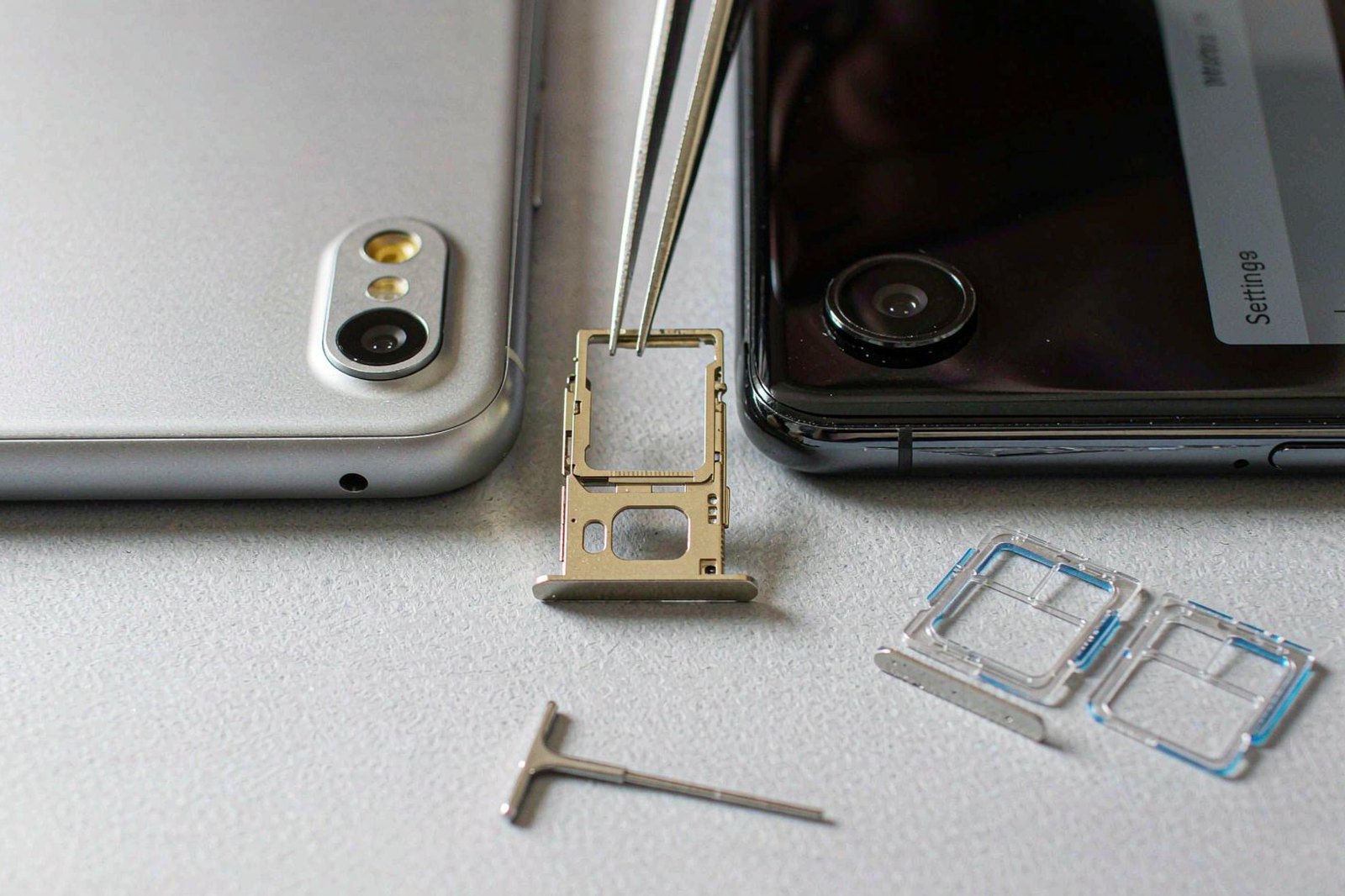
Every article about connectivity in Iceland recommends buying a travel eSIM, and for most visitors that is the right answer. This page is about the case where it is not — the case where you need an Icelandic phone number, and no travel provider on earth can sell you one.
Only a local operator can issue a local number, and in Iceland there are three: Síminn, Sýn (which trades as Vodafone Iceland) and Nova. Among them Síminn is the one most tourists end up with, for two reasons that have nothing to do with marketing. It has the widest rural network in the country, and it sells the only eSIM product shaped close to a tourist’s needs — a fourteen-day unlimited bundle with a number attached.
What follows is not a recommendation to buy it. For a two-week driving holiday, a travel eSIM at a third of the price will do everything you actually need. What follows is an explanation of what the Síminn route gives you, what it costs in money and friction, and how to decide honestly whether the number is worth it.
Síminn Is the Network Iceland Recommends to Itself
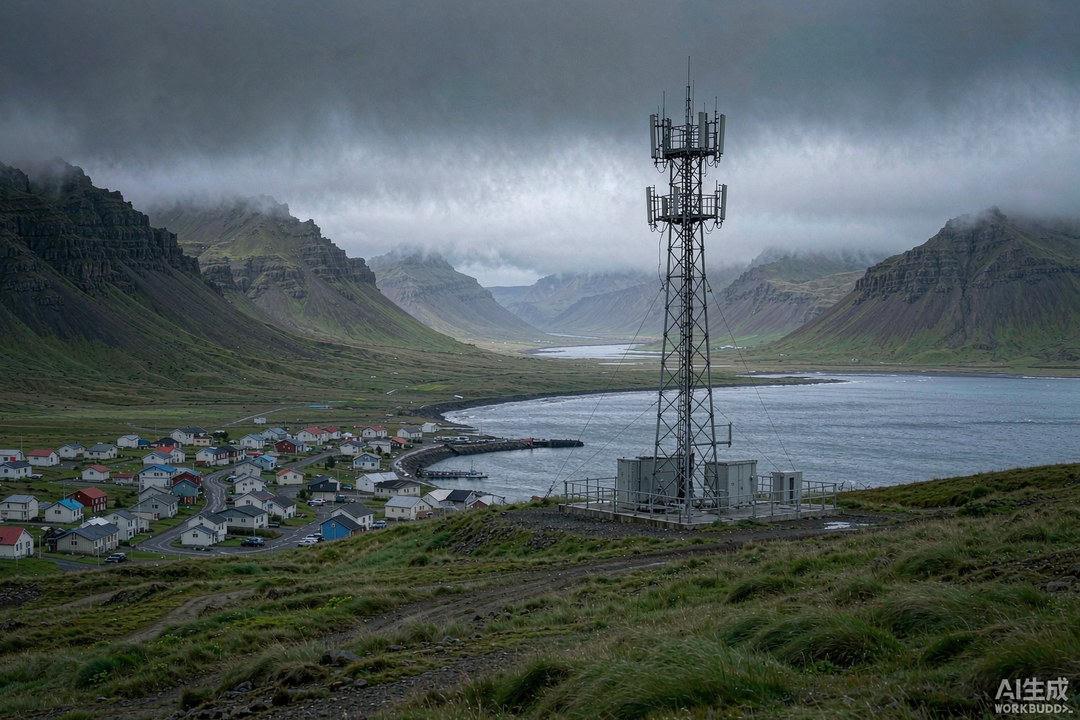
Ask an Icelander which network to use outside Reykjavík and the answer is almost always Síminn, and the answer is not brand loyalty — it is history. Síminn is the former state telecommunications monopoly, and it inherited the rural transmission network that was built to reach every farm and fishing village in a country where the population is spread along a coastline rather than gathered in cities.
That inheritance still decides coverage today. Síminn’s 4G reaches a very high proportion of the population, which in Iceland is a misleading figure but not a meaningless one, and more importantly it holds signal in places the other two networks do not: the East Fjords, the deeper Westfjords, and the mountain passes on the northern routes. When people describe Iceland as having surprisingly good mobile coverage for its size, they are usually describing Síminn.
Its position in the market is the largest of the three, its prices are the highest, and the two facts are related. Vodafone Iceland is second on coverage and usually cheaper. Nova is third on coverage, strongest in the capital, and cheapest of all. The ordering Síminn, then Vodafone, then Nova is the standard recommendation in Iceland, and it is a coverage ordering, not a value ordering. The Iceland operator breakdown covers the three in more detail if you want the band-level version.
For a visitor the practical translation is simple: if you are going to buy a local product at all, and your trip involves driving beyond the Reykjavík area, Síminn’s network premium is buying you something real. If you are staying in the capital, it is buying you very little.
700 MHz and 800 MHz: Why the Low Bands Decide Your Drive
The technical reason Síminn holds rural signal better than its competitors is not tower count. It is frequency.
A Síminn Iceland eSIM inherits this, which is why it is the product most visitors end up with once they decide they want a local number. The rural 4G footprint is LTE on 700 MHz and 800 MHz, with extra capacity at 900 MHz and 1800 MHz closer to towns. Low frequencies travel further and bend around obstacles, which in a country of mountains and fjords is the difference between a signal and no signal. A 700 MHz cell can reach tens of kilometres and follow a valley; a 2100 MHz cell cannot.
Vodafone Iceland runs a strong network with more weight on mid-bands like 1800 MHz and 2100 MHz, which deliver excellent speeds in towns and along the well-trafficked southern corridor, and which thin out faster once the terrain gets awkward. Nova is concentrated in the 3.5 GHz band for 5G in the capital region — very fast at short range, and dependent on roaming agreements once you leave it.
Two practical consequences follow, and neither is obvious from a coverage map.
The first is that raw speed in Reykjavík tells you nothing about signal on a mountain pass. All three networks are quick in the capital, because the capital is where the capacity is. The difference appears 200 kilometres from Reykjavík, where only low-band infrastructure reaches.
The second is that 5G is a city feature in Iceland, not a national one. The 3.5 GHz band that delivers the headline speeds has short range by design, which is why 5G appears in Reykjavík, Reykjanes and Akureyri and disappears on Route 1. If a plan is marketed on 5G, it is marketing a feature you will use for a fraction of your trip.
The Prepaid Packs, and Which One a Visitor Should Take
Síminn sells several prepaid shapes, and they are built for residents. Understanding which is which prevents the most common purchase mistake, which is buying the cheapest one and running out on day two.
| Product | Price | What is included | Who it actually suits |
|---|---|---|---|
| Freedom starter | 10 GB, 50 domestic and international minutes, 50 SMS, 30 days | A visitor who wants data and a working number in one purchase | |
| Data-only starter | 10 GB, no voice, no SMS, 30 days | A visitor who only needs data and bought elsewhere for calls | |
| Data top-up pack | 20 GB, purchased online with an international card | Extending an existing Síminn line mid-trip | |
| Online-only eSIM, unlimited | Unlimited data, unlimited domestic calls and texts, 50 GB EEA roaming, 14 days | A visitor who wants unlimited plus a number, or a remote worker |
For a typical one-to-two-week visit, the Freedom starter is the honest choice if you want a number, because it bundles data with fifty international minutes, which is more useful than it sounds when you need to call a bank or a landline at home. The data-only starter saves almost nothing — about two dollars — and removes voice entirely, which is the whole reason to buy local in the first place.
If what you are weighing up is a Síminn eSIM Iceland purchase against a travel plan, the comparison that matters is not the sticker price of the starter pack but the price of the shape that fits your trip. A ten-day visit needs about 6 GB. The Freedom starter gives you 10 GB and a number for twenty-two dollars; a travel plan gives you 10 GB and no number for fifteen. The seven-dollar gap is the price of the number, and it is much smaller than the gap looks when you compare the biggest packs on each side.
The unlimited eSIM is the most interesting product in the table and the one with a trap attached. At around 7,000 krónur for fourteen days it is priced like a premium travel plan, and it includes an Icelandic number, unlimited domestic calling, and a 50 GB EEA roaming allowance. That combination does not exist anywhere in the travel eSIM market. Its constraint is activation: the unlimited variant must first connect to an Icelandic tower before it starts, which means you cannot validate it from home and should not assume a profile that looks installed is working.
The cost breakdown converts all of these to dollars and compares them per gigabyte against travel plans, if you want the arithmetic rather than the summary.
An Icelandic Number: What It Unlocks and What It Costs
This is the section that justifies the whole page, so it is worth being precise about what a local number actually does for a visitor — and what it does not.
What it unlocks. Restaurant reservations at places that only take phone bookings, which is more common in Iceland than in most of Europe outside the capital. Domestic delivery and ride apps that verify by Icelandic SMS. Calls from a car rental company about a vehicle issue, which arrive by voice and not by email. Calls from a tour operator cancelling on weather, which in Iceland is a real and frequent scenario. And a voice line that works on a marginal signal where data has already failed, which is a different safety calculation than a data-only profile.
What it does not do. It does not make your data faster. It does not improve rural coverage beyond what the network already offers. It does not translate your existing home number, and it does not forward your home calls unless you set that up separately. And it does not remove the need for a data allowance — a number without data is not useful on a driving trip.
What it costs. The premium is real: roughly twenty-two dollars for a Síminn starter against eight to ten for a comparable travel plan, so fourteen dollars or so for the number and the voice minutes. On a longer trip with the unlimited eSIM, the premium narrows, because the product includes far more data than a tourist would buy.
For a Síminn eSIM Iceland purchase the decision rule that works is narrower than for a travel plan: ask whether anything in your itinerary requires someone to call you, or requires you to call an Icelandic number. If the answer is yes — a rental car issue, a weather cancellation, a restaurant booking — buy the number. If the answer is no, and your communication is all WhatsApp and email, a travel eSIM is strictly better value and the number is fourteen dollars of insurance against a scenario that will not happen.
2G and 3G Are Gone: What That Means for an Older Handset
In May 2026 the Icelandic regulator completed the shutdown of the country’s 2G and 3G networks. It is the single most consequential change to Icelandic mobile service in years, and it is almost entirely absent from travel content about the country.
Three consequences matter to a visitor.
Your phone must support 4G, and ideally 5G. Almost every handset sold since around 2019 does. The exceptions are older budget devices, some grey-import models built for other markets, and anything that relied on a 3G fallback for voice.
A marginal signal is now a dead signal. Where a phone once held a weak 3G connection on a pass, it now holds nothing. This does not change which network is best, but it makes the offline-map habit mandatory rather than advisable.
Some old prepaid products are obsolete. Voice-first starter kits designed around 3G have no future. If you are offered a very cheap local pack, check that it is a 4G product before paying.
The technical rules behind the shutdown are published by Fjarskiptastofa, the Icelandic authority for telecoms, and the GSMA maintains the eSIM specification that every product in this article conforms to. Neither is required reading before a holiday, but both are the source to check if a detail here has aged.
Vodafone Iceland and Nova at the Network Level
The comparison between the three networks is more useful at the band level than at the brand level, because brand preferences in Iceland are largely inherited rather than earned.
Vodafone Iceland, run by Sýn, is the strongest alternative to Síminn for a driving trip. Its coverage on the southern corridor — Reykjavík to Selfoss to Vík to Höfn — is genuinely comparable, and its 5G in the capital and in Akureyri is fast. Where it thins relative to Síminn is in the East Fjords and the deeper Westfjords, and on some northern passes. For an itinerary that stays on the classic south coast route, it is a perfectly good choice and usually cheaper.
Its prepaid entry point is the cheapest of the three at around 1,790 krónur, though that buys only a gigabyte. Two cautions apply: its prepaid terms have historically included a tethering charge on some products, which makes hotspot sharing expensive, and its online services are Icelandic-first, which complicates topping up from abroad.
Nova is the urban specialist. It has the most aggressive 5G deployment in the greater Reykjavík area, the Reykjanes peninsula and Akureyri, and the cheapest data in the country by a wide margin — a 20 GB pack at around 2,690 krónur is under twenty dollars. It is also the only one of the three that currently opens 5G to prepaid customers, which is a genuine differentiator.
Its weakness is exactly where a driving trip needs strength: outside towns it relies on roaming agreements and shared infrastructure, and a Nova-only prepaid SIM can fall to a marginal signal in rural valleys. If your trip is Reykjavík-based, Nova is the value pick. If your trip is a loop, a Nova product without national roaming is the wrong purchase.
The synthesis: Síminn for rural reach, Vodafone Iceland for the south coast at a lower price, Nova for the capital at the lowest price. If you are buying a travel eSIM instead, the question becomes which of these networks it rides — which is the subject of the provider comparison.
The Online-Only Unlimited eSIM and Its Activation Order
The Síminn unlimited eSIM deserves its own section because its activation behaviour is unlike anything in the travel market, and getting it wrong produces the frustrating experience of a profile that appears installed and does nothing.
The product is sold online, it includes unlimited data plus unlimited domestic calls and texts, it runs for fourteen days, and it carries a 50 GB EEA roaming allowance. The data-only variant can activate by connecting to any tower within the EEA roaming zone, which means you could in principle start it in mainland Europe on the way to Iceland. The unlimited variant cannot: it must first attach to an Icelandic tower.
That produces a specific sequence. Install the profile at home and leave it off. Do not switch it on in your departure airport, and do not expect it to work if you transit through another European country and turn it on there. Switch it on after landing in Iceland, and give it a minute to attach. If it shows signal but no data at that point, the profile is mid-activation rather than broken.
The practical reasons this matters are more than cosmetic. A traveller who switches the line on in Copenhagen and sees it fail will conclude the product is faulty and start troubleshooting. A traveller who understands the activation order will simply wait until Keflavík. When you are dealing with a product that has an unusual rule, knowing the rule is the whole difference.
One further note: the unlimited product is the only Síminn shape priced close to a tourist budget for a two-week trip. If you are considering it, compare it against a 20 GB travel plan on the same trip — one purchase each, and the difference is roughly twenty-five dollars for a number, voice and genuinely unlimited data. That is a defensible premium for a long trip and a poor one for a short break.
Síminn Versus a Travel Plan on the Same Road
The most useful comparison is not product against product but network against network on the roads you will actually drive, because that is where the seven-dollar difference either earns its money or does not.
Take the classic southern route: Keflavík, Reykjavík, the Golden Circle, Selfoss, the waterfalls, Vík, and on to Höfn. On this corridor a Síminn line and a travel profile roaming onto Síminn behave identically, because they are on the same towers. There is no coverage advantage whatsoever for the local product on this road. The advantage is the number and the voice.
Take the northern and eastern roads: Akureyri and the Ring Road east, the East Fjords, the approach to Egilsstaðir, the Westfjords. Here the Síminn line still has the advantage over a Nova-based product and a modest advantage over a Vodafone-based one, and a travel profile roaming nationally onto Síminn matches it again. The pattern repeats: the local product wins on voice and number, and loses on price, and coverage is a wash as long as the travel plan roams onto the right network.
That produces a cleaner decision rule than most guides offer. Compare on two axes only. Axis one is whether you need an Icelandic number or voice fallback. Axis two is whether your chosen travel plan rides a network with rural reach. If the answer to axis one is no and the answer to axis two is Síminn or national roaming, the travel plan wins on every practical measure. If axis one is yes, buy local and accept the premium, because there is no third option.
What makes this easy to get wrong is that the two products are presented in different units. Síminn quotes krónur for thirty-day packs; travel providers quote dollars for seven or thirty-day plans with a fixed data allowance. Converting both to cost per gigabyte on the same trip length is the only way to see the real gap, and the per-gigabyte workings do exactly that conversion if you want the numbers rather than the shape.
What the Unlimited Bundle Really Includes
The unlimited eSIM is the one Síminn product that looks like it was designed for a visitor rather than a resident, and it repays a close reading because three of its features are easy to miss.
Unlimited domestic calls and texts. Not “included minutes” — unlimited, to Icelandic numbers. For a two-week stay where you are booking restaurants, calling tour operators and chasing a rental car, that removes a small but constant friction. A travel eSIM cannot do this at all.
A 50 GB EEA roaming allowance. This is the figure that matters if your trip continues into Europe, and it is unusually generous for a local prepaid product. Most Icelandic prepaid packs cap their EU roaming allowance far below their domestic one, sometimes at a tenth. Fifty gigabytes is a real allowance rather than a token one, and it means the same profile can carry you onward to Norway or Denmark without a second purchase.
Fourteen days of validity. This is the constraint, and it is worth being blunt about it. Two weeks is shorter than many Icelandic itineraries. A twelve-day Ring Road trip fits; a three-week stay does not, and you will be buying a second bundle mid-trip. Compare that against a thirty-day travel plan and the trade-off becomes visible: the local product gives you more features over less time, which is a shape that suits a specific trip length.
The activation order. Covered above, but restated because it is the most common failure: install at home, leave it off, switch it on only after landing in Iceland. The unlimited variant will not start on a European tower.
Price it honestly against the alternatives for a fourteen-day trip. A 20 GB travel plan costs around twenty-five dollars and gives you data with no number and no voice. The unlimited bundle costs around fifty-two and gives you unlimited data, a number, unlimited domestic calling and 50 GB of European roaming. Twenty-seven dollars for that bundle of features is defensible if you will use them, and wasteful if you only wanted maps and photos.
Reusing a Síminn Line on a Second Trip
A question that comes up from repeat visitors: can you keep a Síminn line alive between trips and avoid buying again? The answer is yes, within limits, and the limits are all about time.
The published schedule has three stages. From activation you get half a year of live credit. Miss that and the service suspends, but a top-up revives it for another half year. Pass the twelve-month mark and the line is retired for good. Read as a calendar, it gives you two chances to rescue an account and one hard stop.
For an annual visitor that is awkward but manageable: top up before the block date and the line survives. For a visitor who comes every two years, it does not, and a fresh purchase is the only route. Neither case is a strong argument either way, but it is worth knowing before you leave credit on an account you intend to reuse.
The reinstall question is separate and more restrictive. A physical SIM can be moved between phones. A profile that has been deleted from a handset generally cannot be restored from the original QR, which means a Síminn eSIM tied to a phone you have since replaced may need a new issue rather than a reinstall. If you are buying a Síminn eSIM Iceland product intending to reuse it across trips, do not delete the line between them, and keep the original setup email.
What Your Phone Must Support Before You Buy
Buying a Síminn eSIM and discovering the handset will not take it is a worse experience than discovering it with a travel plan, because the purchase is tied to a local account with a phone number on it.
Check three things before you pay. The phone must have eSIM hardware, which a *#06# dial confirms by showing an EID. It must be carrier-unlocked, which is the failure that produces a QR that scans and a line that never attaches. And it must support the Icelandic bands, which for 4G means 700, 800, 900 and 1800 MHz and for 5G means 3.5 GHz. Almost every recent handset covers all of them; the compatibility list settles the model-by-model question in under a minute.
One more check specific to the local route: an eSIM starter pack sold by Síminn is tied to an Icelandic account, and some products require you to be able to receive an SMS to that Icelandic number during setup. If you are setting it up from abroad, that is a chicken-and-egg problem. The safe sequence is to install before you fly and complete any verification after landing.
Buying in Person: Keflavík, Reykjavík and Petrol Stations
The physical route is more available than visitors expect, which is one argument for it.
At Keflavík, the arrivals hall has a 10/11 convenience store open around the clock that stocks Síminn, Vodafone and Nova starter packs, a Síminn counter usually staffed until late, and an Elko electronics shop. The eSIM starter packs are not sold at the airport, only physical SIMs, so an eSIM purchase has to happen online or in the city.
In Reykjavík there is a Síminn store in the city centre, and there are electronics retailers and convenience stores that stock prepaid kits. Beyond the capital, the network shifts to petrol stations — the N1 chain is the most commonly cited — and larger supermarkets, which stock starter packs and top-up vouchers. Post offices have also carried Síminn packs historically, which is useful if you are staying somewhere small.
The honest assessment: buying in person is slower than buying online and the price is similar. Its value is as a recovery path when a profile fails, and as the only way to get a physical SIM at two in the morning. If you specifically want the eSIM starter pack with the number, the online purchase is the only route and it should be done before you fly.
One practical note that comes up repeatedly: some counters ask to see a passport even where registration is not strictly required for a tourist prepaid pack. Carry it. The rule is inconsistently applied and arguing about it at a counter after a five-hour flight is not a good use of your evening.
Topping Up in Krónur From Outside Iceland
Top-up is the weakest part of the local route, and it is worth understanding before you commit to it for a long trip.
Paying for extra data from overseas is possible — an international Visa or Mastercard clears without complaint — but everything around that one screen assumes an Icelandic customer — Icelandic-language interfaces, an Icelandic address in some flows, and customer service that operates in Icelandic first. Vodafone Iceland’s site is similarly Icelandic-first, which is a documented frustration for visitors trying to top up remotely.
Expiry adds a timing constraint that catches repeat visitors. The published schedule gives you half a year of live credit from activation, another half year of suspended service that a top-up can revive, and a hard cut-off at the one-year mark. For a single trip none of that matters; for a line you plan to switch back on next summer, it is a deadline with a date on it.
The travel eSIM alternative is simpler: a top-up applies to the existing profile from an app, in your own language, with a card you have already used. That is not a technical advantage, it is a service-design one, and on a two-week trip it is the difference between extending a plan in thirty seconds and working out which Icelandic menu option means “buy more data”.
Voice, 112 and the Case for a Circuit-Switched Call
The safety argument for a local number is narrower than it is usually presented, but it is not imaginary.
Dialling 112 reaches a dispatcher, and Iceland also publishes an app that transmits your coordinates as a text — useful precisely in the situation where a call will not complete. The service is documented at Neyðarlínan. That app runs over data, so a data-only eSIM can use it.
What a data-only profile cannot do is place a circuit-switched voice call on a marginal signal. Voice holds where data fails, because it needs less bandwidth and the network prioritises it. On a road where you have one bar and no usable data, a phone with a Síminn line can call 112 and a phone with only a data profile cannot — though it can still send through the app if there is any data at all.
How much that matters depends on your itinerary. On the Golden Circle and the south coast, where coverage is continuous, it is a theoretical concern. On a long northern drive, or anywhere you are alone on a road in poor weather, a voice-capable line is a reasonable thing to have. This is the strongest non-administrative argument for paying for a local number, and it is the one most travel content ignores.
The safety habits that matter more than either, though, are free: check the road status and the weather forecast before each long drive, tell someone your route, and carry a charged phone with offline maps. No plan substitutes for those.
When Síminn Is the Wrong Choice
Three cases where buying local is a mistake, stated plainly.
A short city trip. Four days in Reykjavík needs under 2 GB and no number. A seven-day travel plan at eight dollars does the job, and buying a Síminn pack for twenty-two is paying fourteen dollars for a feature you will not use.
A Ring Road trip where you do not need a number. The case for Síminn here is coverage, and a travel eSIM that roams onto Síminn gets the same coverage for a third of the price. You lose the number and the voice, and you keep the network. That is the right trade for most people.
A trip that continues into Europe. A Síminn pack’s EEA roaming allowance is capped well below its domestic figure, and a regional travel plan covering Iceland and Europe removes the question entirely.
The one case where Síminn is clearly right, beyond needing a number: a long stay. Two weeks or more, heavy data use, and a base outside the capital — there the unlimited eSIM’s combination of unlimited data, a number, voice and a roaming allowance is genuinely competitive, and the per-day cost falls as the trip lengthens.
Seven Things Worth Knowing Before You Buy a Number
Can I get an Iceland eSIM with a phone number attached? Yes, and Síminn is the only operator that sells one in that shape. Síminn sells eSIM starter packs including an unlimited bundle with a number. They are sold online or in city stores, not at Keflavík.
Do I need a passport to buy one? Not always. Icelandic tourist prepaid packs are widely reported as not requiring formal registration, though some counters ask to see a passport anyway. Carry it and the question resolves itself.
Will an Icelandic number let people call me from home? Yes, at international rates. Whether that is useful depends on who is calling; for most visitors the value is in receiving local calls, not international ones.
Can I keep my home number active at the same time? Yes, with a dual-SIM setup. Your home line stays live for calls and texts, the Icelandic line handles local voice and data. Two-factor codes keep arriving on the home number.
Does the travel eSIM alternative give me a number? No. Data-only, no exceptions. Anyone offering a “free number” with a travel plan is usually describing a VoIP app, which behaves differently and cannot receive ordinary SMS verification.
What happens to the number when I leave? It stays tied to the prepaid account until the credit expires, which for Síminn follows a six-month and then twelve-month schedule. If you plan to return, top it up before the block date.
Is the unlimited eSIM worth it for a one-week trip? Usually not. The premium over a fixed travel plan is around twenty-five dollars, and a one-week trip does not exhaust a 10 to 20 GB plan. It becomes worth it at two weeks and beyond, or when you specifically need the number.
The One Question That Decides It
The Síminn route exists for one reason: it is the only way to get an Icelandic phone number, and a number is the only thing a travel eSIM structurally cannot provide. Everything else — coverage, speed, rural reach — can be bought from a travel provider riding the same network.
So the decision reduces to a single question. Will anyone in Iceland need to call you, or will you need to call an Icelandic number? If yes, buy local, take the Síminn starter or the unlimited eSIM depending on trip length, install before you fly, and activate after landing. If no, buy a travel plan that rides Síminn, spend the difference on fuel, and put the offline maps on before you leave Reykjavík.
If you do decide on the local route, the sequence that avoids most problems is short. Buy the Síminn eSIM Iceland product online a day or two before you fly rather than at the airport, because the eSIM starter packs are not sold at Keflavík. Install it on home Wi-Fi and leave the line switched off. Label it in your settings so you do not confuse it with your home line. After landing, switch it on, give it a minute to attach to an Icelandic tower, and confirm a page loads before you leave the terminal. Then set your home line as the default for calls and the Síminn line as the default for data, so two-factor codes keep arriving while local voice works.
The one thing not to do is delete the line at the end of the trip to tidy up. A deleted profile is difficult to restore and, if you intend to come back, keeping it installed costs nothing until the credit expires.
For the network detail behind that recommendation, the band-by-band operator comparison goes deeper. For the money, the krónur-to-dollar arithmetic does the conversions. For the setup sequence that prevents most failures, the main Iceland guide is the place to start, and the plans page lists what is available by validity if you decide the travel route is the right one.