Taiwan eSIM With a Number: What You Actually Get

Roami Team
Roami offers reliable eSIM plans, serving over 1 million travelers annually, and supports automatic local network switching to help travelers stay connected globally.
📑 Table of Contents
The search phrase “Taiwan eSIM with phone number” is answered wrongly almost everywhere, usually by a list that puts a number next to a brand that does not provide one. So the answer first, plainly: no international travel eSIM sold for Taiwan includes a real +886 phone number. Every product marketed as a Taiwan eSIM in the global market is data-only. The number is not hidden behind a tier or a premium; it is not part of the product.
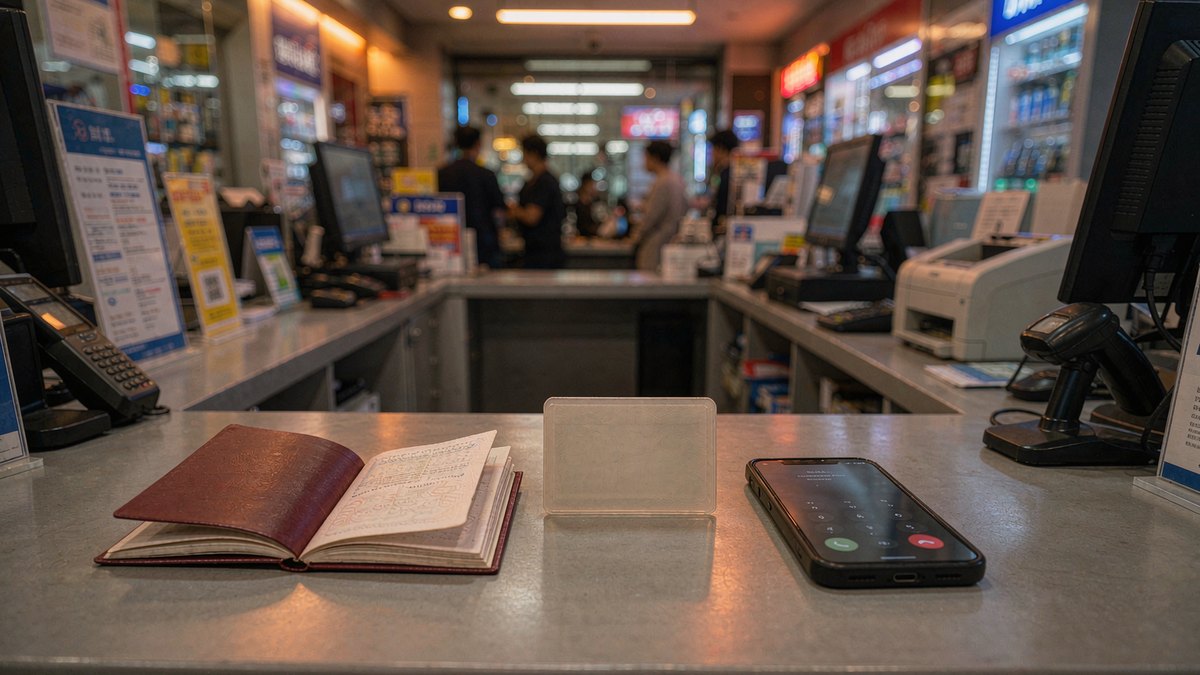
A Taiwanese number does exist on eSIM. It comes from a local carrier, as a prepaid line, and it requires the same in-person registration as a physical SIM card: two original documents, a counter, and a name attached to the line in a national database.
Everything else in this page follows from that split. What the number is genuinely useful for, which pieces of travel admin actually need it and which are fine without, how the registration works, what the carrier’s own eSIM conversion costs, and what to do if you need something number-shaped but cannot get a +886 line.
No travel eSIM for Taiwan includes a +886 number, and here is why
Two structural reasons, and neither is a marketing choice.
Registration is a legal requirement, not a product feature. Taiwan requires real-name registration for prepaid mobile lines, enforced by the National Communications Commission. A seller who cannot verify a passport in person cannot legally open a line in your name. An app-based checkout in another country has no way to do that, so the product it can legally sell is data attached to a roaming agreement — no subscriber identity, no number.
Wholesale roaming does not carry a local number. The technical model behind an international eSIM is that your profile is a guest on a Taiwanese network. Guest profiles are data-only by design; the host network has no reason to allocate a scarce numbering resource to a visitor who will be gone in nine days and cannot be billed.
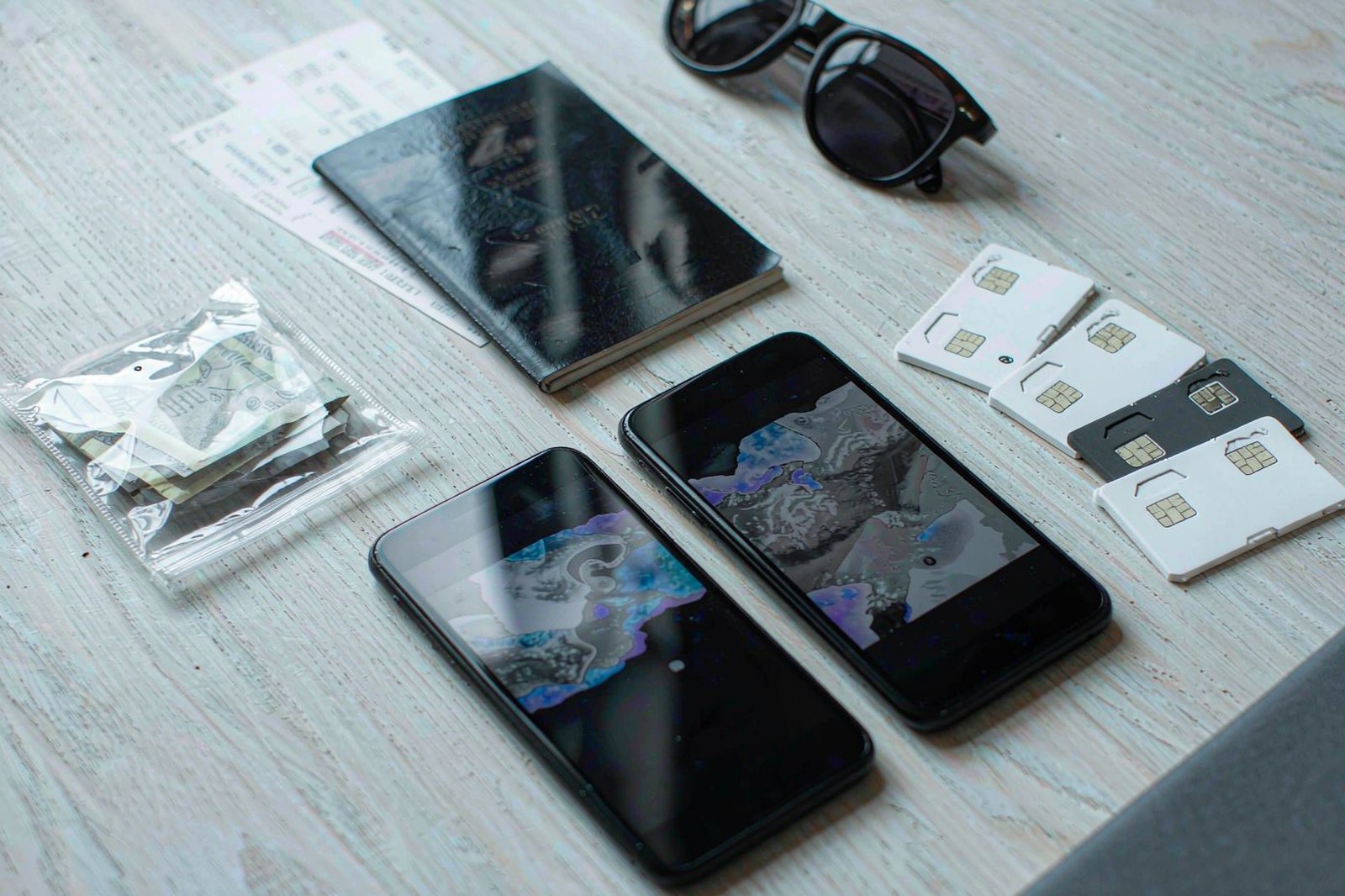
That is why every listing that appears to offer a Taiwan eSIM with a phone number is doing one of three things: reselling a carrier prepaid product that requires in-person registration, bundling a VoIP number from a different country, or simply mislabelling a data plan.
The check is simple. Look for the words “data only” in the specifications. If the product page says data only, there is no number, regardless of what the marketing headline implies.
What a +886 number actually unlocks, and what does not need it
The useful question is not whether you can get a number but whether you need one. Here is the honest inventory, sorted by how often it catches travellers.
| Task | Needs a Taiwan number? | Notes |
|---|---|---|
| Restaurant reservation by phone | Often yes | Many small restaurants have no online booking |
| Hotel calling you back | Usually yes | They will call the number on the booking instead |
| Food delivery apps | Yes | Local accounts are tied to a Taiwan mobile number |
| YouBike app membership | Yes | Kiosk single rentals work with an EasyCard and no phone |
| Car and scooter rental (iRent, GoSmart) | Yes | Local licence plus local number |
| LINE messaging | No | Registers with any number, including your home one |
| Google Maps, MRT routing, translation | No | Data only |
| High-speed rail booking | No | Passport number is enough |
| Banking OTP from your home bank | No, if your home line stays active | This is why dual SIM matters |
| Taiwan bank or payment verification | Yes | Impossible without a local registered line |
| Package delivery or courier contact | Yes | Couriers call the Taiwan number |
| Emergency calls (110, 119, 112) | No | Work without any SIM, including 112 on a foreign handset |
Two entries in that table are the ones people get wrong.
LINE does not need a Taiwan number. It is Taiwan’s dominant messaging app, and it registers against whatever number your account was created with. A tourist with a data-only eSIM and an existing LINE account is fully functional: messages, calls, stickers, the lot. Anyone who tells you a local number is required for LINE is describing a limitation that does not exist.
Emergency calls work without a line. 110 for police and 119 for ambulance and fire are free from any phone with signal on a supported network, and 112 is the international emergency number that will route you even with no SIM in the device, as long as a compatible network is reachable. Since Taiwan shut off 3G on 30 June 2024, this requires 4G or 5G signal and VoLTE enabled on the handset — check that setting before the trip, not during it.
The two documents, and the cases that fail
The registration rule is where a plan to buy a local number quietly dies, so it is worth understanding in full before you count on a +886 line.
A foreign visitor opening a prepaid line in Taiwan presents two documents, satisfying two separate conditions.
The first proves identity: passport, valid Alien Resident Certificate, or entry permit.
The second proves legal presence, and the accepted list is broader than most guides say: a Taiwan-issued ARC, a Taiwan driving licence, a National Health Insurance card, a visa, an entry stamp, an international student ID, or your own national photo ID that shows your name and date of birth.
That last item is the practical escape hatch. A home-country driving licence or national identity card with a photo, name and date of birth satisfies the second requirement, which is why many tourists can buy at the airport with a passport and a driving licence and nothing else.
Three patterns fail repeatedly.
Passport only. The passport cannot be both documents. Without a second original, the counter cannot complete the submission.
A photocopy or a phone photo. Not a document. Counters decline these, and there is no workaround at the till.
A traveller under 18. Foreign minors generally cannot open a prepaid line in Taiwan, so the line has to sit under an accompanying adult’s registration, and the number then belongs to that adult.
There is also a practical failure that has nothing to do with documents: buying a starter pack at a convenience store and then being unable to activate it. Those shops sell legitimate prepaid packs, but the clerk is not a trained telecom agent and the foreign-passport submission often fails. If the airport counters are closed, go to a carrier branch in the city rather than a convenience store.
Two-factor authentication, service by service
The number question is usually a two-factor authentication question in disguise, and the answer varies so much by service that a general answer is useless. Here is the breakdown by category.
Your home bank. No Taiwanese number needed. Your home carrier continues delivering SMS to your home SIM as long as message roaming is enabled, which is free on essentially every plan. Set the Taiwan eSIM as the data line and leave the home line enabled for messages. This covers the case almost every traveller actually has.
Taiwanese banks. Impossible without a locally registered line, and usually impossible without an ARC as well. Opening a Taiwan account requires identity documents, a local address and a local mobile number for OTP; a visitor on a ninety-day stamp generally cannot open one at all. If someone has told you a Taiwan eSIM will let you set up a local bank account, they are wrong on two counts.
Local payment wallets. Taiwan’s wallet apps are tied to a local mobile number and, in most cases, to a local bank account or a local card. A foreign visitor cannot register them with a data-only plan, and mostly cannot register them at all. Carry a physical card and some cash; Taiwan is still a heavily cash-using society outside the big chains.
Delivery and e-commerce. PChome, momo and the courier networks will call or SMS the number on the order. This is where a local number earns its place for anyone staying long enough to order anything, and it is the single most common reason long-stay visitors give up and buy a line.
Government and health services. Appointment systems, the NHI app and tax portals all assume a local mobile number. Same conclusion as the bank: not available on a visitor’s data plan.
International services. Google, Apple, Meta, Microsoft and your airline all authenticate against the number on the account, which is your home one. Nothing changes when you travel.
The pattern is consistent: a Taiwanese number is required by Taiwanese institutions, and almost never by anything international. If your trip consists of international services plus maps plus messaging, you do not need one. If your trip involves anything with a local account attached, you do, and no workaround will substitute.
What a Taiwan number costs beyond the sticker price
The tourist pack’s price is the visible cost. The real cost of holding a Taiwanese number for a trip has four more components, and they are what make the decision non-obvious.
The counter time. At Taoyuan that is 20 to 40 minutes at peak arrival hours, and a second visit if you land after the counters close, which at some booths is early evening. At a city branch it is usually 10 to 15 minutes on a weekday and longer at weekends.
The documents you have to carry. Two originals, kept on your person until the purchase. A passport in a hotel safe is not a document you can present.
The maintenance clock. A prepaid line is valid 180 days from activation and recalculates on each top-up, so a line bought for a two-week trip sits idle for five and a half months and then lapses. There is a top-up cap of NT$5,000 per transaction, which is irrelevant for a tourist and relevant for a resident.
The replacement fee. Convert the line to an eSIM and the first conversion is free, but every subsequent re-issue — phone upgrade, accidental deletion, a lost handset — costs NT$300. Delete the profile out of curiosity and that is NT$300 and a branch visit.
Weigh those against the benefit, which for many travellers is one specific task: a reservation, a delivery, a rental, a callback. If that task is worth an hour and a queue, buy the line. If it is worth nothing, the honest conclusion is that a +886 number is a nice-to-have that the internet has talked you into wanting.
Does Taiwan have eSIM at all? Three routes, and only one has a number
Yes, and the question usually comes from travellers who have read that Taiwan is “behind” on eSIM. It is not. There are three distinct routes, and they differ in exactly the way this article is about.
| Route | What it is | Number | Registration | Where to buy |
|---|---|---|---|---|
| Local carrier prepaid eSIM | A registered prepaid line issued as an eSIM profile; the Taiwan prepaid eSIM number is issued in person | Yes, +886 | Two documents, in person | Carrier counter or branch |
| International travel eSIM | Data profile roaming on a Taiwan network | No | None | Online, before departure |
| Postpaid conversion | A carrier converting an existing line to eSIM | Yes, keeps the number | Existing subscriber only | Carrier branch |
The local prepaid eSIM is the product people are looking for when they search for a Taiwan eSIM with a phone number, and it exists at all three carriers — Chunghwa Telecom, Taiwan Mobile and FarEasTone. The catch is that it cannot be bought online from abroad: it is issued at a counter, against documents, exactly like the plastic version. The Taiwan carrier guide covers which counter sells which tier, and where the three networks differ.
The conversion route is for residents and repeat visitors. If you already hold an active Chunghwa prepaid line, converting it to an eSIM keeps the number. The first conversion for a given number is free; every subsequent re-issue, phone change, accidental deletion or replacement costs NT$300. The QR code is issued once and is not reusable, which makes “remove the eSIM and reinstall it” a NT$300 mistake.
The eSIM standard itself is not the obstacle. It is a GSMA specification supported by every iPhone from the XS onward and by most Android flagships since 2020, and Taiwan’s three carriers all support it. What differs is who is allowed to sell you a line, and that is a registration question rather than a technical one.
If you need something number-shaped, these are the real options
For travellers who need a number for a specific task rather than for the whole trip, there are four legitimate workarounds. None of them produces a +886 line, and being clear about that saves a lot of wasted effort.
Keep your home number active. The single most useful configuration in Taiwan is a data-only eSIM in the second slot and your home line still enabled for voice and SMS. Your bank’s OTP arrives, your two-factor codes arrive, and nobody needs to know you are abroad. Turn off data roaming on the home line so you do not pay for background traffic, and leave voice and SMS on.
Use VoIP for outbound calls. LINE, WhatsApp, Skype and Google Voice all place calls over data. Calling a Taiwanese mobile from abroad needs the country code and the leading zero dropped: a Taipei mobile written locally as 0912 345 678 is dialled as +886 912 345 678. Calling a Taipei landline written as 02 2345 6789 becomes +886 2 2345 6789.
Take the international VoIP number if a brand bundles one. At least one eSIM seller includes a US or Canadian VoIP number with its plans. It is a real number for inbound calls and some SMS, and it will not satisfy a Taiwanese service that checks for a domestic mobile prefix. Use it for your own convenience, not for local verification.
Buy one cheap local voice line for the trip. If a delivery, a rental or a restaurant reservation genuinely needs a Taiwan number, the cheapest solution is a short-validity local prepaid line — physical or eSIM — bought in person, used for that purpose, and abandoned. It costs less than an hour of trying to work around it.
What does not work: asking a hotel to lend you their number, using a virtual number app that is blocked by Taiwanese verification systems, or assuming a data-only plan will accept an inbound SMS. None of these has ever worked reliably.
Receiving SMS while you are on a data-only eSIM
This is the anxiety behind most searches for a Taiwan eSIM with a phone number, and it is worth resolving directly because the answer is reassuring.
Your home line keeps receiving SMS even when the data comes from somewhere else. Dual SIM separates the data line from the voice line. Set the Taiwan eSIM as the data line, leave the home SIM enabled for calls and messages, and inbound SMS continues to arrive — including bank codes.
Two conditions. Your home carrier must have roaming enabled for SMS, which is free on virtually every plan but is sometimes switched off; and your phone must not be in a mode that disables the second line, such as some battery-saver profiles on Android.
There is a cost trap in the other direction: outbound SMS and calls on the home line while roaming are charged at roaming rates, which can be startling. Receiving is normally free; sending is not. If you need to reply to a code by SMS, expect to pay, and consider using a messaging app instead.
For travellers whose only requirement is “my bank can reach me”, this section is the whole answer, and no Taiwanese number is needed.
When the number is genuinely worth the counter visit
Four profiles, and the list is short because most travellers overestimate their need.
Stays over a month. A registered line with 180-day validity, rolling top-ups and a per-transaction cap of NT$5,000 is the right product for a long stay, and the number comes free with it. At that point you are not buying a number; you are buying an account.
Anyone with local admin. A bank account, a rental contract, a delivery address, a school enrolment, a local employer. All of these assume a Taiwanese mobile number, and none can be satisfied by a data plan.
Travellers who will be called. If a friend in Taipei is meeting you, if a driver is collecting you, if a guesthouse needs to reach you, the number matters. Being unreachable in a country where people expect to call is a real inconvenience.
Renters and riders. Scooter rental, car sharing and the bike-share app all lean on a local number. If your trip involves two wheels, budget for the counter.
Everyone else — the seven-day city trip, the two-week rail loop, the family whose coordination happens on LINE — can skip it. The data-only comparison covers what to buy instead, and the counter costed honestly covers what the visit actually involves.
What the counter visit looks like, start to finish
For anyone who has decided to get a local number, the sequence is short and predictable.
Bring both documents. Passport plus a second original. A driving licence is the most reliable second item for most nationalities.
Go to a carrier branch, not a convenience store. Airport counters work if you land within their hours, generally around 04:30 to 23:00 at Taoyuan, shorter at Songshan. A city branch works any weekday and usually Saturday morning.
Ask for the prepaid eSIM explicitly. Not every clerk will offer it, and the default assumption is a plastic card. The phrase to use is prepaid eSIM, and the counter will issue a QR code instead of a card. Bring a phone that is already eSIM-capable and unlocked.
Expected the line to be registered and active before you leave the counter. Ask the clerk to confirm data works. This is the moment to discover a misconfigured APN, not two hours later at a hotel.
Note the expiry date. A prepaid line is valid 180 days from activation and recalculates on each top-up. A tourist day pass, if that is what you bought, counts whole calendar days from 00:00 the day after activation, which is a different clock and a much shorter one.
Photograph the QR code before the clerk puts it away. It is issued once, and a re-issue costs NT$300 after the free first conversion.
The first hour after a prepaid eSIM is issued
The counter visit ends with a QR code and a clerk who has moved on to the next customer. Fifteen minutes of verification at the counter prevents three days of confusion, and there are six checks worth doing before you leave the building.
Photograph the QR code. It is single-use and cannot be reissued for free. A photo on your phone is your only record if the installation fails.
Install while still inside, on the counter’s Wi-Fi if there is one. Installation is a download of a few hundred kilobytes — small, but a failed download at the airport is easier to fix in the airport.
Label the line. Rename it to Taiwan in settings so that three days later you are not guessing which of three profiles is which.
Place a test call. Dial 117, Taiwan’s speaking clock. It costs nothing, it proves the voice path works, and it proves VoLTE is negotiating with the network. If 117 connects and data does not, you have a data problem, which is a much narrower diagnosis than “it doesn’t work”.
Place a test data session with Wi-Fi switched off. Open a page that is not cached. A spinner here means APN or routing, and the counter clerk can fix it in two minutes; a hotel receptionist cannot fix it at all.
Save the receipt. It carries the activation timestamp, which is the only reliable way to know when a tourist day pass’s counted days begin. It also carries the number itself, which you will want if you are handing it to a driver or a hotel.
One thing not to do: do not remove the profile to “reinstall cleanly”. Removal burns the token, and on a carrier-issued prepaid eSIM the replacement costs NT$300.
If you stay a month, the number stops being a purchase
There is a threshold past which the whole calculation inverts, and it sits somewhere around four to six weeks.
On a short trip, a Taiwanese number is a purchase with a fixed cost: the queue, the documents, the pack. On a long stay it becomes a subscription, and the economics are completely different. The 180-day validity rolls forward with every top-up. The top-up cap of NT$5,000 per transaction is far above a month of ordinary use. The number becomes the identifier that local services attach to, which means that replacing it later means re-registering everything — delivery addresses, wallet apps, any local account you have opened.
Two consequences follow, and they point in opposite directions.
Do not put off buying the line if you plan to stay. Every week without a local number is a week in which you cannot open the account, register the app, or receive the delivery. Visitors who spend a month working around the problem usually spend the second month doing the paperwork they avoided in the first week.
Do not buy it casually. Because the number accretes attachments, and because re-registration is tedious, the branch you choose and the documents you bring matter more than they do for a tourist. Bring the ARC if you have one; it changes which products the counter can offer, and some bundles are only available to residents.
For anyone in the one-to-three-month band, the sequence that works is: a data-only eSIM for the first days, a local prepaid eSIM once the documents are in hand, then the data-only plan demoted to a backup line that costs nothing to keep.
The number problem for families and groups
Groups hit a version of this question that individual travellers do not, and the answer is not “everyone buys a line”.
Every adult can hold a line, provided each presents their own two documents. A family of four adults can leave the counter with four numbers in forty minutes, or one person can buy four packs if the carrier allows multiple registrations — and most do, up to a per-passport limit.
Minors generally cannot. Foreign nationals under 18 usually cannot open a prepaid line in Taiwan, so a teenager’s number has to sit under an adult’s registration, and that adult owns the account. Plan for this at the counter rather than discovering it after queueing.
One number for the group is usually enough for the tasks that need it. A restaurant reservation, a driver collecting four people, a guesthouse callback — one number handles all of them. The group’s internal coordination should happen on LINE, which needs no local number at all.
One number for the group is not enough if anyone splits off. Half the group at a night market, half at a temple, and the person holding the only Taiwanese number is in the wrong half. This is the case where two cheap local lines beat one, and where the cost argument stops mattering.
The configuration most families settle on: one local number for the group’s external contact, plus data-only eSIMs for everyone, plus a LINE group. It costs less than four local lines and removes almost every coordination failure.
Three failures to expect, and their fixes
The line is active but nothing receives SMS. Check that the second SIM is enabled for messages in settings, then check that your home carrier has SMS roaming on. If both are correct, the sending service may be refusing a foreign number — some Taiwanese banks and payment apps only send to domestic numbers, and there is no fix for that.
The QR code will not install. Either it has already been consumed, the phone is carrier-locked, or the model does not support eSIM on its current firmware. The activation error guide works through the three in order.
The number works but data does not. On a carrier prepaid eSIM the data bundle and the voice line can expire on different schedules, and a lapsed data bundle leaves a line that can call but not browse. Top up or buy a new data bundle; the number survives.
What travellers still ask about a +886 line
Is a Taiwan phone number eSIM available online? No. The number requires in-person real-name registration at a carrier counter, so no online seller can issue one.
Can I buy an eSIM with Taiwan number provisioning before I fly? No. Number provisioning happens at a carrier counter against two documents. Everything sold online is data-only.
Does any Taiwan eSIM come with a phone number? Only the local carriers’ own prepaid eSIM, bought in person with two documents. Every international travel eSIM sold for Taiwan is data-only.
Does Taiwan have eSIM support? Yes. All three carriers — Chunghwa Telecom, Taiwan Mobile and FarEasTone — issue prepaid eSIM profiles, and every iPhone from the XS onward supports the format.
Can I buy a Taiwan eSIM with a number online before I fly? No. The number requires in-person real-name registration. You can buy a data-only eSIM online, or a carrier prepaid eSIM at the counter after landing.
What documents do I need for a Taiwanese number? Two originals: passport, ARC or entry permit for identity, plus a second document such as a Taiwan driving licence, NHI card, visa, entry stamp, international student ID, or your own national photo ID showing name and date of birth.
Do I need a Taiwan number for LINE? No. LINE registers against whatever number your account already uses. A data-only eSIM is enough.
Will my home bank still send me OTP codes? Yes, if your home SIM stays enabled for SMS and your carrier has message roaming on. Data roaming can stay off.
Can I call Taiwanese numbers from a data-only eSIM? Over data with LINE, WhatsApp, Skype or Google Voice. Dial +886, drop the leading zero: 0912 345 678 becomes +886 912 345 678.
Does 112 work without a SIM in Taiwan? Yes, 112 routes to emergency services on any reachable network with no SIM and no credit, provided the phone has 4G or 5G signal and VoLTE enabled. Taiwan has had no 3G since 30 June 2024.
How much does converting a Taiwan prepaid line to eSIM cost? The first conversion or first eSIM application for a given number is free. Subsequent re-issues, phone changes, accidental deletions and replacements cost NT$300 each.
Can I get a Taiwan number for just a few days? Yes, in the form of a short tourist day pass bought at a counter — but check whether it includes a number, because many data-focused tourist packs are data-only even when sold locally.
Is a Taiwan number worth it for a one-week trip? Usually not. One week rarely involves a delivery, a local account or a caller who needs to reach you, and the counter time is better spent on the trip.
The three ways people lose a Taiwanese number on day two
Getting the line is the easy part. Keeping it is where the failures happen, and all three of them are self-inflicted.
Restoring a phone from a backup does not restore the eSIM. This is the expensive one. Erasing an iPhone and restoring from an iCloud or local backup brings back apps, photos and settings, but it does not bring back the carrier profile — the provisioning token was consumed at installation and is not in the backup. The same is true of an Android factory reset. On a carrier prepaid eSIM that means a branch visit and NT$300 after the free first issue; on a travel eSIM it means a support ticket and a goodwill decision. Do not erase the phone while travelling on a numbered line unless you have no alternative.
Moving the SIM to a new phone is not automatic. A physical card travels between handsets in ten seconds. An eSIM does not: the profile is bound to the device, and moving it requires the carrier to issue a new profile. If you are upgrading mid-trip, do the paperwork before you wipe the old phone, or you will be without a number until you do.
Deleting the profile to fix a problem. Covered above, and repeated here because it is the most common version of the mistake: removing the line in settings looks like a reset, behaves like a deletion, and cannot be undone from the handset.
There is a fourth, slower way: letting the line lapse. A prepaid line is valid 180 days from activation, recalculated on every top-up. Miss the window and the line is suspended, then the number is recycled. Reactivation inside the grace period is normally possible for a fee; after that, the number belongs to someone else.
For a numbered line, the maintenance rule is therefore simple: do not erase the phone, do not delete the profile, and do not let the calendar run out without topping up. None of these applies to a data-only eSIM, which is exactly why most travellers should prefer one.
What a data-only plan does better than a numbered line
The comparison so far has been framed around what a number adds. The reverse is worth stating, because for most readers the data-only plan is not a compromise; it is the better product.
It installs before you fly. No queue, no counter hours, no dependence on a flight landing before a shutter comes down. This alone decides the question for anyone arriving after 22:30.
It needs no documents. Nothing to carry, nothing to lose, nothing to explain at a counter where the clerk does not speak your language.
It cannot be lost. There is no plastic to drop, no tray to open, and no way for the profile to fall out of the phone. Destruction requires deliberately deleting it.
It leaves your home number intact. The physical card slot stays free or keeps your home SIM, and your home line keeps receiving SMS for bank codes — which is the actual authentication problem most travellers have, and which a Taiwanese number does not solve.
It arrives in minutes, at any hour. Purchase at 2 a.m. in your own timezone, install on Wi-Fi, and arrive connected.
The trade is a list of three things: no local number, no walk-up support, no cash payment. Everything else about the product is equal or better. That is why the market has moved the way it has, and why the phrase “Taiwan eSIM with phone number” describes a product that mostly does not exist — the demand is real, and the supply is a counter queue.
How long does a Taiwanese prepaid number stay active? 180 days from activation, recalculated on every top-up, with a per-transaction top-up cap of NT$5,000. Miss the window and the line is suspended, then the number is recycled.
Can I keep my Taiwan number between trips? Yes, if you top up inside the validity window each time. A line used once a year will lapse; a top-up roughly every five months keeps it alive, and the number survives with it. That is the one scenario where maintaining a Taiwanese number makes sense for a non-resident.
The short answer on +886 numbers
If the number is the point, the counter is the only route: two originals, a carrier branch, a prepaid eSIM, and a free first conversion. If the number is not the point, buy a data-only eSIM, keep your home line enabled for SMS, and put the whole question out of your mind — which is what the overwhelming majority of Taiwan travellers should do. The Taiwan plan overview has the data-only options, and what unlimited means on these plans covers the caps before you choose a size.