Taiwan SIM Card vs eSIM: The Counter, Costed

Roami Team
Roami offers reliable eSIM plans, serving over 1 million travelers annually, and supports automatic local network switching to help travelers stay connected globally.
📑 Table of Contents
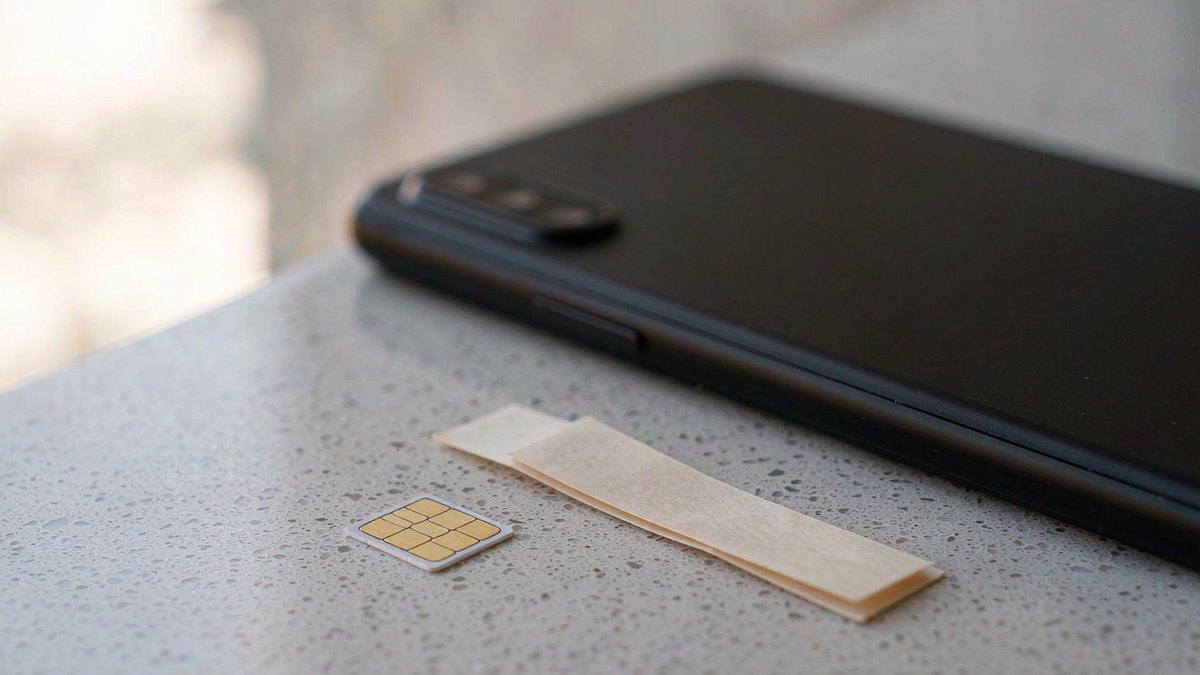
The counter at Taoyuan Terminal 2 sells something most arrivals do not expect. A Taiwan SIM card is not a data bundle you insert and forget. It is a registered mobile line, opened in your name against two pieces of identification, carrying a real +886 number, a fixed expiry date and a legal record that the National Communications Commission can audit. The data that comes with it is generous and cheap. The product, however, is a phone subscription, and treating it as a disposable data card is how people end up with a dead phone on day 32 or a queue receipt they cannot use.
That distinction is the actual argument in the SIM versus eSIM decision, and it is not the argument most comparison pages make. Those pages compare price per gigabyte, a contest the physical card wins by a wide margin and which has very little to do with whether your eight days in Taipei go well.
This page costs the counter honestly: the opening hours by terminal, the two IDs, the price ladders that do not agree with each other, the way day passes count their days, and what happens when the line expires mid-trip. It also states plainly where the physical card is still the right purchase in 2026, because for some travellers it is.
A Taiwan SIM card is a registered phone line, not a data pack
Walk into a Chunghwa Telecom counter and the clerk is not selling you 500 GB. They are opening a prepaid subscriber account. A Taiwan prepaid SIM card and a tourist day pass are the same product wearing two names: the pass is a prepaid line with a bundled data promotion attached, and when the promotion ends the line is still there, still registered to your passport, still able to receive an SMS.
That account has a phone number, an owner, an activation timestamp, a validity window and a top-up ledger. The data allowance is a feature of the account, not the product itself.
Three consequences follow from this, and all three matter more than the gigabyte count.
The line expires on a calendar date, not a data counter. A Chunghwa prepaid line is valid 180 days from activation. Every top-up recalculates that window from the top-up date. Nothing happens when you hit a data threshold; something very definite happens when the date passes. If the validity lapses while you are still in the country, the line stops, and reactivation is a counter visit plus a fee, not a tap in an app.
Every line is tied to a passport. There is no data-only exception for physical prepaid SIMs. The registration is a legal requirement, it is checked at the counter, and it is the reason a convenience-store purchase often fails for foreign visitors.
The number is real, and that is either the point or an inconvenience. A registered prepaid line can receive SMS, make calls, register for local services and be called back by a hotel. A travel eSIM sold internationally is usually data-only. If a +886 number is why you are reading this, the physical card is the shortcut and the number question has its own page.
So the honest framing is not “cheap data versus expensive data”. It is “a local phone account you will probably only use for eight days” versus “a data pipe you install before boarding and throw away at the airport”. Both are valid purchases. They solve different problems.
What the Taoyuan airport counters actually sell in 2026
Taiwan’s arrivals halls are not a single market, and a Taiwan SIM card airport purchase is really three markets in one queue. Three carriers and a layer of resellers compete for the same passenger, and what each one sells depends on which terminal, which hour, and which promotion is running that month.
| Where | Who is usually there | What they sell | Practical note |
|---|---|---|---|
| Taoyuan T1 arrivals | Chunghwa Telecom, Taiwan Mobile, FarEasTone, plus resellers | Prepaid SIM, tourist day passes, prepaid eSIM | Longest queues 06:00–09:00 and 20:00–23:00 |
| Taoyuan T2 arrivals | Same three carriers, more reseller booths | Prepaid SIM, tourist day passes, eSIM | Counters open earliest here, around 04:30 |
| Songshan Airport | Smaller carrier desks | Prepaid SIM, limited eSIM stock | Opens later, closes earlier than Taoyuan |
| Convenience stores (7-Eleven, FamilyMart) | Staff, not telecom staff | Prepaid starter packs | Foreign-passport registration frequently refused |
| Carrier shops in Taipei | Full-service branches | Everything, including prepaid eSIM conversion | Best option if you skipped the airport |
Two things about this table surprise people.
The first is that the airport is not necessarily cheaper. Airport booths pay rent and staff around the clock; a carrier branch on Zhongxiao East Road does not. The airport’s advantage is timing and language, not price.
The second is that the convenience-store route is the one that fails. Those shops do sell prepaid starter packs, and the pack is legitimate. What they cannot reliably do is complete the two-document registration for a foreign passport holder, because the clerk is not a trained telecom agent and the system will reject an incomplete submission. People buy the pack, fail the activation, and then spend a morning in a carrier branch fixing it. If you want a physical SIM and you are not at the airport, go straight to a carrier shop.
Counter hours: T1, T2 and Songshan do not open together
The single most common planning error is assuming “the airport is open, so the SIM counter is open”. Taoyuan runs flights around the clock. Its telecom counters do not.
The dependable window across the arrivals halls is roughly 04:30 to 23:00, and even inside that band the individual booths differ. Some T1 booths do not open until mid-morning. Some reseller desks close in the early evening while the terminal is still busy. Songshan, which handles the downtown-adjacent domestic and regional traffic, runs a shorter day, typically 06:30 to 22:30, and carries less eSIM stock.
That has a direct consequence for anyone landing on a late flight. A 22:40 touchdown at Taoyuan means immigration, baggage and a counter that may already be pulling its shutter down. If your itinerary includes a red-eye arrival, the physical SIM plan needs a fallback, and the fallback is either a carrier branch the next morning or an eSIM installed before you flew.
This is the strongest single argument for the eSIM in Taiwan, and it has nothing to do with price. A travel eSIM is activated at your departure airport, on your home Wi-Fi, before the plane leaves. It connects when the aircraft lands, whatever the hour, whatever the queue.
NT$300 or NT$1,600? Why two price lists both exist
Search for Taiwan tourist SIM prices and you will find two ladders that contradict each other by a factor of two or more.
One widely copied list reads NT$300 for three days, NT$300 for five days, NT$500 for seven days, NT$500 for ten days and NT$1,000 for thirty days. Another, which is closer to what a walk-up counter and some resellers quote, starts at NT$500 for three days and climbs to NT$1,600 for thirty.
Neither list is fabricated, and the gap is not a scam. It is two different products on the same shelf. The cheaper ladder generally belongs to promotional 4G unlimited tiers sold through airport agents with a capped hotspot allowance. The higher ladder is the standard counter rate for the current 5G tourist tier. Same carrier, different line item.
The practical rule is therefore not “the price is X”. It is:
| What to ask at the counter | Why it changes the answer |
|---|---|
| “Is this the 5G tier or the 4G tier?” | The 4G promotional tier can be half the price |
| “How many days of validity, counted from when?” | Day counting is not 24-hour based (see below) |
| “What is the hotspot allowance?” | 5G tourist cards cap tethering at 3, 5 or 7 GB |
| “Can I top this up later?” | Most tourist packs cannot |
| “Is there a cheaper rate online?” | Some resellers sell the same tier below counter price |
Treat any single published figure — including the ones on comparison blogs — as one quote from one channel on one date. Taiwan’s prepaid market runs on promotions, and a promotion that existed in March is not a promise in November.
If you want a fixed number to budget against, use NT$300–500 for a three-day stay and NT$1,000–1,600 for thirty days, then adjust once you see the board. For a seven-day trip the realistic range is NT$500–800.
Two documents or no line: the ID rule that stops most people
Since the NCC tightened real-name registration, a foreign visitor buying a Taiwan prepaid line has to present two documents, and they have to satisfy two different conditions. One proves who you are. The other proves you are legally present.
The primary document is one of: passport, valid Alien Resident Certificate, or entry permit.
The secondary document is one of: a Taiwan-issued ARC, a Taiwan driving licence, a National Health Insurance card, a visa, an entry stamp, an international student ID, or your own national photo ID that carries both your name and your date of birth.
That last option is the one that rescues most tourists. If you carry a home-country driving licence or national ID card with a photo, name and date of birth, you have your second document and you can buy at the airport. If your only second document is a passport, then your passport is doing double duty — and it will not be accepted as both.
There is a second catch that catches families. Foreign nationals under 18 generally cannot open a prepaid line in Taiwan. A sixteen-year-old travelling on a school trip will not be able to register their own SIM, and the line has to sit under an adult’s registration.
Two failure modes follow. First, arriving with only a passport and being turned away. Second, arriving with a passport and a photocopy of something, which is not a document. Bring originals.
The eSIM route has none of this. A travel eSIM purchased from an international provider is not a Taiwan-registered line, so there is no registration, no counter and no second document. That is also exactly why it has no +886 number: the two properties are the same property.
Day passes do not start counting when you activate them
This is the most expensive misunderstanding in Taiwan prepaid, and almost nobody explains it before purchase.
A Taiwan tourist day pass does not run for 24 hours from activation. Its validity starts at 00:00 on the day after activation and then runs a fixed number of consecutive calendar days. Activate at 21:00 on a Monday and your three-day pass covers Tuesday, Wednesday and Thursday. You have effectively paid for three days and received two and a bit.
The same structure applies to the standard ladders: three, five, seven, ten, fifteen and thirty days all count as whole calendar days beginning the following midnight.
Three practical rules come out of this.
Activate in the morning. A morning activation at least gives you the full first counted day. An evening activation donates the first evening to the carrier.
Buy the length you need, counted backwards from your departure. If you land Tuesday evening and fly out the following Wednesday morning, that is eight calendar days of need. A seven-day pass activated Wednesday morning covers Wednesday to Tuesday, and you will be without data on your final evening. Buy the ten-day tier, or accept one gap.
Do not assume you can extend. Tourist day passes generally cannot be extended, and they cannot be topped up with a different day pass or a metered package. When the counted days run out, the line’s data stops. The line itself may stay alive for calls and SMS until its separate validity expires, but the unlimited data is gone.
Compare this with a travel eSIM, which is sold as a data allowance with a validity window measured from first connection — typically 7, 15 or 30 days of calendar time, and where the clock usually starts at first network attach. Neither model is generous. The difference is that the eSIM’s clock starts when you land, not at the next midnight.
Which network your SIM lands on, and where it drops
Taiwan consolidated to three operators, and the merger dates matter if you are reading older guides.
Taiwan Mobile absorbed T Star with effect from 1 December 2023. FarEasTone absorbed Asia Pacific Telecom, which also traded as GT, with effect from 15 December 2023. T Star customers needed no SIM swap because the two networks shared a vendor. APT customers went through a staged SIM replacement. Anyone reading a 2022 article about “five carriers in Taiwan” is reading about a market that no longer exists.
The three survivors run these bands:
| Carrier | 4G bands | 5G bands | Where it matters |
|---|---|---|---|
| Chunghwa Telecom | B1 2100, B3 1800, B7 2600, B8 900 | n1, n78 | Best overall coverage; no Band 28 |
| Taiwan Mobile | B1, B3, B7, B8, B28 700, B38 via T Star | n28, n78 | Strong city performance, 100 MHz of 3.5 GHz after merger |
| FarEasTone | B1, B3, B7, B8, B28, B38 | n1, n28, n78 | Good balance, Band 28 helps indoors |
The Band 28 line is the one worth remembering. Band 28, the 700 MHz band, is what carries signal through concrete and into basements. Chunghwa does not use it. Taiwan Mobile and FarEasTone do. In a Taipei hotel basement or a Kenting guesthouse with thick walls, that difference is visible on the status bar. It is not a reason to avoid Chunghwa — its overall grid is the most complete, which the Ookla connectivity reporting for Taiwan keeps confirming — but it is a reason not to assume all three are identical indoors.
The other network fact that changes behaviour: Taiwan switched off 3G nationwide on 30 June 2024, following 2G in June 2017. Emergency calls to 110, 119 and 112 now require a 4G or 5G connection with VoLTE enabled. A phone that has VoLTE switched off, or an older handset that cannot do VoLTE on Taiwan’s bands, can show signal bars and still fail to place an emergency call. Check that VoLTE is on before you need it.
The full carrier-by-carrier breakdown, including which network each reseller rides, is in the Taiwan carrier guide.
Reactivating an expired Taiwan SIM card: what still works
If you left Taiwan with a prepaid line in your bag, the question next trip is whether you can revive it. The answer depends on how much time has passed and whether you kept the plastic.
Within the validity window, top-up is simple: go to a carrier branch or a supported top-up channel, pay, and the 180-day clock restarts from the payment date. The number, the registration and the remaining balance survive. Top-ups are capped at NT$5,000 per transaction, which is far more than a tourist needs.
Past the validity window, the line is suspended. There is normally a grace period during which the number can still be recovered by paying what is owed plus a reactivation charge. After that, the number returns to the pool and is reassigned. At that point you are not reactivating anything; you are buying a new line with a new number.
For most visitors the arithmetic does not justify it. A round trip to a carrier branch, a reactivation fee and a top-up will cost more than a fresh seven-day pass, and the branch trip costs an hour of a holiday. Reactivation makes sense in exactly one scenario: you hold an ARC, you live in Taiwan part of the year, and the number is tied to bank or delivery accounts.
There is a third path that people miss. If the physical card is dead but the phone supports eSIM, Chunghwa will convert an active prepaid line to a Taiwan prepaid eSIM. The first conversion for a given number is free; later re-issues, phone changes, accidental deletions and replacements cost NT$300 each. The QR code is issued once and cannot be reused, so do not delete the profile to “start over”.
What a travel eSIM gives up, and what it keeps
Being precise about the trade is more useful than a verdict.
What you give up. No +886 number, so no local calls, no inbound SMS, no registration on services that demand a Taiwan mobile number. No walk-up human if something breaks at 23:00. No ability to buy with cash. And a data allowance that is usually smaller per dollar than a local unlimited pass.
What you keep. Your home number stays live for bank OTPs and two-factor codes, because the eSIM occupies the second SIM slot and your primary line can stay active for SMS. No registration, no second document, no queue. Activation before departure, so the phone works the moment the aircraft lands. And no expiry cliff tied to a midnight calendar rule.
For most trips under two weeks, that trade is clearly favourable, which is why travel eSIM adoption in Taiwan has climbed sharply. For a stay past a month, or a trip where a local number unlocks something you actually need, the counter wins.
A middle route exists and is underused: run a travel eSIM for data and keep your home line active for SMS, then buy a cheap local voice-only top-up only if a specific service demands a Taiwan number. That is the configuration most repeat visitors settle into.
What a Taiwan prepaid SIM actually costs per gigabyte
Per-gigabyte comparisons are where most Taiwan SIM card articles start, and they are the least useful number in the decision. It is still worth knowing why they flatter the card so heavily.
Taiwan sits in the cheapest tier of the worldwide mobile data price index that Cable.co.uk compiles every year, comfortably under a dollar per gigabyte for domestic plans and among the lowest in Asia. A tourist pack is priced at a large multiple of that domestic rate — the carrier knows the buyer is captive, has a suitcase and will not shop around. Even so, the tourist pack still undercuts most international travel eSIMs per gigabyte, because the eSIM carries a reseller margin, a currency conversion and a support layer on top of wholesale roaming.
Put concrete numbers next to each other for a seven-day trip:
| Product | Price | Data | Implied cost |
|---|---|---|---|
| 7-day tourist day pass, 4G promotional tier | NT$500 ≈ US$15.5 | Unlimited, hotspot capped | No per-GB price exists |
| 7-day tourist day pass, 5G tier | NT$800 ≈ US$25 | Unlimited, 5–7 GB hotspot | No per-GB price exists |
| Travel eSIM, 7 days | US$9–16 | 5–10 GB, no hotspot cap | US$1.40–2.00/GB |
| Travel eSIM, 7 days unlimited variant | US$25–35 | Unlimited with fair-use throttle | No per-GB price exists |
| Standard prepaid with metered top-ups | NT$300 + top-ups | Scales with spend | About US$0.50–0.90/GB |
The table makes the honest point better than any paragraph: the physical card’s advantage is real but it is a factor of two or three at the mid range, not the factor of fifteen that Singapore-style comparisons produce. And it evaporates entirely when the travel eSIM is bought on promotion, which happens constantly.
Why the per-gigabyte number flatters the card
Three accounting errors sit behind almost every “the SIM is cheaper” claim.
The queue is unpriced. Twenty-five minutes at a counter after a nine-hour flight, at the start of a holiday, has a cost. Most people would pay more than the price difference to skip it, and some do — that is precisely what the eSIM premium buys.
The unused data is unpriced. A 500 GB allowance you cannot consume in eight days is not worth 500 GB. Effective cost is spend divided by data actually used, and on a short trip almost nobody uses more than 5 GB.
The expiry cliff is unpriced. Because the counted days run from the midnight after activation, a seven-day pass on an eight-day trip leaves a hole. Filling that hole costs a top-up or a second pass, and that purchase rarely appears in the comparison.
Once all three are priced, the gap narrows to the point where convenience usually decides it. That is a less exciting conclusion than a fifteen-times price win, and it is the accurate one.
Pocket Wi-Fi is the third option, and it rarely wins
Almost no comparison article mentions it, so it is worth costing, because a fair number of families still ask at the counter.
A pocket Wi-Fi router rented at Taoyuan runs roughly NT$200–300 per day, needs a deposit against a credit card, has to be returned before your flight, and carries a battery that dies somewhere around hour eight of a walking day. For two people over seven days that is NT$1,400–2,100, plus the return trip through the terminal, plus the risk of a late fee if your flight leaves before the desk opens.
Against two seven-day eSIMs at US$9–16 each — call it NT$600–1,050 for the pair — the router is both more expensive and more fragile, and it does not solve the number problem either. Its one genuine advantage is that it connects laptops, cameras and tablets without tethering a phone, which matters if you are travelling with a work laptop, a tablet for a child and no willingness to drain a phone battery.
The second genuine advantage is for groups of four or more, where one router plus local SIMs in a couple of phones can beat four separate plans. Below four people, the arithmetic does not work.
Two phones on one trip: hotspot, or two plans?
Couples and families hit this decision on every trip, and the answer depends on how much time the two people spend apart.
Hotspot sharing works when you are always together. One eSIM with hotspot enabled, the second phone tethered. It costs half as much, and the second phone still receives SMS on its home line. The catch is that hotspot consumption usually counts against the plan’s hotspot allowance, not against its unlimited data. On a 5G Taiwan tourist card with a 3–5 GB hotspot cap, a day of tethering two phones can eat the cap by evening.
Two plans work when you split up. One of you goes to a museum, the other to a market, and neither wants to be the person whose phone has no data because the other one walked away with the hotspot. Two cheap plans cost more and remove an entire class of argument.
A hybrid is usually best. Buy one unlimited plan with a decent hotspot allowance for the person who will tether, and one small metered plan — 3 GB for a week is plenty — for the person who mostly needs maps and messages. That lands close to the cost of a single large plan while keeping both phones independent.
The same logic applies to a group of four: two plans plus selective tethering beats four plans, and beats one router that has to stay within ten metres of everyone.
Seven days in Taipei, costed both ways
Take a concrete itinerary: two adults, landing Taoyuan T2 at 21:15 on a Tuesday, flying out the following Wednesday at 11:00. Eight nights. Both phones are eSIM-capable. They need maps, messaging, a taxi app, and enough data to tether a laptop twice.
The counter route, with its queue and its cliff
The 21:15 landing puts them at the counter around 22:00. Counters are still open at that hour in T2, so this works, but it is the last comfortable window of the day. Two seven-day passes at the mid-range rate, call it NT$500–800 each depending on tier, so NT$1,000–1,600 for the pair.
They activate that night, and because of the midnight rule their seven counted days start Wednesday, covering Wednesday through Tuesday. Their final evening, Tuesday night into Wednesday morning, has no data. They will be checking in for a flight on hotel Wi-Fi. Total: roughly NT$1,000–1,600, plus 25 minutes of queue after a long flight, plus a real risk of running dry on the last night.
The eSIM route, installed at home
Two seven-day plans at the published rate, installed on Sunday, activated on landing. Data is live at 21:20 on the tarmac. The clock runs from first connection, so it covers the whole trip including the last morning. Total is comparable in dollars and saves the queue. The cost is that neither phone has a Taiwan number, so a restaurant that only takes phone reservations is a problem, and an SMS-based taxi booking will not work. For most Taipei trips neither comes up; LINE and the local ride-hailing apps work over data.
Where the money actually goes
Strip out the marketing and the spend splits three ways. Roughly half of it is data, which is cheap in Taiwan and getting cheaper. Roughly a third is the phone number, whether you realise you are paying for it or not — a data-only eSIM is priced without it, a local prepaid line is priced with it. The remainder is optionality: the ability to top up, to call a hotel, to walk into a branch and speak to a person.
Only you can price the last two. What the numbers do establish is that the data component, the thing every comparison table focuses on, is the smallest part of the difference.
The break-even point is not about data volume. It is about whether a +886 number earns its keep. If nobody needs to call you and nothing needs to text you, the eSIM is the cheaper purchase once the queue is priced in. If you are meeting a friend who will call, delivering a package, or staying long enough to open a local account, the card pays for itself in convenience.
Who should still buy the physical card
Four profiles, and the list is short on purpose.
Travellers staying more than a month. The 180-day validity and cheap top-ups make a local prepaid line dramatically better value over a long stay. A thirty-day tourist pass is the entry point; a standard prepaid line with rolling top-ups is the real answer.
Anyone who needs a Taiwan number as a tool. Bank or payment verification, delivery, a rental contract, a local employer, a school. A data-only eSIM cannot substitute, and no amount of data fixes it.
Travellers whose phone cannot do eSIM. Older Android handsets, some China-market models, and anything carrier-locked. Note that recent US-market iPhones have no physical SIM slot at all, so the reverse problem exists too.
Travellers arriving on a daytime flight into a terminal with a short queue. If the logistics are easy, the counter’s price per gigabyte is genuinely better, and there is no reason to pay a premium for a workaround you do not need.
Everyone else — the eight-day city break, the two-week loop, the family arriving at 23:00 — is better served by installing before flying. The Taiwan eSIM plan comparison has the current tiers, and if you are continuing onward, a multi-country East Asia plan can replace two separate purchases.
What breaks in the first hour, and how to fix it
The failures are predictable, and all of them are fixable in under ten minutes if you know which one you have.
The SIM is in, but there is no data. Nine times out of ten the APN is wrong or empty. On a Taiwan prepaid line the APN is normally set automatically, but a dual-SIM phone sometimes keeps the APN of the primary line. Set the APN for the Taiwan line explicitly, then toggle airplane mode.
The line works but only at 3G speeds, or drops to nothing. Taiwan has no 3G. If the phone is falling back to 3G it is not connecting at all. Check that the network mode is set to 4G/5G auto, and that VoLTE is enabled.
The data died at 23:59 on a day the pass should still cover. That is the midnight counting rule, not a fault. Check the activation date on the receipt before assuming the carrier shorted you.
The line shows as active but calls fail. Prepaid voice credit is separate from the data bundle on some tiers. A data-rich pack with zero voice credit will not place calls, and emergency numbers on a data-only configuration are exactly the case that VoLTE matters for.
The eSIM will not install. This is nearly always the same three causes: the QR was already scanned once, the phone is carrier-locked, or the region of the phone model does not support eSIM on that firmware. The activation error guide walks through them in order, and the standard activation walkthrough covers the settings path on both iPhone and Android.
The eSIM installed but shows no service after landing. Data roaming must be on for a travel eSIM, because it is roaming on a Taiwan network. That is not a mistake in the product; it is how it works. Turn on data roaming for that line only, and leave your home line’s roaming off.
Questions people ask at the counter
Can I buy a Taiwan SIM card at Taoyuan Airport? Yes, in the arrivals halls of both terminals, from the three carriers and from reseller booths. Counters generally run from about 04:30 to 23:00, with individual booths opening later or closing earlier.
How much does a Taiwan tourist SIM cost? NT$300–500 for three days and NT$1,000–1,600 for thirty days, depending on the tier and channel. Seven days typically lands between NT$500 and NT$800. Published ladders disagree because they describe different tiers.
Do I need a passport to buy a SIM card in Taiwan? Yes, plus a second document. The primary is a passport, ARC or entry permit; the secondary can be an ARC, Taiwan driving licence, NHI card, visa, entry stamp, international student ID, or your own national photo ID showing name and date of birth.
Can I buy a Taiwan SIM card without a passport? No. Real-name registration is mandatory for every prepaid line, and there is no data-only exemption. A photocopy is not a document.
Why did the convenience store refuse to sell me a SIM? Because the registration requires an agent who can complete the two-document submission. Many convenience stores either cannot process a foreign passport or will decline to try. Buy at the airport or at a carrier branch.
How long does a Taiwan tourist SIM last? The counted days run from 00:00 the day after activation, in whole calendar days: three, five, seven, ten, fifteen or thirty. The line’s separate validity for calls is typically 180 days from activation and recalculates on each top-up.
Is a Taiwan SIM card for tourists different from a local prepaid line? Same registration, same network, different bundle. The tourist pack is a prepaid line with a promotional unlimited-data bundle attached and a short counted-day validity. A standard Taiwan prepaid SIM card has a smaller metered allowance and a 180-day validity that recalculates on every top-up. If you are staying past a month, ask for the second one.
Which SIM card Taiwan visitors should buy for a five-day trip? A five-day tourist pass from any of the three carriers, bought at the airport if you land during counter hours. The carrier matters less than the tier: 4G promotional is cheaper, 5G is faster in the cities and comes with a hotspot cap.
Can I extend a tourist SIM if I stay longer? Usually not. Tourist day passes generally cannot be extended or topped up with another day pass or metered package. Buy the next tier up at the start instead.
Can I reactivate an expired Taiwan SIM card? Within the validity window, top-up restarts the clock. Past it, there is a grace period during which the number can be recovered for a fee. After that the number is recycled and you are buying a new line.
Is an eSIM cheaper than a Taiwan SIM card? Per gigabyte, no. In total cost for a one-to-two-week trip, roughly comparable once the queue and the midnight counting rule are priced in. The eSIM wins on convenience and on keeping your home number live; the card wins on data volume and on giving you a local number.
Does a Taiwan SIM card work in an iPhone? Yes, in any unlocked iPhone with a physical SIM slot. Recent US-market iPhones have no slot, which makes an eSIM the only option on those handsets.
Can I use a Taiwan SIM card in mainland China or Hong Kong, China? Not on a tourist pack. Some prepaid lines include limited regional roaming, but a standard tourist day pass is for use in Taiwan only. If your itinerary crosses the strait, buy a plan that explicitly lists the destinations.
Is 5G worth the extra tier? In Taipei, Taichung and Kaohsiung, yes — the 3.5 GHz grids are dense and the difference is noticeable. On the east coast, in the mountains and on outlying islands, the 4G grid does the work, and the cheaper 4G tier is the better buy.
Which purchase wins for an eight-day Taipei trip
Phone supports eSIM and the trip is under two weeks: install a travel eSIM before you fly, keep your home line for SMS, and skip the counter entirely. Staying past a month, or needing a +886 number for something real: buy the physical card, bring two original documents, ask whether the quote is the 4G or 5G tier, and activate it before noon.
If data volume is your main worry rather than the number, what “unlimited” actually means on a Taiwan plan is the page to read next, because the throttle thresholds and hotspot caps decide whether a cheap unlimited pass is worth anything. And if you are still deciding which provider to buy from, Klook, Airalo and the rest compared covers which network each one actually rides.