Best eSIM for the Netherlands, Scored Instead of Ranked

Roami Team
Roami offers reliable eSIM plans, serving over 1 million travelers annually, and supports automatic local network switching to help travelers stay connected globally.
📑 Table of Contents
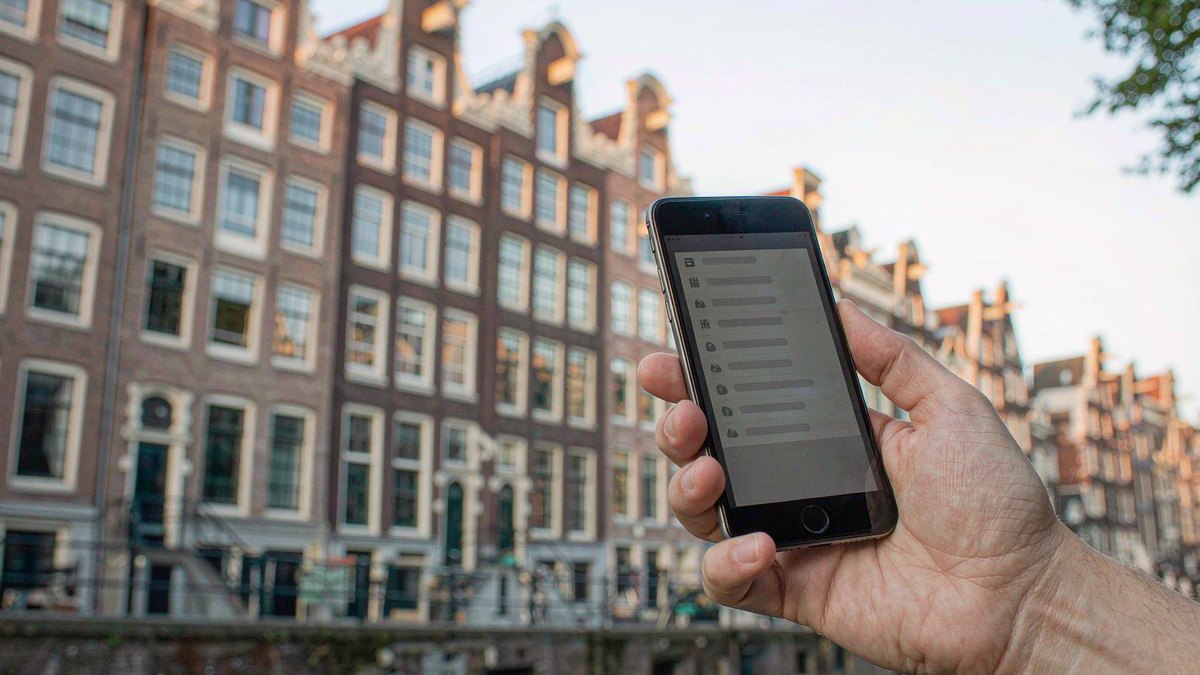
Every page ranking for best eSIM for the Netherlands does the same thing: it lists seven international resellers, ranks them by the price of their smallest package, and calls the cheapest one the winner. That ranking is not so much wrong as unusable, because headline price is the variable a Dutch trip punishes least. The three things that actually break a connection here are an activation step that was never completed, a plan pinned to a single network that is weak where you happen to be standing, and a hotspot rule buried in a page nobody reads.
So this page scores instead of ranks. Six products, six criteria, and a costed verdict for each of the five trip shapes people actually book. Prices below were read in the last week of October 2026 and will move; the ratios between them are the part worth remembering. Nothing here repeats the country mechanics — if you want the reason Dutch prepaid works the way it does, the Netherlands eSIM walkthrough covers that ground properly.
The shortlist first, for anyone who is not going to read 5,000 words
A nine-day trip touching three cities, from outside Europe. The best eSIM Netherlands visitors can buy in the 10 GB band is a multi-network one. It beats everything else on effort, and the price gap to the alternatives is wide enough that the choice is not close.
A trip where people have to reach you. A Dutch carrier eSIM from Vodafone or KPN, because it is the only product on this page with a +31 number attached. You will pay an activation step for it.
A two-week driving trip with a laptop. A generous multi-network plan, 20 GB or more, and check the hotspot clause before paying rather than after. This is the only trip shape where a cheap plan reliably fails.
A month or longer. Dutch prepaid, bought locally, because the per-gigabyte price at that length is a different category of number and the international resellers cannot match it.
That is the whole answer in four lines, and it means the question of which is the best eSIM for Netherlands travel has no single answer. The rest of this page is the reasoning, the scoring, and the specific places where a plan that looks good on paper is the wrong purchase.
Six plans scored on what a Dutch trip actually breaks
The criteria are chosen because each one has a failure mode attached, not because they look thorough.
Network switching. A Netherlands-only plan from a reseller usually rides one Dutch network. A regional plan can often attach to any of the three. This is the single biggest quality difference between two plans that cost the same, and it is invisible on the product page.
Activation friction. Travel eSIMs activate on first connection. Dutch carrier eSIMs generally require a separate bundle activation by SMS or automated line. One is a five-minute job at home; the other is a five-minute job that can silently fail.
Top-up currency. Whether you can add data with a foreign card, or whether the top-up flow assumes a Dutch bank account and iDEAL. This matters only when you run out, which is exactly when it matters most.
Hotspot permission. Some plans allow tethering without limit, some cap it, some forbid it. A laptop on a Dutch trip without hotspot is a dead laptop.
Speed tier. Prepaid and MVNO products in the Netherlands are sometimes a lower throughput tier than the host network’s contract customers. Nobody advertises this.
Voice and SMS. Only two of the six products here can receive a call or a text. That is not a small difference if a car hire desk or a bank needs to reach you.
| Product | Switching | Activation | Top-up with foreign card | Hotspot | Voice | Score |
|---|---|---|---|---|---|---|
| Roami Netherlands / Europe | Multi-network | None | Yes, in app | Allowed | No | 5 / 6 |
| Airalo Netherlands | Single network, regional plan varies | None | Yes | Allowed | No | 4 / 6 |
| Saily Netherlands | Single network | None | Yes, card in app | Allowed | No | 4 / 6 |
| Holafly Netherlands | Single network | None | Yes | Capped on some tiers | No | 3 / 6 |
| Vodafone NL prepaid eSIM | Vodafone only | Bundle activation | Partial, iDEAL preferred | Plan dependent | Yes | 4 / 6 |
| KPN travel data plan | KPN only | Bundle activation | Partial | Plan dependent | Yes | 4 / 6 |
Read the score column as a filter, not a trophy. A phone that only needs maps and messages is served perfectly by a 4, and the sixth point costs money.
Airalo in the Netherlands: what 50 GB for $36 works out at
Airalo is the name most people arrive with. An Airalo eSIM Netherlands purchase gives you a choice between a country package and a regional Europe one, and the country packages are priced from roughly $4.50 for 1 GB over seven days up to about $36 for 50 GB over 30 days. Divide it out and the largest tier lands near $0.72 a gigabyte, which is genuinely cheap, while the smallest lands near $4.50 a gigabyte, which is not.
That spread is the entire lesson of this page. The same brand sells you data at six times the per-gigabyte price depending on which tier you pick, and the tier you pick is usually decided by how long the trip is rather than how much data you will use. A four-day Amsterdam trip does not need 50 GB and should not buy it; a fourteen-day driving trip should not buy 3 GB and will regret it.
The Netherlands-specific thing to check on Airalo is which network the plan sits on. The regional Europe package is the better buy for most itineraries, because it covers Belgium and Germany for the day trips and usually attaches to more than one Dutch network. The country package is cheaper by a couple of dollars and the difference buys you a narrower footprint.
Two practical notes from using it here. Installation is a QR code or a one-tap link, and it must be done on Wi-Fi before you fly, because the profile download is the part that fails in an arrivals hall. And the plan’s validity clock generally starts at first connection to a Dutch network rather than at purchase, which means buying a fortnight early costs nothing — a useful property if you like to have things settled before you travel. If you want the wider brand picture including the Dutch carriers, the carrier comparison goes deeper than any reseller review will.
Saily in the Netherlands: cheapest per gigabyte, narrowest network list
Saily comes out of the Nord Security stable and prices aggressively, roughly $3.99 for the smallest weekly tier up to around $25 for the largest monthly one. On the mid tiers it is frequently the cheapest per gigabyte of anything on this page, and the app is one of the few that makes topping up with a non-Dutch card genuinely painless — which is a real advantage in a country where iDEAL is the default payment rail and foreign cards are an afterthought.
What it does not give you is breadth. A Saily eSIM Netherlands plan is a country product, so it attaches to one Dutch network rather than roaming across all three. In Amsterdam, Rotterdam, Utrecht and The Hague that is irrelevant; all three networks are strong and you will not notice. It becomes relevant in three specific places: the Veluwe forest between towns, the dunes behind the North Sea beaches, and anywhere in an older city-centre building where one operator’s indoor coverage is materially better than another’s.
There is a second consideration that matters more than people expect. A single-network plan means a single point of failure. If the network you are pinned to has a local outage — and Dutch networks do have them, usually brief and usually in one region — you have no fallback, whereas a multi-network profile simply reattaches elsewhere. That is a rare event and a total one when it happens.
For a city break, Saily is a defensible first choice and often the cheapest correct answer. For a driving trip through the Veluwe or a stay on a Wadden island, pay the extra few dollars for something that can switch.
Holafly sells days, not gigabytes, and that changes the arithmetic
Holafly’s model is unlimited data priced per day, which in the Netherlands lands around $6 to $7 a day depending on how long you commit to. For a three-day trip that is roughly $20 and it is a completely reasonable purchase. For a fourteen-day trip it is roughly $95, at which point it is competing with a 50 GB plan at $36 and losing badly.
So the honest framing is that Holafly is a short-trip product. It solves the anxiety of running out, which is a real anxiety for anyone who has been burned by a 1 GB plan, and it charges a premium for removing that anxiety from the trip.
Two things to know before buying it. Unlimited on any of these products is a fair-use construct, and after a daily high-speed allowance the connection drops to a low tier that feels like a broken plan but is not — the mechanism is worth understanding because it is the most common false alarm on a Dutch trip, and the price and allowance breakdown puts actual numbers on where the throttles sit. And hotspot is capped or excluded on some Holafly tiers, which matters enormously if a laptop is part of the trip and not at all if it is not.
The right way to think about per-day pricing generally: it is insurance against your own estimate being wrong. If you have never bought travel data before, or you are travelling with a teenager, that insurance has value. If you know you use 4 GB a week, you are paying for something you will not claim.
Roami, Nomad and Ubigi: the middle of the market
The middle of this market is where most people should land, and it is also the least exciting to read about.
Roami’s Netherlands plans start at $1.99 and its selling point is automatic switching between local networks, which on a Dutch trip means the profile is not pinned to whichever operator the reseller happened to contract with. Europe regional plans start at $4.99 and cover the Belgium and Germany day trips without a second purchase. For a trip that is mostly cities with one excursion over a border, that combination is the shortest path from decision to working data.
Nomad and Ubigi sit in the same band — regional packages, multi-network attachment on the European products, pricing that is unremarkable rather than aggressive. Neither has a Dutch-specific feature worth switching for. If you already use one of them and the price is within a few dollars of the alternatives, staying is fine; the switching cost of learning a new app is real and small.
The thing to compare across all three is not the headline price but the published network list. A provider that tells you which Dutch networks it rides is telling you something verifiable. A provider that says best coverage in the Netherlands without naming a network is telling you nothing, and the next section explains why that phrase has almost no content.
Dutch carrier eSIMs win on exactly one thing, and it is not data
A prepaid eSIM from Vodafone, KPN or Odido is more expensive per gigabyte than any reseller on this page. It requires an activation step. Its top-up flow prefers a Dutch bank. And yet for one group of travellers it is the only correct purchase, because it is the only one that comes with a +31 phone number.
That number does specific work. A car hire desk that wants to call you about a delayed vehicle. A restaurant taking a booking. A bank that insists on texting a code. A parking app that wants to verify a phone. None of these are common, all of them are blocking when they happen, and the guide to Dutch numbers covers the formats and the cases in detail.
The second thing carrier eSIMs buy is domestic voice and SMS included in the bundle rather than as a separate top-up. For a business trip where a call to a Dutch supplier is part of the day, that is worth more than the per-gigabyte difference.
What they do not buy is coverage. A Vodafone prepaid eSIM rides Vodafone, full stop. It does not roam onto KPN when Vodafone is thin. The premium you pay is for the number and the voice, not for a better signal, and any review that frames it otherwise is inventing a benefit.
Vodafone prepaid unlimited at €10 for a week: the honest catch
The most attractive-looking Dutch offer is Vodafone’s prepaid eSIM with unlimited data, sold at around €10 for seven days and around €15 for fourteen. On the face of it that undercuts every reseller on this page by a wide margin.
The catch is arithmetic plus process. The arithmetic is that unlimited on a prepaid Dutch bundle carries fair use terms and a speed tier that is not the same as a contract customer’s. For maps, messages, tickets and browsing it is completely fine. For sustained video or a laptop tethered all afternoon, read the terms before you commit, because the throttle is real and the terms are where it lives.
The process catch is the one that costs people money. A Dutch prepaid eSIM is not live with data when you buy it. You get a line with a small balance, and you must activate a specific bundle — usually by SMS code or an automated line — before any data allowance exists. Skip that step, or let it fail silently, and you are on pay-as-you-go at roughly €0.10 a megabyte. Ten megabytes of map tiles is a euro, and a day of ordinary use is a bill that dwarfs the bundle you thought you had bought.
So the €10 unlimited offer is genuinely the best value on this page for anyone willing to complete two steps and read one page of terms. It is a trap for anyone who assumes buying equals activating, which is most people arriving off a flight.
Odido and KPN sell visitors a different product than residents
Odido runs a separate app-based route aimed at short-stay visitors, and KPN sells a travel-oriented data plan from about €19.99. Both are legitimate, both are priced above the resellers, and both have a narrower network footprint than a multi-network profile because they ride their own network only.
The reason to consider either is the same as the Vodafone case: a Dutch number, domestic voice, and a local product that will not surprise you at a car hire desk. The reason to skip them is also the same: you are paying for that, not for better data.
One genuine Dutch twist changes the calculus for older handsets. Odido’s network is 4G and 5G only — it shut 2G in 2021 and has now retired 3G as well. KPN and Vodafone still run 2G. So a device that only speaks 2G will work on KPN and Vodafone and fail completely on Odido, and a device that only speaks 3G will fail on all three. If you are bringing an older phone, a tablet or a hotspot, the network matters more than the brand, and the handset and band guide works through which device fails where.
For everyone else — anything sold in the last five years — this is a non-issue and the choice comes back to price, switching and whether you need a number.
Best coverage in the Netherlands is a claim you cannot verify
Three resellers will tell you they have the best coverage in the Netherlands. At most one of them can be right, and in practice none of them is making a claim about coverage at all — they are making a claim about which network they buy capacity from, dressed up as a coverage claim.
Here is why the phrase is close to meaningless in this country. Dutch population coverage on all three networks is essentially complete. There is no meaningful coverage difference between KPN, Vodafone and Odido in Amsterdam, Rotterdam, Utrecht, The Hague, Eindhoven, Groningen, Maastricht or any town a visitor is likely to sleep in. The differences that exist are in three narrow categories: rural gaps, indoor penetration in specific old buildings, and throughput under load.
Ookla’s measurements give the shape of it. Odido posted the fastest medians in the country in the first half of 2025, at 216.3 Mbps across all technologies and 272.74 Mbps on 5G. KPN took the consistency crown, with 88.6 percent of samples above 25 Mbps down. Vodafone sits between them. Fastest and most consistent are different claims and both are true of different networks, which is exactly why a single best network does not exist and why a plan that can attach to more than one is worth a small premium.
What you should actually check, in order: does the provider name the Dutch networks it uses, does the plan allow hotspot, and what happens if you need to top up with a foreign card. Those three answers separate a good purchase from a cheap one far more reliably than any coverage badge.
Unlimited means about 1 Mbps after the daily allowance
The word unlimited is doing less work than it appears to on every product on this page.
A Dutch unlimited plan, whether from a carrier or a reseller, carries a fair-use policy. In practice that means a high-speed allowance — often somewhere between 1 GB and 5 GB a day depending on the product — after which the connection continues at a reduced rate that typically lands around 1 Mbps. At 1 Mbps, maps work, messages work, email works, and video does not.
This is worth internalising because it is the most common false alarm in the Netherlands. A traveller hits the throttle at four in the afternoon, sees a data symbol with full bars and pages that will not load, concludes the plan has failed, and spends an hour reinstalling a profile that was never broken. The connection fix order puts the throttle check where it belongs, which is before reinstalling anything.
The practical consequence for choosing a plan: an unlimited product is not a substitute for estimating your usage, it is a cap on the downside. If you would use 8 GB on a two-week trip, an unlimited plan with a 5 GB daily allowance serves you perfectly. If you plan to tether a laptop for eight hours a day, an unlimited plan with a low throttle will disappoint you in exactly the way a metered 20 GB plan would not.
Hotspot rules end more Dutch work trips than coverage does
This is the least-discussed criterion on this page and the one that ruins the most trips.
Tethering is permitted on most travel eSIMs, capped on some, and excluded on a few. The exclusion is rarely on the marketing page; it is in the terms. And on a Dutch trip specifically, hotspot is not a luxury — it is how a laptop gets online in an apartment with bad Wi-Fi, how a rental car’s navigation gets live traffic, and how a second traveller on the same trip stays connected without buying a second plan.
Two Dutch-adjacent uses people forget. Parking apps and public transport apps both run on a phone rather than a laptop, so they do not need hotspot — but a tablet used for navigation in a rental car does, and so does a work laptop on a train where the on-board Wi-Fi is saturated. Dutch intercity carriages have metal-coated windows that attenuate radio, which makes the on-board Wi-Fi a shared and often slow fallback; a phone in the window with hotspot on is frequently the better connection.
Before paying, find the hotspot line in the plan terms. If you cannot find it, assume it is capped, and if the trip depends on a laptop, buy from a provider that states the position in plain language rather than one that leaves it ambiguous.
Cost per gigabyte: where the curve turns on Dutch pricing
The price curve on Dutch travel data is steep at the bottom and flat at the top, and the turn is around the 10 GB tier.
| Tier | Typical price | Per gigabyte | Who this fits |
|---|---|---|---|
| 1 GB over 7 days | $3.99–4.50 | About $4 | A two-night stopover with good Wi-Fi |
| 3 GB over 7–15 days | $6–8 | About $2.40 | A city break of four or five days |
| 5 GB over 15 days | $9–12 | About $2 | A week of ordinary use |
| 10 GB over 15–30 days | $13–19 | About $1.60 | Nine to twelve days, two or three cities |
| 20 GB over 30 days | $24–30 | About $1.35 | Two weeks driving, some streaming |
| 50 GB over 30 days | $36 | About $0.72 | A month, or a laptop on hotspot |
The mistake the table exposes is buying the smallest tier to save four dollars. On a Dutch trip, running out at four in the afternoon is not an inconvenience — parking is enforced by camera cars and an unpaid session carries a municipal tax ticket of roughly €85 to €90, and the app that starts the session needs data. Missing a tap-out on public transport costs €20, a missed tap-in costs €33.30. The full country guide covers both penalties in context.
So the correct sizing question is not how much data will I use but what is the cost of having none at the wrong moment. Once you ask it that way, the 10 GB tier stops looking like an upsell and starts looking like the cheapest insurance on the page.
Best for three nights in Amsterdam
Three nights in a city with excellent public Wi-Fi in every café, museum and hotel is the one trip shape where the smallest defensible plan wins.
Buy 3 GB. You will use it for tram tickets, a parking session if you drove in, museum time slots, and maps between the station and the hotel. The Rijksmuseum, the Van Gogh Museum and the Anne Frank House all have Wi-Fi. Your hotel has Wi-Fi. The gap between 3 GB and 10 GB on this trip is roughly $7 and it buys data you will not consume.
The one exception is anyone planning to work from the hotel for a day, in which case buy 10 GB and check the hotel’s Wi-Fi before you decide, because Dutch hotel Wi-Fi in older canal buildings is variable in a way that surprises people.
Between the brands, Saily’s mid tier is usually the cheapest correct answer here, and any multi-network plan within a couple of dollars of it is the safer one. Do not buy a Dutch carrier eSIM for a three-night city break unless you specifically need a number — the activation step is not worth it for 72 hours.
Best for two weeks driving the Veluwe and Zeeland
This is the trip shape where cheap plans fail, and it fails in a predictable sequence.
You drive out of Amsterdam, the signal thins between the Veluwe towns, you switch to offline maps, you arrive at a cottage with Wi-Fi that is worse than you hoped, you tether the laptop, and you discover the plan either forbids hotspot or has run out of data. Every step of that is avoidable and none of it is exotic.
Buy 20 GB on a multi-network plan, and buy it before you fly. The multi-network part matters here more than anywhere else in the Netherlands, because the Veluwe forest gaps, the dunes behind the North Sea beaches and the Afsluitdijk causeway all behave differently on different networks, and a plan that can reattach is worth the few dollars over one that cannot.
Add two things to the purchase that cost nothing. Offline maps for the whole country, downloaded on Wi-Fi before you leave, because the ferry crossings to Texel, Vlieland, Terschelling, Ameland and Schiermonnikoog lose signal over open water and the smaller islands thin out away from the harbour. And a parking app installed and tested before you drive, because the first car park you meet will not be the moment to discover that the app wants a phone verification you cannot receive.
If the trip includes a Wadden island, check whether your accommodation’s Wi-Fi claim is real. Island connectivity is fine in the villages and patchy in the dunes, and a cottage that advertises Wi-Fi sometimes means one bar in the kitchen.
Best for a month in Utrecht with a laptop open
At a month, the international resellers stop being competitive and the answer changes completely.
A Dutch prepaid eSIM from Vodafone, KPN or Odido at €15 to €25 for the first month, then topped up locally, is the cheapest per gigabyte available to you by a wide margin. It also comes with a +31 number, which at that length stops being decorative: a Dutch number is what a landlord, a landlord’s plumber, a gym and a second-hand bike seller will expect to be able to ring.
The friction is real and it is front-loaded. Bundle activation has to be completed. Top-up may want iDEAL, which wants a Dutch bank account, which you may not have in week one — so buy a voucher from a supermarket as a bridge, which is precisely why vouchers still exist in this country. And if you are working, read the throughput tier on the prepaid product rather than the headline gigabytes, because Dutch prepaid has historically been a lower tier than contract on speed and that limitation passes down to the MVNOs riding the same network.
If you would rather not deal with any of that, a 50 GB regional plan at around $36 covers a month of ordinary work and removes the process entirely. It costs more per gigabyte and saves you an afternoon and a bank account.
Best when Belgium or Germany is on the itinerary
The Netherlands is small enough that a border crossing is a normal day, not an expedition. Maastricht to Aachen is about thirty minutes by train, Arnhem to Kleve is twenty, Roosendaal to Antwerp is under an hour, and Groningen to Leer is forty minutes.
That makes a Netherlands-only plan the wrong purchase for a large share of real itineraries. A country plan from a reseller often stops at the border — sometimes with a warning, sometimes quietly — and the failure mode is that data works all morning in Maastricht and stops working at Aachen station with no message.
The fix is cheap. A Europe regional plan costs a few dollars more than the Netherlands-only version and covers the neighbours under EU roaming. For anyone whose itinerary includes even one Belgian or German day, it is the better buy, and for a trip that properly includes both it is not a close call.
One detail worth knowing: a Dutch carrier prepaid eSIM also roams across the EU at no extra cost, so the carrier route does not have this problem. The border issue is specific to country-locked travel eSIMs, and it is the second reason — after the number — that a carrier product can be the right answer for an itinerary that is not confined to one country.
Best for a handset that is five years old
An older phone changes the ranking, and the reason is uniquely Dutch.
The three networks did not retire their legacy technology on the same schedule. KPN and Vodafone dropped 3G years ago but still run 2G, with KPN scheduled to switch 2G off on 1 December 2027 and VodafoneZiggo at the end of 2026. Odido did the opposite: 2G went in 2021 and 3G has now gone too, leaving 4G and 5G only.
The consequence for a purchase is direct. No Dutch network runs both 2G and 3G. A 3G-only device works on none of them. A 2G-only device works on KPN and Vodafone and not at all on Odido. A device with 4G but no voice over LTE gets data everywhere and calls nowhere, because there is no circuit-switched fallback left on two of the three networks.
So for an older handset, a plan whose network you cannot choose is a gamble, and a plan that can attach to whichever network is present is the safer purchase. If the device is a tablet, a hotspot or a tracker rather than a phone, assume it needs 4G and verify before you travel. The device compatibility page covers the EID check, the band list and the carrier-lock question in one place.
Three brands people ask about that I would not buy here
Not every popular name is a good fit for this country, and the reasons are specific rather than tribal.
Any reseller that will not name the Dutch network it uses. Not because the product is bad, but because the claim cannot be checked, and in a country with three networks and a documented legacy asymmetry, the network is the product. A provider that publishes its network list is telling you it has nothing to hide.
A cheap MVNO bought for speed. Lebara, Lyca, Simyo, Ben, Hollandsnieuwe, Youfone and Simpel all resell one of the three networks and none of them owns a mast, so none can outperform the network underneath. Lebara and Lyca are cheap because they buy wholesale capacity, and wholesale arrangements sometimes exclude the fastest parts of the host network. If throughput matters — remote work, video calls, hotspotting — buy from the host carrier or a plan that publishes its network.
A plan bought at Schiphol on arrival. Starter packs at the airport run around €18 and up against roughly €10 to €15 for a comparable bundle in a city supermarket, and the queue is the slowest part of the terminal. The only argument for it is a phone with no eSIM support, and even then a supermarket is ten minutes away.
Ten minutes of testing before you pay for anything
Most of the risk in this purchase can be removed before money changes hands, and the checks are boring.
Confirm the handset supports eSIM at all. Dial *#06# and look for a 32-digit EID. If it is not there, the hardware does not do eSIM and no amount of plan research will help. The compatibility list covers the model-by-model answer.
Confirm the phone is not carrier-locked. A handset bought on a US instalment plan is often eSIM-capable and locked to its original network, and a locked phone refuses a foreign profile regardless of how well it installed. Ask the carrier to remove the lock before you fly; it is usually free once the device is paid off.
Read the hotspot clause. Search the plan terms for tethering or hotspot. If neither word appears, assume it is capped.
Read the throttle clause on anything marketed as unlimited. Find the high-speed allowance and the post-allowance speed. If the terms do not state a number, that is itself information.
Check the top-up path. Can you add data with a card you actually hold? Does the flow assume iDEAL? A plan you cannot top up is a plan with a hard expiry date.
Check the validity start rule. Some plans start at purchase, some at first connection to a Dutch network. For a trip booked weeks ahead, this is the difference between a plan that waits for you and one that expires in your inbox.
What a refund policy is worth when the plan fails on day one
The scenario worth planning for is not a slow connection. It is a profile that installs and never attaches, on the first morning, in a country where you do not speak the language and the first meeting is in two hours.
Three things make that recoverable. A provider with support that answers inside an hour rather than inside a day, in a channel you can reach without data — which usually means email over an app. A stated refund or replacement policy that does not require you to prove a fault you cannot demonstrate. And a second, cheap fallback: a $4 tier bought from a different provider as a spare profile, installed but switched off, which turns a catastrophic morning into a two-minute fix.
That last item is the single most useful thing on this page for anyone whose trip has a fixed appointment in it. Two plans from two providers cost less than one airport starter pack and remove the single failure mode that has no workaround.
Questions that decide the purchase
Is Airalo or Saily better for the Netherlands? Saily is usually cheaper per gigabyte on the mid tiers and easier to top up with a foreign card. Airalo’s regional Europe package covers the Belgium and Germany day trips and can attach to more than one Dutch network, which matters outside the cities. For a city break, either works; for a driving trip, take the one with the wider network list.
What is the best eSIM for the Netherlands if I need a phone number? A Dutch carrier eSIM from Vodafone, KPN or Odido. No international reseller on this page issues a +31 number, so the choice is made for you.
How much should a week in the Netherlands cost in data? Between $6 and $12 for a metered plan in the 5 to 10 GB range. Anything above that is buying headroom, which is a defensible choice on a driving trip and wasted money on a city break.
Do I need a Dutch eSIM at all if I am coming from Germany or Belgium? No. EU roam like at home means your existing SIM already works here at domestic rates. Buying anything is a mistake in that case.
Which network is fastest in the Netherlands? Odido, on Ookla’s first-half 2025 measurements, at 216.3 Mbps across all technologies and 272.74 Mbps on 5G. KPN is the most consistent, with 88.6 percent of samples above 25 Mbps. Vodafone sits between. For a visitor the practical answer is that a plan able to attach to more than one is worth more than picking the fastest.
Can I use a Netherlands eSIM in Belgium and Germany? On a regional plan or a Dutch carrier plan, yes, under EU roaming. On a country-locked travel eSIM, often not, and the failure is silent rather than announced.
Is unlimited data worth it in the Netherlands? For three or four days, yes, because it removes the estimate. For two weeks, no — a 20 GB metered plan costs less and will not be exhausted by ordinary use.
Will a cheap plan be slow? Sometimes. Prepaid and MVNO products in the Netherlands are sometimes a lower throughput tier than contract customers on the same network, and the limitation is not advertised. It matters for video calls and hotspotting, not for maps and messages.
Should I install before I fly or at the airport? Before you fly, on Wi-Fi. The profile download is the step that fails on airport Wi-Fi, and it is the only step that needs a good connection.
The shortlist at the top of this page survives all of that scrutiny: a multi-network plan in the 10 to 20 GB band for most trips, a Dutch carrier eSIM when a number matters, and local prepaid once the stay passes a month. Everything else is a variation on price.