Dutch Prepaid eSIM Pricing, Costed Step by Step

Roami Team
Roami offers reliable eSIM plans, serving over 1 million travelers annually, and supports automatic local network switching to help travelers stay connected globally.
📑 Table of Contents
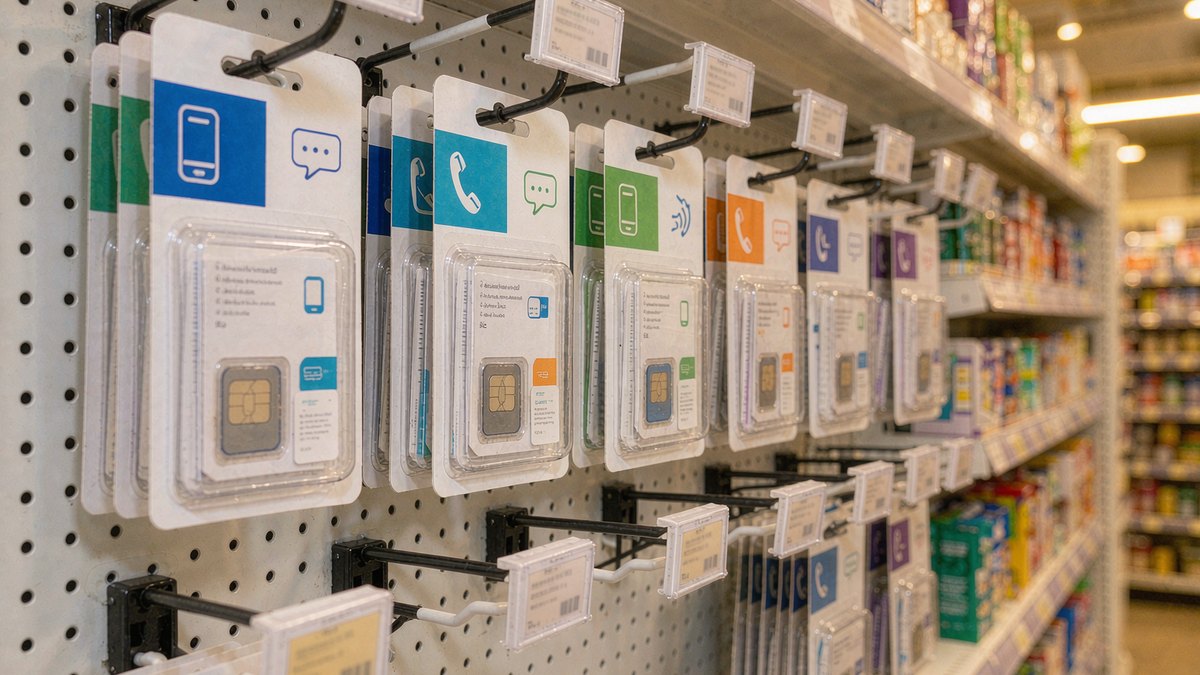
Dutch prepaid is priced honestly and sold confusingly, and the confusion is not accidental. A €10 sticker on a supermarket shelf gets you a plastic card with a phone number on it. It does not get you ten euros of data, and in the first hour of a trip that distinction is worth somewhere between €10 and €90 depending on whether you were parked at the time.
This page is about the money. What each channel charges for the same bundle, what the activation step is worth when it fails, what a prepaid line actually costs over a week once the top-ups are counted, and where a travel eSIM beats the local product and where it cannot. It does not re-explain the country — the country-level guide handles the networks, the coverage and the airports.
The whole page in four lines: a Dutch prepaid SIM is the cheapest data in the country per gigabyte and the most expensive per mistake. Pay-as-you-go after a failed activation runs to about €0.10 a megabyte, which is €100 a gigabyte, which is a hundred times the bundle price. Complete the activation step and Dutch prepaid is excellent value. Skip it and you will spend a week topping up a line you already paid for.
What €10 buys at a Dutch supermarket, and what it does not
A starter pack bought at Albert Heijn, Jumbo, Kruidvat, Primera or a station kiosk costs roughly €10 to €15 in a city and around €18 and up at Schiphol for a comparable bundle. Inside the pack is a SIM or an eSIM activation code, a phone number in the Dutch 06 range, and a starting balance that is usually zero or close to it.
The bundle is separate. Dutch carriers sell starter packs and bundles as two products because the pack is a distribution item that supermarkets can stock and the bundle is a subscription-like allowance that the carrier controls. So the shelf price buys the line, and the allowance comes from an activation step you perform afterwards.
That step is normally one of three things. An SMS with a code to a short number. A call to an automated line where you key in the bundle code from the packaging. Or, for the newer app-based products, a purchase inside the carrier’s own app after the line is live. The mechanics are close enough to any other market that the activation walkthrough applies unchanged; what differs is that a Dutch prepaid line needs the extra step at all. Vodafone’s prepaid eSIM, for example, is sold with unlimited data for seven days at around €10 and fourteen days at around €15, and the bundle appears after activation rather than at the till.
There is a fourth path people miss: some packs are sold with a bundle pre-loaded and require only that you insert the SIM and connect once. Those exist and they are the good ones. You can tell by reading the front of the pack for a data amount alongside the price. If the packaging only shows a price and a validity date, you have bought a line and you still owe the activation step.
Reading a Dutch prepaid pack: onbeperkt, MB’s and the date that matters
The shelf label is in Dutch and it is not translated at the till, so the three words that decide what you are buying are worth knowing before you queue.
| Dutch on the pack | What it means | Why it changes the purchase |
|---|---|---|
| onbeperkt | Unlimited | Always carries a fair-use allowance and a throttle; look for the number after it |
| databundel | Data bundle | The thing you actually want, sold separately from the line |
| beltegoed or tegoed | Call credit | Money on the account, spent at pay-as-you-go rates if no bundle is active |
| geldig tot | Valid until | The bundle’s expiry date, which is usually shorter than your trip |
| opwaardeercode | Top-up code | The voucher code; redeem it before you need it |
| activeer je bundel | Activate your bundle | The instruction most people skip |
| eenmalig | One-off | A charge that will not repeat, as opposed to a subscription |
| automatisch verlengen | Auto-renew | The bundle renews and takes credit you may have wanted for something else |
| opzeggen | Cancel | How you stop the auto-renew, usually by SMS or in the app |
| zonder abonnement | No contract | Prepaid, as opposed to a monthly plan with a minimum term |
| dagbundel, weekbundel, maandbundel | Day, week, month bundle | The validity tiers, which is where the per-gigabyte price differences live |
| 1e maand | First month | A promotional price that reverts to a higher one, common on MVNO shelf labels |
Three numbers are worth finding before you pay, and all three are printed on the pack or the receipt.
The bundle code, which is what the activation step wants. If the packaging has a scratch-off panel, that is it.
The validity, which tells you whether the bundle covers your trip or stops two days short. A week bundle on a nine-day trip is the single most common accidental overspend on Dutch prepaid, because day eight silently reverts to €0.10 a megabyte.
The auto-renew flag, which determines whether the bundle quietly repurchases itself using credit you had earmarked for something else. If you are leaving the country, cancel it.
One more piece of vocabulary that saves a phone call: a Dutch carrier’s balance check is usually a short code or a USSD string printed on the pack, not an app. Dial it and you get a text with your remaining data and the expiry date. On a prepaid line, that text is the only reliable source of truth about what you have left, and checking it once a day costs nothing.
The activation step nobody completes, costed at €0.10 a megabyte
This is the most expensive five minutes in Dutch travel data, so it is worth costing precisely.
If the bundle is never activated, the line stays on pay-as-you-go. On Vodafone and Odido that rate is roughly €0.10 per megabyte. Multiply it out: ten megabytes is a euro, one hundred megabytes is ten euros, one gigabyte is one hundred euros. A morning of maps, a parking session and a few photo uploads is comfortably a hundred megabytes, so the practical cost of forgetting is around ten euros an hour of ordinary use.
Compare it to the bundle. A ten-euro bundle buys several gigabytes. So the failure mode is not a small overcharge; it is paying roughly a hundred times the intended rate, and the phone gives no warning because a live line with a positive balance looks exactly like a working one.
The symptoms are specific and worth memorising:
- The phone shows a Dutch carrier name and full bars.
- Pages load, but slowly, and images stall.
- A balance check shows a number that is falling fast.
- The carrier sends a top-up prompt within hours rather than days.
If any of those appear on a Dutch prepaid line in the first day, the bundle was never activated. The fix is to find the code on the packaging and complete the step, not to buy more credit — topping up a line that has no bundle just buys more pay-as-you-go megabytes.
For an eSIM bought from an international reseller the entire problem disappears, because those products arrive with the allowance attached and activate on first connection. That is the main structural advantage a travel eSIM has over Dutch prepaid, and it is worth more than the price difference.
Where the money goes: airport, supermarket, carrier store, online
The same bundle costs different amounts depending on which door you walk through, and the spread is wider than a price-comparison instinct would suggest.
| Channel | Typical price for a comparable 7-day bundle | What you get for the difference |
|---|---|---|
| Schiphol or Eindhoven airport | €18 and up | Convenience, English-speaking staff, the queue |
| City supermarket | €10–15 | The same bundle, no assistance |
| Carrier store | €12–20 | Someone to complete the activation for you |
| Carrier website, eSIM | €10–20 | Nothing physical, no queue, needs a card |
| International travel eSIM | $5–10 equivalent | No number, no activation step, no iDEAL |
The airport premium is roughly €5 to €8 on the same product, and what it buys is opening hours and a person. That is a fair trade if you land at 22:00 with no plan, and a poor one if you land at 11:00 and there is an Albert Heijn in the terminal, which at Schiphol there is.
The carrier store premium is smaller and buys something more useful: an assistant who completes the activation step in front of you. For anyone unsure about the process, that is the best eight euros in this table, because it converts the highest-risk failure mode on the page into someone else’s task.
The online route through a Dutch carrier is priced between the two and is the only one that can be done before you fly. It requires a card the carrier accepts, which is where the next problem starts.
A Netherlands prepaid eSIM is not the same as a data bundle
The words get used interchangeably and they are three different purchases.
A line is the phone number and the ability to connect. This is what a starter pack gives you.
A bundle is a data allowance attached to that line, with a validity period. This is what the activation step buys, and it is what expires.
Credit is money on the account that can buy a bundle or be consumed at pay-as-you-go rates. This is what silently drains if the bundle was never activated.
A Netherlands prepaid eSIM is all three, sold in an order that punishes anyone who stops after the first step. And because the three expire on different clocks — the line after months of inactivity, the bundle at the end of its validity, the credit whenever it is spent — a line bought on one trip can be reactivated on the next with a top-up and no new SIM.
That last property is genuinely useful for anyone who visits the Netherlands more than once a year. A Dutch prepaid line kept alive with a small top-up every few months is a permanently available Dutch number, and the cost of keeping it alive is a few euros rather than a new starter pack each time.
iDEAL, vouchers and the top-up you cannot make
The most common failure on a Dutch prepaid trip is not coverage. It is the moment the bundle runs out, the traveller opens the carrier’s top-up page, and the payment step asks for iDEAL.
iDEAL is the dominant online payment method in the Netherlands and it settles through Dutch bank accounts. If you do not hold one, you cannot use it. Carriers do accept international credit cards and PayPal on some channels, but not universally, not always on the top-up flow specifically, and the pattern differs between the website, the app and the automated phone line.
Three workarounds, in order of how well they work.
Buy a voucher before you need one. Top-up vouchers are sold in supermarkets, drugstores, convenience shops and tobacco counters, priced in round amounts, and redeemed by keying a code. They sidestep the payment problem entirely because the transaction happens at a till with a card reader that takes anything. If you are on a Dutch prepaid line for more than a few days, buy a voucher on day one rather than hunting for one on the day the data stops.
Top up through the carrier’s app rather than the website. Apps are more likely to carry card payment than the mobile web flow, and more likely to offer a saved method.
Use a travel eSIM for the data and a Dutch line only if you need the number. A reseller’s top-up runs through the reseller’s own app with whatever card you used to buy, which is the path of least resistance in a country that assumes iDEAL.
Notice that this is a payment-rail problem, not a telecom problem, and it is the reason so much Dutch advice sounds over-cautious. It is not caution. It is that the second purchase is harder than the first.
Buying an eSIM in the Netherlands online: what the checkout asks
The online route is the only one available before you land, and the questions it asks are different from what most visitors expect.
A Dutch carrier selling a prepaid eSIM online will usually want a name, an email, a delivery of the QR code by email and a payment method. Some run an identity verification step. That verification is a commercial choice rather than a legal requirement — the Netherlands has no prepaid SIM registration law, so there is no obligation to collect an identity document for a prepaid line. Some carriers do it anyway for their own risk reasons, and some retailers ask for photo ID in store as a matter of policy.
What the checkout does not ask for, in this country, is a BSN or a Dutch address. That is worth stating plainly because the reputation of European prepaid registration leads people to assume otherwise, and readers who assume a Dutch bank account is required frequently give up on the local option before trying it.
If you buy eSIM Netherlands plans from an international reseller instead, the checkout is shorter — an email, a card, and a QR code — and the product has no number. The trade is straightforward: fewer questions and no voice, versus more questions and a +31 line.
Prepaid is a slower tier, and here is what that means in practice
Dutch prepaid has historically sat below contract on throughput, and that positioning is passed down the chain to the MVNOs that ride the same host network. Nobody puts it on the marketing page, and almost nobody notices, because the difference only shows up under specific loads.
What it looks like in use. Web pages, maps, messaging, tickets, banking apps and email are indistinguishable between tiers because they are latency-bound rather than bandwidth-bound and the Dutch networks are fast enough that both tiers clear them easily. Video at standard quality is fine on both. What separates them is sustained throughput: a large file upload, a video call with screen sharing, a laptop tethered for an afternoon of remote work.
If your Dutch trip is a holiday, the tier is irrelevant and you should buy on price. If your trip involves working, the tier is the reason to buy from the host carrier rather than an MVNO, or to buy a travel eSIM that publishes which network it rides. That is a real distinction and it is not visible in any comparison table that ranks by euros per gigabyte.
There is a second speed-related trap on Dutch prepaid: the unlimited bundles. Unlimited on a prepaid product carries a fair-use allowance and a post-allowance throttle, and the throttle usually lands around 1 Mbps. At 1 Mbps maps and messages work and video does not. On a two-week trip, that will happen in the second week.
eSIM vs physical SIM in the Netherlands, row by row
The eSIM versus physical SIM comparison in the Netherlands is shorter than in most countries, and the reason is administrative rather than technical.
| Question | eSIM from a Dutch carrier | Physical Dutch SIM |
|---|---|---|
| Available before you fly | Yes, online | No |
| Queue at the airport | None | Yes, and the shop may be shut |
| Registration required by law | No | No |
| Activation step for the bundle | Yes | Yes |
| Survives losing the phone | No, the profile is in the device | Yes, move the card |
| Works in a phone without eSIM support | No | Yes |
| Can be moved to a second device | Only with a carrier reissue | Yes, instantly |
| iDEAL dependency for top-up | Same | Same |
| Typical price for the same bundle | Same | Same, plus channel markup |
The two rows that decide it for most people are the first and the fifth. Buying before you fly removes the airport queue and the opening-hours risk entirely, which is worth real money on a late arrival. Losing the ability to move the line to another handset by pulling a card is a smaller risk than it sounds, and it is the one genuine advantage plastic still holds.
There is a third option the table does not cover and it is the one most visitors actually want: a data-only travel eSIM, which is cheaper, needs no activation step, and has no number. The full comparison of brands, scored on things other than price, is on the Netherlands eSIM shortlist.
A physical SIM still wins in three specific Dutch situations
Plastic is not obsolete here, it is just narrow.
A handset without eSIM support. Older phones, some budget models and most tablets and mobile hotspots have no eSIM hardware. For those, a physical Dutch SIM is not a preference, it is the only option. The handset checker covers how to check with a single dial code, and the model-by-model list answers it device by device.
A device that has to be handed to someone else. A tracker left in a rental car, a hotspot passed around a group, a phone lent to a family member. Moving a physical SIM takes seconds and moving an eSIM takes a carrier reissue, which on a prepaid product may not be possible at all.
A trip where the phone is likely to be lost or stolen. The card survives the handset. That is a real consideration on a cycling holiday, which is most holidays in this country.
For everything else, the calculation favours eSIM, and the reason is not technology. It is that the eSIM can be bought and installed at home, before the trip, on Wi-Fi, with no dependence on a shop being open when you land.
Prepaid versus a travel eSIM: the five-year cost curve
Short trips and long stays point in opposite directions, and the crossover is around two to three weeks.
| Trip length | Dutch prepaid, all-in | Travel eSIM | Which wins |
|---|---|---|---|
| Long weekend | €10 bundle plus the risk of the activation step | $5–8 | Travel eSIM, easily |
| One week | €10–15 plus a voucher | $8–12 | Travel eSIM on effort, prepaid on data volume |
| Two weeks | €15–20 plus top-up | $13–19 | Close, and it turns on how much you use |
| One month | €25–35 with a number and voice | $26–36 for 20–50 GB | Prepaid, on price per gigabyte and on the number |
| Three months | €60–90 across top-ups | $60–100 | Prepaid, decisively |
The pattern is that prepaid’s advantage compounds with time and a travel eSIM’s advantage is concentrated in the first hour. For a long weekend, paying a few dollars to skip the activation step is obviously correct. For a semester, paying the activation price once and then topping up locally is obviously correct.
The line people get wrong is the two-week trip, where the two options are close enough that the tie-breaker is not price. It is whether you need a number, and whether you are willing to spend twenty minutes in a shop on arrival. Both are legitimate answers, and the guide to getting a +31 line lists the handful of cases where a number is genuinely load-bearing.
Lebara, Lyca and the €5 bundle that is not a bargain
The cheapest prepaid bundles in the Netherlands come from MVNOs — Lebara, Lyca, Simyo, Ben, Hollandsnieuwe, Youfone, Simpel — and they are cheap for a reason worth understanding.
None of these brands owns a radio network. They buy capacity from KPN, Vodafone or Odido and resell it. That is a legitimate business model and for most travellers it delivers identical coverage, because the masts belong to the host network and the signal does not know who bills you. The brand-by-brand network list works through which brand rides which network if you want to know before you buy.
The differences are in three places. Throughput, because wholesale arrangements sometimes exclude the fastest parts of the host network. Support, because an MVNO’s customer service is thinner and slower than a carrier’s. And the small print, because a €5 bundle is frequently a first-month price rather than a standing price, or carries a shorter validity than the headline suggests.
So a €5 bundle is a good purchase for a five-day city trip where you need maps and messages, and a poor one for a two-week driving trip where you need sustained throughput and someone to call if it breaks. That is not a criticism of MVNOs; it is a statement about what the price is buying.
One practical note on Lyca specifically, since it comes up often: Lycamobile Netherlands operates as an MVNO with its own international calling economics, which is why it appears in comparisons aimed at diaspora communities rather than tourists. For a visitor needing data, its advantage over the host carrier’s own prepaid is small.
Unlimited prepaid in the Netherlands: read the fair-use paragraph
Unlimited is the most attractive word on any Dutch prepaid shelf and the least specific.
Every unlimited product here carries fair-use terms. In practice that means a high-speed allowance per day or per month, after which the connection continues at a reduced rate. The reduced rate is typically around 1 Mbps, which is enough for maps, messages, email and music and not enough for video.
What the terms will tell you, if you find them: the allowance size, whether it resets daily or monthly, whether hotspot counts against it, and whether the throttle is a hard cap or a deprioritisation. What they will not tell you: that a 1 Mbps connection looks exactly like a broken plan to a user who has never hit a throttle, which is why so many people reinstall a working profile on a Dutch afternoon.
For a three-day trip, unlimited is genuinely good value because the throttle will not arrive. For a two-week trip it will arrive, and a metered 20 GB plan costs less and does not have the failure mode. The country guide’s data table has the per-activity figures if you want to size it properly rather than guess.
Three Dutch pricing habits that look like a trick and are not
Dutch prepaid is not a scam, but three conventions make the headline number smaller than the amount you will spend, and knowing them prevents a bad afternoon.
The four-week cycle. Several bundles are priced per four weeks rather than per calendar month, which is 28 days. For a resident that is thirteen renewals a year instead of twelve and a slightly worse deal than it appears. For a visitor it is worse in a specific way: a month bundle bought on day one of a thirty-day stay expires on day twenty-eight, and the last two days revert to pay-as-you-go. Read the validity in days, not in the word maand.
The introductory price. Shelf labels on MVNO starter packs frequently show a first-month or first-bundle price with the standing price in smaller type below. That is legal and disclosed, and it means the €5 on the front is not what the second month costs. For a one-off trip this is irrelevant, because you only buy once.
The daily cap inside unlimited. An unlimited bundle with a daily high-speed allowance is not the same product as unlimited without one, and the difference only appears on day three of heavy use. The terms state it; the shelf does not.
None of these are hidden in the sense of being deceptive. All of them are invisible to someone reading a price label in a second language at a supermarket till with a queue behind them, which is the exact situation the product is sold into.
Two conventions work in your favour, for balance. Dutch consumer prices are quoted including VAT, so the number on the shelf is the number you pay. And prepaid credit does not carry an activation fee or a connection charge, so a €10 bundle costs €10 rather than €10 plus a monthly line rental.
What a week of Dutch prepaid actually costs, three ways
Three costed itineraries, using the ranges above. These are ordinary trips, not best cases.
Two people, four nights in Amsterdam, one phone each. Two starter packs at €12 from a city supermarket, two €10 bundles, no top-ups. Total €44 for both, or €22 each, for four days of city data with a Dutch number each. Alternatively two travel eSIMs at $8 each is roughly €15 total, with no number. The gap is €29 and it buys two phone numbers and two activation steps.
One person, nine days, Amsterdam and Rotterdam, driving for part of it. One starter pack at €12, one €15 bundle, one €10 top-up in week two, one parking session per day. Total around €37 for data. A 10 GB travel eSIM is about $15, or €14, and needs no top-up. The gap here is €23, and the decision turns on whether the Dutch number was needed for the car hire.
Two people, three weeks, one apartment in Utrecht, working. Two prepaid lines at €12 each, two monthly bundles at €30 each, one voucher each as insurance. Total around €104 for both, with numbers, voice and a month of data each. A 50 GB travel eSIM each would be about $36, or €33, so €66 total. Prepaid costs €38 more and includes two Dutch numbers, domestic calls and a top-up path that works locally. That is the trip shape where prepaid is clearly right.
Two people, one bundle: hotspotting against a second line
Every couple or pair of friends reaches this decision, and the arithmetic is closer than the intuition.
| Option | Cost for a week | What it costs you in practice |
|---|---|---|
| One bundle, hotspot from one phone | €10–15 | Both phones must stay within about ten metres, one phone’s battery carries the load, and if the phone with the line walks off the second goes dark |
| Two small bundles | €20–30 | Nothing operational; each phone is independent |
| Two travel eSIMs | $10–16 | Nothing operational, and no activation step |
| One regional travel eSIM with hotspot | $13–19 | Same range limit, one battery load, no number |
The saving from hotspotting is roughly €10 to €15 a week, which is real money and not transformative. What it buys in exchange is a dependency: a shared connection fails as a unit, and on a Dutch trip the moments that need data are exactly the moments when the pair separates. One person is in the car park looking for the app; the other has walked to the ticket machine.
Where hotspotting is clearly right: a couple where one person holds the phone and the other does not care, a family with children whose phones only need messaging, and any trip where the second device is a tablet rather than a phone.
Where it is clearly wrong: two people who split up during the day, a group of three or more, and anyone whose second phone is the one that needs the parking app.
There is also a battery cost that nobody prices. A phone running as a hotspot for a full day of navigation drains roughly twice as fast as one that is not, and a dead phone in a Dutch car park at the wrong moment is worth more than the €12 saved. A power bank solves it for about the same money, which is the honest way to see this decision: hotspotting and a power bank is the same purchase as a second bundle, with more moving parts.
The compromise most people land on is one generous bundle plus one small one, so the second phone has enough for maps and messages without doubling the spend. That costs about €18 in total and removes the dependency entirely.
The €85 parking fine that makes cheap data expensive
The economics of Dutch data are distorted by two penalties that dwarf any bundle price, and both need a live connection at a specific moment.
Parking in Dutch cities is paid through apps such as EasyPark and Yellowbrick. Enforcement is by camera cars scanning plates. If a session is not started within minutes of parking, the municipality issues a naheffingsaanslag, a municipal tax ticket that runs to roughly €85 to €90. There are effectively no coin meters left to fall back on.
Public transport has its own version. The OVpay system is contactless and taps a bank card or phone at the gate, so it needs no phone number — but correcting a missed tap requires the app, and the national rail operator prices a missed check-out at €20 and a missed check-in at €33.30. Both are recoverable in the app, and only in the app.
Put those against the price table. A €10 bundle against an €85 fine is not a close comparison, and the fine does not care that the bundle was cheap. This is the argument for buying slightly more data than the estimate says, and it is the argument against the 1 GB tier that looks like a saving.
Topping up from abroad after you leave
A surprising number of Dutch trips continue into Belgium, Germany or France, and the prepaid line comes along. Under EU roaming the line works across the single market at domestic rates, so a Dutch bundle bought in Amsterdam is valid in Antwerp. That part is fine.
The top-up is the part that breaks. From outside the Netherlands, the carrier’s top-up page may geo-restrict payment methods, the automated phone line may not accept a foreign number, and the voucher you would have bought at a supermarket is in a different country. A line that runs out in Ghent is harder to revive than the same line running out in Utrecht.
The mitigation is unglamorous and completely effective: top up before you leave the country, and buy one voucher more than you think you need. A voucher is a code, it does not expire with your location, and it can be redeemed from anywhere the carrier’s top-up page loads.
For anyone whose itinerary leaves the Netherlands for more than a day, the cleaner answer is a regional travel eSIM for data plus the Dutch line kept alive for voice. That combination costs a few dollars more and removes an entire failure class.
Refunds, expiry and the balance that disappears
Three administrative facts about Dutch prepaid that nobody mentions at the till.
The bundle expires on its validity date, not on your trip. A seven-day bundle bought on day one of a nine-day trip leaves two days of pay-as-you-go at the end unless you top up. This is the second most common way to accidentally pay €0.10 a megabyte, after the failed activation.
The credit can expire too. Prepaid balances on Dutch lines are typically subject to an inactivity period of a few months, after which the line may be suspended and the balance forfeited. For a one-off trip this is irrelevant. For a line you intend to keep for next year, a small top-up every few months keeps it alive.
Refunds are close to impossible. A prepaid bundle that was activated and partly used is not refundable, and a starter pack opened at a till generally is not either. The practical protection is to buy the smallest bundle that covers the first two days and top up once you know the trip is going as planned — the per-gigabyte price of doing it that way is worse and the downside is capped.
On an international travel eSIM the position is usually more forgiving: providers commonly replace a profile that fails to activate, because the failure is visible on their side and cheap for them to fix. That difference in after-sales behaviour is worth more than a euro or two of headline price.
Questions people ask at the till
How much is a prepaid eSIM in the Netherlands? Starter packs run about €10 to €15 in a city supermarket and €18 and up at the airport. Bundles are a separate purchase, typically €10 for seven days of unlimited at Vodafone, around €15 for fourteen days, and from about €19.99 for KPN’s travel-oriented data plan.
Do I need a Dutch bank account to top up? No, but it helps. iDEAL requires a Dutch bank, so without one you depend on the carrier accepting an international card, or on a voucher bought in a shop. Buy the voucher early.
Can I buy a Dutch prepaid eSIM before I arrive? Yes, from the carriers’ websites. It arrives as a QR code by email. Some checkouts run their own identity verification even though Dutch law does not require one for prepaid.
Why did my data run out in one day? Almost certainly the bundle was never activated and the line is on pay-as-you-go at about €0.10 a megabyte. Check the balance, then complete the activation rather than buying more credit.
Is a Netherlands prepaid eSIM cheaper than a travel eSIM? Per gigabyte, usually yes, especially beyond two weeks. Per trip, often no, because the travel eSIM includes the simplicity of no activation step, no iDEAL and no airport queue.
Does a Dutch prepaid SIM work in Belgium and Germany? Yes, under EU roam like at home, at domestic rates. The line works; topping it up from abroad is the part that gets awkward.
Is a prepaid eSIM Netherlands-only, or does it roam? It roams. A Dutch prepaid line uses its bundle across the EU at domestic rates, so a bundle bought in Amsterdam works in Antwerp and Aachen. Top-ups are the part that gets awkward from abroad.
Can I buy an eSIM card Netherlands-wide, or only in the cities? Starter packs are sold in supermarkets, drugstores, station kiosks and carrier stores across the country, so anywhere with an Albert Heijn or a Jumbo will have one. The airport is the most expensive channel rather than the only one.
Is the Netherlands eSIM prepaid route cheaper than a travel eSIM? Per gigabyte beyond about two weeks, yes. Per trip, often no, because it adds an activation step, an iDEAL dependency and a channel markup.
Can I keep the Dutch number between trips? Yes, if you keep the line active with an occasional top-up. Balance and line both lapse after a period of inactivity, so a small top-up every few months preserves the number.
Is a physical SIM cheaper than an eSIM in the Netherlands? No. The bundle price is the same; the physical version adds a queue and sometimes an airport markup. The only reason to choose plastic is a device without eSIM support, or a need to move the line between handsets.
What happens to my Dutch number if I lose the phone? A physical SIM can be moved to a new handset. An eSIM profile lives in the lost device and usually needs a carrier reissue, which on prepaid may not be offered at all.
The whole page reduces to one instruction: complete the activation step, and buy a voucher before you need it. Everything else on Dutch prepaid pricing is a variation on those two.