Cheap eSIM Philippines: What the $2 Plan Gives Up

Roami Team
Roami offers reliable eSIM plans, serving over 1 million travelers annually, and supports automatic local network switching to help travelers stay connected globally.
📑 Table of Contents
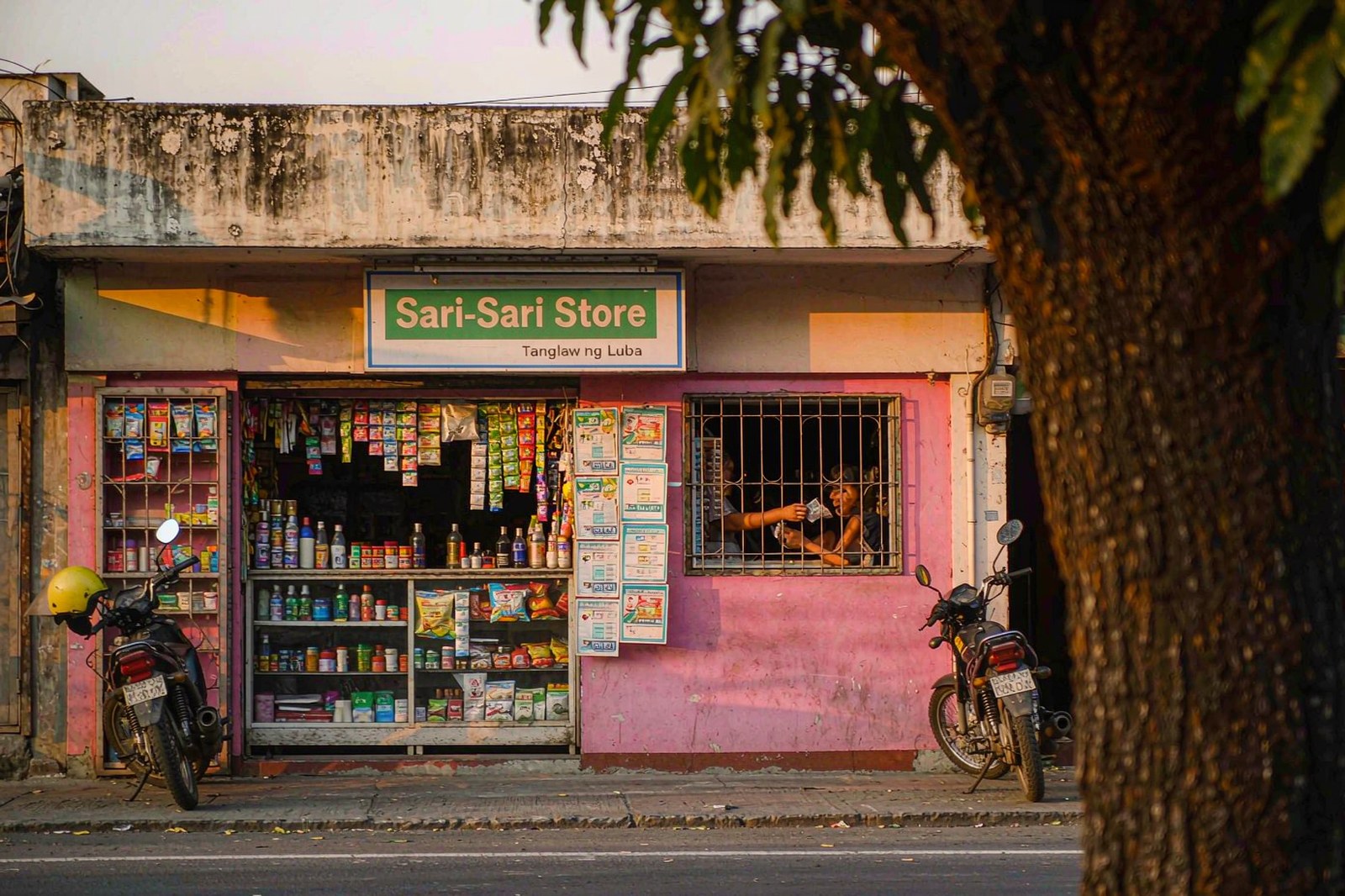
The cheapest Philippines eSIM you can buy costs under a dollar. It gives you 500 MB and it expires in a day. The second cheapest costs about $4 and gives you a gigabyte over three days. Both are real products, both are honestly described, and both are useless for the trip most people are actually planning.
That is the shape of the cheap end of this market: the headline price is real, the product is real, and the number has almost nothing to do with whether it will work. The useful question is not “what is the cheapest eSIM for the Philippines” but “what is the cheapest plan that covers my trip without leaving me buying a top-up at resort prices.” Those are different questions, and only one of them produces a cheap eSIM Philippines purchase you will not regret.
The short answer: The cheapest usable Philippines eSIM is a $6.99 to $8.00 plan giving 3 GB over 30 days, from Nomad, BNESIM or similar. Below that you are buying 1 GB over 3 to 7 days, which covers maps and messages for a long weekend and nothing else. If your trip is longer than a week, the cheapest option in the country is not an eSIM at all — it is a ₱99 Smart eSIM with Magic Data 549, which gives 38 GB that never expires for about $11. And if the trip is short and urban, the honest cheapest answer is a $3.99 entry tier plus hotel wifi.
The rest of this page is the arithmetic, six bargains that are not bargains, and the point at which cheap stops being cheap.
What $2 Actually Buys in the Philippines
A cheap eSIM Philippines plan is easy to find and hard to choose, because the bottom of this market is crowded with products that are honestly described and genuinely useless. Below about $4, the market sells one shape: a small data allowance on a short validity window. Here is the real inventory at the bottom of the price ladder.
| Plan | Data | Validity | Price | Per GB | Practical life |
|---|---|---|---|---|---|
| Klook entry tier | 500 MB | 1–3 days | From $0.89 | $1.78 | Half a day of maps |
| Saily entry | 1 GB | 7 days | $3.99 | $3.99 | 3–4 days of light use |
| Airalo entry | 1 GB | 3 days | $4.00 | $4.00 | 2–3 days of light use |
| Nomad entry | 1 GB | 7 days | $4.00 | $4.00 | 3–4 days of light use |
| aloSIM entry | 1 GB | 7 days | $4.50 | $4.50 | 3–4 days of light use |
| GlocalMe entry | 1–3 GB | 7 days | From $4.80 | $1.60–4.80 | 2–7 days |
A gigabyte is not nothing. In the Philippines it is 100 to 200 hours of Google Maps navigation, 50 to 65 hours of WhatsApp, and enough Grab bookings for a month. If your trip is four days in Manila and you are on hotel wifi at night, 1 GB is genuinely sufficient and paying more is waste.
What 1 GB is not is 5 GB. The moment you add Instagram, a video call, or a photo backup over cellular, the allowance disappears. One hour of TikTok is 250 to 350 MB. One hour of YouTube at 480p is 300 to 500 MB. A two-hour video call is over a gigabyte. So the $4 tier is a maps-and-messages product, and should be bought as one.
Tethering changes the arithmetic again, and it is the line item cheap plans handle worst. A laptop pulling a software update over a shared connection can clear a gigabyte in twenty minutes, and some budget tiers restrict tethering outright rather than metering it. If a second device is coming with you, size the plan for both devices or buy two plans — the per-gigabyte rating on a 1 GB tier assumes one screen.
The $2 plan that does not exist
There is a persistent belief that a $2 Philippines eSIM with usable data exists. It does not, in the English-language market, from any provider with a working support channel. The sub-$2 options are either 500 MB tiers, promotional first-purchase codes, or regional plans that technically include the Philippines as one of forty countries and price the data accordingly.
If you find a $2 offer, read three things: the data volume, the validity days, and whether the data is app-restricted. A $2 plan with 500 MB over 24 hours is a real product and not a mistake; it is just not a trip plan.
The Cheapest Six Plans and Their Real Cost
Ranked by total cost for a two-week trip, not by headline price. The difference between those two rankings is the whole article.
| Plan | Size needed for 14 days | Total cost | Per GB | Network |
|---|---|---|---|---|
| Nomad 3 GB / 30 days | One plan | $7.00 | $2.33 | Globe |
| BNESIM 10 GB / 30 days | One plan | About €6.99 | Very low | Varies |
| Saily 5 GB / 30 days | One plan | Around $9.99 | $2.00 | Smart |
| Airalo 5 GB / 30 days | One plan | $12.00 | $2.40 | Smart |
| Airalo 10 GB / 30 days | One plan | $19.00 | $1.90 | Smart |
| Nomad 10 GB / 30 days | One plan | $17.00 | $1.70 | Globe |
| Klook fixed 10 GB | One plan | Varies by tier | Low | Globe and Smart |
Reading down the total-cost column, the spread between the cheapest and the most expensive option that covers a two-week trip is about $12. That is the entire prize. Twelve dollars separates the value leaders in this category, which is why agonising over price is usually the wrong use of time — and why the network question, which can cost you the whole plan, deserves more attention than the price.
Two entries in that table need qualifying.
BNESIM’s 10 GB at around €6.99 is the cheapest large plan in the market on paper. It is also the entry with the least public information about its Philippine network partner, which on an archipelago is the single fact you most want. Cheap data on a network that does not cover your island is not cheap.
Klook’s fixed tiers start very low but the value is in its unlimited product, which publishes a 15 GB daily allowance. For a two-week trip the fixed tiers are fine; for anything data-heavy the unlimited product is the better buy despite costing more.
The break-even against a local SIM
The cheap-eSIM argument collapses at a predictable point, and it is worth locating it precisely.
| Option | Data | Price | Per GB | Number |
|---|---|---|---|---|
| Nomad 3 GB / 30 days | 3 GB | $7.00 | $2.33 | No |
| Nomad 10 GB / 30 days | 10 GB | $17.00 | $1.70 | No |
| Airalo 20 GB / 30 days | 20 GB | $30.00 | $1.50 | No |
| Smart eSIM + Magic Data 549 | 38 GB, no expiry | About $11.17 | $0.25 | Yes |
| Smart All Data 399 | 36 GB / 30 days | About $6.88 | $0.19 | Yes |
| Globe Traveler 20 GB / 15 days | 20 GB | About $8.60 + $1.70 eSIM | $0.52 | Yes |
The crossover is at about 3 GB. Above 3 GB, a local SIM is cheaper — not slightly cheaper, but five to twelve times cheaper per gigabyte — and it comes with a phone number.
The catch is not price, it is process. A local SIM needs a passport, a hotel address, a return ticket, a selfie and a queue. If that is worth $10 to you, buy the eSIM. If it is not, the local route is dramatically better value and the only reason more visitors do not take it is that it happens on arrival day.
Why the Cheap Plan Expires Before You Do
Validity is the hidden cost in cheap plans, and it is where the $4 tier quietly stops being cheap.
| Plan | Data | Validity | Data per day available | Fits a 14-day trip? |
|---|---|---|---|---|
| Airalo 1 GB / 3 days | 1 GB | 3 days | 333 MB | No |
| Airalo 3 GB / 7 days | 3 GB | 7 days | 428 MB | No |
| Saily 1 GB / 7 days | 1 GB | 7 days | 143 MB | No |
| Nomad 1 GB / 7 days | 1 GB | 7 days | 143 MB | No |
| Nomad 3 GB / 30 days | 3 GB | 30 days | 100 MB | Yes |
| Airalo 5 GB / 30 days | 5 GB | 30 days | 167 MB | Yes |
The pattern is stark. A 3 GB plan over 7 days gives you 428 MB a day, which is generous for a week. The same 3 GB over 30 days gives you 100 MB a day, which is enough for maps and messages and nothing else.
Cheap plans are almost always short-validity plans. That is why they are cheap: the provider is selling you a small amount of data and a small amount of time, and the two constraints bind together. A 7-day plan on a 14-day trip means buying twice, and the second purchase happens when you are already in the country with no comparison shopping available.
Three consequences:
The second purchase is always worse. Buying again mid-trip means paying whatever the provider’s app charges, or finding a local SIM at whatever the nearest retailer charges. Neither is the price you would have paid at home with time to compare.
Stacking does not fix it. Buying two 7-day plans costs more than one 14-day plan and requires you to remember to buy the second one before the first expires. If you forget, you are offline until you find wifi.
Validity starts at first attachment, not at purchase. This is good news for buying early and bad news for activating in the departure lounge to test. If the plan attaches to a network at home, the clock may run before you land.
The Per-Gigabyte Table Nobody Publishes
Providers publish price per plan. Almost none publish price per usable gigabyte, which is the number that predicts what the plan will actually cost you.
| Plan | Price | Data | Validity | Per GB | Per usable GB at 60% use |
|---|---|---|---|---|---|
| Klook 500 MB | $0.89 | 0.5 GB | 1 day | $1.78 | $2.97 |
| Saily 1 GB / 7 days | $3.99 | 1 GB | 7 days | $3.99 | $6.65 |
| Airalo 1 GB / 3 days | $4.00 | 1 GB | 3 days | $4.00 | $6.67 |
| Nomad 3 GB / 30 days | $7.00 | 3 GB | 30 days | $2.33 | $3.89 |
| BNESIM 10 GB / 30 days | €6.99 | 10 GB | 30 days | Low | Low |
| Airalo 5 GB / 30 days | $12.00 | 5 GB | 30 days | $2.40 | $4.00 |
| Nomad 10 GB / 30 days | $17.00 | 10 GB | 30 days | $1.70 | $2.83 |
| Airalo 20 GB / 30 days | $30.00 | 20 GB | 30 days | $1.50 | $2.50 |
| Airalo 50 GB / 30 days | $48.00 | 50 GB | 30 days | $0.96 | $1.60 |
| Smart Magic Data 549 | $9.47 | 38 GB | None | $0.25 | $0.25 |
The right-hand column is the honest one, because most travellers use about 60% of what they buy. A 1 GB plan used fully is $4 a gigabyte; used typically, it is $6.65. The cheap plan is the expensive one per gigabyte the moment you account for what gets wasted.
The last row is the outlier that breaks the whole table. Magic Data at 25 cents a gigabyte with no expiry means the “used 60%” adjustment does not apply — you will use it eventually or you will not, and either way the clock is not against you.
The 60% rule and why it matters for cheap plans
Cheap plans have the worst waste profile. A 1 GB plan is usually bought for a four-day trip during which the buyer uses 400 MB, because the last two days are spent on a beach with a weak signal and a phone in a bag. That is 60% waste on a plan that was already the most expensive per gigabyte.
A larger plan with a longer validity inverts this. A 10 GB plan over 30 days bought for a 14-day trip will be used 70% or more, because the trip is long enough for the allowance to be the binding constraint rather than the clock.
The rule: buy the largest validity window your budget tolerates, then size the data to the trip. Validity is free; data is not.
Six Fake Bargains
Every one of these is a real product with an honest description. All six are bad purchases for most trips.
One: the 500 MB “just to have something” plan. Bought as insurance and never used, or used for one Google Maps session and then forgotten. At $0.89 it is cheap enough that people buy it instead of deciding, which means they arrive with a plan that covers about four hours and then buy a real one anyway. If you are going to buy a real plan, buy it first.
Two: the 1 GB plan for a ten-day trip. One gigabyte is 100 to 200 hours of navigation and four to seven hours of social media. On a ten-day trip with any social media at all, it runs out on day three. This is the single most common bad purchase in the category.
Three: the app-restricted plan. Some cheap tiers in this market cover social apps but not general data — Facebook, Instagram, WhatsApp and TikTok, but not Maps, not Grab, not email. They are cheap because they are narrow. Always check for “all apps” or “open access.”
Four: the 3-day plan bought for a 5-day trip. The arithmetic is obvious and people still do it, usually because the 7-day equivalent costs more and the buyer plans to “be careful.” Being careful does not extend a validity window. When the clock stops, the remaining data dies with it.
Five: the multi-country plan that includes the Philippines. A 40-country plan priced for a Europe trip will often include the Philippines at a data rate that makes a Philippines-only plan look expensive. You are paying for coverage you will not use in eleven countries you will not visit. If the Philippines is one leg of four, a regional plan is right; if it is the whole trip, it is not.
Six: the “cheapest” plan on an aggregator site. Comparison sites rank by headline price, which surfaces exactly the short-validity, small-data, app-restricted plans described above. The cheapest row on an aggregator is almost never the cheapest plan for a real trip.
| Bargain | Real cost | Why it fails |
|---|---|---|
| 500 MB insurance plan | $0.89 plus the real plan you buy later | Never used, or used and insufficient |
| 1 GB for ten days | $4.00 plus a mid-trip top-up | Runs out on day three |
| App-restricted tier | Low, plus needing a second plan | No Maps, no Grab, no email |
| 3-day plan for 5 days | $4.00 plus a second plan | Validity binds before data |
| 40-country plan | Higher than needed | You pay for 39 irrelevant countries |
| Aggregator’s cheapest row | Depends | Optimised for the sort order |
The Local Route That Beats Every Cheap eSIM
This is the part that makes cheap-eSIM shopping look like a hobby rather than a saving.
| Route | Data | Validity | Total cost | Per GB |
|---|---|---|---|---|
| Nomad 3 GB / 30 days | 3 GB | 30 days | $7.00 | $2.33 |
| Saily 5 GB / 30 days | 5 GB | 30 days | Around $9.99 | $2.00 |
| Nomad 10 GB / 30 days | 10 GB | 30 days | $17.00 | $1.70 |
| Airalo 20 GB / 30 days | 20 GB | 30 days | $30.00 | $1.50 |
| Base SIM + Smart All Data 299 | 24 GB | 30 days | About $6.90 | $0.29 |
| Base SIM + Globe Go+99 | 16 GB usable | 7 days | About $3.40 | $0.21 |
| Base SIM + Smart Magic Data 549 | 38 GB | None | About $11.17 | $0.25 |
A ₱40 base SIM and a ₱299 All Data promo gives you 24 GB for about $6.90, which is less than the cheapest 3 GB eSIM in the international market and eight times the data. The eSIM’s entire advantage is that you skip the queue — the promos themselves are listed on Smart’s store and on Globe’s prepaid help pages, and neither is behind a paywall or a passport.
That advantage is worth real money and it is not worth infinite money. If the queue costs you 40 minutes and $14, and you value your arrival time at more than $21 an hour, the eSIM is the rational purchase. Most people do, on arrival day.
The honest recommendation splits by trip length, and it is the only place on this page where the answer changes:
Under 5 days, city-based: cheap eSIM. A 1 GB or 3 GB plan plus hotel wifi is genuinely sufficient, and the queue is not worth $10 of savings.
5 to 14 days: either. The eSIM is $10 to $30; the local route is $7 to $12. Difference is small enough that convenience should decide.
Over 14 days: local SIM. The gap becomes $20 to $50 and the local product comes with a number and, on Smart, data that does not expire.
Anyone who needs a Philippine number: local SIM, with no exception. No cheap eSIM has one.
Reading a Deal Page Without Being Fooled
Most Philippines eSIM deals are the same three or four products sold under different banners, and the discount is usually a permanent one rather than a seasonal one. Deal pages are written to be skimmed, and five conventions do most of the work.
“From $0.89.” The word “from” is doing enormous labour. It refers to the smallest, shortest plan in the catalogue, which is usually 500 MB over a day. You will never buy it, and it exists to set the anchor. When comparing two providers, ignore every “from” price and compare the plan you would actually buy.
Strikethrough pricing. Many eSIM platforms show a crossed-out higher price next to the current one. In this market the “discount” is frequently permanent, which means the crossed-out number was never a real price. Treat the strikethrough as decoration, not as evidence of value.
“Unlimited” without a number. Covered at length on the unlimited data page, but the short version: an unlimited claim with no published threshold is a marketing term, and the difference between 3 GB a day and 15 GB a day is the difference between a working hotspot and a dead one.
The rating count. A product with a high rating across a small number of reviews is not the same as one with a slightly lower rating across tens of thousands. Read the count as well as the score, and read the recent reviews rather than the top ones — install failures show up in recent reviews first.
The bundle that is not included. Some deal pages quote a price that excludes tax, or that includes a “free” add-on you did not ask for, or that requires an app store subscription. The number at the checkout is the number that matters, and it is often 10% to 20% above the number on the banner.
The habit that defeats all five: decide which plan you want before you look at any deal page, then find the cheapest price for that plan. Shopping by price first means letting the marketing choose your plan for you.
That single habit is also the only reliable filter on Philippines eSIM deals, because a deals page can answer “which plan is cheapest today” and cannot answer “which plan do I need”. Those are different questions, and only the second one decides whether the trip works.
The Top-Up That Costs More Than the Plan
Running out of data mid-trip is the most expensive way to buy data in the Philippines, and the markup is worse than most people expect.
| Where you top up | Typical markup over online price | Why |
|---|---|---|
| Provider app, at home | 1× | Baseline |
| Provider app, in country | 1× to 1.5× | Same price, worse options |
| Airport counter | 2× to 3× | Convenience premium |
| Resort or hotel front desk | 2× to 4× | Captive audience |
| Island reseller | 2× to 4× | Scarcity plus cash handling |
| Local SIM plus promo | 0.3× to 0.5× | Cheapest, if you have a number |
The pattern is that the price of data rises with your distance from a comparison. At home you can compare three providers in ten minutes; on an island with one reseller you can compare nothing.
Two habits prevent this. Size the original plan correctly — a 20 GB plan bought upfront costs less than a 10 GB plan plus two top-ups at resort prices. And carry a second cheap plan as backup rather than relying on being able to buy one when you need it.
There is a third option that is rarely considered: a local SIM bought on arrival and topped up with cash at a 7-Eleven. That route is immune to the markup because the top-up channels are everywhere and priced the same. It costs a queue on day one and saves 50% to 75% on every gigabyte thereafter.
When Cheap Is the Right Answer
Cheap eSIMs are correct in four situations, and it is worth naming them because the previous sections are all about when they are wrong.
A short layover or a two-day business trip. One gigabyte, one city, hotel wifi at night. Buying anything larger is waste.
A second-line backup. A $4 plan on the other network, kept installed and switched off, activated only when the primary plan fails. This is the best use of a cheap plan in the entire category: not as a primary plan, but as insurance.
A trip where you are mostly on wifi. A resort with good wifi, a conference with connectivity, a family visit with a router in every room. The eSIM covers the gaps between wifi zones, and the gaps are small.
A first trip where you do not yet know your usage. Buy a cheap plan, measure your actual consumption for three days, then buy the plan that fits. The cheap plan is a data-gathering exercise, and if you are going to be in the country for a month it is a reasonable way to avoid over-buying a 30-day plan.
The backup use is the one worth expanding. Two cheap plans on two networks — $4 on Globe, $4 on Smart — cost less than a single 10 GB plan and cover the failure case that a single-network plan cannot. On an island itinerary, that is the cheapest form of resilience available.
What a Failed Cheap Purchase Costs
The risk of buying cheap is not losing $4. It is what happens when the plan fails and you are already in the country.
| Failure | What it costs to fix | Where |
|---|---|---|
| Plan runs out on day three | Resort top-up price, or a local SIM | Wherever you are |
| Plan expires before the trip ends | A second plan at app prices | Anywhere with wifi |
| Single-network plan has no signal | A second plan, or nothing | On the island |
| App-restricted plan blocks Maps | A second plan | Immediately |
| Profile will not install | Support time, possibly nothing | At the airport |
The last row is the expensive one, because it happens at the worst moment. A profile that will not install at 11pm in an arrivals hall means you are buying a local SIM at airport prices anyway, which means you paid twice.
Three habits reduce the risk to near zero:
Install before you fly, on wifi, and test the install. Not the activation — the install. Confirm the profile appears in Settings with the right label.
Carry a second $4 plan on the other network. This is the cheapest insurance in the category and it converts a catastrophic failure into a minor inconvenience.
Screenshot the QR code and the order confirmation. If the profile is accidentally deleted, the screenshot is the difference between a reinstall and a support ticket.
Buying at the Right Moment to Save Money
Timing moves the price more than provider choice does, and almost nobody optimises for it.
Promotional codes are permanent. Most providers in this market run affiliate codes worth 5% to 10% that do not expire. There is rarely a reason to pay list price, and the existence of a standing discount is worth noticing when you compare headline prices — one provider may simply be showing its pre-discount number.
Currency conversion costs 1.5% to 3%. If the plan is priced in USD and your card is not, your bank adds a fee. On a $30 plan that is under a dollar, which is not worth optimising. On a $70 plan it is worth using a card without a foreign transaction fee.
Buying at the airport costs the most. The same category of product at an airport counter runs two to three times the online price. This is not a secret and people still do it, because arrival-day convenience is real. Just make that a deliberate choice rather than a default.
Buying too early can cost the whole plan. Validity sometimes starts at purchase or install. If a trip moves and the plan has already activated, there is no refund. Buy in the week you fly.
Buying too late costs more than buying early. Last-minute purchases happen in the departure lounge, where you have no time to compare and no ability to fix an install failure.
| Timing | Effect on price | Effect on risk |
|---|---|---|
| A month before | Best price, codes available | Validity may start early |
| A week before | Best price, codes available | Low |
| Day of departure | Normal price | Install failure has no time to fix |
| On arrival, at the airport | Two to three times online | Highest |
| Mid-trip | App prices, no comparison | Highest |
The window to aim for is three to seven days before departure: enough time to install and test, late enough that validity does not start early.
The Cheapest Plan for Each Trip Length
The answer changes with duration, so here it is by duration, with no hedging.
| Trip length | Cheapest sensible plan | Cost | Why |
|---|---|---|---|
| 1–2 days, layover | Klook 500 MB or Saily 1 GB | $0.89–$3.99 | Wifi does the rest |
| 3–4 days, one city | 1 GB over 7 days | $3.99–$4.50 | Maps, Grab, messages |
| 5–7 days, one city | 3 GB over 30 days | $7.00 | Headroom without waste |
| 7–10 days, multi-city | 5 GB over 30 days | $9.99–$12.00 | Social media plus navigation |
| 10–14 days, island hopping | 10 GB over 30 days, dual-network | $17.00–$30.00 | Coverage fallback matters more than price |
| 14 days, heavy use | 20 GB over 30 days | $27.00–$30.00 | Cheaper than two smaller plans |
| Over 14 days | Local SIM plus promo | $7–$12 | Five to twelve times cheaper per GB |
| Any length, needs a number | Globe or Smart local eSIM | $1.70 plus promo | No cheap eSIM has a number |
| Any length, working remotely | 50 GB fixed plan | $45–$48 | Unlimited throttles below your needs |
Two rows are where people go wrong most often: the 1 GB plan for a ten-day trip, and the 20 GB plan for a four-day city break. Both are solved by looking at the trip length first and the price second.
Cheap eSIM Philippines: the Cost-Per-Day Test That Reorders the List
Every cheap-plan comparison sorts by total price. That is the wrong sort, and it is wrong in a predictable direction: it rewards long validity windows, which are exactly the plans a short trip cannot use.
Sort by cost per day of trip, not cost per day of plan validity, and the ladder rearranges itself. The arithmetic is not complicated; it is just never done on the product page.
| Plan | Price | Validity | Cost per day if the trip is 5 days | 10 days | 20 days |
|---|---|---|---|---|---|
| 1 GB / 3 days | $4.00 | 3 days | $0.80 | $0.40 | $0.20 |
| 1 GB / 7 days | $3.99 | 7 days | $0.80 | $0.40 | $0.20 |
| 3 GB / 30 days | $8.99 | 30 days | $1.80 | $0.90 | $0.45 |
| 5 GB / 30 days | $12.00 | 30 days | $2.40 | $1.20 | $0.60 |
| 10 GB / 30 days | $19.00 | 30 days | $3.80 | $1.90 | $0.95 |
| Local: ₱99 eSIM + Magic Data 549 | ~$11.00 | No expiry | $2.20 | $1.10 | $0.55 |
The first two rows win on a five-day trip and lose on its actual constraint, which is data, not days. A 1 GB plan costs 80 cents a day for five days and delivers 200 MB a day, which is about forty minutes of Instagram. The 3 GB plan costs $1.80 a day and delivers 600 MB a day. You are not comparing prices; you are comparing what a day of your trip is worth.
Three conclusions survive the arithmetic.
Under five days, buy the smallest plan and stop. The cost-per-day gap between $0.80 and $1.80 is a coffee. Neither plan will run out if you stay on hotel wifi at night.
Between seven and fourteen days, the 3 GB and 5 GB tiers are the value point. They are the smallest plans whose daily allowance matches an ordinary travel day without streaming.
Beyond fourteen days, the local line wins on every column. The last row is the only one that keeps falling on the 20-day trip, because there is no clock to waste.
A cheap eSIM Philippines purchase made on total price alone almost always lands on a 30-day plan for a 6-day trip, which is how people end up paying $19 to use 2 GB.
Three Ways to Cover a Two-Week Trip, Costed
Two weeks is the most common Philippines trip length and the length where the cheap end of the market stops working. Three configurations, priced end to end from published rates.
Configuration A: one cheap eSIM, nothing else.
| Line | Cost |
|---|---|
| 10 GB / 30 days travel eSIM | $19.00 |
| Total | $19.00 |
Works when the route is dense and urban. Fails the moment the single network it rides has no site, and at 10 GB you have about 700 MB a day, which is comfortable without video and tight with it.
Configuration B: one cheap eSIM plus a local line.
| Line | Cost |
|---|---|
| 3 GB / 30 days travel eSIM, installed at home | $8.99 |
| ₱99 Smart eSIM plus Magic Data 549 (38 GB, no expiry) | ~$11.00 |
| Registration time at a Smart store | 45 minutes |
| Total | ~$20.00 |
For one dollar more than configuration A you get 41 GB instead of 10 GB, two networks instead of one, and a working phone number for GCash. The cost is the queue and the paperwork. This is the configuration most experienced travellers land on, and it is the one that survives an unplanned extra week.
Configuration C: local only.
| Line | Cost |
|---|---|
| Globe Traveler 20 GB / 15 days plus ₱99 eSIM fee | ~$10.30 |
| Top-up if needed (Go250, 15 GB / 15 days) | $4.31 |
| Total | ~$14.60 |
Cheapest of the three and the only one with no redundancy. It also puts all your connectivity behind a registration that fails on bad lighting, attempted in an arrivals hall at 11pm.
The point of the exercise is that the cheapest configuration is not the cheapest purchase. Configuration B costs one dollar more than the obvious choice and removes the two failure modes that actually end trips: a single network with no fallback, and a data allowance that runs out on day nine.
Buying Cheap in the Wrong Currency Costs More Than the Plan
The price you compare is rarely the price you pay, and the gap is largest on the cheapest plans, because a fixed fee is a bigger share of a small number.
Four charges get added after you have chosen a plan.
Currency conversion at checkout. Many providers price in US dollars and convert at their own rate, sometimes with a markup of two to four percent. On a $19 plan that is under a dollar. On a $0.89 plan with a minimum transaction fee, it can double the cost. If your card is not denominated in the provider’s currency, check whether the checkout offers a local-currency option and what rate it applies.
Your bank’s foreign transaction fee. Typically one to three percent, and it applies to every purchase including the top-up you make mid-trip from a beach. A card with no foreign transaction fee is worth carrying for this reason alone.
The declined-payment retry. Fraud filters on travel purchases are aggressive, especially for a first-time merchant in a foreign country at 2am. A declined payment usually means a second attempt, and some providers place a temporary authorisation on the first. If your only card is declined three times, the plan you saved $4 on becomes a support ticket you cannot open because you have no data.
The top-up premium. This is the big one. A cheap plan bought at the lowest tier is a plan you will top up, and top-ups are priced at whatever the provider charges that day, in-app, with no comparison shopping possible because you are standing in a resort lobby. The article’s earlier section on top-ups covers the arithmetic; the point here is that the cheapest plan is the one most likely to be topped up, so its total cost is the least predictable number on the page.
The practical rule: pay for the plan that gets you to the end of the trip without a mid-trip purchase. A $19 plan bought once is usually cheaper than a $7 plan plus a $15 top-up on day six, and it is definitely less annoying. If you want the provider-by-provider comparison of who charges what at checkout, the checkout comparison covers it line by line, and the Globe route shows the local alternative where a card fee never applies because you pay in pesos at a counter.
Three Things That Have No Cheap Version
Everything above is about buying well at the low end. Three capabilities in this market have no budget option at all, and knowing which they are stops you looking for one.
A Philippine phone number. The cheapest route to a +63 line is a ₱99 Globe or Smart eSIM, plus a promo. There is no promotional version, no free trial, and no workaround. Every international provider is data-only. If you need GCash, Maya or a bank OTP, you are buying a local line and registering it, and the process costs an hour rather than a dollar.
Dual-network coverage. Two providers in this market offer it and neither is the cheapest in its segment. A single-network plan will always undercut a dual-network one, because the provider only has to buy wholesale data from one operator. The premium for a fallback network is about 20% to 40%, and there is no way to get the fallback without paying it. Two cheap single-network plans is the only budget route to the same outcome, and it costs about $8.
Data that does not expire. Magic Data is a Smart and TNT product with no international equivalent. Every travel eSIM expires. If you want data that survives a trip, you are buying a local SIM, and the cheapest route to it is ₱99 plus ₱99 for 2 GB, which is still cheaper than any 30-day eSIM with a useful allowance.
The pattern is that the cheap end of the eSIM market sells volume and nothing else. Numbers, redundancy and non-expiry are structural capabilities that cost the provider money to offer, so they never appear in a discount tier. If any of the three matters to your trip, stop shopping on price and start shopping on capability.
Cheap eSIM Questions, Answered Bluntly
How much is an eSIM in the Philippines? From under $1 for 500 MB over a day to about $50 for 50 GB over 30 days. A usable plan for a week is $4 to $12; for two weeks, $10 to $30.
What is the cheapest eSIM that actually works for a week? A 3 GB plan over 30 days, around $7, from Nomad or similar. Avoid 1 GB plans for anything longer than four days.
Is there a $2 Philippines eSIM? No usable one. Sub-$2 options are 500 MB single-day tiers, promo codes, or multi-country plans that include the Philippines as a minor leg.
Why do cheap plans expire so fast? Because short validity is what makes them cheap. A small data allowance on a long window would be priced higher, so providers sell small data on a short window instead.
Is a cheap eSIM cheaper than a local SIM? No, above about 3 GB. A ₱299 promo gives 24 GB for under $7, which no international eSIM matches. The eSIM’s advantage is skipping the registration queue, not the price.
Can I buy an eSIM after I arrive? Yes, but the price is worse and the install happens when you have least time to fix it. Buy three to seven days before you fly.
Do cheap plans work on Siargao? Only if they are on Smart or dual-network. A cheap Globe-only plan is a cheap plan that does not work outside General Luna.
Are app-restricted plans worth it? Only if maps, Grab and email are not in your plan’s covered apps — which they usually are not. Check for “all apps.”
What happens if my cheap plan runs out mid-trip? You buy a top-up at app prices or a local SIM. Neither is catastrophic; both cost more than sizing the original plan correctly.
Is it worth buying two cheap plans instead of one bigger one? For an island itinerary, yes. Two $4 plans on two networks cost less than one 10 GB plan and cover the case where one network has no signal.
Where the Saving Actually Is
Cheap eSIM shopping saves between $5 and $15 on a typical two-week trip. That is the size of the prize, and it is worth having.
It is also the honest ceiling on Philippines eSIM deals. Promotions in this category move the price by a few dollars, not by half, which is why a page promising 50% off is describing a comparison against a price nobody paid.
One more number puts it in perspective. The same two-week trip, bought badly — a 30-day plan for a 12-day stay, on the wrong network, topped up once at resort prices — costs $20 to $40 more than a cheap eSIM Philippines purchase that was merely done in the right order. So the saving is not really in the price you pick. It is in the sequence you buy in, and the sequence costs nothing.
What cheap shopping does not save is the thing that actually goes wrong: a plan on the wrong network, a validity window shorter than the trip, or an install that fails on arrival. Those three failures cost more than the entire spread between the cheapest and most expensive plan in the category — Klook’s published fair-use terms are a useful illustration of how much of the real product is in the fine print rather than the headline price.
So the order of priorities is: network that covers your route, validity that outlasts your trip, data sized to your usage, install tested at home, and only then price. Shopping in that order costs about the same and fails far less.
If you want the cheapest plan that survives an island itinerary, the ten-option shortlist sets coverage against cost, dual-network plans included. If you are weighing a local SIM against a cheap eSIM on actual numbers, the Philippines SIM card guide has the airport-versus-city arithmetic and the registration steps. And if you are buying for a long stay where the per-gigabyte maths matters most, the no-expiry option on Smart is what makes every cheap plan look expensive.