A Hong Kong eSIM With a Number: Who Needs One, Who Does Not

Roami Team
Roami offers reliable eSIM plans, serving over 1 million travelers annually, and supports automatic local network switching to help travelers stay connected globally.
📑 Table of Contents
Most people searching for a Hong Kong eSIM with a phone number are looking for something that does not exist in the form they expect. They want the convenience of an app-based eSIM and the reassurance of a local number, and they assume the two come together because in their home country they always have.
In Hong Kong they do not. The product splits cleanly in two.
A travel eSIM is a data profile issued outside Hong Kong. It carries no +852 number, cannot receive a text message, and cannot make an ordinary call. What it does do is install in two minutes, skip registration, and cost about a dollar a day.
A carrier eSIM is issued by a Hong Kong operator. It comes with a real eight-digit +852 number, local call minutes, and the ability to receive SMS — and it requires real-name registration with your passport before it activates.
There is no product that has both properties. The choice is data-only with no paperwork, or a number with paperwork, and the only question worth answering is which of those your trip actually needs.
This page answers that question, then explains what the number costs, how to keep it alive, and the workaround that solves the problem for most people without buying a second product at all.
Why a Travel eSIM Cannot Give You a +852 Number
The reason is structural rather than commercial, and understanding it saves a lot of searching.
A travel eSIM is a roaming profile. It is issued by a company in another jurisdiction — often under a wholesale agreement with a carrier group — and when you land in Hong Kong it attaches to a local network as a visiting subscriber. Your data traffic is routed through the provider’s own core network, not through a Hong Kong carrier’s subscriber system.
That architecture is why the product is cheap and instant: nobody has to verify who you are, because nobody is issuing you a local subscription. It is also why it cannot give you a number. A number is a subscription artefact. No subscription, no number.
A second layer is regulation itself. Hong Kong requires real-name registration for locally issued SIM cards, including eSIMs. A number attaches to a registered identity. A travel eSIM deliberately sits outside that system by not being a local issuance — which is precisely why it needs no passport and why it has no number.
So when a listing says “eSIM Hong Kong with phone number”, it is almost always describing a local carrier product, not a travel eSIM. Worth checking which, because the difference is an hour of your first evening.
The operator breakdown covers which carriers issue numbered eSIMs and what each brand is for. This page covers the number itself: who needs one, what it costs, and what to do instead.
Which Apps and Services Actually Require a Hong Kong Number
This is the question that decides everything, and most people answer it wrong in both directions — either assuming they need one when they do not, or discovering at the worst moment that they do.
| What you want to do | Needs a +852 number? | Notes |
|---|---|---|
| Use Maps, WhatsApp, Instagram, email | No | Data only |
| Ride-hailing through an international app | No | Your home number works |
| Book a restaurant online | Usually no | Some ask for a local mobile for confirmation |
| Receive a bank verification code | Sometimes | Depends on whether your bank insists on the number on file |
| Open a Hong Kong bank or payment account | Yes | Local regulation requires a local number in most cases |
| Register for local government or transport services | Often yes | Local mobile required for SMS confirmation |
| Call a local business that does not use WhatsApp | Yes | Hotels and clinics mostly answer landlines, but small shops do not |
| Use a local taxi app that routes bookings by SMS | Usually yes | Taxi apps are the most common failure point for visitors |
| Receive delivery notifications | Usually yes | Couriers call or text the local number |
| Register or re-verify a messaging account | Sometimes | WeChat takes most numbers for the SMS step, but a long-dormant account can still demand a friend to approve it |
The pattern is that almost nothing a tourist does daily requires a number, and almost everything administrative does.
That WeChat row deserves a sentence of its own, because it is the reason a lot of people search for this. Registering a WeChat account needs a phone number that can receive one SMS, and almost any country’s number satisfies that. Where visitors get stuck is on an older account that was never bound to a number, or one that has been flagged: at that point WeChat asks for a second person to confirm you, and no new number fixes it. A Hong Kong number solves the registration case and does nothing for the confirmation case, so check which one you are in before buying anything.
So the useful test is not “would a number be convenient” — it usually would — but “can I name the specific service that will send me a message”. A number you cannot attach to a named service is a number you do not need.
Three cases where the answer is genuinely yes:
You are opening a local account. A Hong Kong bank, a stored-value payment account, or a local service that requires identity verification will ask for a local mobile number, and it will send an SMS to it during onboarding and afterwards.
You are staying long enough to have local errands. A month-long stay produces deliveries, appointments and bookings. Each of those has a small chance of needing a local number, and the probabilities compound.
You are working, not travelling. A client, an employer, or a landlord who needs to reach you on a local line is a reason no app can substitute for.
Three Ways to Get a +852 Number on an eSIM
There are exactly three routes, and they differ in cost, paperwork and how well the number survives your departure.
| Route | How it works | Registration | Best for |
|---|---|---|---|
| Carrier prepaid eSIM | Buy from 3HK, CMHK, csl or Club Sim; registration at purchase | Passport scan, approval before activation | Stays of two weeks or more |
| Carrier postpaid eSIM | Monthly contract with a number | Passport plus proof of address, credit check | Residents and long stays over three months |
| Physical prepaid SIM in a second slot | Buy a card, keep the travel eSIM for data | Passport scan at the counter | Anyone whose phone holds two physical SIMs |
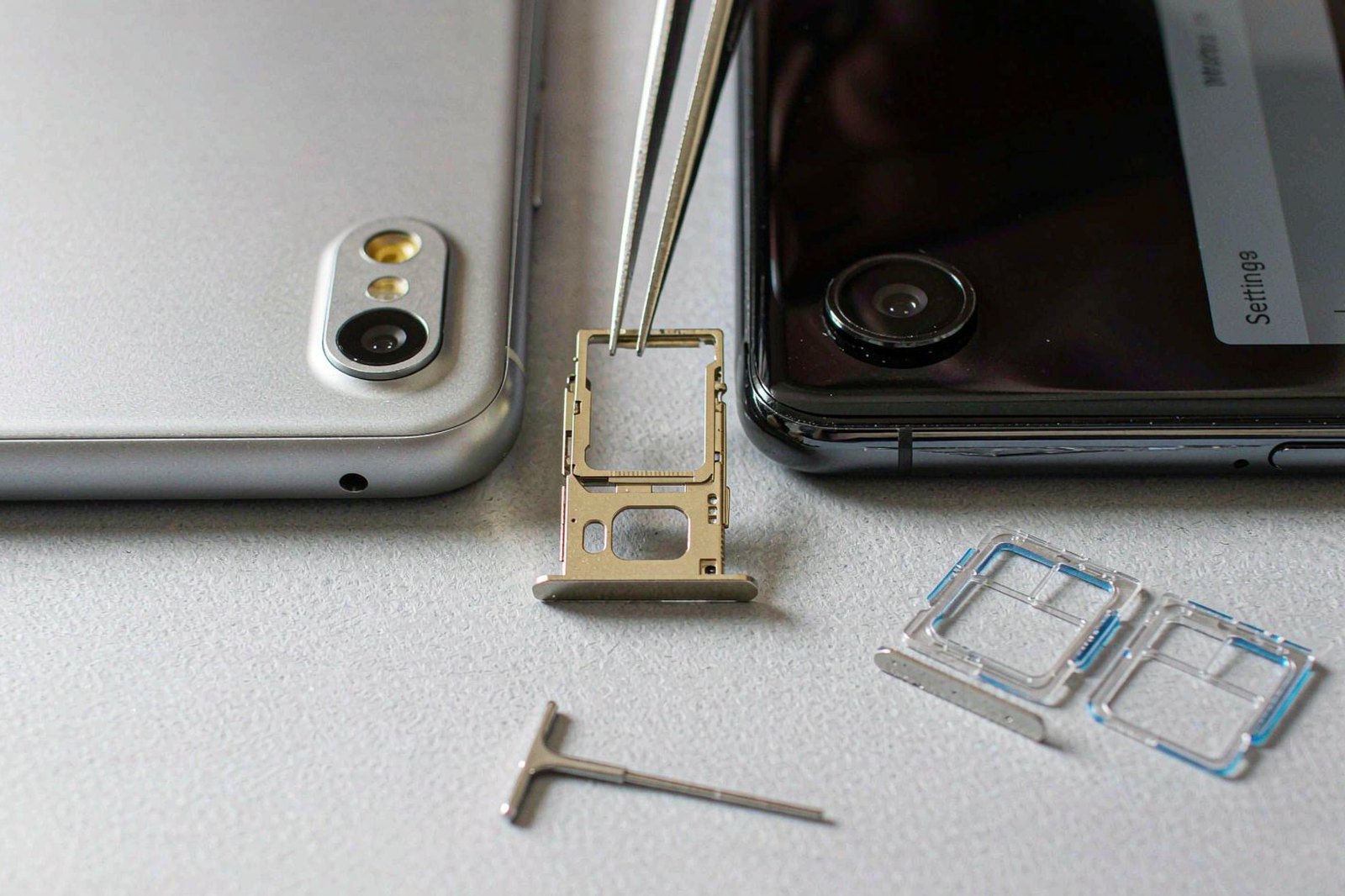
The third route gets overlooked and is often the most practical. If your phone has a physical SIM slot free — or two, as many Hong Kong-bought iPhones do — a plastic prepaid card in that slot gives you a number alongside a data eSIM, with no need for the carrier to support prepaid eSIM issuance at all.
It is also the route where brand choice matters least. Any of the four networks sells a prepaid card with a number; the differences are price per day and indoor coverage depth, both covered in the operator comparison. Current prepaid line-ups are listed on the operators’ own sites, such as csl’s, and those pages change more often than any article about them.
For a two-week stay, the physical card route is usually quicker: ten minutes at a counter, registration included, number working before you leave. For a longer stay, the carrier prepaid eSIM is tidier, because you end up with one line instead of two.
A postpaid contract is not realistic for most visitors. It generally requires proof of Hong Kong address and a credit check, which a hotel booking does not satisfy.
Registration: The Step That Stops People
Every route above leads to the same requirement, so it is worth knowing exactly what it involves before you commit.
Hong Kong’s real-name registration programme for SIM cards has applied since the regulation took effect on 1 September 2021. Cards issued from 1 March 2022 must be registered before activation, and prepaid cards that missed the 23 February 2023 deadline were deactivated. The Communications Authority’s page sets out the framework and what a visitor must provide.
For an individual visitor, the sequence is:
- Buy the card or eSIM from the operator.
- Complete the registration through the operator’s app, website, or a shop counter.
- Scan the passport photo page and confirm the details the system reads.
- Submit and wait for confirmation.
- Turn off Wi-Fi and test that data and SMS both work.
Four details account for nearly all failures.
Use the passport you entered on. A Hong Kong SAR passport and a BN(O) passport are not accepted for this process, even though both are travel documents. The government’s own announcement of the registration deadline confirms that individuals register with the identity document they hold, and that visitors use a travel document.
Match the name exactly. Registration systems compare against the document. A shortened or reordered name gets rejected, and the rejection is not always explained clearly.
Each adult registers their own card. A parent cannot register a prepaid line for an adult family member. Children under 16 need an adult’s endorsement and that adult’s details.
The cap is 10 prepaid cards per operator per person. Irrelevant for most visitors, relevant if you are buying for a household.
Approval is usually immediate, but manual review happens when a scanned document is unclear — and it can take hours. Buying at 11pm after a long flight is a worse plan than it appears, because a queued registration means no service until it clears.
What the registration record actually holds
Operators store your name, document number, date of birth and a copy of the document image. That record is what makes the number portable, recoverable and legally yours.
Two consequences follow.
First, you cannot transfer or recover the number without proving you are the registered user. If a vendor registered the card in their name, you cannot recover it, port it, or replace a lost eSIM. The registration record is the ownership record.
Second, the registration is per operator, not per person. If you register with one carrier and later buy from another, you register again. There is no central identity that carries across.
Why some shops still say no registration is needed
Because some products genuinely do not need it — the travel eSIMs sold online — and counter staff sometimes conflate the two.
A plastic prepaid card bought in Hong Kong always needs registration. A travel eSIM bought online never does. A carrier-issued prepaid eSIM handed over at a shop needs it. If a counter assistant tells you otherwise about a local card, ask them to activate it in front of you; the registration prompt will appear.
A +852 Number on Your Phone: Where It Appears
Small details, but they cause confusion in the first hour.
Eight digits, no trunk prefix. Hong Kong numbers are eight digits with no leading zero. When someone gives you a number typed as 9123 4567, the full international form is +852 9123 4567.
Mobile numbers start with 4, 5, 6, 7 or 9. Landlines traditionally start with 2 or 3. This matters when you are reading a business card and deciding whether to text or call.
Caller ID displays as +852 to foreigners. Your number will show up on your bank’s system as +852 followed by eight digits. If you registered the number locally as 91234567, use the international form when a foreign service asks for it.
Inbound SMS works from international senders. A Hong Kong prepaid number can receive a text from a bank in another country, provided the sender is willing to send internationally. Some banks block international SMS delivery to the number on file for fraud reasons, which is a bank policy problem rather than a Hong Kong problem — see the section further down.
Emergency calls bypass everything. 999 works from any handset with signal, with or without a valid SIM, and without credit.
Testing Your Number Before You Rely On It
The mistake people make is discovering the number is not fully functional on the day they need it. Five minutes of testing prevents that.
- Send an SMS from the counter phone to your new number and confirm it arrives. If it does not, inbound SMS is not enabled and the card is not what you bought.
- Send an SMS out to a Hong Kong mobile and confirm delivery. Outbound matters for two-factor setups that verify both directions.
- Make a local call to a landline and confirm the other side sees your number. Caller ID on prepaid cards is not always enabled by default.
- Ask someone abroad to text you if you intend to receive international codes. This is the specific path a bank code takes.
- Turn off Wi-Fi and confirm data still works, so you know the card is not relying on a Wi-Fi network for the appearance of function.
If any of those five fails at the counter, you can resolve it there. The same failure a week later means a support queue, a shop visit, or a purchase you cannot use.
One more test worth running if you are staying more than a week: check that the number receives an SMS from an automated sender rather than from a person. Automated messages route differently from person-to-person texts, and a card that accepts one sometimes rejects the other.
Two Numbers, One Phone: The Settings That Matter
Running a home number for SMS alongside a Hong Kong number for local use is the configuration most long-stay travellers end up with, and it has four settings that cause nearly all the trouble.
| Setting | What to choose | Why |
|---|---|---|
| Data line | Whichever line has the Hong Kong plan | Data on the home line means roaming charges |
| Default voice line | The line you actually answer | Some Android handsets default to the first SIM without asking |
| Wi-Fi Calling | On for the home line | Delivers calls and texts over the other line’s data |
| Allow Cellular Data Switching | Off | Stops the phone moving data to the home line when the travel line looks weak |
The fourth one is the culprit behind most surprise bills, because it activates exactly when the travel line is congested — the moment you are least likely to notice.
One more iPhone setting matters: label the lines clearly. “Home” and “Hong Kong” is enough. Two lines labelled “Primary” and “Secondary” after a week is how people send a work call to the wrong number.
One behaviour to expect: with two lines active, the phone uses one data connection at a time. Calls on the secondary line still arrive, because most recent handsets are dual-SIM dual-standby. On a small number of older or cheaper models, activating the second line disables the first — check before you rely on it.
When Your Own Bank Refuses to Text a Foreign Number
This is the failure that sends people looking for a Hong Kong number in the first place, and it is worth separating from the general question.
Some banks will not deliver an SMS to a foreign number, or will deliver it only to a number registered in the account’s home country. Others will, but flag the delivery as suspicious and hold it for a call-back. Neither is a Hong Kong problem, and neither is solved by buying a local card.
Three things actually help, in order of effort:
Check the bank’s app before you travel. Most large banks push verification codes through their own app or an authenticator, falling back to SMS only as a last resort. Turning that on before departure removes the problem entirely.
Enable Wi-Fi Calling on the home line. If your carrier supports it in Hong Kong, SMS and calls to your home number can travel over data, bypassing the roaming path that banks sometimes hold.
Register a second number with the bank in advance. Some banks allow two numbers on file. Adding one before you travel is easier than adding one from abroad.
Buying a Hong Kong number does not fix a bank that refuses foreign SMS; it creates a second number the bank has never heard of. This is the single most common misdiagnosis in this whole topic.
HK$50 to HK$300: What the Number Costs and Buys
Local prepaid plans with a number are priced for residents, which means the value curve is skewed toward longer stays.
A short-validity local prepaid plan typically costs more per day than a travel eSIM at the same data volume, because you are paying for the number, the call minutes and the registration overhead. Over a month, the arithmetic reverses: a local prepaid plan with a large allowance and included local minutes beats any travel product on a per-day basis.
| Stay | Travel eSIM, data only | Local prepaid with number | What the difference buys |
|---|---|---|---|
| 3 days | 3 days 5 GB, $4.99 | Short-validity local card, higher per day | A number you will barely use |
| 10 days | 15 days 10 GB, $11.99 | Local prepaid card plus registration time | A number, at the cost of an hour |
| 30 days | 30 days 50 GB, $39.99 | Local monthly prepaid, cheaper per day | A number and local minutes |
| 30 days, no number needed | 30 days 10 GB, $12.99 | Not comparable | Nothing — this is the wrong purchase |
The “nothing” in the last row is the point. If you do not need a number, paying for one is paying for an unused feature plus a registration hour.
What the number actually buys, beyond the obvious: local call minutes to landlines and mobiles, the ability to receive SMS for as long as the card stays valid, caller ID that local businesses recognise, and — in the case of some operator bundles — mainland or Macau data at better rates than a standalone product.
What it does not buy: any improvement in coverage. A local prepaid eSIM and a travel eSIM at the same price point perform similarly on the same network. The number is an administrative feature, not a signal feature.
What a number does not fix
Three problems get misdiagnosed as “I need a Hong Kong number”.
Bad coverage. A number does not improve signal. If calls drop inside your hotel, the fix is a different network or a Wi-Fi Calling setup, not a local subscription.
Bank verification failures. If your bank will not text a foreign number, a Hong Kong number it has never been told about does not help. The fix is in the bank’s app.
Slow data. A number is not a data upgrade. If a travel plan is throttling after a daily allowance, a numbered plan on the same network at the same tier will throttle too.
Buy the number when you need a number. Buy a better plan when you need better service. They are separate purchases, and confusing them costs money twice.
Ten Questions That Settle Whether You Need the Number
If the categories above still feel abstract, run these. Any single yes justifies a numbered product; ten noes means buy data only and skip the registration hour.
- Will a bank, payment app or government service send a code to a Hong Kong mobile?
- Will you need to call a Hong Kong landline — a clinic, a restaurant, an office?
- Are you opening any local account that requires identity verification?
- Is your stay longer than two weeks?
- Will a courier, landlord or employer need to reach you on a local line?
- Does any app on your phone refuse to register without a local number?
- Will you be receiving deliveries to an address rather than a hotel front desk?
- Is your home carrier’s roaming in Hong Kong unreliable enough that inbound SMS is a risk?
- Do you need a number that local businesses recognise when you call them?
- Are you staying long enough that topping up a local card makes sense?
Question 8 is the one people answer wrongly. It reads like a reason to buy a local number, and it is not — the fix for unreliable inbound roaming SMS is Wi-Fi Calling on the home line, which costs nothing and requires no registration.
Every other question on the list is a genuine reason to buy.
Receiving Bank Codes Without Buying a Local Number
This is the workaround that solves the problem for most people, and it deserves more attention than it gets.
You almost certainly do not need a Hong Kong number to receive a verification code from your own bank. You need your own number to stay reachable, which is a different problem with a cheaper solution.
The arrangement: keep your home SIM active as the primary line for voice and SMS, and use the travel eSIM as the data line. Your bank’s code arrives on your home number as it always does, and it arrives over the network as a roaming SMS.
Three settings make this work, and all three are on the phone rather than in the tariff:
- Leave the home line enabled. Turning it off to “avoid charges” is the most common reason people miss verification codes abroad.
- Keep data on the travel line, so you are not paying roaming data rates.
- Turn off Allow Cellular Data Switching on iPhone, so the phone does not move data to the home line when the travel line looks weak.
What about the cost of receiving an SMS while roaming? In most cases, received SMS is free or cheap, but policies vary by carrier and plan. Check your own carrier’s roaming terms before you travel rather than assuming — and note that the risk is not the received message, it is the phone quietly using home-line data.
One failure mode is worth knowing: if your bank has your number on file but your home carrier’s roaming agreement in Hong Kong is weak, the SMS can be delayed. In that case, a Wi-Fi Calling setup on your home line often delivers the message over data instead of the roaming network. Check whether your carrier supports Wi-Fi Calling in Hong Kong before you fly; not all do.
Wi-Fi Calling and VoLTE: What Changes With Two Lines
Once you run two lines, three call behaviours change and none of them are obvious.
Wi-Fi Calling lives on the home line, not the travel line. If your carrier supports it, calls and texts to your home number can travel over the travel eSIM’s data. That solves the “I need my bank code and the roaming signal is bad” problem, and it solves it for free. It requires enabling Wi-Fi Calling on the home line before departure, and it may require a registered address in the home country.
The travel line cannot make ordinary calls. Data-only eSIMs have no voice service. Calls must go through WhatsApp, FaceTime, or whatever the other party uses. If you need to call a landline — a restaurant, a clinic, a hotel reception — a data-only line cannot do it, and this is the most practical argument for buying a numbered product.
Emergency calls work regardless. Dialling 999 in Hong Kong reaches emergency services from any handset with signal, even without a valid SIM. This is true in most jurisdictions and it is worth knowing rather than assuming your phone is useless without a plan.
A fourth behaviour catches people on Android: some handsets default outgoing calls to the first SIM in the list rather than asking. Set the default voice line explicitly, or you will make a local call from your home number at roaming rates.
Does Every Traveller in the Group Need a Number?
Almost never, and the arithmetic is worth doing before everyone queues for registration.
A number exists to receive SMS and calls addressed to a person. In a group of four, the services that need one are usually shared: the hotel booking, the restaurant reservation, the taxi, the delivery. One number covers all of them.
The exceptions are individual: a personal bank code, a personal account verification, a work callback. Those need the number of the person they concern.
So the practical pattern for a family or group:
- One numbered line for shared logistics, bought by whoever handles bookings.
- Data-only eSIMs for everyone else, which are cheaper and need no registration.
- Home numbers left enabled for anyone expecting a code from their own bank.
That configuration costs less than four numbered lines and produces fewer failure points, because there are three fewer registrations to clear.
Two caveats. If the group splits up for the day, the person carrying the numbered line is the only one reachable by local call — which matters if someone needs to be collected. And if the numbered line runs out of credit or validity, the whole group loses the shared channel at once, so keep it topped up.
For a couple, the answer is usually the same: one numbered line, two data lines. The only common exception is a couple where both people have their own banks sending codes, in which case both keep their home lines enabled and neither buys a local number at all.
Keeping the Number Alive After You Leave
A prepaid number is not yours forever. It stays alive while the card remains valid, and validity is extended by topping up within the operator’s window.
The mechanics differ by operator, but the shape is consistent:
- Each top-up extends validity by a defined period, typically measured in days or months.
- If you do not top up before expiry, the number enters a grace period and then returns to the operator’s pool.
- Once returned, it cannot be recovered, and any service that used it — a bank, a payment app, a delivery account — loses its verification channel.
For someone who visits Hong Kong regularly, keeping a number alive costs very little: one small top-up a year is usually enough, and the number becomes a permanent asset for local accounts.
For a one-off visitor, letting it lapse is fine. Just be aware that anything you registered with that number will need a new one on your next trip, and re-verifying a bank account from abroad is considerably harder than opening it in person.
Two practical habits:
- Top up before you fly home, not after. Doing it from abroad can require a payment method the operator’s app does not accept.
- Store the ICCID and the registration confirmation. When a dormant line stops working, support asks for both.
At the Counter, Four Things Go Wrong
The counter process is short, and the failures are consistent enough to list.
The card is sold without registration and does not work. Shops sometimes hand over a card and tell you to register later. It will not connect until registration clears, which means the queue you avoided becomes a second trip.
The vendor registers the card in their own name. This happens when a shop offers to “handle it for you”. The number then belongs to them, and you cannot port it, replace the card, or recover it if it lapses. Always register in your own name.
The plan turns out to be a monthly contract. Ask for prepaid explicitly. Contracts require a Hong Kong address and a credit check, and a tourist cannot satisfy either.
The card is data-only despite having a number printed on it. Some tourist products include a number that cannot receive SMS from all senders, or that is inbound-only. Ask specifically whether the plan can receive an SMS from a bank.
The validity is shorter than expected. A card sold as “30 days” may count validity from activation rather than from purchase, and activation may have happened when the shop tested it.
The single most useful thing to do at the counter: have staff confirm data works and then send yourself a test SMS from their phone. If the SMS arrives, the number is real and inbound SMS is enabled. If it does not, you have found the problem before leaving the shop.
When a Number Matters More Than Data
One category of traveller has this calculation settled before they arrive, and it is worth naming separately.
If you are relocating, working remotely for a Hong Kong employer, or opening any local account, the number is not optional and the data allowance is secondary. In that case the right product is a local prepaid plan with a large allowance and included minutes, bought at a counter with your passport, registered in your own name, and topped up before you leave the territory for the first time.
The travel eSIM is still useful alongside it — as the data line while you sort out the local product, and as a fallback if the registration takes longer than expected. Two lines is the correct configuration for that first week, not one.
If that is your situation, the carrier comparison covers which operator to choose and the cross-border guide covers what happens when the job takes you to Shenzhen.
Six Questions About Hong Kong Numbers and eSIMs
Is there a Hong Kong eSIM with phone number that behaves like a local line? Yes, and it is the carrier-issued product rather than a travel eSIM. Travel eSIMs are roaming profiles issued outside Hong Kong and carry no local number; a numbered product comes from a local operator and requires real-name registration.
Do I need a Hong Kong ID to register? No. Visitors register with a passport or other travel document. An HKID is used only if you hold one, and a Hong Kong SAR passport is not accepted for this purpose.
Will my bank still text me if I use a travel eSIM for data? Yes, provided your home line stays enabled. The code arrives as a roaming SMS on your home number while data runs on the travel eSIM. Check your carrier’s roaming terms and consider enabling Wi-Fi Calling as a backup.
Can I make local calls with a data-only eSIM? No. Voice requires a numbered line. Calls over WhatsApp or FaceTime work, but a restaurant landline does not.
How long does a prepaid number stay valid? It depends on the operator’s validity period and your top-up history. Top up before you leave and the number survives; let it lapse and it returns to the pool and cannot be recovered.
Is it cheaper to buy a number locally or to use my home number? If you only need to receive codes from your own bank, using your home number costs nothing extra and avoids an hour of registration. If you need to call local landlines or open a local account, the local number is the only option.
If you have concluded that you need data more than a number, the Hong Kong eSIM guide covers the data-only route from purchase through setup, and the plan comparison prices it against real itineraries. If the phone is the open question, the iPhone model check settles whether eSIM is even available on your handset — which matters more than usual here, because several Hong Kong iPhone models have no eSIM hardware at all.